
Choosing the right smart lighting system for your home in Singapore often comes down to a choice between the open, budget-friendly versatility of the Tuya platform, or the premium, highly polished, and hub-centric ecosystem of Philips Hue. While both systems allow you to control lights via smartphone apps, set schedules, and adjust colors, they operate on entirely different technical architectures. Tuya is a global IoT platform powering thousands of third-party smart bulbs, switches, and appliances. Philips Hue is a proprietary, closed ecosystem developed by Signify, designed to offer seamless integration, high-end hardware, and exceptional reliability through a dedicated network hub.
For homeowners planning a smart lighting setup, this decision impacts your initial budget, home network stability, long-term scalability, and daily user experience. If you are looking to outfit a single room or want to experiment with smart home technology on a budget, Tuya-compatible devices offer an incredibly low barrier to entry. However, if you are planning a comprehensive, whole-home automation setup across a multi-room HDB flat or condominium, the structured reliability of the Philips Hue ecosystem often justifies its premium price tag. Understanding how these systems handle connectivity, smart home integration, and electrical compatibility is essential to making an informed investment.
Understanding the Core Ecosystem Differences
To make an accurate comparison, it is crucial to understand that Tuya and Philips Hue are not direct brand-to-brand competitors. Tuya functions as a backend technology provider, licensing its software, cloud infrastructure, and hardware modules to thousands of independent manufacturers worldwide. When you buy a “Tuya smart light,” you are purchasing hardware manufactured by a third-party brand that runs on Tuya’s software platform, typically managed through the Smart Life or Tuya Smart mobile applications. This open-platform approach results in an incredibly diverse marketplace where you can find Tuya-compatible smart bulbs, downlights, light strips, and outdoor fixtures in almost any shape, size, and price bracket.
Products mentioned in this guide
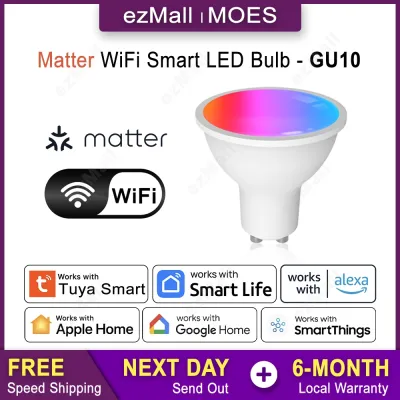
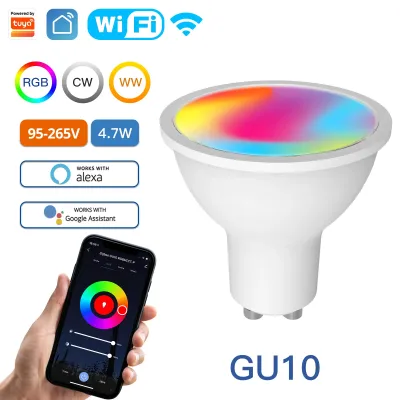
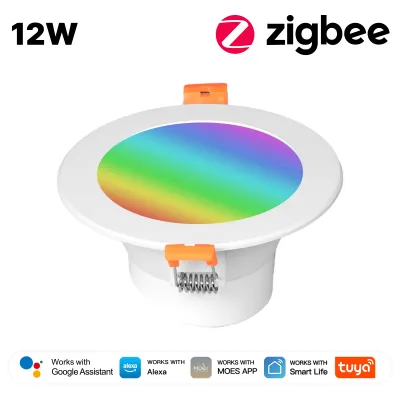
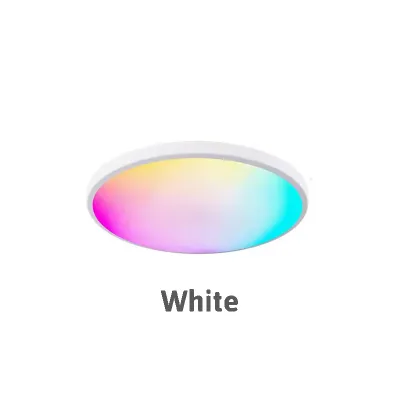
Prices are valid at publication and may change. Please refer to the product page for the latest price.
In contrast, Philips Hue is a fully integrated, proprietary ecosystem. Every bulb, bridge, switch, and sensor is designed, manufactured, and supported directly by Signify. This closed-loop system allows for strict quality control, ensuring that color temperatures are perfectly calibrated across different product lines and that firmware updates are rolled out seamlessly to all devices. While this limits your hardware choices to what Philips Hue officially manufactures, it eliminates the compatibility guesswork and quality variance often associated with the vast sea of third-party Tuya devices.
The core trade-off between these two approaches lies in flexibility versus consistency. The Tuya platform allows you to mix and match ultra-affordable hardware from various manufacturers while keeping them under a single control application. Philips Hue sacrifices this budget flexibility in favor of a standardized, premium experience where every component is guaranteed to work together flawlessly, backed by dedicated customer support and regular software updates.
Comparing Setup, Hubs, and Connectivity
The physical setup and network architecture of your smart lighting system play a critical role in its daily reliability, especially in Singapore’s typical high-density housing environments. Many entry-level Tuya smart lights utilize a direct Wi-Fi connection. These bulbs connect directly to your home’s 2.4GHz Wi-Fi router, requiring no additional hubs or gateways. While this makes the initial setup of one or two bulbs simple and cheap, it can quickly lead to network congestion. A standard home router provided by local internet service providers can typically handle only a limited number of concurrent Wi-Fi devices before experiencing dropouts, lag, or connection failures. If you plan to install dozens of smart bulbs across your living room, bedrooms, and kitchen, a pure Wi-Fi setup can severely strain your home network.

To mitigate this, the Tuya ecosystem also offers Zigbee-compatible bulbs, which require a dedicated Tuya Zigbee gateway. This gateway connects to your router and creates a local Zigbee mesh network specifically for your smart devices, offloading the traffic from your primary Wi-Fi. Philips Hue relies almost entirely on this hub-based architecture. While newer Hue bulbs feature Bluetooth capability for single-room control, a complete setup requires the Philips Hue Bridge. The Bridge connects directly to your home router via an Ethernet cable and establishes a robust Zigbee mesh network that can support up to 50 light sources and accessories.
In a Zigbee mesh network, each mains-powered smart bulb acts as a signal repeater, passing commands along to the next closest bulb. This is particularly advantageous in Singapore homes, where thick reinforced concrete walls can easily degrade Wi-Fi signals. By using a dedicated hub like the Philips Hue Bridge or a Tuya Zigbee gateway, you ensure that commands travel quickly and reliably throughout your entire home, without slowing down your family’s internet bandwidth for streaming, gaming, or working from home.
Checking Compatibility with Your Smart Home
Before purchasing any smart lighting hardware, it is essential to verify how well it integrates with your existing smart home ecosystem, whether you use Apple Home, Google Home, Amazon Alexa, or Samsung SmartThings. When shopping for Tuya-compatible lights, you must carefully inspect the product packaging or online specifications for official certification logos. Because Tuya is an open platform, individual manufacturers decide which integrations to support. While almost all Tuya devices work seamlessly with Google Assistant and Amazon Alexa, native Apple HomeKit support is relatively rare and typically limited to specific, slightly more expensive Tuya models or those that explicitly support the newer Matter smart home standard.
Philips Hue, by comparison, offers comprehensive, native compatibility out of the box. The Philips Hue Bridge is officially certified for Apple HomeKit, Google Home, Amazon Alexa, and SmartThings, allowing you to easily integrate your lights into complex, multi-brand automation routines. This native integration ensures that when you configure a “Good Night” scene on your smartphone or voice assistant, your Hue lights respond instantly alongside your smart locks, air conditioning, and security systems.
Another critical factor is how these systems process automations. Many budget-friendly Wi-Fi Tuya bulbs rely entirely on cloud-to-cloud integration to execute schedules and voice commands. This means that if your fiber broadband connection experiences a temporary outage, or if the Tuya cloud servers undergo maintenance, your automated schedules, motion sensors, and voice controls may stop working entirely. The Philips Hue Bridge processes most of its schedules, switch inputs, and sensor triggers locally within the hub itself. Even if your external internet connection goes down, your pre-programmed schedules, physical smart switches, and motion sensors will continue to control your lights reliably.
Evaluating Costs and Long-Term Expansion
Budget planning is a major consideration when designing a smart lighting layout, and the financial differences between these two systems become more pronounced as you expand. Tuya-based smart lights are highly cost-effective, with individual Wi-Fi bulbs often available at a fraction of the price of a single Philips Hue bulb. For homeowners looking to smarten up a few bedside lamps or a single accent wall, Tuya allows you to achieve this with a minimal upfront investment, as there is no need to purchase a dedicated hub.
Philips Hue requires a much higher initial investment. Starting from scratch usually means purchasing a starter kit that includes the Hue Bridge, which adds to the upfront cost. However, when evaluating the long-term cost of scaling your system to cover an entire three-room, four-room, or five-room flat, you must look beyond the individual bulb prices. Adding dozens of standalone Wi-Fi bulbs to your home may eventually force you to invest in high-end mesh Wi-Fi routers to handle the device load, which can be a significant hidden expense.
Furthermore, you must consider how you plan to control your lights physically. Leaving traditional wall switches turned on is required for smart bulbs to remain online, but family members or guests will inevitably flip them off out of habit. To solve this, you may need to install smart switches. The Tuya ecosystem offers an extensive and highly affordable range of wall-mounted smart switches, including models designed for Singapore’s common “no-neutral wire” electrical setups. Philips Hue offers premium wireless dimmers and smart button accessories that can be mounted over existing switches, but these accessories carry a premium price tag. If you plan to replace every physical light switch in your home with a smart alternative, the Tuya ecosystem provides a much wider and more budget-friendly selection of hardware.
Verifying Electrical Specs and Fixture Compatibility
When installing smart lighting in Singapore, safety and physical compatibility must always come first. Singapore’s electrical grid operates on a standard voltage of 230V at 50Hz. Before purchasing any smart bulbs online, always verify the voltage rating printed on the packaging or product specifications. Importing bulbs designed for 110V markets will result in immediate electrical failure and poses a severe fire hazard. Look for safety certifications such as the Safety Mark, which indicates the product has been tested and approved for use in Singapore homes.
Next, identify the exact base type required for your light fixtures. The most common fittings in Singapore are E27 screw-type bases, B22 bayonet-type bases, and GU10 bi-pin bases commonly used in recessed downlights. Additionally, smart bulbs often contain internal wireless radios and power converters, making them physically larger, heavier, or longer than standard, non-smart LED bulbs. Always measure the internal clearance of your downlight canisters, track light fixtures, or decorative glass globes to ensure the smart bulb will fit comfortably without overheating.
A critical safety rule for all smart bulbs is that they must never be installed on circuits controlled by traditional wall-mounted dimmer switches. Traditional dimmers work by rapidly cutting the electrical current to reduce brightness, which will starve the smart bulb’s internal computer of power, leading to constant flickering, buzzing, connection dropouts, and permanent hardware damage. Smart bulbs require a continuous, un-dimmed 230V power supply; all dimming must be performed digitally via the app, voice commands, or compatible smart wireless switches.
For any installation involving fixed electrical wiring—such as replacing your traditional wall switches with smart switches—always isolate the power at your home’s main distribution board (DB box) before commencing work. If you are unfamiliar with electrical wiring, or if your home lacks a neutral wire at the switch box, always hire a licensed electrical worker (LEW) to perform the installation. Working with live mains electricity carries severe risks of electrical shock and fire, and professional installation ensures compliance with local building and safety regulations.
Decision Framework: Which System Fits Your Needs?
To finalize your decision, evaluate your home’s layout, your technical comfort level, and your long-term budget. The Tuya platform is highly suitable if you are looking for a budget-friendly entry point into smart lighting, prefer a simple Wi-Fi setup for a few isolated fixtures, or want the freedom to choose from a massive variety of third-party hardware designs. It allows you to build a highly customized, cost-effective smart home system, provided you are willing to spend a bit of time verifying the compatibility and quality of the specific third-party brands you purchase.
Philips Hue is the ideal choice if you prioritize absolute reliability, seamless color performance, and a highly polished user experience. It is particularly well-suited for whole-home installations where a dedicated Zigbee hub ensures your local network remains stable and your automations continue to run even during internet outages. While the upfront cost is significantly higher, the ease of setup, native Apple HomeKit integration, and consistent hardware quality provide long-term peace of mind.
If you find yourself drawn to both systems, it is entirely possible to mix them within the same household. However, to avoid the frustration of constantly switching between different mobile apps, you should plan to use a universal smart home controller or a Matter-compatible bridge. This allows you to unify your Tuya and Philips Hue devices under a single interface, ensuring a cohesive and convenient smart lighting experience for everyone in your home.
Frequently Asked Questions (FAQ)
Can I use Tuya smart lights and Philips Hue together?
Yes, you can use both systems in the same home, but they cannot be managed natively within each other’s proprietary apps. You cannot add a Tuya bulb directly to the Philips Hue app, nor can you control Hue bulbs via the Tuya Smart or Smart Life apps. To control them together, you must link both your Tuya and Philips Hue accounts to a universal smart home platform such as Google Home, Amazon Alexa, or Apple Home. This integration allows you to group bulbs from both ecosystems into the same virtual rooms, control them simultaneously with voice commands, and create unified automation scenes.
Do Tuya smart lights work if the internet goes down?
It depends on the specific connection protocol of your Tuya devices. Standard Wi-Fi Tuya bulbs rely heavily on cloud servers to process commands; if your home internet connection goes down, you will lose the ability to control them via mobile apps, voice assistants, or cloud-based schedules, though they will still function as standard lights via your physical wall switches. If you use Tuya Zigbee bulbs connected to a local Tuya Zigbee gateway, certain local automations, physical smart switches, and sensor triggers may continue to function within your local home network even without an active internet connection.
Community discussion
Share your experience or ask a question. Comments are reviewed before publication.