
Selecting the right ceiling light for a standard Housing & Development Board (HDB) flat in Singapore requires a careful balance of aesthetics and spatial awareness. With a standard ceiling height of 2.6 metres, introducing the organic, minimalist principles of the wabi-sabi design movement can feel challenging. The key to successfully integrating wabi-sabi ceiling lights into these compact spaces lies in choosing low-profile fixtures—such as textured flush mounts, semi-flush mounts, and strategically placed low-drop pendants—that maintain essential headroom while introducing natural, imperfect textures.
By prioritizing soft, diffused illumination over harsh, direct glare, homeowners can create a tranquil sanctuary that feels both grounded and spacious. Achieving this balance requires understanding how physical dimensions, material weights, and installation clearances interact within a limited vertical envelope.
Defining Wabi Sabi Aesthetics for Compact HDB Spaces
The wabi-sabi philosophy, rooted in traditional Japanese aesthetics, finds beauty in imperfection, simplicity, and the natural cycle of growth and decay. When applied to interior design, this translates to uncluttered spaces, organic textures, muted earth tones, and a deep appreciation for raw, authentic materials. In standard Singapore HDB flats, where space is often at a premium, the wabi-sabi aesthetic offers a refreshing alternative to highly polished, sterile modernism. By prioritizing restraint and natural elements, this style helps to create a tranquil, meditative sanctuary away from the bustling city.
Products mentioned in this guide
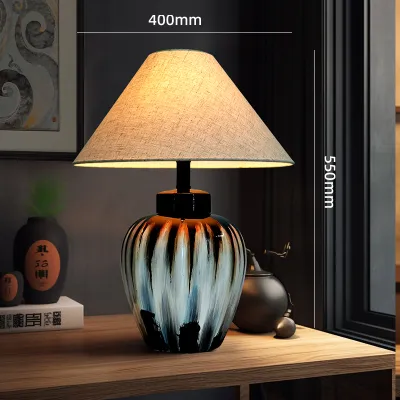
Prices are valid at publication and may change. Please refer to the product page for the latest price.
Lighting plays a pivotal role in establishing this atmosphere. Instead of the sharp, uniform glare of standard LED panels, wabi-sabi lighting relies on soft, diffused illumination that casts gentle shadows and highlights the natural textures of the room. The fixtures themselves are treated as functional sculptures, featuring matte finishes, organic contours, and subtle irregularities. In a compact room, these minimalist and slightly asymmetrical designs prevent visual clutter. Because they eschew ornate metalwork and complex geometric patterns, wabi-sabi lights possess a lighter visual weight, allowing the ceiling to feel higher and the overall space more open.
Proportion Rules for 2.6m Ceilings
To maintain a comfortable and airy feel in an HDB flat with a 2.6-metre ceiling, homeowners must adhere to key spatial proportions. The most critical benchmark in interior design is the clearance height: walking areas must maintain a clear headroom of at least 2.1 to 2.2 metres from the floor to the lowest point of the light fixture. In a 2.6-metre room, this leaves a maximum vertical allowance of 40 to 50 centimetres for the entire light assembly. This allowance must encompass the mounting canopy, any hanging cord or chain, and the physical height of the fixture body itself.

Calculating the appropriate diameter of a ceiling light is equally vital to prevent the fixture from overpowering the room or, conversely, getting lost in the space. A reliable design guideline involves converting the room’s dimensions into a proportional scale. For instance, if you add the length and width of a room in metres (such as a standard bedroom measuring 3 metres by 3 metres, totaling 6 metres), multiplying that sum by ten provides a recommended fixture diameter in centimetres—in this case, approximately 60 centimetres. For a smaller study or hallway, a diameter of 30 to 40 centimetres is more appropriate.
When planning, always account for the physical presence of the fixture’s base and canopy. A wide, shallow fixture can visually expand a low ceiling, whereas a narrow, deep fixture can draw the eye downward, making the vertical space feel more restricted. Homeowners should sketch out these dimensions on an elevation plan or use temporary cardboard mockups to assess how the physical volume of the light interacts with the room’s sightlines before committing to a purchase.
Ideal Wabi Sabi Light Profiles for Low Ceilings
Achieving a wabi-sabi aesthetic within a 2.6-metre vertical limit requires selecting fixtures that offer organic texture without encroaching on functional living space. Certain lighting profiles are inherently better suited to low ceilings, offering the perfect blend of form, function, and safety.
Flush and Semi-Flush Mounts
Flush and semi-flush mount fixtures are the most practical choices for low-clearance areas such as main living rooms, hallways, and bedrooms. These lights sit directly against or very close to the ceiling, minimizing vertical protrusion while still acting as a focal point. For a wabi-sabi look, seek out flush mounts crafted from textured materials like unglazed ceramic, hand-blown bubbled glass, or light-toned woods.
Semi-flush mounts, which typically drop between 10 and 20 centimetres from the ceiling, allow a small amount of light to escape upward. This upward bounce reflects off the ceiling surface, creating a soft halo effect that visually elevates the room. Choosing a semi-flush mount with a textured plaster finish or a shallow, woven rattan dome introduces tactile warmth without dropping into the active walking path of the household.
Low-Drop Pendants and Paper Lanterns
While hanging pendant lights are traditionally associated with high ceilings, they can be safely and beautifully integrated into a 2.6-metre HDB flat if placed outside of high-traffic walking zones. Positioning pendants over stationary furniture—such as dining tables, kitchen islands, or bedside tables—eliminates the risk of head collisions, allowing you to use larger, more expressive wabi-sabi pieces.
Washi (rice paper) lanterns and lightweight paper shades are iconic wabi-sabi elements. Their translucent fibers diffuse light beautifully, emitting a warm, organic glow that softens the entire room. When installing these fixtures, choose models with highly adjustable cords. This allows you to fine-tune the drop length to sit precisely where needed—typically 75 to 90 centimetres above a dining tabletop. Shallow rattan or bamboo domes are also excellent alternatives, providing a natural, rustic texture while maintaining a wide, low-profile shape that respects the vertical limits of the space.
Recessed and Track Lighting Alternatives
In areas where any downward physical drop is impractical, or where a central ceiling fixture would make the room feel visually heavy, alternative architectural lighting is highly effective. Minimalist track lighting systems and recessed downlights can be adapted to support a wabi-sabi design scheme.
Instead of choosing stark, industrial black or chrome tracks, opt for systems with matte white, sand, or plaster-toned finishes that blend seamlessly into the ceiling. Direct the adjustable spotlights toward walls finished with textured limewash, microcement, or textured wallpaper. This wall-washing technique highlights the natural, organic imperfections of the wall surfaces, creating depth and a sense of spaciousness without requiring a bulky central fixture. Recessed downlights with deep-set, matte-trimmed bezels can also be used to provide glare-free ambient light, keeping the ceiling plane entirely clean and unobstructed.
Materials and Finishes That Keep Spaces Airy
The materials and finishes of your ceiling lights directly influence how light behaves in a room and how spacious the environment feels. Heavy, opaque materials like dark cast iron, polished brass, or dense, dark timber tend to absorb light and create harsh, solid silhouettes that can make a 2.6-metre ceiling feel lower and more oppressive.
To keep a compact HDB flat feeling airy and open, prioritize lightweight and translucent materials that encourage soft light transmission. Washi paper, linen fabric, and thin wood veneers allow light to pass through the sides of the fixture, softening the boundaries of the room and reducing harsh shadows. Natural fibers such as rattan, bamboo, and seagrass offer a delicate, woven structure that casts intricate, organic shadow patterns on the walls, adding depth without visual weight.
Unglazed ceramics, terracotta, and textured plaster finishes are also quintessential wabi-sabi materials. When finished in light, earthy tones like cream, beige, sand, or pale terracotta, these materials reflect ambient light gently, emphasizing their tactile, hand-crafted qualities.
When selecting these natural materials, safety must remain a primary consideration. Homeowners must always check the product labels and manufacturer specifications for maximum bulb wattage limits and fire safety ratings. This is especially critical for fixtures constructed from flammable materials like paper, fabric, wood, or woven fibers. Ensure that the electrical components, including the socket and internal wiring, carry the appropriate local safety certifications, such as the Safety Mark in Singapore, to guarantee safe operation under continuous use.
Installation Clearances and HDB Specifics
Installing ceiling lights in an HDB flat involves navigating specific structural and electrical parameters. Because standard HDB ceilings are constructed from solid concrete slabs, drilling, mounting, and routing cables require careful planning and adherence to safety guidelines.
Before finalizing the placement of any ceiling light, verify the location of existing structural concrete beams, ceiling fan hook points, and recessed ceiling voids. Drilling into structural concrete beams is strictly regulated, and deep penetrations should be avoided to preserve structural integrity. If you plan to install a heavy fixture, such as a solid ceramic or large wooden semi-flush mount, ensure the mounting anchors are rated for concrete and can safely support the suspended load.
For any new electrical wiring, relocating light points, or installing heavy fixtures at height, always engage a licensed electrical worker (LEW) certified by the Energy Market Authority (EMA) of Singapore. A professional electrician will ensure that the circuit load is balanced, the earthing is secure, and the installation complies with Singapore Standard SS 638 (Code of Practice for Electrical Installations). Always isolate the main power supply at the distribution board (DB box) before attempting any maintenance, bulb replacement, or installation adjustments.
Additionally, verify that the selected fixtures are compatible with the local electrical supply (230V, 50Hz) and use standard, easily replaceable bulb bases such as E27 or GU10. If you plan to use dimmable LED bulbs to create a cozy, low-light wabi-sabi ambiance, confirm that both the bulb and the wall switch are compatible with the same dimming method (such as trailing-edge or leading-edge dimming) to prevent flickering or premature driver failure.
Common Sizing and Placement Mistakes
Avoiding common design and installation errors is crucial to achieving a balanced wabi-sabi aesthetic in a compact HDB flat. One of the most frequent mistakes is purchasing oversized statement fixtures that are designed for high-ceiling landed properties or spacious condominiums. A massive, low-hanging pendant placed in the center of a standard living room will immediately make the space feel cramped and disrupt natural walking paths.
Another common error is failing to measure the minimum drop length of adjustable cords before purchasing. Some pendant lights have a minimum structural drop (including the canopy and strain relief) that cannot be shortened beyond a certain point, which may still hang too low for a 2.6-metre ceiling. Always verify the minimum adjustable length in the product specifications.
Finally, avoid placing low-hanging lights in high-traffic zones, such as the direct path from the entryway to the living room or around hallway intersections. Successful wabi-sabi design in an HDB flat relies on restraint, careful proportion, and a deep respect for the physical boundaries of the space. By selecting the right profiles, lightweight materials, and appropriate scales, you can create a serene, beautifully lit home that feels both grounded and spacious.

Community discussion
Share your experience or ask a question. Comments are reviewed before publication.