
When preparing a household emergency kit for a Singapore Housing & Development Board (HDB) flat, selecting a reliable portable light source is a critical safety step. A warsun flashlight has become a popular choice among local homeowners looking for budget-friendly security, but understanding how it compares to premium tactical gear or minimalist everyday carry (EDC) lights is essential. The ideal emergency tool must balance cost, spatial footprint, and battery performance under local environmental conditions.
Quick Answer: Is a Warsun Flashlight Right for Your HDB Emergency Kit?
A warsun flashlight is a highly practical, cost-effective option for basic HDB emergency kits, offering versatile lighting modes and multi-functional features at an accessible price. These devices typically retail within the S$20 to S$50 range on major e-commerce platforms, making them highly attractive for budget-conscious households. They excel at providing immediate, wide-angle illumination during localized power trips or when navigating dark corridors and utility closets.
However, these budget-friendly models generally lack the regulated power circuitry, premium weatherproofing, and ultra-low standby battery drain of high-end tactical brands. If you are willing to perform routine battery maintenance every few months, a Warsun model delivers outstanding value and versatility. Conversely, if you require a ‘set-and-forget’ tool that is guaranteed to function flawlessly after years of neglected storage, investing in a premium tactical brand is a more reliable path.
Products mentioned in this guide
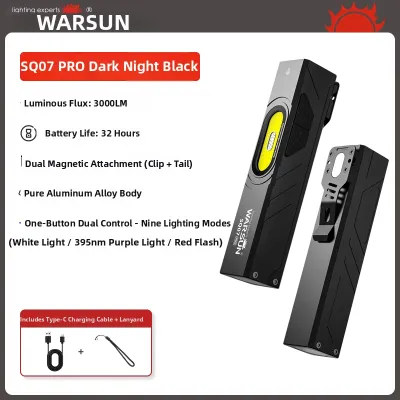
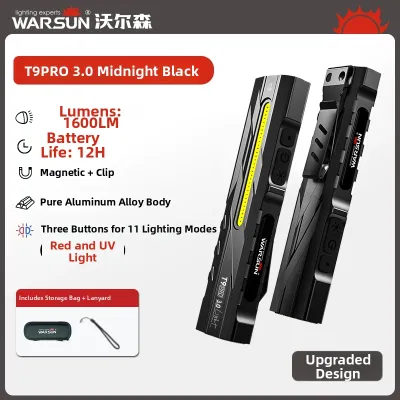
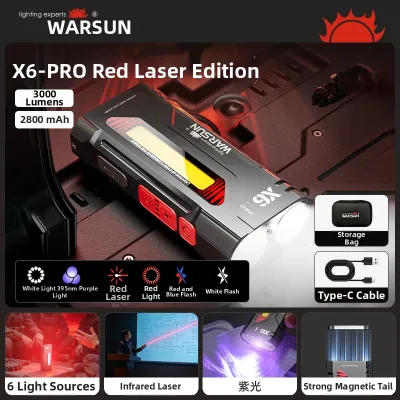
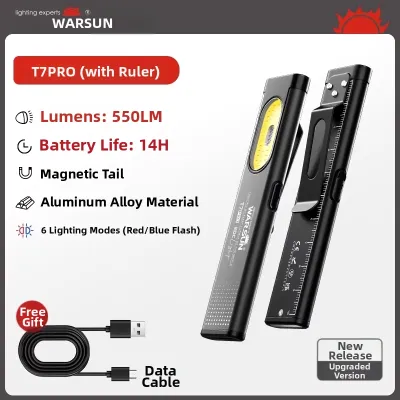
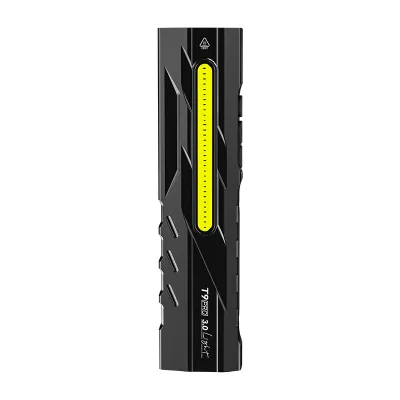
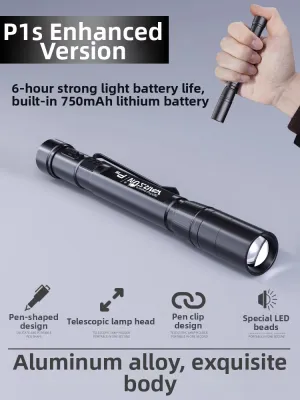
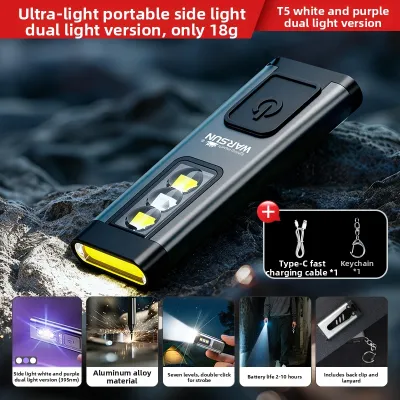
Prices are valid at publication and may change. Please refer to the product page for the latest price.
Essential Flashlight Features for HDB Emergency Preparedness
Singapore’s HDB flats present unique spatial and environmental conditions that dictate what makes an emergency light effective. Most families store their emergency kits inside utility closets, household shelters (bomb shelters), or DB box (distribution board) cabinets. These enclosed areas trap heat and humidity, which can accelerate the self-discharge rate of rechargeable batteries and cause contact corrosion over time. Therefore, any flashlight selected for standby duty must possess resilient battery contacts and robust housing seals.

Unlike outdoor searchlights, an HDB emergency light does not require an extreme beam distance (throw) to illuminate targets hundreds of meters away. Instead, the priority is a wide, diffused beam (floodlight) that can light up a kitchen, living room, or narrow corridor without creating blinding glare on light-colored walls or polished floor tiles. A runtime of at least four to six hours is recommended, which comfortably covers the typical duration of localized power outages or the time required for SP Group technicians to resolve substation issues.
Physical storage constraints also play a major role. Because space is highly optimized in modern HDB layouts, your emergency light should be compact enough to fit inside a standard utility drawer or a small plastic emergency box. Finally, the light must have a very low parasitic drain. This refers to the tiny amount of electrical current the flashlight’s internal standby circuit draws even when turned off; if this drain is too high, the battery will empty itself silently while sitting in your closet, leaving you in the dark when an actual emergency occurs.
Evaluating a Warsun Flashlight: Strengths and Limitations for Home Use
To evaluate a warsun flashlight objectively, you must look past the high-lumen marketing claims often found on online marketplaces. Many budget-friendly lights advertise outputs of several thousand lumens, but these peak levels are typically temporary. Due to thermal limitations and voltage drops, these flashlights usually step down to a much lower, sustainable output within a few minutes. For indoor emergency use, a steady, continuous output of 100 to 300 lumens is far more valuable than a brief, blinding burst.
The primary strength of the Warsun brand lies in its emphasis on multi-functional utility. Many models integrate a traditional forward-facing beam with a lateral Chip-on-Board (COB) LED panel. This lateral light allows the flashlight to function as an emergency lantern, which can be magnetically attached to the steel door of an HDB household shelter or placed upright on a dining table for hands-free room illumination. Additionally, several models feature USB output ports, allowing the flashlight to serve as a backup power bank to charge mobile phones during a prolonged blackout.
However, these integrated features introduce specific limitations that you must verify on the product’s packaging or manual. The physical construction of budget-friendly models often utilizes lightweight plastics or lower-grade aluminum, which may not survive repeated drops onto hard terrazzo or ceramic tile floors. Furthermore, the internal charging circuits may lack advanced safety certifications. To ensure electrical safety, always check the manufacturer’s instructions, use certified USB charging blocks, and verify the ingress protection (IP) rating to ensure the device can withstand Singapore’s high ambient humidity without internal short-circuiting.
How Warsun Stacks Up Against Other Flashlight Categories
Understanding where Warsun fits in the broader portable lighting market requires comparing it to two distinct categories: premium tactical brands and everyday tech or lifestyle brands.
Warsun vs. Premium Tactical Brands
Premium tactical and outdoor brands (such as Fenix, Nitecore, or Olight) are engineered for critical safety and professional use. These manufacturers utilize aircraft-grade anodized aluminum, gold-plated spring contacts, and highly efficient buck or boost drivers. A key performance advantage of premium brands is regulated output, which ensures the flashlight maintains a constant level of brightness throughout the battery’s runtime rather than gradually dimming as the voltage drops.
In contrast, a warsun flashlight typically relies on a direct-drive circuit, where the light output continuously decreases as the battery drains. While a premium tactical light represents a larger upfront investment—often ranging from S$80 to over S$200—it offers verified IPX8 waterproofing, superior drop resistance, and exceptionally low standby drain. For an HDB emergency kit, a premium tactical light is the ideal choice for those who prioritize absolute, fail-safe reliability, while Warsun offers a highly practical, multi-functional alternative at a fraction of the cost.
Warsun vs. Everyday Tech and Lifestyle Brands
Everyday tech and lifestyle brands focus on minimalist designs, compact dimensions, and seamless integration into modern home decor. These flashlights are often highly aesthetic, featuring sleek cylindrical bodies, uniform USB-C charging interfaces, and simple, intuitive controls that make them easy for any family member to operate.
However, these lifestyle lights often sacrifice raw performance and utility for their compact size. They rarely feature the high-capacity rechargeable cells (such as 21700 or 26650 batteries) found in larger Warsun models, resulting in shorter runtimes at higher outputs. They also lack specialized emergency features like magnetic bases, red-and-blue warning strobes, or wide-angle COB floodlights. If your priority is a discreet, lightweight tool for quick tasks around the flat, a lifestyle tech light is highly convenient; however, if you are preparing a dedicated emergency kit for prolonged blackouts, the ruggedness and versatile lighting modes of a Warsun flashlight provide superior practical utility.
Critical Specifications to Verify Before You Buy
Before purchasing any flashlight for emergency preparedness, you must look past generic product titles and verify specific technical parameters. This checklist will help you evaluate any model to ensure it meets the safety and performance demands of an HDB household.
First, confirm the battery chemistry and compatibility. Most modern flashlights use rechargeable Lithium-ion (Li-ion) batteries, which offer excellent energy density. However, Li-ion cells naturally self-discharge over time and can be permanently damaged if left completely depleted for months. If you want a true standby light, check if the flashlight can also accept primary lithium batteries (such as CR123A) or low-self-discharge NiMH batteries (like Panasonic Eneloop). Primary lithium cells have a shelf life of up to ten years and are highly resistant to temperature and humidity, making them the gold standard for emergency storage.
Second, verify the charging interface and electrical safety standards. A standard USB-C port is highly preferred, as it allows you to recharge the flashlight using your existing phone chargers or portable power banks. When charging the device, always follow the manufacturer’s guidelines and avoid leaving rechargeable batteries plugged into the wall indefinitely. Ensure you purchase from reputable sellers to guarantee that the internal battery cells and charging circuits comply with basic electrical safety standards.
Third, check for verified ANSI/PLATO FL 1 standards on the product packaging. This international standard ensures that the manufacturer’s claims regarding lumen output, beam distance, impact resistance, and runtime have been tested under standardized conditions. Be highly skeptical of unbranded or budget lights claiming tens of thousands of lumens at an impossibly low price, as true high-output lights require massive heat-sinking structures that cannot fit into a standard handheld chassis.
Finally, assess the physical dimensions and weight of the flashlight. Ensure the device fits comfortably in your designated emergency storage box and can be easily handled by all members of your household. If you intend to mount the light near your DB box or inside a household shelter, measure the mounting area beforehand to ensure a proper fit.
Decision Framework: Which Flashlight Category Fits Your Needs?
To finalize your purchase decision, match your household’s specific priorities, budget, and maintenance habits against the three main flashlight categories.
- Choose a Warsun flashlight if:
- You want a highly versatile, multi-functional tool without spending more than S$30 to S$50.
- You value hands-free utility, such as a magnetic base or a side COB lantern, for working near your DB box or kitchen.
- You want the added convenience of an emergency power bank built directly into your light.
- You are disciplined enough to set a calendar reminder to check, discharge, and recharge the battery every three to six months.
- Choose a Premium Tactical brand if:
- You want absolute reliability, guaranteed performance, and a rugged build that can survive severe drops and water immersion.
- You require a constant, regulated light output that does not dim as the battery level decreases.
- You prefer a 'set-and-forget' emergency tool that can sit in a drawer for extended periods with minimal parasitic battery drain.
- You have a flexible budget (S$80 to S$150+) and view emergency preparedness as a long-term investment.
- Choose an Everyday Tech or Lifestyle brand if:
- You prioritize minimalist design, compact dimensions, and lightweight storage in a standard HDB utility drawer.
- You prefer a simple user interface without complex strobe modes or multiple side lights.
- You only expect to use the light for brief, non-critical tasks like finding dropped keys or navigating to the bathroom during a minor trip.
Frequently Asked Questions (FAQ)
How often should I check the batteries in my emergency flashlight?
For flashlights utilizing standard rechargeable Lithium-ion (Li-ion) batteries, such as most Warsun models, you should inspect and recharge the device every 3 to 6 months. Even when turned off, many digital-switch flashlights experience a small amount of parasitic drain that slowly empties the battery. Storing the flashlight in Singapore’s warm, humid climate can also accelerate this self-discharge process. If your emergency flashlight supports primary lithium batteries (such as CR123A) or low-self-discharge NiMH batteries, you can extend this inspection interval to once every 12 to 18 months, as these chemistries are highly stable and resistant to capacity loss during prolonged storage.
Can I use a high-lumen tactical flashlight indoors during an HDB power outage?
Yes, but using a high-lumen beam directly in a confined indoor space can cause intense glare and temporary eye fatigue, especially when reflected off light-colored HDB walls, glass panels, or polished floor tiles. To create comfortable, ambient lighting during a blackout, point the flashlight straight up at the ceiling. This technique, known as ‘ceiling bouncing’, diffuses the beam and scatters the light evenly across the entire room, mimicking a standard ceiling fixture. Alternatively, you can use a translucent diffuser cone over the bezel, or simply switch the flashlight to a lower-lumen setting (between 50 and 150 lumens), which is more than sufficient for indoor navigation and significantly extends the battery’s runtime.
Community discussion
Share your experience or ask a question. Comments are reviewed before publication.