
To find out if a light bulb and a fixture are compatible, you need to look at the base specification. The term “E27” refers to a standard Edison screw base that measures approximately 27 millimetres in diameter. It is one of the most common bulb sizes used in residential lighting across Singapore.
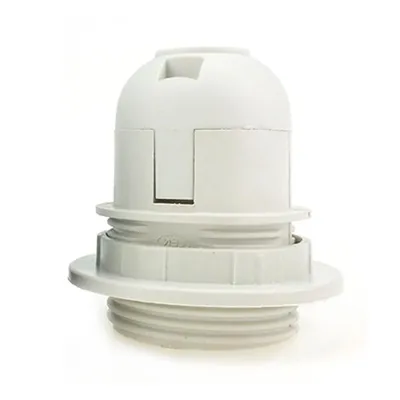
An E27 light bulb holder is designed specifically to accept this threaded base. If your bulb has a 27mm screw thread and your fixture features a matching threaded socket of the same size, they will fit together perfectly. However, ensuring a safe and functional setup requires checking more than just the physical dimensions, including voltage ratings and wattage limits.
What the "E27" Specification Actually Means
The “E” in E27 stands for Edison Screw, named after Thomas Edison, who developed this threaded mounting system. This classic design uses a threaded metal base on the bulb that screws clockwise into a matching socket. The threads secure the bulb mechanically while establishing the electrical connections.
Products mentioned in this guide
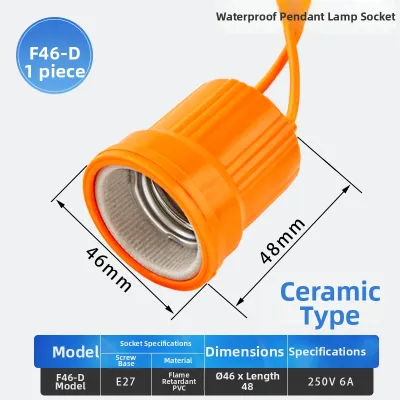
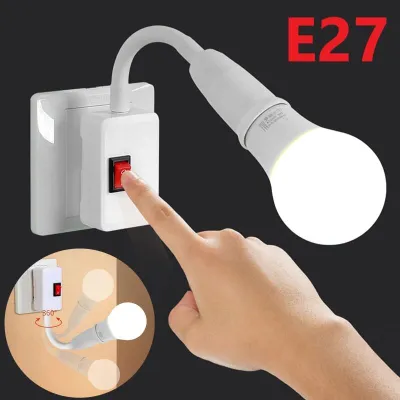
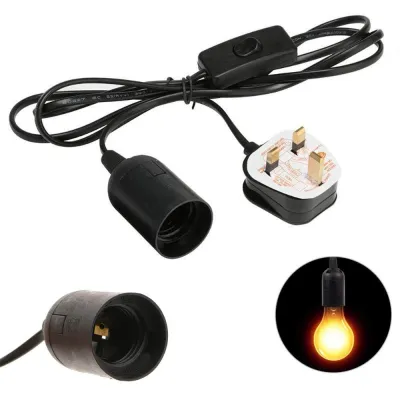
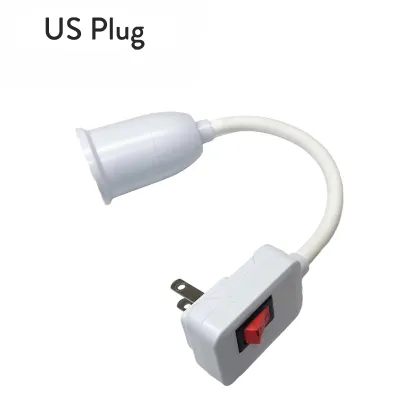
![[SG FREE ] 1Pc LED Light Bulb E27 Socket Lamp Base Holder Adapter Converter With Switch EU UK Plug Energy Saving Lamp F](https://img.lazcdn.com/g/p/b5bd2697fbbdbae80a04cf62cbc9482a.jpg_400x400q80.jpg_.webp)
Prices are valid at publication and may change. Please refer to the product page for the latest price.
The number “27” represents the nominal outer diameter of the screw base in millimetres. When you measure across the widest part of the bulb’s threaded base, the measurement will be approximately 27mm. This standard sizing ensures that any E27 bulb from any manufacturer will fit into any standard E27 light bulb holder.
Distinguishing an E27 base from other common household light bases is straightforward once you know what to look for. The most frequent point of confusion is the smaller E14 base, often called a small Edison screw (SES) or candelabra base, which measures only 14mm in diameter and is typically found in chandeliers or small bedside lamps.
Other common base types do not use screw threads at all. For instance, the B22 bayonet base features two small protruding pins on opposite sides of a smooth metal cap, requiring a push-and-twist motion to install. Meanwhile, spotlight bulbs like the GU10 use two thick twist-lock pins. If your bulb has threads and is roughly the width of an adult thumb, it is almost certainly an E27.
How to Verify E27 Fit for Your Bulb and Fixture
Confirming compatibility before purchasing an e27 light bulb holder or a new set of bulbs prevents unnecessary returns and safety hazards. The easiest way to verify your bulb’s size is to look at the markings printed on the product. Manufacturers typically stamp the model details, voltage, wattage, and base type directly onto the ceramic or plastic base of the bulb, or on the glass envelope itself.

If the markings on the bulb have faded or are missing, you can check the original packaging. For the light fixture or holder, look for a specification sticker. This label is usually located inside the socket cup, on the underside of the fixture’s base, or detailed within the product manual.
When labels are unavailable, you can perform a safe physical measurement of the bulb and the holder. To measure the bulb, use a ruler or a digital caliper to measure the outer width of the metal screw thread from one edge to the other. A reading of 26.5mm to 27mm confirms it is an E27 base.
Before inspecting, touching, or measuring the inside of any wired light fixture, you must isolate the electrical circuit. Turn off the power at the main consumer unit (DB box) rather than relying solely on the wall switch. Use a reliable non-contact voltage detector to verify that the socket is completely dead before inserting any measuring tools.
If your fixture is hardwired, mounted high on a ceiling, or if the internal contacts are difficult to see, do not attempt to measure it yourself. Working at heights or handling complex electrical wiring carries significant risks. In these scenarios, or if you find damaged wiring, always consult a licensed electrical worker or a qualified professional to inspect the setup.
Essential Electrical and Safety Specs for Your E27 Light Bulb Holder
While physical compatibility is the first step, electrical safety is paramount when selecting an e27 light bulb holder. You must verify that the holder is rated for the local mains voltage. In Singapore, the standard utility voltage is 230V at a frequency of 50Hz. Installing a holder designed exclusively for low-voltage systems or different regional standards can lead to electrical failure or fire.
Every light bulb holder has a maximum wattage limit that must never be exceeded. This limit is determined by the physical materials of the holder, such as plastic, bakelite, or ceramic, and its ability to dissipate heat. For example, a holder rated for a maximum of 40W should never house a 60W incandescent bulb, as the excessive heat can melt the housing and expose live wires.
Although modern LED bulbs draw significantly less power than traditional incandescent options, the holder’s wattage rating remains a critical safety threshold. An LED bulb rated at 10W might produce the equivalent light of a 75W incandescent bulb, making it safe for a 40W-rated holder. However, you must still ensure the holder itself is constructed to handle the physical weight and thermal profile of larger LED assemblies.
Dimming capability is another area where physical fit does not guarantee performance. A standard E27 holder simply passes electricity to the bulb and does not control dimming on its own. To dim your lights successfully, you must use a dimmable E27 bulb, a compatible wall dimmer switch, and a holder wired correctly to that dimming circuit.
The installation environment dictates the type of E27 holder you require. Standard plastic or decorative metal holders are suitable for dry, indoor spaces like living rooms and bedrooms. For damp areas like bathrooms, kitchens, or outdoor balconies, you must select a holder with an appropriate Ingress Protection (IP) rating, such as IP44 or higher, to prevent moisture from penetrating the electrical contacts.
Finally, always look for recognized local safety certification marks when purchasing electrical components. In Singapore, look for the Safety Mark on the product packaging or the holder itself. This certification indicates that the product has been tested and meets the necessary safety standards for domestic use, protecting your household from electrical hazards.
Common E27 Compatibility Mistakes to Avoid
A frequent point of confusion is the difference between E26 and E27 bulbs. The E26 base is the standard in North America and measures 26mm in diameter, while the E27 is the standard in Singapore, Europe, and other 230V regions. While an E26 bulb can physically screw into an E27 holder, they are designed for different electrical environments.
E26 bulbs are typically rated for 120V, whereas E27 bulbs are rated for 230V. Screwing a 120V E26 bulb into a 230V E27 holder will cause the bulb to receive double its intended voltage, leading to immediate failure, a blown fuse, or a potential fire hazard. Only mix these bases if the bulb is explicitly labeled as a dual-voltage bulb (supporting 100V to 240V).
Another mistake involves the integration of smart lighting. Installing a smart E27 bulb into a holder that is controlled by a traditional wall dimmer switch can damage the bulb’s internal driver. Smart bulbs require a constant, uninterrupted flow of full voltage to power their wireless chips; reducing the voltage via a physical dimmer causes flickering, buzzing, and premature hardware failure.
Mechanical strain is also a common oversight when planning decorative lighting. Large, heavy vintage-style LED filament bulbs or heavy glass shades place significant physical stress on the light holder. If you are using a suspended pendant cord, ensure the holder features robust strain relief clamps to prevent the weight of the bulb and shade from pulling the electrical wires out of their terminals.
Frequently Asked Questions (FAQ)
Can I safely use an E26 bulb in an E27 holder?
While an E26 bulb can physically fit into an E27 holder, it is generally unsafe to do so unless the bulb is rated for dual voltage. E26 bulbs are typically manufactured for 120V electrical grids, whereas E27 systems in Singapore operate at 230V. Connecting a standard 120V bulb to a 230V supply will overload the bulb, causing it to burn out instantly or pose a safety risk. Always verify that the bulb’s voltage rating matches your local power supply before installation.
Do I need a special E27 holder for smart bulbs?
No, smart E27 bulbs do not require a specialized holder and will fit into any standard E27 light bulb holder. However, they do require a constant power supply to remain connected to your smart home network. You must keep the physical wall switch turned on at all times and avoid installing smart bulbs in holders connected to traditional analog dimmer switches, as the fluctuating voltage will damage the smart bulb’s internal electronics.
Community discussion
Share your experience or ask a question. Comments are reviewed before publication.