
When shopping for light fixtures or replacement parts, you will frequently encounter the term E27 stamped onto sockets and packaging. At its most basic level, E27 on a bulb holder indicates a standard Edison screw thread with a nominal outer diameter of 27 millimetres. This specification is the most widely used lighting interface in Singapore homes, serving as the physical connection point for everything from basic ceiling pendants to modern smart lamps.
However, selecting the right bulb holder involves much more than finding a matching thread. To ensure a safe, durable, and reliable lighting setup, you must also evaluate critical electrical ratings, physical dimensions, material properties, and local safety standards. Understanding these specifications prevents common installation errors and protects your home from electrical hazards.
The Basics: Decoding the "E27" Designation
The “E” in E27 stands for Edison screw, named after Thomas Edison’s patented threaded screw base system. This design uses a threaded metal sleeve on the bulb that screws securely into a matching threaded socket within the holder. This thread mechanically secures the bulb and completes the electrical circuit through the base and side contacts.
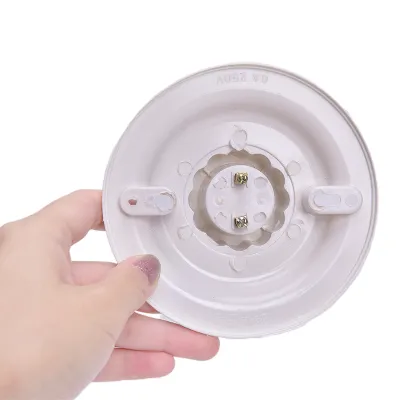
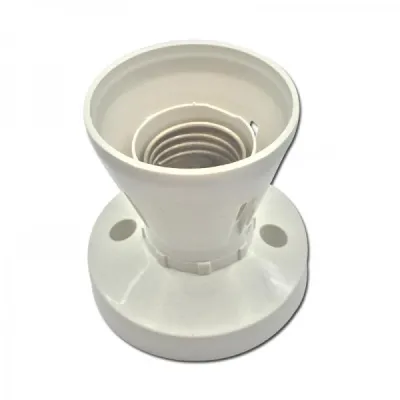
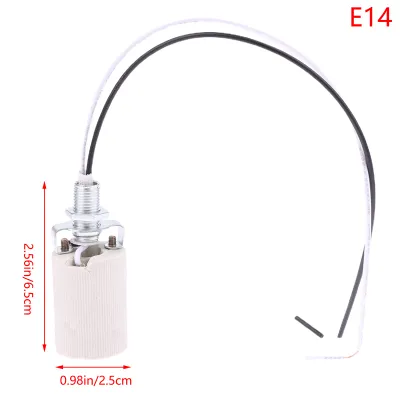
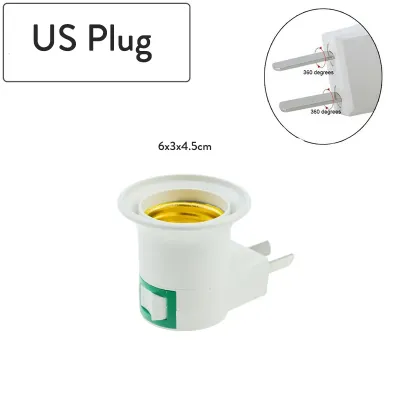
Products mentioned in this guide
![[tgyhtgyht]E27 Round Plastic Base Screw Light Bulb Lamp Socket Holder White](https://img.lazcdn.com/g/p/50a589dcfbf28e6267e354fac648715c.jpg_400x400q80.jpg_.webp)
![[Einjugle]E27 Round Plastic Base Screw Light Bulb Lamp Socket Holder White](https://img.lazcdn.com/g/p/00e74e866e734cf01531fbbfbaae342e.jpg_400x400q80.jpg_.webp)
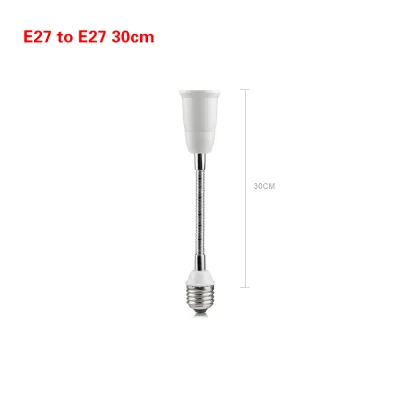
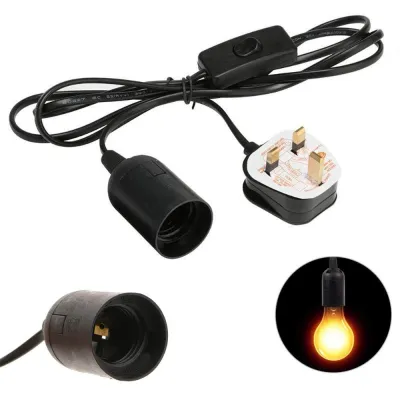
Prices are valid at publication and may change. Please refer to the product page for the latest price.
The number “27” refers explicitly to the outer diameter of the screw thread, which measures exactly 27 millimetres. This size is often referred to as the standard or medium Edison screw.
To help confirm you have the correct size, it is helpful to contrast E27 with other common screw bases found in residential settings:
- E14: Known as the Small Edison Screw (SES), this base has a 14mm diameter and is typically used for smaller decorative fixtures, chandeliers, and bedside lamps.
- E40: Known as the Giant Edison Screw (GES), this 40mm base is reserved for high-wattage industrial or commercial lighting.
While confirming the physical thread size is the essential first step, it does not guarantee electrical safety or a proper mechanical fit within your specific light fixture. You must look deeper into the electrical and material specifications of the holder to ensure compatibility.
Critical Electrical Specs: Voltage and Wattage Limits
Operating electrical accessories safely requires strict adherence to their rated limits to prevent component failure, electrical shocks, or fire hazards.

Matching Voltage to Singapore's Mains Supply
Singapore’s standard mains electricity operates at a voltage of 230V at a frequency of 50Hz. Consequently, any bulb holder e27 installed in your home must be rated to handle this voltage safely.
Before installation, inspect the product body or packaging to ensure a clear voltage rating of 220V–240V.
Be highly cautious when importing light fixtures or DIY lighting components online. Many products manufactured for North American or Japanese markets are only rated for 110V–120V. Connecting a 110V-rated holder directly to Singapore’s 230V mains supply without a step-down transformer is extremely dangerous; the higher voltage can break down the internal insulation, leading to short circuits, sparks, and severe fire hazards.
Understanding Maximum Wattage and Heat Safety
Every bulb holder has a maximum wattage rating, commonly marked as “Max 60W” or “Max 100W.” This limit is determined by the holder’s physical ability to dissipate heat and the gauge of its internal wiring contacts.
This limit refers to the actual electrical power drawn by the bulb, not its light output equivalent. For example, a modern LED bulb may produce the same amount of light as an old 60W incandescent bulb while drawing only 8W of actual power. While LEDs run significantly cooler, you must still respect the holder’s maximum rating. If a user later replaces the cool-running LED with a high-wattage halogen or traditional incandescent bulb, an underrated holder will overheat rapidly.
Additionally, always check the maximum wattage limit of the overall light fixture or lampshade. Enclosed glass globes, tight paper lanterns, or plastic shades often have lower heat tolerance than the bulb holder itself. Always adhere to the lowest maximum wattage rating among all the combined components to prevent melting or scorching.
Choosing the Right Material for Your Fixture
The material of your bulb holder e27 dictates its thermal resistance, mechanical durability, and suitability for different environments.
- Ceramic and Porcelain: These materials offer the highest heat resistance and excellent electrical insulation. They are highly recommended for high-wattage bulbs, enclosed fixtures where heat easily accumulates, and outdoor or damp environments. While highly durable against thermal stress, they are heavy and can crack if subjected to hard physical impacts.
- Plastic and Bakelite: Lightweight, economical, and easy to install, these are standard for basic indoor fixtures. High-quality modern plastics handle the low heat of LED bulbs perfectly. However, low-grade or older plastics can degrade, turn brittle, and crack over time when exposed to continuous heat from traditional bulbs.
- Metal (e.g., Brass, Aluminum, Copper): Frequently chosen for industrial, rustic, or modern minimalist pendant designs. Because metals conduct electricity, these holders must feature high-quality internal ceramic or plastic insulating sleeves. Furthermore, metal holders must be properly grounded (earthed) via a three-core cable to prevent the outer metal casing from becoming live and delivering a shock if an internal wire comes loose.
Always verify that the product features secure wiring terminals, robust insulation, and valid local safety certifications, such as the Enterprise Singapore Safety Mark. For any fixed wiring installations, always isolate the mains power at your distribution board (DB box) before proceeding, and consult a Licensed Electrical Worker (LEW) if you are unsure of the wiring requirements.
Physical Dimensions and Mounting Constraints
A bulb holder e27 must also physically fit within the spatial limits of your light fixture.
The overall length and outer diameter of the holder are critical dimensions. If a holder is too bulky, it may not fit through the mounting hole of a glass globe or a narrow metal pendant shade. Conversely, if the holder is too long, the bulb may protrude awkwardly past the edge of the shade, causing unsightly glare and exposing the bulb to accidental physical damage.
Mounting styles also vary based on how the holder connects to the fixture:
- Threaded Entry: The top of the holder features an internal thread (typically M10 or M12) designed to screw directly onto a threaded metal rod or pipe.
- Bracket Mount: The holder is secured to a metal bracket, which is then screwed into the chassis of the light fixture.
- Ceiling Rose Integration: The holder hangs directly from a flexible electrical cord, secured tightly by a strain-relief cord grip to support the weight of the holder and bulb.
Always measure the entry hole of your existing lampshade and the diameter of the mounting pipe or thread before purchasing a replacement holder to ensure a secure and flush fit.
Smart Bulbs and Dimming: What the Holder Actually Controls
A standard bulb holder e27 is a passive electrical component. It does not contain any electronic circuitry to dim a light, change colours, or connect to a smart home network. Its sole function is to safely route mains electricity to the bulb’s contact points.
Any dimming or smart capabilities are entirely determined by the bulb you screw into the holder or the wall switch controlling the circuit. For instance, if you install a smart E27 bulb, the wireless receiver, dimming chips, and colour-changing LEDs are all self-contained within the bulb itself. The holder simply needs to remain switched on to provide continuous power.
If you plan to use a dimmable system with traditional or LED bulbs, ensure that your wall dimmer switch is compatible with the specific bulb type (such as using trailing-edge dimmers for dimmable LEDs).
If you prefer a “smart holder” (a socket adapter with built-in Wi-Fi or Zigbee modules), verify its network compatibility, app support, and physical clearance, as these adapters add significant length to the fixture.
Frequently Asked Questions (FAQ)
Can I safely use an E26 bulb in an E27 holder?
While E26 (26mm diameter) and E27 (27mm diameter) bases are physically very similar and can often thread into one another, using them interchangeably is highly discouraged due to electrical safety risks. E26 bulbs are designed for North American 120V systems, whereas E27 holders in Singapore are connected to 230V mains. Screwing a 120V E26 bulb into a 230V E27 holder will immediately destroy the bulb and can cause an electrical short, sparks, or a fire. Always match the bulb’s rated voltage to Singapore’s 230V mains supply.
Does the bulb holder material affect light output?
The material of the bulb holder does not change the actual lumen output or brightness of the bulb. However, the physical shape and opacity of the holder can influence how light is distributed. For example, a deep, opaque metal or ceramic holder will block upward light, directing it downward in a focused beam. A shallow or clear holder allows for a wider, more ambient light spread. Choose the holder shape based on your desired lighting effect for the room.
Community discussion
Share your experience or ask a question. Comments are reviewed before publication.