
Installing a toilet light requires balancing aesthetic preferences with strict electrical safety standards. For most bathroom wall lights in Singapore, an IP44 rating serves as the baseline safety standard for areas exposed to moisture, though the precise requirement depends entirely on where the fixture is mounted relative to water sources.
Understanding how Ingress Protection (IP) ratings work and mapping your bathroom into distinct safety zones is essential. By selecting a fixture with the correct rating and verifying its material durability, you can ensure a safe, long-lasting installation that withstands the high humidity of a tropical climate.
Understanding IP Ratings for Bathroom Lighting
The IP (Ingress Protection) code is an international standard that classifies the degree of protection a light fixture offers against the intrusion of solid objects and liquids. When shopping for a toilet light, you will typically see this rating expressed as the letters “IP” followed by two digits, such as IP44 or IP65. Understanding how to read these labels is the first step toward making a safe purchasing decision.
Products mentioned in this guide
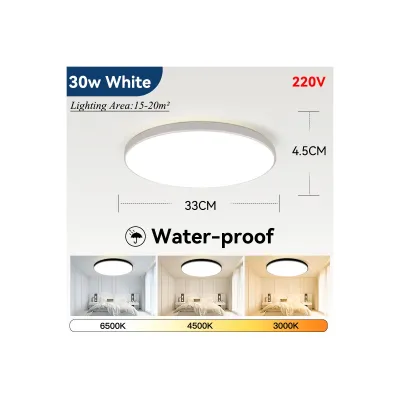
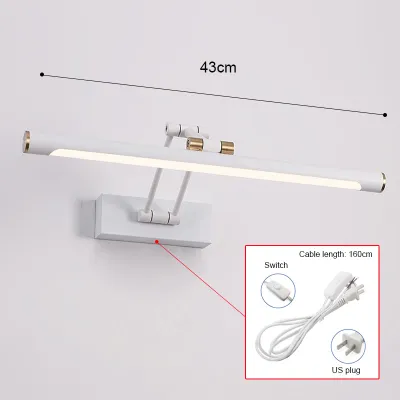
Prices are valid at publication and may change. Please refer to the product page for the latest price.
The first digit of the code ranges from 0 to 6 and indicates protection against solid particles, dust, and accidental contact. While dust protection is generally less critical in a clean residential toilet than in an industrial setting, it remains relevant for long-term maintenance. Sconces and vanity lights can accumulate dust and lint on their upper surfaces over time; a higher first digit prevents these particles from entering the electrical housing and creating potential tracking paths or short circuits.
The second digit, ranging from 0 to 9, measures liquid ingress protection and serves as the primary safety metric for bathroom lighting. A rating of 4 indicates protection against splashing water from any direction, which is the standard baseline for damp environments. Ratings of 5 or 6 indicate protection against low-pressure and high-pressure water jets, respectively, while ratings of 7 and 8 denote safety during temporary or continuous submersion.
It is vital to remember that IP ratings are determined under controlled laboratory conditions using brand-new fixtures. This rating represents the baseline capability of the light’s physical design and seals. It does not guarantee safety if the fixture is installed incorrectly, if the mounting surface is uneven, or if the protective rubber gaskets are pinched during assembly.
Bathroom Zones and Minimum IP Requirements
To ensure electrical safety, standard bathroom layouts are divided into distinct physical zones based on their proximity to water sources. These zones dictate the minimum IP rating required for any wall light installed within their boundaries.

- Zone 0: This zone covers the interior of the bathtub or shower basin itself. Because this area is subject to direct submersion, fixtures must be rated at least IPX7 and operate on low-voltage systems. Wall lights are almost never installed in Zone 0.
- Zone 1: This area extends vertically up to 2.25 metres from the floor directly above the bath or shower basin. Wall lights installed here are highly likely to experience direct water spray. The absolute minimum requirement for Zone 1 is IPX4, though IPX5 is strongly recommended if high-pressure water jets are used to clean the shower area.
- Zone 2: This zone extends 0.6 metres horizontally outside the perimeter of Zone 1, and also encompasses a 0.6-metre radius surrounding any washbasin tap. This is the most common location for toilet wall lights, including vanity lights and mirror sconces. The minimum safety standard for Zone 2 is IP44.
- Outside Zones: These are the areas of the bathroom where direct splashing or water contact is highly unlikely. While standard indoor fixtures rated IP20 are technically permissible in these zones, Singapore's naturally high relative humidity makes IP44 a far more reliable and safety-conscious choice to prevent internal moisture accumulation.
When planning your lighting layout, map your desired wall light placements directly to these zones. Sconces flanking a vanity mirror usually fall within Zone 2, making IP44 the standard requirement. If your bathroom layout places a wall light close to an open shower partition, it may cross into Zone 1, necessitating an upgrade to an IP65 fixture.
These zoning descriptions represent general international guidelines. Because regional building codes vary, you must verify the specific zone dimensions and legal IP requirements outlined in Singapore’s local electrical regulations, specifically SS 638 (the Code of Practice for Electrical Installations). Always defer to the manufacturer’s installation instructions and local code compliance before finalizing your layout.
Beyond IP Ratings: Other Safety Specs for Toilet Wall Lights
While a proper IP rating is critical, it is not the only specification that determines whether a wall light is safe and durable enough for a humid toilet environment. Relying solely on the IP code can lead to premature fixture failure if other electrical and material factors are ignored.
First, consider the electrical class and voltage of the fixture. Class I fixtures rely on a protective earth connection to prevent electric shock in the event of a fault, while Class II fixtures utilize double insulation and do not require an earth wire. Class III fixtures operate on Safety Extra-Low Voltage (SELV), typically 12V or 24V, and require a remote transformer. Ensure your chosen wall light is fully compatible with Singapore’s standard 230V, 50Hz mains supply, and verify that any driver or transformer used is rated for bathroom installation.
Material and finish durability are equally important in high-humidity environments. Singapore’s tropical climate accelerates the corrosion of inferior metals. Look for wall lights constructed from corrosion-resistant materials such as solid brass, anodized aluminium, or high-grade stainless steel. Check that the mounting backplates, mounting screws, and rubber seals are robust and rated for damp environments to prevent rust, which can degrade the fixture’s structural integrity and compromise its electrical seals over time.
Thermal management also plays a major role in fixture safety. While modern LED light sources generate far less heat than traditional halogen bulbs, their electronic drivers are highly sensitive to thermal buildup. Ensure the wall light’s maximum wattage limit is never exceeded, particularly when installing fixtures in small, enclosed, or poorly ventilated toilet spaces. Verify the interface or bulb base compatibility (such as GU10 or integrated LED modules) and check whether the fixture supports your preferred dimming method to avoid electrical humming or flickering.
Safe Installation and Maintenance Boundaries
Working with electrical fixtures in wet environments carries inherent risks. Establishing clear safety boundaries during installation and establishing a routine maintenance schedule will protect both your home and your household.
Before undertaking any installation, wiring adjustment, or bulb replacement, you must isolate the electrical circuit. Turn off the main power supply at the consumer unit (DB box) and verify that the circuit is completely dead using a reliable, non-contact voltage tester. Never rely solely on the wall switch to isolate the power.
In Singapore, fixed electrical wiring work must be performed by an EMA-licensed electrician. Do not attempt DIY wiring or circuit modifications in wet zones. A professional installer will ensure proper earthing, verify circuit breaker compatibility, and guarantee that all cable entries are sealed with appropriate silicone or rubber grommets to maintain the fixture’s IP integrity.
Once installed, perform a brief visual inspection of your toilet lights every few months. Check for signs of degraded or cracked rubber seals, condensation trapped behind the glass diffuser, or early signs of rust on the mounting screws. Over time, cleaning chemicals and ambient moisture can break down synthetic seals, allowing water to bypass the protective housing.
If you observe any signs of failure, such as flickering light, audible buzzing, visible water droplets inside the sealed unit, or a faint burning smell, immediately turn off the circuit breaker that controls the light. Do not attempt to turn the fixture back on until it has been thoroughly inspected, repaired, or replaced by a qualified professional.
Frequently Asked Questions (FAQ)
Can I use a standard IP20 wall light in a toilet without a shower?
If the toilet is a dedicated dry powder room with no shower or bathtub, and the fixture is installed well outside the immediate splash zone of the washbasin, a standard IP20 wall light may be acceptable. However, you must ensure the space is well-ventilated to prevent ambient moisture from settling on the electronics. In Singapore’s humid climate, even dry powder rooms can experience high moisture levels, meaning an IP44-rated fixture remains the safer and more durable choice over the long term. Always consult the manufacturer’s specified environmental limits before installing an IP20 light in any bathroom space.
Does a higher IP rating always mean a better wall light?
A higher IP rating does not automatically make a light fixture superior for every location. Choosing an IP65 or IP67 wall light for an area outside the splash zones is generally unnecessary and introduces practical drawbacks. High-IP fixtures require heavy gaskets, robust sealed enclosures, and specialized cable glands, which can result in bulkier designs, limited aesthetic options, and higher retail costs. The best fixture is one that matches the specific safety requirements of its installation zone while aligning with your design preferences and budget.
Community discussion
Share your experience or ask a question. Comments are reviewed before publication.