
An E14 socket, also known as the Small Edison Screw (SES), is a threaded light bulb base measuring exactly 14 millimetres in diameter. It is primarily used for smaller decorative fixtures, accent lamps, and appliances. In contrast, the E27 socket is the standard, larger 27-millimetre Edison screw typically found in main ceiling fixtures and high-output lamps.
Understanding this physical distinction is the first step to ensuring you buy the correct bulb for your home lighting setup. Choosing the wrong base type not only leads to frustrating return trips to the store but can also present safety hazards if bulbs are forced into incompatible fixtures.
Understanding the E14 Socket: Size, Shape, and Common Uses
The naming convention of the E14 socket follows a simple, globally recognized system developed by Thomas Edison. The letter “E” stands for Edison screw, which indicates the threaded metal base that screws directly into a matching female socket. The number “14” represents the external diameter of the bulb’s base in millimetres. This compact size makes it highly versatile for fixtures where space is limited or where a bulky base would ruin the aesthetic appeal.
Products mentioned in this guide
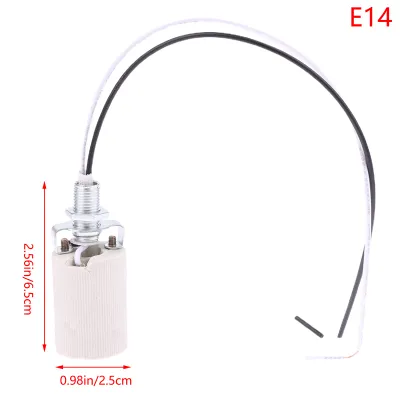
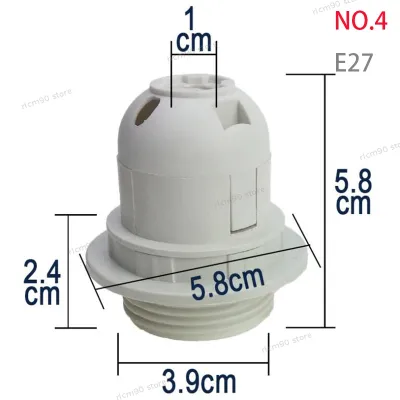
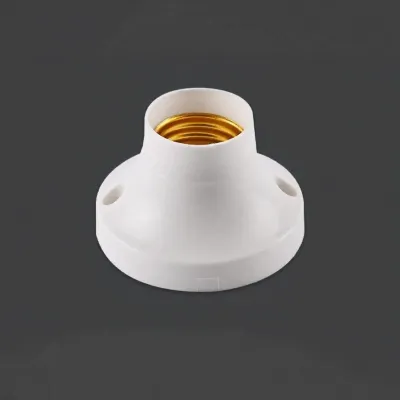
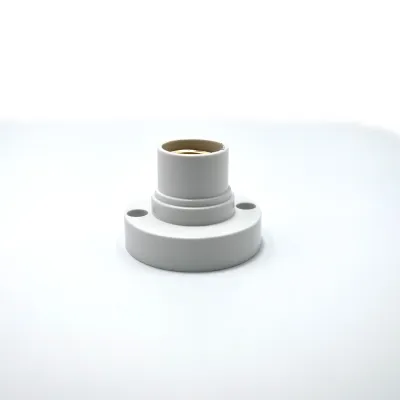
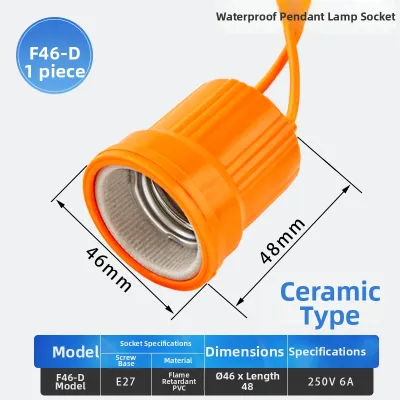

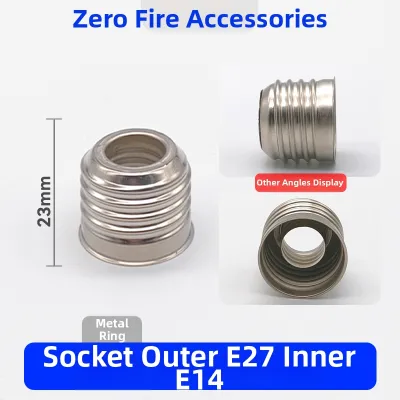
Prices are valid at publication and may change. Please refer to the product page for the latest price.
Physically, the E14 socket features a fine, threaded metal sleeve. The socket itself is often constructed from heat-resistant plastics, ceramic, or metal wrapped in an insulating sleeve. The interior contains a central contact point at the bottom and threaded side contacts, which complete the electrical circuit when the bulb is fully screwed in.
You will most commonly encounter E14 sockets in decorative residential fixtures across Singapore homes. Chandeliers are prime examples, where multiple small bulbs are arranged to mimic candlelight. Table lamps, bedside reading lights, and wall sconces also frequently utilize this smaller base to maintain a slim, elegant profile. Beyond decorative lighting, specialized E14 bulbs are widely used in home appliances, such as inside refrigerators, ovens, and cooker hoods, where space is tightly constrained.
Because of its decorative applications, E14 bulbs are manufactured in specific shapes designed to be seen. The most famous is the classic candle shape, which often features a pointed or bent tip to resemble a flickering flame. Other common shapes include the compact “golf ball” (or round) shape, which fits neatly under small lampshades, and small reflector shapes (like the R39 or R50) designed to direct light downward in spotlight fixtures.
E14 vs. E27: The Core Differences That Matter
While both bases share the same threaded screw design, they are fundamentally non-interchangeable due to their physical dimensions. The E14 base measures 14mm in diameter, whereas the E27 base measures 27mm. This substantial difference means an E27 bulb cannot physically enter an E14 socket, and an E14 bulb will simply fall out of an E27 socket. This physical barrier ensures that users do not accidentally install high-power bulbs in fixtures not rated for them.

Beyond physical size, wattage and thermal limits represent a critical operational difference. E14 sockets are engineered for lower maximum wattages due to their smaller physical volume, thinner internal wiring, and limited capacity to dissipate heat. While modern LED bulbs consume very little power, traditional incandescent E14 bulbs are typically capped at 40 watts or occasionally 60 watts. Exceeding these limits in an E14 fixture can lead to rapid heat buildup, melting the socket or damaging the fixture’s internal wiring. E27 sockets, being larger and more robust, can safely handle much higher wattages and dissipate heat more effectively.
The design intent of the fixture dictates which socket is used. Lighting designers select E27 sockets for general, ambient, or primary room lighting where high lumen output is required to illuminate entire spaces. Conversely, E14 sockets are reserved for accent, task, or decorative lighting. They are meant to create warmth, highlight specific design features, or provide localized light for reading without overpowering the room.
| Feature | E14 (Small Edison Screw) | E27 (Standard Edison Screw) |
|---|---|---|
| Base Diameter | 14 mm | 27 mm |
| Typical Max Wattage | Typically 40W (incandescent equivalent); check fixture label | Typically 60W to 100W+ (incandescent equivalent); check fixture label |
| Common Bulb Shapes | Candle, golf ball, small reflector (R39, R50) | Classic A60 (pear-shaped), globe, large reflector, ST64 |
| Primary Use Cases | Chandeliers, wall sconces, bedside lamps, appliance lights | Main ceiling fixtures, pendant lights, large floor lamps, outdoor floodlights |
How to Identify Your Light Socket Type
Identifying your light socket type before purchasing a replacement bulb is straightforward if you follow a systematic approach.
- Step 1: Check the existing bulb's base or packaging. If you are replacing an old bulb, inspect the metal base or the glass envelope. Manufacturers often print the specifications directly onto the metal collar or the glass. Look for markings like "E14", "SES" (Small Edison Screw), "E27", or "ES" (Edison Screw). If you still have the original packaging, the base type will be clearly printed on the box.
- Step 2: Measure the base diameter. If the old bulb is missing, broken, or the markings have faded over time, you can measure the socket or the bulb base yourself. Use a ruler or a digital caliper to measure the width across the threaded metal base from outer edge to outer edge. A measurement of approximately 14mm indicates an E14, while a measurement of 27mm confirms an E27.
- Step 3: Inspect the light fixture's rating label. Every safety-compliant light fixture sold in Singapore features a rating label or sticker, usually located near the socket cup, on the base of the lamp, or inside the canopy of a ceiling light. This label specifies the required socket type (e.g., "Max 1x E14") and the maximum allowable wattage. Always cross-reference this label with your user manual if available.
Never attempt to force a bulb into a socket if it does not thread smoothly. Forcing a mismatched bulb can permanently strip the delicate threads of the socket, damage the electrical contacts inside, or crack the bulb’s glass, creating a severe electrical short or shock hazard.
Electrical Safety and Installation Boundaries
When working with any electrical fixture in your home, safety must be your absolute priority. Before inspecting, cleaning, or replacing a light socket, always turn off the main power supply at your home’s main distribution board (DB box). Simply turning off the wall switch is not sufficient, as faulty wiring can sometimes leave live current running to the socket even when the switch is in the “off” position.
It is vital to remember that Singapore operates on a 230V electrical system at a frequency of 50Hz. When sourcing bulbs online or from international retailers, always verify that the replacement bulb is rated for 220V–240V. Installing a bulb designed solely for a 110V system (such as those from North America) into a Singapore socket will cause the bulb to fail instantly, potentially popping your circuit breaker or causing an electrical fire.
While changing a light bulb is a simple task any homeowner can perform, replacing the actual physical socket hardware or altering the fixed wiring of a fixture is a different matter. In Singapore, any fixed electrical work or rewiring must be performed by a licensed electrical worker (LEW) registered with the Energy Market Authority (EMA). If you notice signs of heat damage on your existing socket—such as brown or black scorch marks, brittle plastic, or a faint burning smell when the light is on—stop using the fixture immediately and contact a professional to replace the damaged socket safely.
Frequently Asked Questions (FAQ)
Can I use an E27 bulb in an E14 socket?
No, an E27 bulb cannot be directly inserted into an E14 socket because the base is nearly twice as wide. While step-up adapters (E14-to-E27) are commercially available, using them introduces significant risks. These adapters physically extend the bulb, which can cause structural stress on a delicate E14 fixture. More importantly, E14 fixtures are designed with lower thermal and electrical limits. Installing a larger, higher-wattage E27 bulb via an adapter can easily overload the fixture’s wiring, leading to excessive heat buildup and potential fire hazards. It is always safest to use a bulb that matches the fixture’s native socket.
Are E14 and E12 the same?
No, E14 and E12 are not the same and are not interchangeable. The E14 base has a 14mm diameter and is the standard small screw base used in Singapore, Europe, and most of Asia. The E12 base, also known as the Candelabra screw base, has a 12mm diameter and is the standard for small decorative fixtures in North America. Attempting to screw an E12 bulb into an E14 socket will result in a loose, unsafe connection that cannot complete the electrical circuit reliably, while an E14 bulb will not fit into an E12 socket. Always check the specifications when importing light fixtures from overseas.
Do smart bulbs come in E14 sizes?
Yes, major smart lighting brands manufacture smart bulbs with E14 bases. These allow you to bring smart features like dimming, color-changing, and scheduling to your decorative chandeliers and bedside lamps. However, before purchasing, you must carefully check the physical dimensions of the smart bulb. Because smart bulbs contain internal wireless receivers and driver electronics, they are often noticeably bulkier or longer than traditional, non-smart E14 bulbs. This extra size can prevent them from fitting inside tight glass shades, enclosed sconces, or narrow decorative covers.
Community discussion
Share your experience or ask a question. Comments are reviewed before publication.