
An E27 bulb base is one of the most common screw-in light bulb connections used in homes across Singapore and many other regions. Characterized by its threaded metal base, this standard size is widely used for general lighting in pendant lamps, ceiling fixtures, and table lights. Confirming whether your fixture requires an E27 bulb is a straightforward process of checking the socket’s physical dimensions, inspecting the fixture’s safety labels, or comparing it to an existing bulb.
What the E27 Specification Actually Means
The “E” in E27 stands for Edison screw, named after Thomas Edison, who designed the threaded mounting system that remains a global standard. The number “27” refers to the major diameter of the screw thread, which is approximately 27 millimeters. This standard sizing ensures that any bulb designated as E27 will physically thread into any matching E27 socket, regardless of the bulb’s shape or manufacturer.
When shopping for E27 bulbs, understand that the base designation only refers to the physical connection point, not the electrical specifications. In Singapore, residential electrical systems typically operate at a nominal voltage of 230V, so local E27 bulbs are designed to handle this voltage level. While traditional incandescent E27 bulbs often drew high wattages like 60W, modern LED alternatives provide equivalent brightness while consuming a fraction of the power, typically ranging from 5W to 15W. Always verify that the bulb’s rated voltage matches your local mains supply before installation.
Products mentioned in this guide
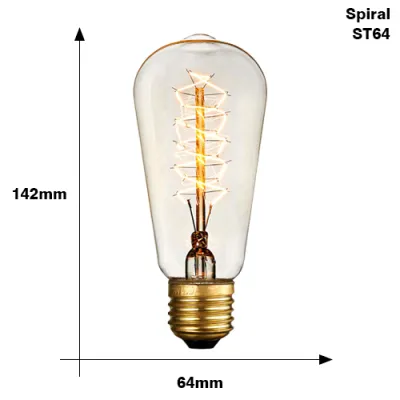
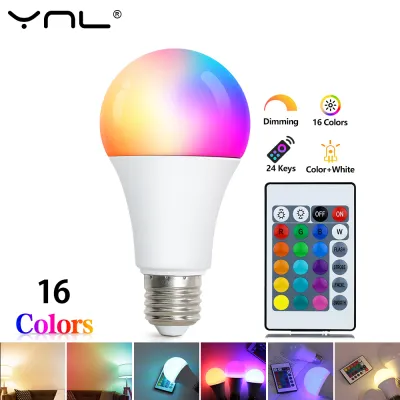
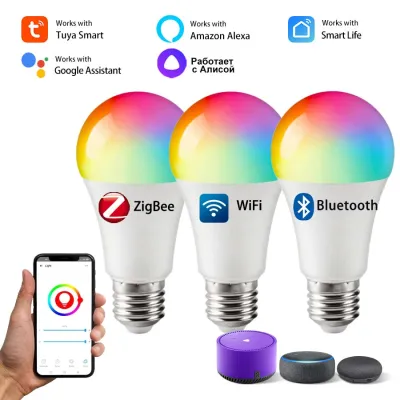
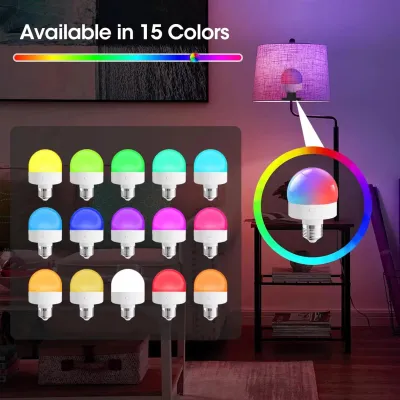
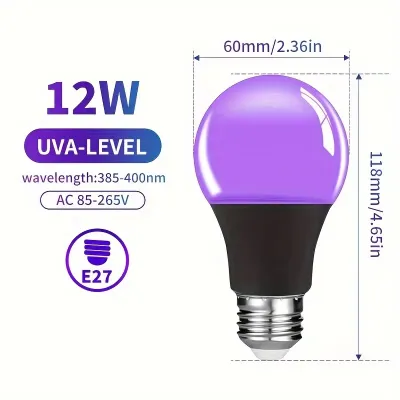
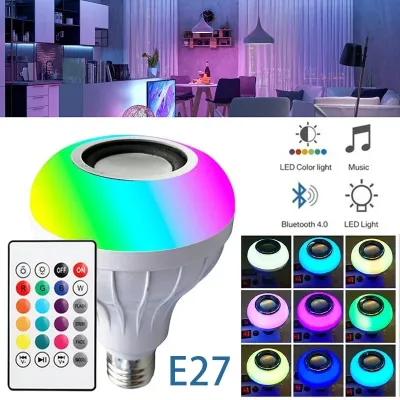
Prices are valid at publication and may change. Please refer to the product page for the latest price.
How to Confirm Your Fixture Needs an E27 Bulb
Identifying whether your light fixture requires an E27 bulb can prevent the hassle of purchasing the wrong size. The most reliable method is to perform a visual and physical inspection of the fixture itself. Start by ensuring the power to the fixture is completely switched off at the main circuit breaker to guarantee safety during your inspection.

Look inside the empty socket of your light fixture. An E27 socket features a threaded metal interior lining designed to receive a screw-in base. If the interior is smooth with two small slots on either side, it is not an Edison screw socket. To verify the size, you can measure the inner diameter of the socket opening using a ruler. An E27 socket will measure approximately 27 millimeters across.
Another highly dependable method is to check the manufacturer’s markings on the fixture. Most light fixtures have a small safety label or sticker located near the socket, on the base of the lamp, or inside the canopy. This label typically lists the required bulb base type, such as “E27,” along with the maximum allowable wattage. If you are replacing an existing bulb, simply examine the metal base or the glass envelope of the old bulb, where the base type is usually printed.
Telling E27 Apart from Similar Bulb Bases
Because several light bulb bases look similar at a glance, it is easy to mistake one for another. Understanding the key differences between E27 and other common bases will help you select the correct bulb on your first try.
The most common point of confusion is between E27 and E14 bases. Both feature the classic Edison screw thread, but they differ significantly in size. The E14 base, often referred to as a Small Edison Screw (SES), has a diameter of only 14 millimeters. It is much narrower than the E27 and is typically found in smaller decorative fixtures, chandeliers, and bedside reading lamps.
Another common base type is the B22, or bayonet base. Unlike the threaded screw design of the E27, the B22 base is completely smooth with two small pins protruding from opposite sides. It requires a push-and-twist motion to lock into place. Because the installation mechanisms are entirely different, a B22 bulb cannot be fitted into an E27 socket without a specialized adapter, which is generally not recommended for permanent installations.
Finally, you may encounter the E26 base, which is the standard screw base used primarily in North America. The physical difference between E26 and E27 is minimal, with the E26 measuring 26 millimeters in diameter. While an E26 bulb can often physically thread into an E27 socket, they are designed for different electrical standards. E26 bulbs are typically rated for 120V systems, whereas E27 bulbs are rated for 220V to 240V systems. Mixing them without verifying voltage compatibility can lead to electrical hazards or premature bulb failure.
Essential Safety and Fit Checks Before You Buy
Before purchasing your new E27 bulb, there are several critical safety and compatibility factors to verify to ensure optimal performance and prevent damage to your home’s electrical system.
First, always check the maximum wattage rating of your light fixture, which is typically printed on the socket’s safety label. This rating indicates the maximum thermal load the fixture can safely handle. While energy-efficient LED bulbs operate at much lower wattages than traditional incandescent bulbs, you must still ensure that the actual wattage of the new bulb does not exceed the fixture’s stated limit. Exceeding this limit can cause heat buildup, damaging the fixture’s wiring or shade.
Second, consider the physical dimensions of the bulb itself. While the E27 base size is fixed, the glass or plastic housing of the bulb comes in various shapes and sizes. A bulb that is too wide or too long may not fit inside a tight lamp shade, a recessed ceiling canister, or an enclosed outdoor fixture. Measure the available clearance inside your fixture and compare it with the dimensions listed on the bulb’s packaging.
Lastly, if your fixture is connected to a dimmer switch, you must verify that the E27 bulb you choose is explicitly labeled as dimmable. Standard LED bulbs installed on a dimming circuit may flicker, buzz, or fail prematurely. If you plan to use smart bulbs, check their compatibility with your existing home network and wall switches, as some smart E27 bulbs require a constant power supply and should not be used with traditional wall dimmers.
Frequently Asked Questions (FAQ)
Can I use an E26 bulb in an E27 socket?
While an E26 bulb can physically screw into an E27 socket due to the nearly identical thread dimensions, you must verify the voltage rating before doing so. E26 bulbs are generally manufactured for 120V electrical grids, while E27 sockets are typically wired to 220V–240V mains power. Connecting a 120V E26 bulb to a 230V circuit will cause the bulb to burn out instantly and can pose a safety hazard. Only use them interchangeably if the bulb is explicitly rated for universal voltage (110V–240V).
Are all E27 bulbs the same shape?
No, the E27 designation refers solely to the screw base and does not dictate the shape of the bulb’s glass or plastic envelope. E27 bulbs are available in a wide variety of shapes, including standard A60 globe shapes, large decorative globes, vintage-style Edison shapes, and tubular designs. The choice of shape depends on your aesthetic preference and the physical space available inside your light fixture.
Community discussion
Share your experience or ask a question. Comments are reviewed before publication.