
Selecting the right abstract painting for your home relies on evaluating your room’s existing lighting, color palette, and furniture lines rather than just personal preference. By treating your interior as a cohesive environment, you can select an artwork that either harmoniously blends into the background or acts as a striking, intentional focal point. The four primary abstract styles—geometric, fluid, minimalist, and expressionist—serve as the core candidates for your space, each carrying its own visual weight, emotional energy, and structural characteristics that interact uniquely with your home’s layout. By identifying the visual cues of your current setup, you can avoid common purchasing mistakes. Use the subsequent diagnostic steps to identify which style naturally complements your current interior before making a purchase.
Assess Your Room: The Visual Signals That Dictate Art Choice
Before browsing through art collections, you must conduct a thorough visual audit of the room where the painting will hang. The physical characteristics of your space act as the surrounding frame for any artwork you introduce. By systematically analyzing these elements, you can select a piece that feels fully integrated into your home’s design.
Lighting Conditions: The quality, direction, and intensity of light in your room dramatically affect how paint pigments and textures appear. In tropical climates like Singapore, homes often experience intense, direct sunlight during the day, followed by reliance on warm artificial lighting in the evening. If your room features large, sunlit windows, it can easily accommodate high-contrast, dark, or highly saturated abstract paintings. Conversely, if the space is naturally dim—such as a deep-plan apartment layout—you should opt for paintings with lighter backgrounds or metallic accents that catch and bounce ambient light. Under artificial track lighting, textured canvases with heavy paint application create beautiful, dynamic shadows that add depth.
Products mentioned in this guide
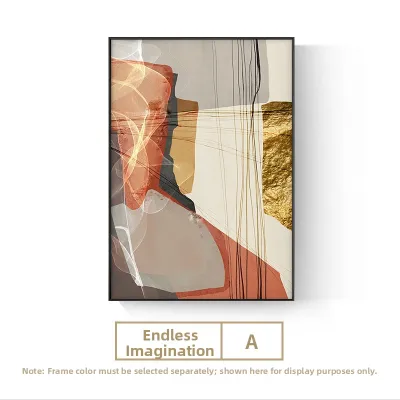
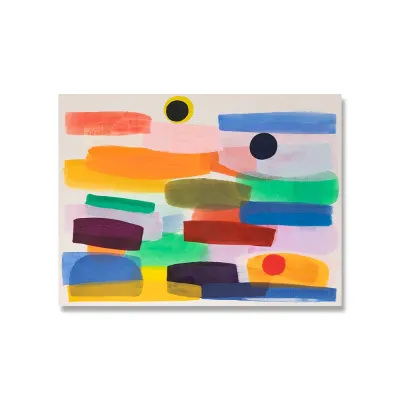
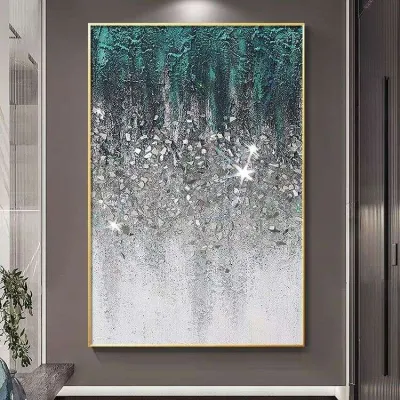

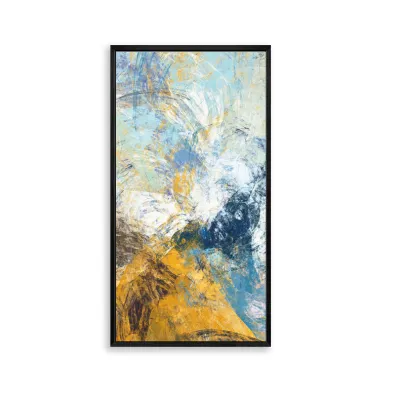
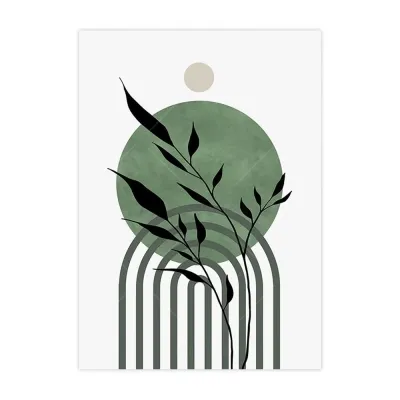
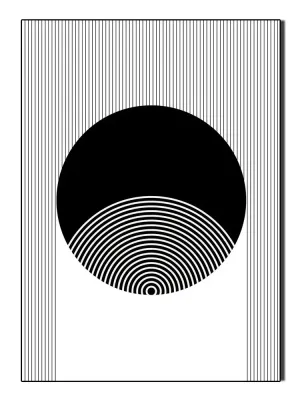
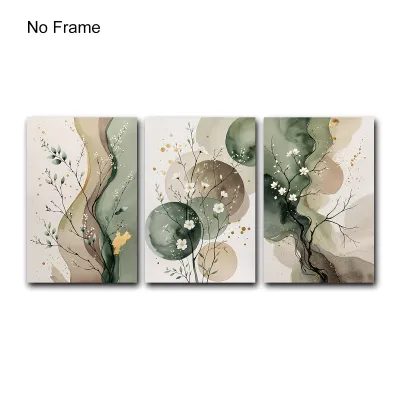
Prices are valid at publication and may change. Please refer to the product page for the latest price.
Furniture Silhouettes: The dominant shapes and structures of your furniture establish the spatial rhythm of the room. Take a moment to observe whether your furniture is defined by clean, straight, and angular lines or soft, organic, and curved forms. A living room filled with mid-century modern credenzas, low-profile linear sofas, and sharp-edged metal coffee tables possesses a structured, architectural energy. On the other hand, a space styled with rounded bouclé accent chairs, circular dining tables, and flowing linen drapes has a softer, more organic feel. The lines of your furniture will either contrast with or mirror the shapes in your chosen abstract painting.
Current Color Palette: Your room’s baseline color scheme dictates the color family your new artwork should belong to. Identify the dominant hues of your walls, flooring, and large furniture pieces. Is your space a neutral sanctuary dominated by cool greys, warm beiges, or pristine whites? Or does it already feature bold accent walls, colorful upholstery, and vibrant textiles? An abstract painting can serve two distinct color functions: it can act as a unifying element that pulls together existing accent colors, or it can introduce a singular, unexpected pop of color to break up a monochromatic scheme.
Wall Space and Scale: The physical dimensions of your available wall space determine the scale of the art you can support. A massive, unbroken wall behind a large sectional sofa or a dining table demands a commanding, large-scale piece to anchor the room. Installing a small painting on a vast wall makes the artwork look lost, while placing an oversized canvas on a narrow, segmented wall can make the entire room feel cramped. Measure your wall carefully, keeping in mind that the surrounding negative space is just as important as the artwork itself.
The 4 Core Abstract Styles and Where They Belong
Understanding the distinct visual languages of the four primary abstract styles allows you to match them precisely to the spatial signals you have just assessed. Each style creates a different atmosphere and suits specific architectural layouts and interior design themes.

Geometric Abstract Art
Geometric abstract art is defined by sharp lines, structured shapes, hard edges, and deliberate mathematical arrangements. It often utilizes circles, triangles, rectangles, and intersecting grids, frequently paired with high-contrast color blocks or precise gradients. This style is inherently orderly, clean, and analytical, leaving little room for visual ambiguity.
This style is exceptionally well-suited for modern, mid-century modern, or industrial interiors. If your home features angular furniture, exposed metal frames, or concrete finishes, a geometric abstract painting will naturally complement these architectural lines. It acts as an organizing visual anchor, bringing a sense of discipline and deliberate design to open-plan living areas. For homes that feel slightly unstructured, a geometric piece can introduce a necessary sense of order and sophisticated symmetry.
Fluid and Organic Abstract Art
In direct contrast to geometric precision, fluid and organic abstract art is characterized by sweeping curves, blended colors, soft transitions, and natural, flowing movements. Often created using acrylic pouring, watercolor washes, or alcohol ink techniques, these paintings mimic natural phenomena such as marble veining, ocean currents, smoke plumes, or geological strata.
Fluid art is the ideal complement for bohemian, contemporary, or relaxed interiors. It thrives in spaces styled with curved furniture, soft textiles like linen and jute, and natural wood elements. The soft, undulating lines of fluid art introduce a calming, dynamic flow that helps to soften the rigid, boxy architecture common in high-rise apartments. If your goal is to create a serene, sanctuary-like environment, a fluid abstract painting with cool blue, green, or sandy neutral tones will cultivate that peaceful atmosphere beautifully.
Minimalist Abstract Art
Minimalist abstract art embraces the philosophy of “less is more,” focusing heavily on negative space, subtle textures, muted tones, and highly restricted color palettes. Rather than relying on complex compositions or vibrant colors, minimalist pieces often feature simple brushstrokes, single lines, or monochromatic textured surfaces created with plaster, gesso, or mixed media.
This style is the perfect match for Scandinavian, Japandi, or highly curated, clutter-free environments. In compact living spaces, minimalist art serves as a quiet, sophisticated focal point that enhances the illusion of spaciousness. It provides a visual resting place, allowing the eyes to wander without being overwhelmed by excessive visual stimuli. If your home is designed as a low-stimulus retreat from the busy outside world, a textured, monochromatic minimalist canvas will elevate the space while preserving its tranquil, understated elegance.
Expressionist and Bold Abstract Art
Expressionist and bold abstract art is characterized by high emotional energy, spontaneous brushwork, thick palette knife textures, and intense, often clashing color combinations. These paintings do not seek to represent external reality or maintain geometric order; instead, they convey raw emotion, movement, and intensity through heavy impasto layers and dramatic compositions.
This style belongs in eclectic, maximalist, or transitional spaces that possess the visual weight to support a striking statement piece. It is not suited for timid interiors, as it will easily overpower a delicate or sparsely furnished room. Instead, use an expressionist painting as a powerful conversational anchor in a dining room, entryway, or formal living area that embraces layered decor, rich wood finishes, and bold design choices. It works beautifully to tie together disparate design elements by acting as the energetic focal point of the entire room.
From Diagnosis to Display: Sizing and Color Integration
Once you have identified the abstract style that matches your room’s character, you must apply practical interior design principles to ensure the painting integrates seamlessly into your space. This involves balancing colors and selecting the correct dimensions to maintain visual harmony.
The 60-30-10 Color Rule: To prevent your new abstract painting from looking like an afterthought, utilize the classic 60-30-10 design ratio. Under this guideline, 60% of your room should be dominated by a primary color (typically your walls, large rugs, or major furniture pieces), 30% should consist of a secondary color (such as curtains, accent chairs, or wooden cabinetry), and the remaining 10% should be reserved for accent colors. Your abstract painting is the perfect vehicle for this final 10%. Choose a piece that features small splashes of a vibrant color, and then distribute that exact same hue throughout the room in minor details like throw cushions, ceramic vases, or decorative objects. This simple technique instantly makes the entire room feel professionally styled and cohesive.
Proportional Sizing: A common design pitfall is hanging an abstract painting that is far too small for the wall or the furniture beneath it. When placing artwork above a major furniture piece, such as a sofa, sideboard, console table, or bed headboard, the artwork should cover approximately two-thirds (60% to 75%) of the furniture’s total width. For example, if your living room sofa is 210 cm wide, your abstract painting or grouped art arrangement should ideally measure between 126 cm and 157 cm in width. If the painting is too small, it will appear to float aimlessly; if it is too wide, it will top-heavy the furniture below, disrupting the visual balance of the room.
Single Statement vs. Gallery Wall: Consider whether your space is better served by a single, large-scale canvas or a multi-piece arrangement. A single, oversized statement canvas is highly recommended for minimalist and expressionist styles, particularly on large, unbroken walls where you want to create a high-impact, clean gallery feel. Conversely, multi-piece arrangements—such as a cohesive diptych or triptych—work exceptionally well for geometric and fluid styles. These multi-piece layouts are highly effective in segmented spaces, narrow hallways, or on walls that require a sense of visual rhythm and movement without the overwhelming weight of a single massive frame.
Safe Hanging and Installation Guidelines
Installing your chosen abstract painting safely requires attention to detail, proper hardware, and an understanding of your home’s structural elements. Proper installation ensures that your artwork is displayed beautifully while remaining securely anchored to the wall.
Standard Hanging Height: To achieve a balanced look, always hang your artwork at a comfortable viewing height. The standard museum guideline is to position the center of the painting at eye level, which is approximately 145 to 150 cm from the floor to the center of the canvas. If you are hanging the abstract painting above a piece of furniture like a console table or sofa, ensure there is a gap of roughly 15 to 20 cm between the bottom of the frame and the top of the furniture. This gap provides enough breathing room to prevent the arrangement from feeling cramped while keeping the art visually connected to the furniture below.
Wall Anchors and Hardware: Before driving any nails or screws into your wall, you must identify the wall material. In Singapore, residential walls are typically constructed of solid concrete or brick (especially in HDB flats and older condominiums) or drywall/partition boards (commonly found in newer condominium bedrooms and study rooms). Heavy canvases, framed glass prints, and oversized wooden frames require appropriate heavy-duty anchors; standard nails or adhesive strips are highly prone to failure and should not be used for substantial pieces. For solid concrete or brick walls, you must use a masonry drill bit, plastic wall plugs (anchors), and matching screws to secure the hanging brackets. For drywall partitions, use specialized hollow-wall anchors or toggle bolts that expand behind the board to distribute the weight safely.
Environmental Considerations: Given Singapore’s high relative humidity, protecting your artwork from moisture damage is essential. Canvases hung in poorly ventilated rooms can sag over time, and paper prints can develop mould. To mitigate this risk, ensure your room is well-ventilated, and consider using moisture-resistant backing materials or choosing framed prints protected by lightweight, shatter-resistant acrylic glazing rather than heavy glass.
Professional Boundary: If you are dealing with exceptionally heavy, oversized, or high-placed installations, or if you are uncertain about the structural integrity and material of your wall, always consult a qualified professional installation service. Attempting to hang heavy or complex art pieces without the proper tools or structural knowledge can lead to severe property damage, ruin your valuable artwork, or cause personal injury.
Community discussion
Share your experience or ask a question. Comments are reviewed before publication.