
Choosing the right decorative globe for your home depends on balancing your aesthetic goals with the practical realities of your living space. Whether you are drawn to the scholarly charm of a traditional world globe, the whimsical nostalgia of a liquid-filled snow globe, or the sleek lines of an abstract metal sculpture, each type serves a distinct decorative purpose. In Singapore’s tropical climate, where high humidity and intense sunlight are daily factors, your choice must also account for material durability and placement safety.
By matching your primary decorative intent with the physical conditions of your room, you can select a piece that not only enhances your interior design but also stands the test of time. Understanding the unique characteristics, maintenance needs, and safety considerations of each globe type will guide you toward the perfect addition to your home.
Identify Your Display Purpose and Space Constraints
Start by diagnosing your primary motivation for adding a globe to your decor. Are you seeking an educational tool to spark curiosity, a nostalgic collectible that evokes cherished memories, or an artistic statement piece to anchor a contemporary living room? Identifying this primary driver prevents impulse purchases that ultimately clash with your lifestyle or existing decor.
Products mentioned in this guide
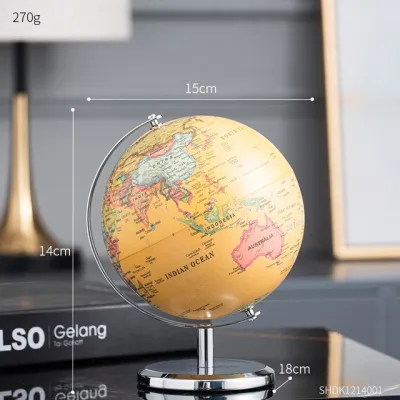
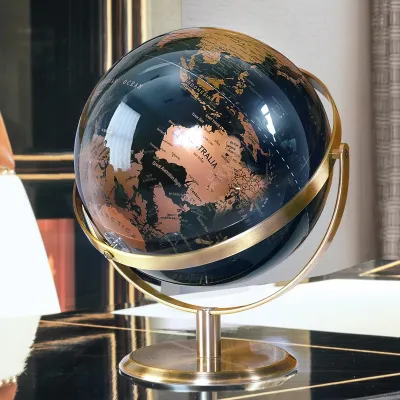
![[SG Stock] Centre World Globe with Stand | 14.16cm 18.20cm 21.40cm | Educational | Feng Shui Enhancement](https://img.lazcdn.com/g/p/9cbf931a38c128e89f7b486015d9aff3.jpg_400x400q80.jpg_.webp)
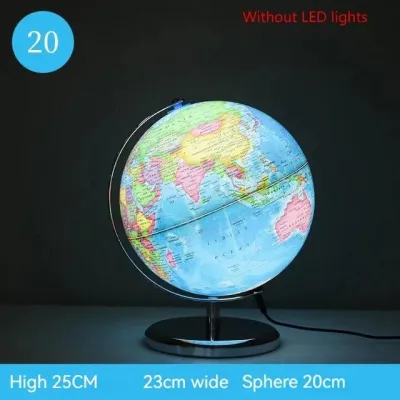
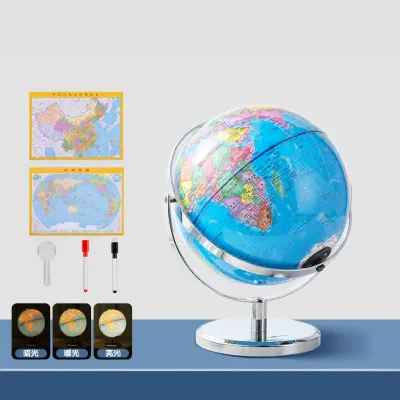
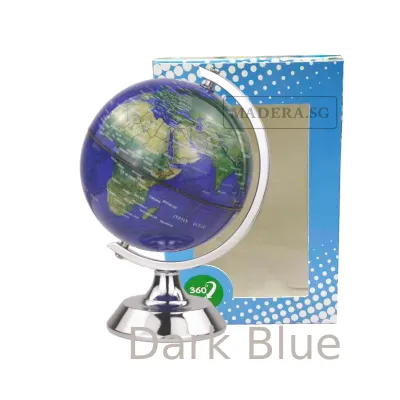
Prices are valid at publication and may change. Please refer to the product page for the latest price.
Next, evaluate the physical environment of your home. Singapore apartments, such as high-rise HDB flats and condominiums, often feature compact shelving, built-in study desks, or open-plan living areas where space must be optimized. Measure the depth of your shelves and the surface area of your tables before committing to a specific globe size. A massive floor-standing world globe may overwhelm a cozy study, while a tiny snow globe can easily get lost on a large sideboard.
Environmental exposure is another critical baseline factor. Singapore’s bright, sunlit interiors can be beautiful, but prolonged exposure to direct ultraviolet rays can fade paper maps, yellow acrylic, and cause liquid-filled globes to cloud or leak. Consider where the light falls in your room throughout the day to ensure your chosen piece remains protected.
Finally, determine the desired visual weight of the object. A heavy, solid brass abstract sculpture commands attention and acts as a room-defining focal point, whereas a delicate glass snow globe functions better as a subtle, intimate accent on a bedside table or a display cabinet shelf.
World Globes: Best for Education, Travel Memories, and Classic Decor
Traditional world globes remain a timeless addition to homes, offering a unique blend of educational utility, nostalgic wanderlust, and scholarly elegance. They are particularly well-suited for families with school-aged children, avid globetrotters who love visualizing their next destination, and professionals looking to cultivate an intellectual atmosphere in a home office. Placing a classic globe on a writing desk instantly elevates the room’s aesthetic, lending it a refined, curated feel.

When selecting a world globe, you must choose between different cartographic styles and mounting designs. Traditional globes often feature a full meridian ring, allowing you to tilt and spin the sphere along its axis, which is highly engaging for hands-on learning. Modern minimalist versions might feature a simplified single-axis stand, prioritizing clean lines over multi-directional movement.
Political vs. Physical Maps
Political maps are the most common cartographic style, featuring clearly defined country borders, vibrant color-coded nations, and prominent labels for capital cities and major geographical landmarks. These maps are ideal for tracking global news, helping children with geography homework, or planning international travel routes.
Physical maps, on the other hand, focus on the earth’s natural topography, showcasing mountain ranges, desert basins, ocean depths, and forest cover using realistic earth tones. This style blends more seamlessly into neutral, rustic, or organic interior designs, as the soft greens, browns, and deep blues do not compete with your room’s existing color palette.
Illuminated vs. Non-Illuminated Models
Illuminated globes offer dual functionality, serving as a detailed geographical reference by day and transforming into a soft, warm ambient light source by night. Some advanced models even feature dual-mapping technology, displaying a political map when unlit and revealing intricate star constellations or physical terrain features when the internal light is switched on.
When purchasing an illuminated model in Singapore, electrical compatibility and safety are paramount. Always verify that the globe is rated for the local 230V voltage at 50Hz and comes equipped with a standard Type G three-pin plug. If you are importing a specialty globe from overseas, ensure you use a safe, certified adapter and check that the internal bulb wattage does not exceed the manufacturer’s recommended limit to prevent overheating.
Snow Globes: Ideal for Nostalgia, Seasonal Displays, and Collectibles
Snow globes evoke a sense of childhood wonder and quiet nostalgia, making them excellent decorative accents for personal spaces, bedrooms, and dedicated display cabinets. Unlike world globes, which invite intellectual exploration, snow globes encourage quiet, tactile interaction. They are highly favored by collectors of architectural landmarks, festive seasonal decor, and pop-culture memorabilia.
However, because snow globes contain liquid, they require more careful consideration regarding placement and maintenance than dry decorative objects. The liquid inside must remain clear, and the internal scene must stay securely anchored, meaning these delicate items cannot simply be placed anywhere and forgotten.
Material and Build Quality
The outer sphere of a snow globe is typically constructed from either glass or high-grade acrylic. Glass spheres offer unparalleled optical clarity, a satisfying physical weight, and excellent scratch resistance, making them the preferred choice for high-end collectibles. However, glass is highly fragile and poses a safety risk if knocked over, especially in households with active pets or young children.
Acrylic or plastic spheres are lightweight and virtually shatterproof, offering a safer alternative for lower shelves or children’s bedrooms. The trade-off is that acrylic is more susceptible to surface scratching and can gradually cloud or yellow over time when exposed to ambient light or warmth.
Thematic vs. Traditional Designs
Traditional snow globes often feature classic winter wonderlands, historical European landmarks, or holiday scenes, which add a cozy, festive touch to living rooms and display cabinets during specific times of the year. Modern thematic globes, featuring characters from popular franchises or abstract artistic scenes, can be displayed year-round on personal desks or floating shelves to showcase your personality.
Regardless of the design, a crucial safety warning applies to all liquid-filled globes: never place them in direct sunlight. The curved glass or acrylic sphere acts as a natural magnifying lens, which can concentrate solar rays onto nearby flammable materials like wooden tabletops, curtains, or paper, posing a serious fire hazard. Furthermore, intense sunlight accelerates liquid evaporation, causes the water to cloud, and can fade the painted details of the internal scene.
Abstract Globe Sculptures: Perfect for Modern Art Lovers and Statement Pieces
For those who appreciate the spherical form but prefer a contemporary, non-literal interpretation of geography, abstract globe sculptures are the ideal choice. These pieces prioritize texture, material, and geometric structure over cartographic accuracy, making them highly versatile statement pieces for modern, minimalist, or industrial interiors. They serve as excellent conversation starters when positioned on a dining room sideboard, an entryway console table, or a living room coffee table.
Abstract globes often represent the earth through open wireframe armillaries, interlocking metal bands, or solid spheres carved from natural materials. Because they do not feature busy map details, they rely heavily on their material composition and scale to create visual interest.
Material Choices and Climate Considerations
Metal abstract globes, crafted from brass, iron, or stainless steel, offer a sleek, industrial, or mid-century modern aesthetic. However, Singapore’s persistent high humidity can cause untreated metals to tarnish or oxidize over time; choosing lacquered or powder-coated metals will significantly reduce maintenance.
Carved wood globes bring warmth and organic texture to a room, fitting perfectly into Scandinavian or Japandi design schemes. To protect wooden sculptures, avoid placing them directly in the path of cold air-conditioning vents, as rapid temperature fluctuations and dry air can cause the wood to warp or crack.
Resin and composite stone globes are highly durable, resistant to humidity, and can be molded into incredibly intricate, textured designs that mimic natural marble or concrete without the associated weight and fragility.
Scale and Visual Weight
Selecting the right scale is essential to ensuring your abstract globe sculpture complements your room rather than cluttering it. Large, oversized floor sculptures or pedestal-mounted armillaries work beautifully to anchor empty corners, frame a large doorway, or sit alongside a tall houseplant.
Conversely, compact, heavy desktop sculptures are best suited for flat surfaces like console tables, deep bookshelves, or office desks. Ensure these pieces have a stable, weighted base so they cannot be easily tipped over during daily household activity.
Quick Comparison: Matching Your Needs to the Right Globe
To help you synthesize these options and make a confident decision, the table below compares the three main decorative globe categories across key practical dimensions.
| Globe Type | Primary Purpose | Best Room Placement | Maintenance Level | Sunlight Sensitivity |
|---|---|---|---|---|
| World Globe | Education, travel planning, classic study decor | Study room, home office, children's bedroom | Low (occasional dusting) | Low to Moderate (map fading risk) |
| Snow Globe | Nostalgia, seasonal display, personal collecting | Display cabinet, bedroom, shaded vanity | High (dusting, temperature control) | Extreme Hazard (magnifying fire risk, liquid clouding) |
| Abstract Sculpture | Modern art, geometric visual interest, focal point | Living room console, dining sideboard, entryway | Low to Moderate (material-specific care) | Low (metal/resin) to Moderate (wood cracking) |
If you find that your first preference does not align with your room’s physical constraints—for example, if you love snow globes but only have a sun-drenched windowsill available—it is best to pivot. In that scenario, an abstract metal wireframe globe would be a far safer and more durable alternative, allowing light to pass through without any risk of fire or degradation.
Placement, Care, and Safety in a Tropical Climate
Maintaining the pristine appearance of your decorative globe in a tropical environment requires a few targeted care habits. Regular dusting is essential; use a clean, dry microfiber cloth to wipe down glass world globes and acrylic snow globes to avoid micro-scratches. For highly textured abstract sculptures made of carved wood or detailed metal, a soft-bristled makeup brush or a dry paint brush is excellent for clearing dust out of tight crevices without scratching the surface. Avoid using harsh chemical solvents or window cleaners on painted, lacquered, or resin surfaces, as these can strip away protective coatings.
Managing indoor humidity is another key factor in preserving your decor. Ensure there is adequate air circulation around wooden bases and metal sculptures to prevent the buildup of mold or surface oxidation. If you display your items in a closed glass cabinet, consider placing a small, rechargeable dehumidifier pack inside to maintain a stable, dry environment.
Safety should always guide your placement choices. Secure top-heavy abstract sculptures or tall world globes on stable, level surfaces. In homes with young children or active pets, applying a small amount of non-damaging museum wax or removable mounting putty to the base of the globe can prevent accidental tip-overs. Finally, keep all types of globes away from intense, direct tropical sunlight to preserve their colors, protect liquid levels, and eliminate fire hazards.
Frequently Asked Questions (FAQ)
How do I clean a cloudy snow globe without damaging it?
Exterior cloudiness is usually caused by dust, fingerprints, or mineral deposits from ambient humidity. To clean it safely, wipe the outer sphere gently with a damp microfiber cloth and dry it immediately with a soft towel. Avoid submerging the globe in water or using abrasive scrubbers and harsh chemical cleaners, as these can scratch acrylic surfaces or degrade the adhesive seal at the base.
Can I change the liquid inside a vintage snow globe myself?
It is highly recommended that you do not attempt to change the liquid yourself. Opening a sealed snow globe risks permanently damaging the internal scene, breaking the delicate glass, and introducing bacteria that will cause rapid mold growth. Furthermore, the original fluid may contain chemical additives like antifreeze or preservatives; instead, consult a professional restoration service to handle valuable or vintage pieces safely.
How do I protect metal globe sculptures from tarnishing in high humidity?
To protect metal sculptures from humidity-induced tarnish, keep them in well-ventilated rooms and dust them regularly to prevent moisture-binding dust buildup. For unlacquered brass, copper, or iron pieces, apply a thin coat of manufacturer-approved microcrystalline wax or metal polish to create a protective barrier against moisture. Always check the manufacturer’s care instructions and test the polish on a small, hidden area of the base first.
Community discussion
Share your experience or ask a question. Comments are reviewed before publication.