
Finding the most reliable and energy-efficient E14 LED bulb for your rangehood in Singapore requires looking beyond basic brand recognition. Because rangehoods expose bulbs to high heat, trapped steam, and airborne cooking grease, standard LED bulbs often fail prematurely. The most reliable bulb for your kitchen is one that provides transparent, verifiable specifications for thermal management, voltage compatibility, and safety certifications. By evaluating these physical and electrical characteristics, you can select a bulb that safely withstands the demanding conditions of daily cooking.
Rather than relying on generic marketing claims, consumers should focus on a systematic verification process. Different brands design their bulbs for different environments, and a bulb that works perfectly in a well-ventilated living room lamp may fail within weeks inside a cramped, hot rangehood. Understanding how to read product labels and inspect physical build quality is the most effective way to secure a long-lasting lighting solution for your kitchen.
Baseline Specifications to Verify Before Comparing Brands
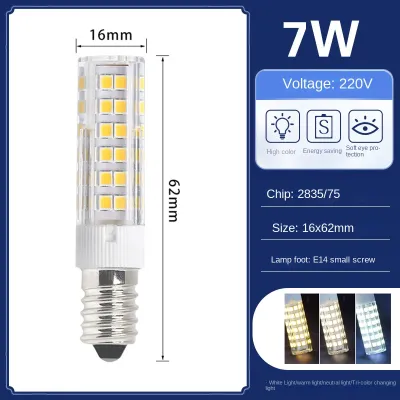
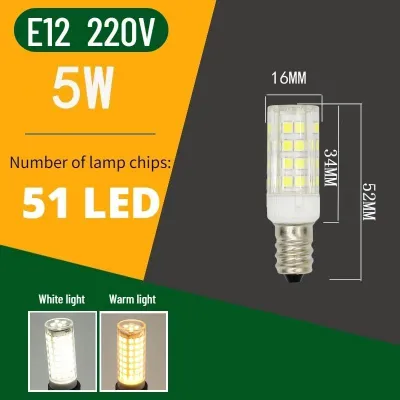
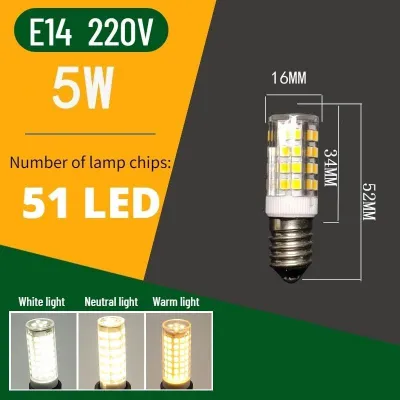
Before comparing different brands, you must establish the baseline electrical and physical parameters required by your specific rangehood model. The first step is verifying the base type and voltage compatibility. In Singapore, the standard mains voltage is 230V at 50Hz. You must check the product packaging to ensure the bulb is rated for 220V–240V. Importing bulbs from overseas online marketplaces without verifying this specification can lead to immediate electrical failure or safety hazards if the bulb is designed for lower-voltage regions.
Products mentioned in this guide
![[SG Local Seller] E14 LED Bulb 5W for Cooker Hood Refrigerator](https://img.lazcdn.com/g/p/0494b76284a153b89facc571a9577315.png_400x400q80.png_.webp)
Prices are valid at publication and may change. Please refer to the product page for the latest price.
Next, compare the bulb’s wattage against your rangehood’s maximum wattage limit. This limit is typically printed on a label inside the rangehood housing near the socket. While LED bulbs consume significantly less power than legacy halogen or incandescent bulbs—typically drawing between 2W and 6W compared to 20W or 40W—verifying this limit prevents overloading the rangehood’s internal circuitry. Additionally, check the lumen output to ensure adequate task lighting. For effective food preparation, look for bulbs that deliver between 200 and 400 lumens, which provides sufficient brightness without causing uncomfortable glare on reflective cooktop surfaces.
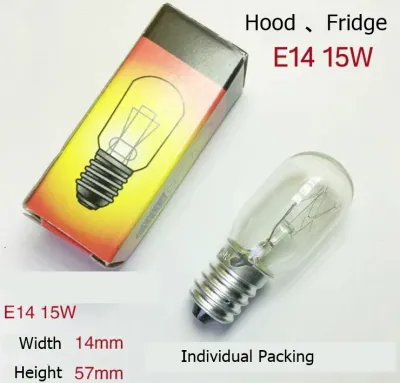
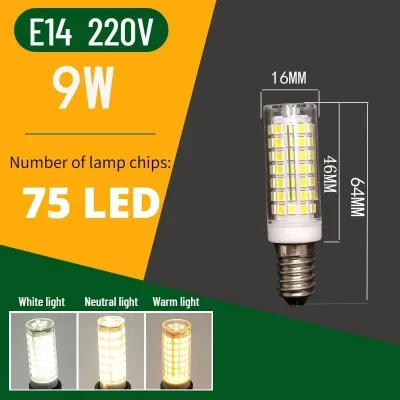
Physical dimensions are another critical baseline factor. Rangehood bulb compartments are notoriously compact and are often sealed behind a protective glass or plastic cover. E14 bulbs come in various shapes, including tubular (T25), candle (C35), and mini-globe (G45) profiles. You must measure the clearance inside your rangehood’s light cavity and compare it to the bulb’s dimensions listed on the packaging. If a bulb is too long or too wide, the protective cover will not close, exposing the socket to steam and grease.
Finally, evaluate the color temperature options based on your kitchen layout and food preparation needs. Color temperature is a matter of conditional preference rather than universal performance. A neutral white or cool white light (around 4000K to 5000K) is often preferred for task lighting because it makes it easier to judge the doneness of food and spot grease during cleaning. Conversely, if your kitchen opens directly into a dining area with warm ambient lighting, a warm white bulb (around 2700K to 3000K) may provide a more cohesive visual transition.
Assessing Heat and Grease Resistance for Rangehood Use
The physical design and material composition of an LED bulb determine whether it can survive the harsh microclimate inside a rangehood. Thermal management is the single most important factor governing LED longevity. Standard, low-cost LED bulbs often use basic plastic housings that trap heat inside the bulb. For rangehood applications, look for brands that utilize ceramic or aluminum heat sinks. Ceramic materials offer excellent thermal conductivity and electrical insulation, allowing heat to dissipate away from the delicate LED chips even in enclosed spaces.

In addition to heat, cooking grease and moisture pose a constant threat to electrical components. When you stir-fry or boil liquids, vaporized oils and steam rise directly into the rangehood. Inspect the bulb’s lens design before purchasing. A completely sealed, smooth glass or heavy-duty polycarbonate lens is highly desirable. Avoid bulbs with visible seams, cooling vents, or open gaps in the casing, as these openings allow grease and moisture to penetrate the internal driver circuitry, leading to short circuits and premature failure.
The manufacturer’s stated maximum ambient operating temperature provides a clear indication of a bulb’s suitability for kitchen environments. Standard LEDs are rated for typical room temperatures up to 25°C or 30°C. However, the air directly above a active gas hob or induction cooker can easily exceed these temperatures. Look for brands that explicitly state an elevated operating temperature limit (such as 45°C or higher) on their technical datasheets, indicating that the internal components are rated to handle the thermal stress of a cooking environment.
Validating Energy Efficiency and Lifespan Claims
To ensure you are choosing an energy-efficient option that justifies its cost, you must validate the manufacturer’s performance claims using standardized metrics. Cross-reference the brand’s energy claims with official local energy efficiency labeling schemes where available. Comparing the lumens-per-watt (lm/W) ratio is a reliable way to measure true efficiency. For example, a bulb that produces 350 lumens while consuming 3.5W (100 lm/W) is more efficient than a bulb that requires 5W to produce the same 350 lumens (70 lm/W). Over time, choosing a higher-efficiency bulb helps lower your household utility bills.
It is also important to maintain realistic expectations regarding rated lifespan claims. Many brands advertise lifespan figures of 15,000 to 25,000 hours. However, these ratings are calculated under ideal laboratory conditions at constant room temperature in open-air fixtures. In the high-heat, enclosed environment of a rangehood, the actual lifespan of the bulb will likely be shorter. Heat accelerates the degradation of both the LED phosphors and the capacitors inside the driver. Therefore, a brand’s thermal design is a much better predictor of real-world longevity than the theoretical hours printed on the box.
Warranty terms serve as a practical indicator of a manufacturer’s confidence in their product’s durability. Compare the warranty periods and specific conditions offered by different brands. A brand that offers a multi-year local warranty specifically covering residential use provides better peace of mind than a brand with no warranty or one that excludes coverage for bulbs installed in enclosed fixtures. Always retain your purchase receipt and check if the warranty requires registering the product online with the local distributor in Singapore.
Conditional Selection Guide for Rangehood Bulbs
Selecting the right E14 LED bulb requires matching the bulb’s specifications to your specific cooking habits and rangehood configuration. If your household engages in daily, high-heat cooking such as wok-based stir-frying, you should prioritize bulbs constructed with ceramic bases and fully sealed glass covers. The ceramic base handles the intense heat rising from the stove, while the sealed glass cover prevents grease buildup from reaching the electrical contacts and can be easily wiped clean during routine kitchen maintenance.
Before completing any purchase, verify that the bulb carries mandatory safety certification marks applicable to your region. In Singapore, electrical accessories and controlled goods must carry the SAFETY Mark, which indicates the product has been tested by an approved conformity assessment body and meets local safety standards. Purchasing certified bulbs minimizes the risk of electrical faults, short circuits, or fire hazards in your kitchen.
Finally, establish clear stop conditions to reject a bulb during your search. You should immediately reject any bulb that lacks clear voltage and frequency markings, fails to specify its housing materials, or does not fit comfortably within the rangehood’s light compartment with the protective cover fully secured. Furthermore, if your rangehood features a dimmable light switch, do not use a standard, non-dimmable LED bulb. Doing so can cause persistent flickering, buzzing, or immediate damage to the bulb’s internal driver. If the packaging does not explicitly state that the bulb is dimmable, assume it is non-dimmable and look for an alternative.
Frequently Asked Questions (FAQ)
Can I use a standard E14 LED bulb in my rangehood if it fits the socket?
Using a standard E14 LED bulb designed for open-air household lamps in a rangehood is not recommended. Standard bulbs lack the robust thermal management and sealed construction required to withstand the high heat, steam, and grease accumulation typical of a cooking environment. Installing a standard bulb in an enclosed rangehood fixture often leads to rapid overheating, causing the bulb to flicker, dim prematurely, or fail completely within a short period.
Do I need a dimmable E14 LED bulb for my rangehood?
Whether you need a dimmable bulb depends entirely on your rangehood’s control mechanism. If your rangehood has a simple on/off switch, a standard non-dimmable E14 LED bulb is suitable. However, if your rangehood features multiple brightness settings, a touch-control slider, or a dedicated dimming function, you must install a certified dimmable E14 LED bulb. Using a non-dimmable bulb on a dimming circuit can damage the bulb’s driver and may cause electrical buzzing or flickering.
How can I safely replace the E14 bulb inside my rangehood?
To replace the bulb safely, first isolate the power supply by turning off the rangehood at the main wall switch or unplugging the unit entirely. If the rangehood has been in use, allow the old bulb and the surrounding fixture to cool completely to avoid burns. Carefully remove the protective cover, unscrew the old bulb, and inspect the socket for any signs of heat damage, melting, or corrosion. If you observe any damage to the socket or fixed wiring, do not install a new bulb; instead, keep the power isolated and consult a qualified electrician to repair the fixture.
Community discussion
Share your experience or ask a question. Comments are reviewed before publication.