
There is no single “most efficient” LED light tube brand across all product lines, as energy consumption depends entirely on the specific model’s luminous efficacy, driver quality, and installation method. Rather than relying on brand reputation or marketing claims, identifying the best option for lower electricity bills requires comparing technical specifications and understanding how real-world conditions affect power draw. When shopping for lighting in Singapore, you will find various brands on the market, but the key to true energy savings lies in reading the specification sheets rather than trusting promotional slogans. By focusing on verifiable performance metrics, you can make an informed decision that directly reduces your monthly utility bills.
Key Metrics to Compare LED Light Tube Efficiency
To accurately evaluate how much electricity an LED light tube will consume, you must look beyond the brand name and analyze the technical specifications. The most critical metric to consider is luminous efficacy, which is measured in lumens per watt (lm/W). This ratio indicates how much visible light (lumens) a tube produces for every watt of electrical power it consumes. For example, if you compare two tubes that both output 1,600 lumens, but one draws 10 watts while the other draws 16 watts, the 10-watt tube is significantly more efficient. It delivers an efficacy of 160 lm/W compared to the other’s 100 lm/W, resulting in lower electricity consumption for the same level of brightness.
Many consumers mistakenly rely on wattage as a direct indicator of brightness, assuming that a lower-wattage tube is always the better choice. However, if a low-wattage tube has poor luminous efficacy, it will produce less light, which might force you to install additional fixtures to achieve the desired illumination in your space. Comparing the actual lumen output against the wattage ensures you maintain the necessary light levels while minimizing power draw. When reviewing product specifications, always prioritize models that offer the highest lumen output with the lowest possible wattage.
Products mentioned in this guide
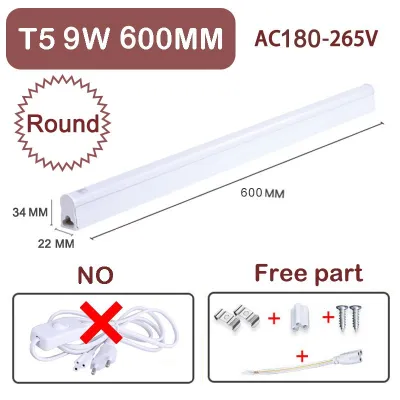
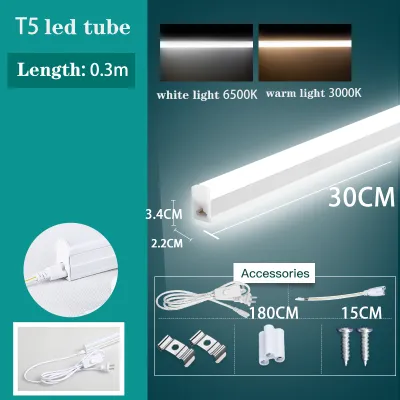
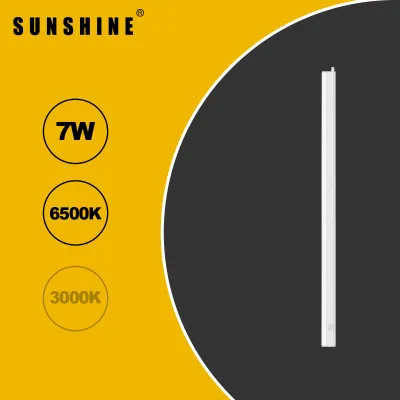
Prices are valid at publication and may change. Please refer to the product page for the latest price.
Another critical factor that influences real-world energy consumption is the efficiency of the internal LED driver and its Power Factor (PF). The driver acts as the power supply, converting alternating current (AC) from your home’s electrical grid into the direct current (DC) required by the LED chips. High-quality drivers minimize energy loss during this conversion process, which is typically dissipated as heat. Power Factor is a measure of how effectively the driver uses the incoming electricity, represented as a decimal between 0 and 1. A tube with a high Power Factor, such as 0.9 or above, draws power more efficiently from the grid, reducing electrical waste and ensuring the actual power draw aligns closely with the rated wattage.
Navigating Energy Labels and Efficiency Standards
Navigating the various marketing claims on product packaging can be challenging, but official certifications and energy labels provide a reliable way to filter out inefficient models. In Singapore, the National Environment Agency (NEA) regulates energy-consuming appliances, including lamps, under the Mandatory Energy Labelling Scheme (MELS). When shopping for LED light tubes, look for the energy label on the packaging, which displays a tick rating. A higher number of ticks indicates greater energy efficiency, allowing you to quickly compare the relative performance of different models without needing to perform complex calculations yourself.

While the tick rating system offers an excellent starting point, verifying “energy-saving” marketing claims against standardized test results provides an extra layer of assurance. Reputable manufacturers publish detailed photometric reports and test data, such as LM-79 and LM-80 reports, which are conducted by independent laboratories. These documents verify the tube’s actual light output, color rendering properties, and electrical characteristics under controlled conditions. If a brand claims to offer dramatic energy savings but cannot provide standardized test reports to back up those claims, it is safer to look for alternative options that offer transparent data.
In addition to energy labels, recognized safety and performance marks play a vital role in ensuring long-term efficiency and preventing premature failure. In Singapore, look for products that carry the Safety Mark, which indicates that the electrical appliance has been tested and certified to meet local safety standards. A certified product is built with high-quality components that are less likely to degrade rapidly or fail prematurely. When an LED driver or chip degrades, its efficiency drops, meaning it will consume the same amount of electricity while producing less light, ultimately defeating the purpose of your energy-saving investment.
Evaluating Brand Specification Sheets Side-by-Side
To conduct a fair, apples-to-apples comparison between different brands, you must compare equivalent models within their respective product lines. LED light tubes come in various lengths, such as 2-foot or 4-foot options, and different diameters, with T5 and T8 being the most common. They also vary in color temperature, ranging from warm white to cool daylight. When comparing specifications, ensure you are looking at tubes of the same physical dimensions, color temperature, and target lumen output. Comparing a high-output industrial tube from one brand to a standard residential tube from another will lead to inaccurate conclusions about their relative efficiency.
Thermal management is another critical aspect to evaluate on brand specification sheets, as excessive heat is the primary enemy of LED efficiency. When LED chips and drivers get too hot, their performance degrades, leading to a drop in light output and an increase in power consumption over time. This is particularly important in Singapore’s warm and humid climate, where ambient temperatures can accelerate heat buildup. Look for specification sheets that detail the tube’s construction materials, such as aluminum heat sinks or advanced thermal plastics designed to dissipate heat effectively. Brands that invest in robust thermal design will maintain their rated efficiency far better than cheaper alternatives with poor heat dissipation.
Finally, assess the lumen maintenance ratings, which are typically expressed as L70 or L80 values. These ratings indicate the number of operating hours it takes for the tube’s light output to drop to 70% or 80% of its original brightness. For instance, a tube with an L70 rating of 50,000 hours will maintain its efficiency and brightness for a significantly longer period than a model rated for only 25,000 hours. Choosing a tube with superior lumen maintenance ensures that you continue to get the full benefit of your energy savings over the entire lifespan of the product, reducing the frequency and cost of replacements.
Installation and Environmental Factors Affecting Power Draw
The way an LED light tube is installed can have a significant impact on its actual power consumption, sometimes negating the efficiency benefits of a high-quality model. Many older fluorescent fixtures utilize magnetic or electronic ballasts to regulate the electrical current. When upgrading to LED, you can choose between “plug-and-play” (Type A) tubes that work with the existing ballast, or “direct-wire” (Type B) tubes that bypass the ballast entirely. Keeping the ballast in place introduces an energy penalty, as the ballast itself consumes power—often between 2 and 5 watts per fixture—even when running an efficient LED tube. Bypassing the ballast and wiring the tube directly to the mains voltage eliminates this parasitic power loss, maximizing your overall energy savings.
Ambient temperature and the physical environment also play a major role in LED driver performance and overall power consumption. In Singapore, ceiling fixtures are often enclosed or installed in unventilated areas, which can trap heat and raise the operating temperature of the tube. If the driver runs too hot, its conversion efficiency decreases, causing it to draw more power from the grid to produce the same amount of light. When planning your installation, ensure that the selected LED tubes are rated for use in enclosed fixtures if your setup requires it, and try to maximize ventilation around the light fixtures to maintain optimal operating temperatures.
The use of external controls, such as motion sensors, timers, and dimmers, can further influence the operational efficiency of your lighting system. While these controls are excellent for reducing overall energy use by turning lights off when spaces are unoccupied, they must be fully compatible with the LED tubes you choose. Incompatible dimmers or sensors can cause the LED driver to struggle, leading to issues like flickering, buzzing, and increased power consumption as the driver attempts to stabilize the electrical signal. Always check the manufacturer’s compatibility list to ensure that your chosen tubes work seamlessly with your existing or planned control systems.
Decision Framework: Choosing the Right Tube for Your Needs
To finalize your purchase and achieve the lowest possible electricity bills, you can use a structured decision framework based on your specific lighting requirements and installation constraints. If your primary goal is to maximize long-term energy savings and you are comfortable with a slightly higher initial setup effort, choose direct-wire (ballast bypass) LED tubes with a high lm/W rating. This approach eliminates ballast power loss and removes a common point of failure from your lighting system. Because direct-wire installation involves working with mains voltage, always hire a licensed electrical worker in Singapore to perform the rewiring safely and in compliance with local regulations.
If you require a quick and straightforward installation without the need for electrical rewiring, plug-and-play LED tubes are a highly convenient alternative. This option allows you to simply swap out your old fluorescent tubes without modifying the fixture. However, you must accept a minor efficiency trade-off due to the ongoing power consumption of the existing ballast. Additionally, you should be prepared to eventually replace or bypass the ballast if it fails in the future, as plug-and-play tubes cannot operate without a functioning ballast.
For spaces where visual accuracy and color quality are critical, such as kitchens, vanity areas, or retail displays, prioritize LED tubes with a high Color Rendering Index (CRI), typically rated at 80 or 90+. It is important to note that high-CRI tubes often have a slightly lower luminous efficacy than standard tubes, as more energy is required to produce a broader, more natural spectrum of light. In these scenarios, you must balance your need for high-quality visual performance against absolute energy efficiency, choosing the highest lm/W model available within the high-CRI category.
Before making any purchase, always verify the physical and electrical compatibility of the selected LED tubes with your existing fixtures. Check the physical dimensions, pin configurations (such as G13 for standard T8 fixtures), and whether the tubes require single-ended or double-ended wiring. Taking the time to verify these details beforehand prevents installation issues, avoids the risk of damaging your new tubes, and ensures that your transition to energy-efficient lighting is smooth and successful.
Frequently Asked Questions (FAQ)
Do higher wattage LED light tubes always use more electricity?
Yes, higher wattage LED light tubes will always draw more electrical power from your grid than lower wattage models, as wattage is a direct measure of electrical power consumption. However, a higher-wattage tube does not necessarily represent a less efficient choice if it features a significantly higher luminous efficacy. For example, a highly efficient 15-watt tube might produce more usable light than two inefficient 10-watt tubes combined. In this scenario, installing a single higher-wattage, high-efficacy tube allows you to illuminate the space effectively while consuming less total electricity than you would by running multiple lower-wattage, inefficient options.
Is it worth replacing working fluorescent tubes with LED tubes to save power?
In most cases, replacing working fluorescent tubes with LED tubes is highly cost-effective, but the exact payback period depends on several variables. To determine if the switch is worth it, you should check your daily usage hours, current electricity tariffs in Singapore, and the efficiency gap between your existing fluorescent tubes and the proposed LED models. Fluorescent tubes typically have an efficacy of around 60 to 80 lm/W and lose additional energy through their ballasts, whereas modern LED tubes can easily exceed 130 lm/W. If your lights are on for several hours a day, the substantial reduction in power consumption will quickly offset the upfront cost of the new tubes, especially if you choose direct-wire models that eliminate ballast power draw.
Community discussion
Share your experience or ask a question. Comments are reviewed before publication.