
Finding the right mosquito coil holder for your home is not just a matter of aesthetic preference; it is a critical safety decision that depends on your household layout, family members, and local climate. In Singapore, where humid tropical weather makes mosquito control a year-round necessity, choosing the correct holder ensures you can repel pests effectively without introducing fire hazards or exposing young children and pets to accidental burns. The ideal choice hinges on whether you plan to place the holder in high-traffic HDB common corridors, windy balconies, or sheltered service yards.
While traditional open metal stands are often packaged with mosquito coils, they offer minimal protection against accidental contact and wind. Modern holders come in various configurations—such as flat trays, elevated stands, hanging cages, and wall-mounted brackets—each designed to address specific environmental challenges. By evaluating your space, you can select a holder style that maximizes airflow while keeping your household completely safe from open embers and hot ash.
Quick Guide: Matching Holder Styles to Your Living Space
Selecting the right mosquito coil holder requires balancing accessibility, safety, and environmental conditions. Different areas of a home present unique hazards, from sudden gusts of wind on high-rise balconies to the curious fingers of toddlers in living rooms. A mismatch between the holder style and its environment can lead to scattered ash, extinguished coils, or serious burn risks.
Products mentioned in this guide
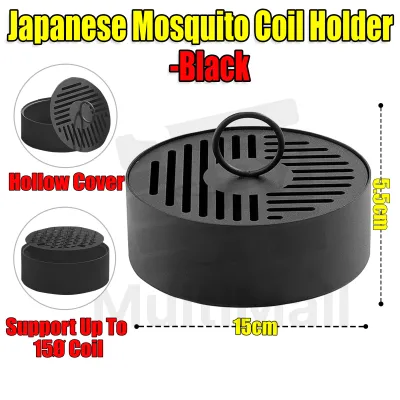
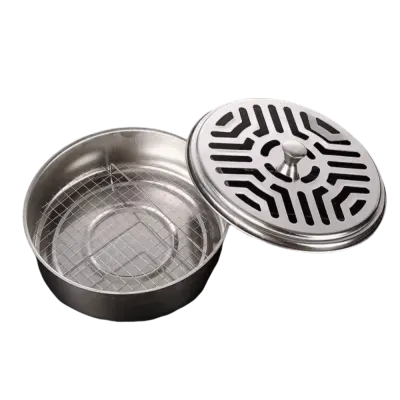
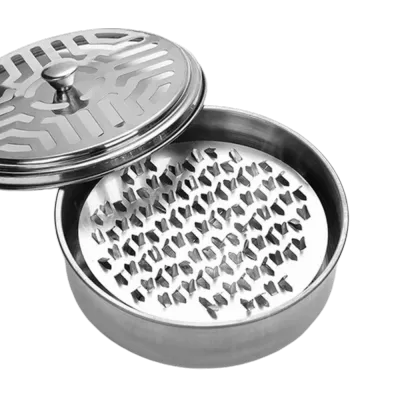
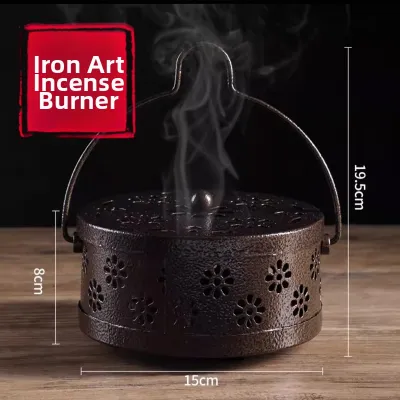
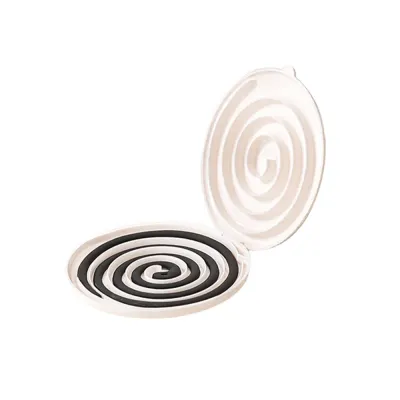
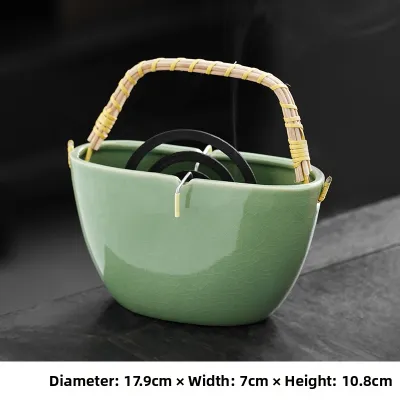
Prices are valid at publication and may change. Please refer to the product page for the latest price.
To help you identify the most suitable option, consider the following environmental matching guide:
- Households with active toddlers, crawling babies, or curious pets: Prioritize wall-mounted or high-hanging holders. Keeping the burning coil completely elevated removes the risk of children or pets touching the hot surface or knocking the holder over.
- Semi-outdoor, windy areas (e.g., HDB common corridors, high-floor balconies): Opt for heavy, standing holders with weighted bases and secure, windproof covers. Alternatively, use enclosed hanging holders securely latched to fixed structures. These designs prevent wind from scattering hot ash or blowing the coil out of its housing.
- Frequent multi-room users or outdoor hobbyists: Choose portable flat tray holders equipped with secure, locking mesh lids. These allow you to move the active coil safely from a service yard to a balcony without exposing the burning ember.
- Narrow walkways and high-traffic transition zones: Select wall-mounted holders. Placing a holder on the floor in a narrow corridor or entryway creates a major tripping hazard, which can easily lead to accidental fires or painful burns.
The “best” holder is entirely dependent on your specific living situation. A holder that works perfectly on a spacious, sheltered ground-floor patio may be highly dangerous in a compact, high-rise apartment with pets. Understanding the strengths and limitations of each style is the first step toward safe pest management.
Tray and Flat Holders: Simple, Portable, and Ground-Level
Tray and flat holders are the most traditional and recognizable designs on the market. These low-profile containers typically consist of a circular metal or ceramic base with a removable, perforated lid or a fine wire mesh cover. The burning mosquito coil rests horizontally inside the tray, supported by a central prong or a bed of non-combustible fiberglass mesh.

The primary appeal of flat holders lies in their simplicity and portability. Because they have a low center of gravity, they are virtually impossible to tip over accidentally. This makes them highly suitable for stable, flat surfaces such as tiled floors, outdoor tables, or concrete steps. They are also exceptionally easy to pack, making them a popular choice for families who want a portable solution that can transition from indoor service yards to outdoor balconies.
However, ground-level placement presents significant safety limitations. Because these holders sit flat on the floor, they are easily accessible to crawling infants, toddlers, and pets. A curious dog or cat can easily sniff or paw at the hot metal cover, resulting in painful burns. Furthermore, in high-traffic areas like entryways or narrow HDB kitchen walkways, flat holders are easy to trip over. An accidental kick can dislodge the lid, spilling hot ash and burning embers onto your flooring.
When purchasing a tray-style holder, several specific design checks are essential for safety:
- Verify base insulation: Ensure the bottom of the holder features heat-resistant pads or raised silicone feet. Direct contact between a hot metal tray and delicate flooring—such as vinyl, laminate, or finished wood—can cause permanent discoloration or heat damage.
- Check the lid latching mechanism: Avoid models where the lid simply sits loosely on top of the base. Look for secure twist-lock mechanisms, side latches, or deep-fitting grooves that prevent the lid from falling off if the holder is accidentally bumped or kicked.
- Examine the mesh aperture: If you have pets, ensure the holes in the decorative metal lid are small enough to prevent a cat's claw or a dog's nose from making direct contact with the burning coil inside.
Standing and Elevated Holders: Better Airflow and Pet Safety
Standing and elevated holders feature a pedestal, tripod, or raised frame design that lifts the burning coil several inches or feet off the ground. These structures typically include a dedicated ash-catching tray at the bottom, an elevated central mounting point for the coil, and a surrounding protective mesh or decorative metal cage.
The main advantage of elevating the mosquito coil is significantly improved smoke dispersion. Because warm smoke naturally rises, elevating the source allows the active insect repellent ingredients to disperse more evenly across the room or outdoor seating area. This height also keeps the hot ember away from the immediate ground level, protecting low-roaming pets like small dogs and cats from accidental contact.
Elevated holders are highly effective in semi-outdoor spaces such as HDB common corridors, sheltered balconies, and service yards. In these areas, ground-space is often limited by shoe racks, potted plants, or laundry baskets. A standing holder can be tucked neatly into a corner, raising the coil above floor-level obstructions while allowing the breeze to carry the protective smoke across the entryway.
Despite these benefits, standing holders have inherent physical limitations. Their taller profile gives them a higher center of gravity, making them more susceptible to tipping over if bumped by a passing family member, a vacuum cleaner, or a large pet. A falling standing holder can scatter hot ash across a wide radius, posing a fire risk to nearby fabrics or wooden furniture.
To mitigate these risks, perform the following checks before purchasing an elevated holder:
- Assess base weight and stability: Look for models with heavy cast-iron, ceramic, or thick steel bases. The base should feel substantially heavier than the top frame to ensure the unit remains upright even if lightly jostled.
- Evaluate the windproof enclosure: If you plan to use the holder in a breezy corridor or balcony, ensure the elevated burning chamber is fully enclosed by a fine, durable mesh screen rather than wide decorative cutouts. This prevents strong drafts from accelerating the burn rate of the coil or blowing loose embers out of the holder.
- Check joint durability: Inspect the connection points between the elevated stem and the base. Flimsy screw threads or thin welded joints can degrade over time, especially when exposed to high humidity and outdoor air.
- Confirm height clearance: Ensure the height of the stand is compatible with your furniture layout. The burning coil should sit below eye level but high enough to remain out of reach of shorter pets.
Hanging and Wall-Mounted Holders: Space-Saving and Child-Proof
Suspended and wall-fixed holders offer the ultimate combination of space efficiency and safety. By removing the burning coil entirely from floor and table surfaces, these designs eliminate tripping hazards and keep hot embers far out of reach of children and pets.
Hanging Holders for Balconies and Semi-Outdoor Areas
Hanging mosquito coil holders are designed with an integrated hook, loop, or chain, allowing them to be suspended from overhead structures. These holders are exceptionally popular for high-rise balconies, patios, and HDB service yards where floor space is at a premium.
Suspended placement is ideal for catching natural cross-breezes. When hung near a balcony railing or an open window, the holder utilizes the air current to distribute the repellent smoke before mosquitoes can enter the living space. This setup is also highly portable, as the holder can be easily unhooked and moved to different outdoor locations, or even taken along on camping trips.
However, hanging holders require strict safety boundaries to prevent fire hazards:
- Isolate from flammable materials: Never hang a mosquito coil holder near drying laundry, curtains, blinds, or hanging plants. In Singapore HDB service yards, where clothes are frequently hung on overhead racks, a shifting breeze can blow fabric directly against a hot hanging holder, posing an immediate fire risk.
- Secure the mounting hook: Ensure the hook or bracket from which the holder hangs is completely stable. Avoid hanging holders from flimsy plastic plant hooks or temporary adhesive hangers that can fail under heat or humidity.
- Verify material weather resistance: Because hanging holders are heavily exposed to rain spray and high humidity on balconies, prioritize high-grade stainless steel or powder-coated metals. Untreated steel will rust rapidly, weakening the hanging chain or hook and eventually causing the holder to fall.
Wall-Mounted Holders for Child-Proofing and Space Saving
Wall-mounted holders are permanently or semi-permanently fixed to a vertical wall surface. This design represents the gold standard for child-proofing, as it allows parents to position the burning coil at an exact, safe height that is completely inaccessible to toddlers and pets.
These holders are particularly beneficial for narrow HDB common corridors and entryways. In these tight spaces, any floor-standing item can violate local fire safety guidelines regarding corridor obstruction. A wall-mounted holder keeps the walkway entirely clear, ensuring safe passage while still providing a protective barrier against incoming pests.
When installing and using a wall-mounted holder, adhere to these safety and installation guidelines:
- Verify wall material and hardware: Before mounting, identify your wall type. Concrete or brick walls (common in HDB flats) require masonry drill bits and high-quality wall plugs (anchors) to ensure a secure hold. For tiled walls in service yards, use specialized tile drill bits to avoid cracking the ceramic surface.
- Establish strict height boundaries: Mount the holder at a minimum height of 1.5 meters from the floor. This keeps it safely out of reach of young children while remaining at a convenient height for adults to replace the coil.
- Maintain clearance from wall coverings: Do not mount the holder directly beneath wooden shelving, hanging artwork, or near window dressings. Ensure there is at least 1 meter of clear vertical space above the holder to allow hot air and smoke to dissipate safely.
- Select designs with detachable ash trays: Cleaning a fixed wall holder can be difficult. Look for models featuring a slide-out or twist-off ash collector. This allows you to empty the accumulated ash quickly without having to unscrew the entire bracket from the wall.
Essential Safety, Material, and Maintenance Checks
Regardless of the style you choose, the safety and longevity of your mosquito coil holder depend on its material composition, placement, and regular maintenance. Because mosquito coils burn via slow smoldering, the holder must be capable of withstanding prolonged exposure to high temperatures without degrading, warping, or transferring dangerous levels of heat to surrounding surfaces.
Material Selection and Structural Integrity
Prioritize robust, non-combustible materials such as heavy-gauge stainless steel, cast iron, or thick ceramics. These materials offer excellent heat resistance and durability.
- Avoid cheap alloys and thin tin: Lightweight tin holders warp easily under continuous heat. Once warped, the lid may no longer fit securely, creating a risk of accidental exposure to the burning coil.
- Beware of decorative wood or plastic accents: Some holders feature wooden handles, plastic latches, or synthetic decorative elements. Ensure these components are structurally isolated from the hot burning chamber. If a decorative element is placed too close to the heat source, it can melt, char, or release toxic fumes.
- Verify structural clearance: Do not rely solely on "fireproof" marketing claims. Visually inspect the holder to ensure there is adequate physical clearance (at least 1.5 to 2 centimeters) between the edges of a standard-sized coil and the interior walls of the holder. If the burning edge of the coil touches the metal frame directly, it can transfer intense heat to the exterior of the holder or extinguish itself prematurely.
Fire and Burn Safety Boundaries
To ensure safe operation, establish a strict set of safety protocols for everyone in your household:
- Maintain a one-meter safety zone: Always place or mount the holder at least one meter away from any combustible materials, including paper, cardboard, wooden furniture, dry leaves, and synthetic fabrics.
- Ensure proper ventilation: Traditional mosquito coils produce smoke and fine particulate matter. Never burn a coil in a completely closed, unventilated bedroom overnight. If you must use them indoors, ensure windows are kept open to maintain continuous fresh air circulation. For closed, air-conditioned spaces, consider switching to electronic liquid vaporizers or plug-in mats, which do not produce smoke.
- Never leave a burning coil unattended: If you are leaving the house or going to sleep, extinguish the coil completely. Do not rely on the holder to safely manage a burning coil in an empty home.
Ash Management and Cleaning Routine
As a mosquito coil burns, it produces a significant volume of fine, powdery ash. Regular ash management is crucial for both safety and performance:
- Empty the ash tray after every use: Accumulated ash can block the airflow inside the holder, starving the burning coil of oxygen and causing it to extinguish. Furthermore, a thick layer of loose ash can trap heat, creating a secondary smoldering hazard if a hot ember falls into it.
- Clean the holder weekly: Over time, the active ingredients and binders in mosquito coils leave a sticky, tar-like residue inside the holder. This residue can become highly flammable if allowed to build up. Follow a regular cleaning routine using safe, low-risk methods to maintain the holder’s safety and appearance.
Size and Coil Compatibility
Before finalizing your purchase, verify that the holder is compatible with the specific brand and size of mosquito coils you intend to use.
- Measure the internal diameter: Standard mosquito coils sold in Singapore typically measure between 10 and 12 centimeters in diameter. Ensure the holder's internal chamber is large enough to accommodate these dimensions without the coil touching the outer walls.
- Check the mounting interface: Some holders use a central metal pin or fork to hold the coil in place, while others utilize a horizontal fiberglass mesh bed. If you prefer micro-coils or jumbo-sized coils, ensure the mounting mechanism can hold them securely without letting them sag or touch the base.
Frequently Asked Questions (FAQ)
Can I use a traditional mosquito coil holder indoors safely?
While a high-quality, enclosed holder effectively manages physical fire and burn risks, burning traditional mosquito coils indoors requires caution. The smoke generated by traditional coils contains fine particulate matter and chemical byproducts that can irritate the respiratory system, particularly for individuals with asthma, allergies, or respiratory sensitivities.
If you choose to use a coil holder indoors, place it in a well-ventilated area near an open window or door to allow the smoke to escape. Avoid burning coils in closed, air-conditioned bedrooms overnight. For sealed indoor environments, electronic liquid vaporizers or plug-in repellent mats are safer, smoke-free alternatives.
How do I clean stubborn ash stains from a metal holder?
To clean stubborn ash stains and sticky tar residue from a metal holder, use gentle, non-abrasive cleaning methods. First, ensure the holder is completely cool, then discard any loose ash. Soak the removable metal parts in a basin of warm, soapy water mixed with a mild dishwashing liquid for 15 to 30 minutes to loosen the baked-on residue.
After soaking, gently scrub the surfaces with a soft-bristled brush or a non-scratch sponge. Avoid using harsh chemical acids, bleach, or abrasive steel wool, as these can strip away protective powder coatings or rust-resistant plating, leaving the metal vulnerable to rapid corrosion in Singapore’s humid climate. Once clean, dry the holder thoroughly with a soft cloth before inserting a new coil.
Do covered holders restrict smoke and reduce effectiveness?
Covered holders do not reduce the overall effectiveness of the mosquito repellent. While a solid lid or a fine mesh cover may slightly alter the immediate visual pattern of the rising smoke, it does not trap or neutralize the active chemical ingredients. The heat generated by the smoldering coil creates a natural convection current that carries the vaporized active ingredients out through the lid’s perforations.
In fact, covered holders often improve performance in windy conditions. By shielding the burning coil from direct drafts, the cover ensures a steady, controlled burn rate rather than an accelerated burn that wastes the repellent. The safety benefits of preventing accidental fires, flying embers, and contact burns far outweigh any negligible difference in smoke dispersion.
Community discussion
Share your experience or ask a question. Comments are reviewed before publication.