
Direct Answer: Does the Brand Really Dictate Your Electricity Bill?
When shopping for an rgb led light in Singapore, it is natural to wonder if choosing a premium, well-known brand will result in a lower monthly electricity bill. The direct answer is that the brand name itself does not dictate your energy costs. Instead, your electricity bill is determined by the technical specifications of the specific model you choose, the wireless protocols it uses, and how you configure and use the light in your daily life.
While established brands often invest more in engineering high-quality components, no single manufacturer holds a monopoly on energy efficiency. A budget-friendly bulb might operate with high efficiency when fully illuminated but draw excessive power when turned “off” in standby mode. Conversely, a premium bulb might have incredibly low standby draw but require a central bridge or hub that consumes constant power from your wall outlet.
In Singapore’s context, where electricity tariffs are regulated and can fluctuate quarterly, optimizing your lighting setup is a smart way to manage household utility bills. The “cheapest to run” option shifts depending on whether you are retrofitting a single room or an entire multi-generation HDB flat. To find the option that saves the most on your electricity bill, you must look past marketing claims and evaluate the technical specifications of individual models.
Products mentioned in this guide
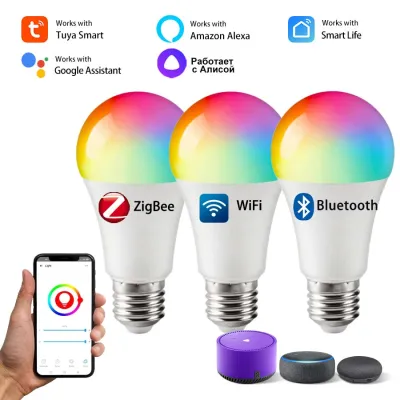
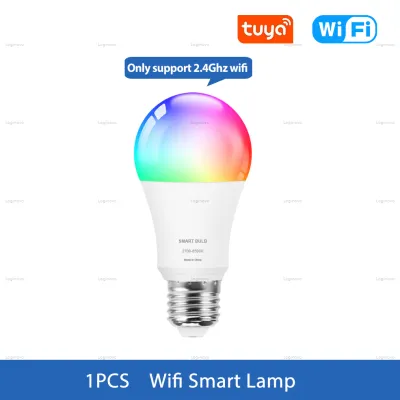
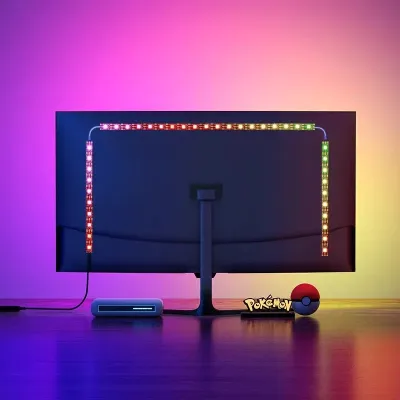
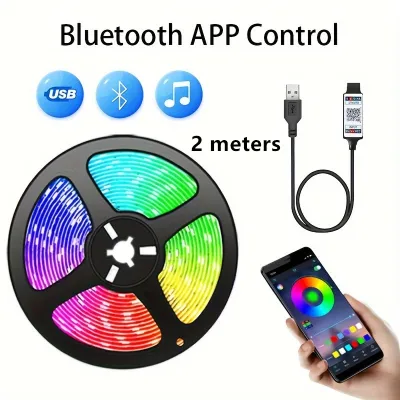
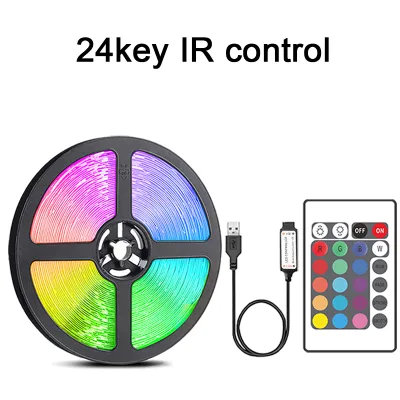
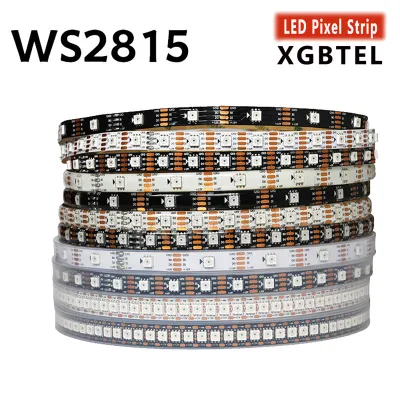
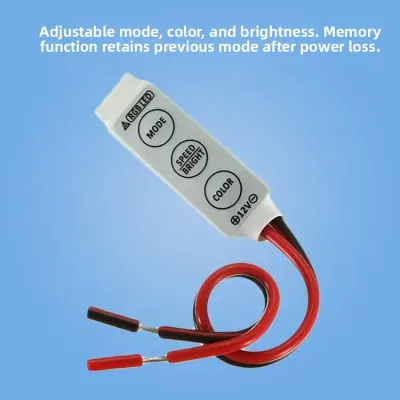
Prices are valid at publication and may change. Please refer to the product page for the latest price.
Key Dimensions for Comparing RGB LED Energy Efficiency
To make an informed decision when shopping for an rgb led light, you must know how to read the technical specifications on the packaging or manufacturer spec sheets. Relying solely on the advertised “wattage equivalent” can be misleading, especially with multi-colored smart bulbs. Comparing different brands requires looking at two primary phases of power consumption: active power draw and standby power draw.

Active Power Draw and Luminous Efficacy
Active power draw refers to the electrical power a bulb consumes when it is turned on and actively emitting light. This is measured in watts (W), representing the rate of energy consumption. However, looking at wattage alone does not tell you how efficient a bulb is; you must compare it to the light output, which is measured in lumens (lm).
Luminous efficacy is the ratio of light output to power consumption, expressed as lumens per watt (lm/W). A higher efficacy rating means the bulb produces more visible light for every watt of electricity it draws. When comparing brands, look for the luminous efficacy rating specifically for white light modes, as this is where the bulb will spend most of its active operating hours.
It is important to note that the maximum power rating printed on the packaging usually represents the bulb’s consumption under its most demanding setting. This typically occurs when the bulb is set to maximum brightness in a mixed white mode, where multiple internal diodes are illuminated simultaneously. A bulb with a more advanced diode arrangement can achieve the same brightness as a competitor while drawing fewer active watts.
Let us look at a practical active power comparison. An unoptimized or low-cost RGB bulb might lack dedicated white LEDs and must mix red, green, and blue light at full power to produce a simulated white light of 800 lumens, drawing about 12W of power. In contrast, a highly optimized, branded RGBW bulb uses dedicated white LEDs to produce the same 800 lumens of warm white light while drawing only 8.5W.
If you run ten bulbs for five hours a day, the unoptimized setup consumes 600 watt-hours (Wh) daily, which equals 219 kilowatt-hours (kWh) per year. The optimized setup consumes 425 Wh daily, or 155.1 kWh per year. At a Singapore electricity tariff of S$0.30 per kWh, the optimized setup costs S$46.53 per year to run, compared to S$65.70 for the unoptimized bulbs. This represents a direct saving of S$19.17 annually, simply by choosing a bulb with a more efficient active diode design.
Standby Power Consumption in Smart RGB Bulbs
Unlike traditional light bulbs that consume zero electricity when turned off at the wall switch, smart RGB bulbs are never truly off. To remain responsive to smartphone apps, voice assistants, and automation schedules, these bulbs maintain a continuous wireless connection. This constant state of readiness requires a small but continuous flow of electricity, known as standby power or phantom load.
While a standby draw of 0.2 to 0.5 watts per bulb may seem negligible, it accumulates continuously over 24 hours a day, 365 days a year. In a home with dozens of smart bulbs, this phantom load can quietly add up to a noticeable portion of your monthly electricity bill. When comparing smart lighting brands, the standby power rating is often the single most important factor for long-term energy savings.
Let us look at a practical mathematical example. Suppose a smart bulb has a standby power of 0.5W. Over 24 hours, if the bulb is turned off via software but kept on standby, it consumes 12 Wh per day. Over a year, this amounts to 4.38 kWh. In Singapore, with an average electricity tariff of approximately S$0.30 per kWh, one bulb costs about S$1.31 per year just sitting in standby.
If your household has 20 of these Wi-Fi bulbs, you are paying S$26.20 annually for lights that are turned off. If you choose a brand with an optimized standby draw of 0.15W per bulb, the annual standby cost for 20 bulbs drops to S$7.88. This comparison highlights why checking the standby power specification is critical when evaluating different brands.
How Different RGB Color Settings Affect Power Usage
To understand how your daily use affects your electricity bill, it is helpful to look at the internal mechanics of an rgb led light. A standard color-changing bulb contains multiple tiny light-emitting diodes (LEDs) packaged closely together. In a typical RGBW or RGBWW bulb, these include red, green, and blue diodes, alongside dedicated warm white and cool white diodes.
The specific color and brightness settings you select directly determine which of these internal diodes are illuminated and how much electrical current they draw. When you select a single primary color, such as pure red, green, or blue, only one set of diodes is active. This results in a relatively low power draw, often well below the bulb’s maximum rated wattage.
However, creating custom colors or simulating white light using only the RGB diodes requires a different process. To produce a mixed white light, the bulb must illuminate the red, green, and blue diodes simultaneously at high intensity. This mixed approach is highly inefficient, as it requires three times the electrical current to produce a similar level of brightness as a single dedicated white diode.
This is why high-quality smart bulbs include dedicated white diodes (the “W” or “WW” in RGBW/RGBWW). These dedicated white diodes are engineered for maximum luminous efficacy, producing bright, comfortable light while drawing minimal power. When you use your bulb’s dedicated warm white or cool white modes, the energy-hungry color diodes are turned off, resulting in significantly lower active power consumption.
Dynamic lighting effects, such as color-cycling scenes, party modes, or reactive screen-syncing, also impact energy consumption. These modes require continuous communication between your home network and the bulb’s internal controller, alongside rapid voltage adjustments to change the diode outputs. This continuous processing and shifting power demand keep the bulb operating at a higher average wattage than a static, dimmed color setting.
For the best balance of ambiance and energy efficiency, use your bulb’s dedicated white modes for general tasks like reading, cooking, or working. Save the vibrant color settings for accent lighting, and keep them dimmed to lower brightness levels when they are active. This simple adjustment in user behavior can dramatically reduce the active energy consumption of your lighting setup.
Evaluating Popular Brand Categories in Singapore
The smart lighting market in Singapore is broadly split into two architectural categories: premium hub-based ecosystems and direct-to-Wi-Fi budget brands. Each approach handles wireless communication differently, which has direct implications for both the upfront cost and the ongoing standby power consumption of your home lighting.
Premium Hub-Based Smart Ecosystems
Premium smart lighting ecosystems typically rely on a dedicated central hub or bridge to manage communication. Instead of connecting each bulb directly to your home Wi-Fi router, these systems use low-power wireless protocols such as Zigbee or Thread. The bulbs communicate with the hub, and the hub connects to your router via an ethernet cable or Wi-Fi.
Because Zigbee and Thread are designed specifically for low-power smart home devices, the individual bulbs in these systems require very little energy to maintain their wireless connection. A typical hub-based smart bulb has an exceptionally low standby power draw, often ranging between 0.1 and 0.2 watts. This makes them highly efficient when deployed in large numbers across an entire home.
However, you must factor in the power consumption of the central hub itself. A smart hub must remain plugged into a wall outlet and connected to the internet at all times, drawing a constant 1.5 to 2.5 watts of power. To determine if a hub-based system is truly the more energy-efficient choice for your home, you must calculate the crossover point where the low standby draw of the individual bulbs offsets the constant power consumption of the hub.
Let us compare the standby math for a 30-bulb household. If you choose a hub-based system where each bulb draws 0.15W on standby and the hub draws 2W, the total standby power is 6.5W. This translates to an annual standby consumption of 56.94 kWh, costing S$17.08 per year at S$0.30 per kWh. If you chose a hub-less Wi-Fi system where each bulb draws 0.5W, the total standby power would be 15W, costing S$39.42 per year. In this scenario, the hub-based system is the clear winner for long-term standby efficiency.
Wi-Fi Direct and Budget-Friendly Brands
Budget-friendly smart lighting brands generally eliminate the need for a central hub by using Wi-Fi direct technology. Each individual bulb contains a Wi-Fi chip that connects directly to your home’s 2.4GHz wireless router. This setup is highly popular because it features a low upfront cost and does not require setting up extra hardware.
The trade-off for this convenience lies in the standby power consumption of individual bulbs. Wi-Fi is a high-bandwidth protocol that was not originally designed for low-power smart home accessories. As a result, direct-to-Wi-Fi bulbs typically have a higher standby power draw, often ranging from 0.3 to 0.6 watts per bulb to maintain a stable connection to your router.
While a single Wi-Fi bulb drawing 0.5 watts on standby will not make a noticeable impact on your electricity bill, the math changes quickly as you add more lights. If you install twenty Wi-Fi bulbs throughout your home, their combined standby draw can reach 10 watts or more. This continuous phantom load runs 24 hours a day, meaning your lighting system is constantly drawing power even when all the lights are switched off.
Furthermore, a large number of Wi-Fi smart devices can congest your home router. As the router struggles to manage dozens of individual IP addresses and constant small data packets, its CPU load increases. This can cause the router itself to draw slightly more power and run hotter, adding another hidden layer of energy consumption to your household.
Practical Decision Framework: Which Type Should You Choose?
Deciding which smart lighting setup will save you the most money depends on the scale of your installation and how you plan to use the lights. There is no one-size-fits-all brand; instead, you should apply a conditional framework to match the technology to your specific living space and usage habits.
Choose Hub-Based Premium Brands if:
- You are planning a whole-home installation: If you are replacing fifteen or more bulbs across multiple rooms in a typical HDB flat or condominium, the low standby power of Zigbee or Thread bulbs makes a hub-based system highly efficient.
- You want to keep your Wi-Fi network clear: Connecting dozens of direct-to-Wi-Fi bulbs can congest your home router, leading to dropped connections and increased router power consumption as it struggles to manage the traffic.
- You value long-term reliability: Premium hub-based systems offer faster response times and more reliable local automation, meaning your lights will still turn off reliably via schedules even if your internet connection goes down.
Choose Wi-Fi Direct Budget Brands if:
- You only need a few accent lights: If you are only installing a couple of bedside lamps or a single color-changing strip behind your living room television, a hub-less Wi-Fi setup is the most cost-effective choice.
- You want to avoid upfront hardware costs: Buying a dedicated hub can be expensive, and for a small number of bulbs, the standby savings of Zigbee would take many years to offset the initial cost of the bridge.
- You have a robust home router: Modern, high-performance routers can handle a handful of smart devices easily without experiencing network congestion or noticeable performance drops.
Choose Non-Smart RGB LEDs if:
- Your absolute priority is zero standby power: If you do not care about mobile apps, voice control, or automated schedules, a non-smart RGB bulb is the ultimate energy saver.
- You prefer physical controls: These bulbs are controlled entirely via a physical wall switch or a simple infrared remote control, drawing zero electricity when turned off.
- You want a simple, maintenance-free setup: Non-smart bulbs have no firmware updates, no network pairing issues, and are highly reliable for basic decorative lighting.
Verify First if:
- You are mixing different brands or protocols: Combining Zigbee bulbs from one brand with Wi-Fi bulbs from another can result in a fragmented smart home. You may end up needing multiple hubs or software bridges, which increases both standby power consumption and system complexity.
- The bulbs are compatible with Singapore's electrical standards: Always verify that any bulb you purchase is rated for Singapore's local voltage of 230V at 50Hz. Importing bulbs designed for different regional voltages can lead to electrical instability, flickering, or premature hardware failure.
Actionable Steps to Minimize RGB LED Operating Costs
No matter which brand or technology you choose, you can take practical steps to keep your lighting energy consumption as low as possible. Implementing these simple strategies will help you maximize the efficiency of your rgb led light setup and protect your wallet from unnecessary electricity costs.
First, prioritize the use of dedicated white light channels for your daily activities. When you need functional lighting for reading, working, or cleaning, switch your smart bulbs to their dedicated warm white or cool white modes rather than trying to mix a white light using the red, green, and blue color channels. This ensures you are utilizing the most efficient diodes inside the bulb, keeping your active power draw to a minimum.
Second, make full use of smart automation features to eliminate wasted energy. Set up automated schedules or sleep timers to ensure that lights are never left running in empty rooms or overnight. If you have smart motion sensors, integrate them into your lighting setup so that lights in hallways, bathrooms, or entryways automatically switch off when no activity is detected for a set period.
Third, group your smart lights logically within your smart home application. Grouping lights allows you to control multiple bulbs with a single command, which can reduce the network polling overhead on your home router. It also makes it easier to dim entire rooms at once; keeping your smart bulbs dimmed to 50% or 70% brightness instead of running them at 100% all the time will significantly lower their active power draw.
Fourth, avoid using smart bulbs on physical dimmer switches. Standard wall dimmers work by rapidly cutting off the AC voltage (phase-cut dimming), which can damage the delicate electronic power supplies inside smart bulbs, causing flickering, buzzing, or immediate failure. Keep your wall switches fully turned on and use the smart app or voice commands to adjust brightness.
Finally, always verify physical compatibility and electrical safety before installing new bulbs. Ensure that the bulb’s base type matches your existing fixtures perfectly, whether it is an E27 screw thread, a B22 bayonet mount, or a GU10 spotlight base. For any installations involving fixed wiring, outdoor damp environments, or smart wall switches that require physical wiring modifications, always isolate the main power at the distribution board and consult a licensed electrical worker (LEW) in Singapore to ensure the installation is safe and compliant with local regulations.
Community discussion
Share your experience or ask a question. Comments are reviewed before publication.