
Choosing the right timekeeper for your home is no longer just a matter of finding a device that ticks. In a modern living space, a clock serves as a functional anchor, a design statement, and often a gateway to your smart home ecosystem. The ideal Xiaomi clock depends entirely on where you place it. For a bedroom, you must prioritize sleep hygiene with non-glaring displays and gentle, progressive alarms. For an office, your focus shifts to minimalist designs and productivity tools like focus timers. In the living room, readability from a distance, aesthetic integration, and smart home hub capabilities take center stage.
By matching the specific features of different models—such as display technology, smart connectivity, and environmental sensors—to the unique demands of each room, you can select a device that actively enhances your daily routine rather than just occupying space on a shelf.
Diagnosing Your Room's Core Needs Before Choosing a Clock
Before exploring specific models, it is essential to evaluate the environmental constraints and primary activities of the room where the clock will live. A common mistake is selecting a clock based solely on its aesthetic appeal or its density of smart features, only to find that its screen is too bright for a dark bedroom or too small to read across a spacious living room. A systematic self-diagnosis of your space prevents these frustrations and ensures long-term utility.
Products mentioned in this guide
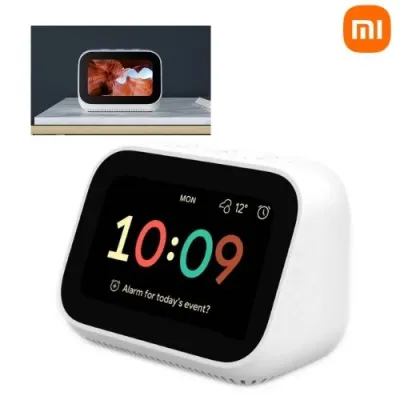
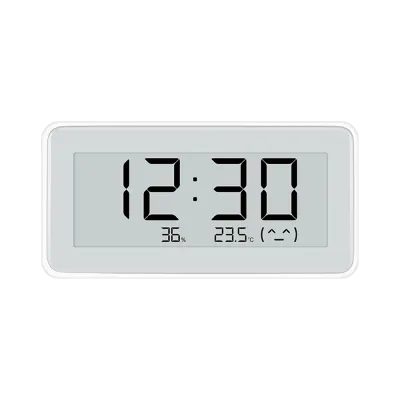
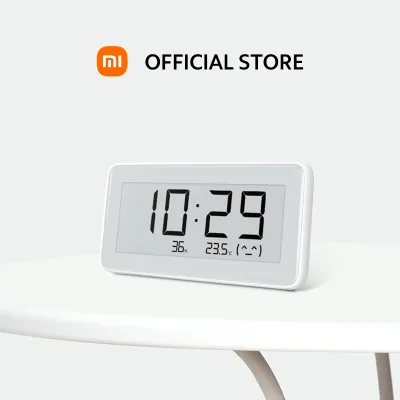
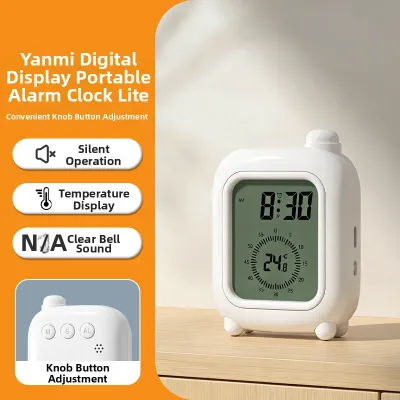
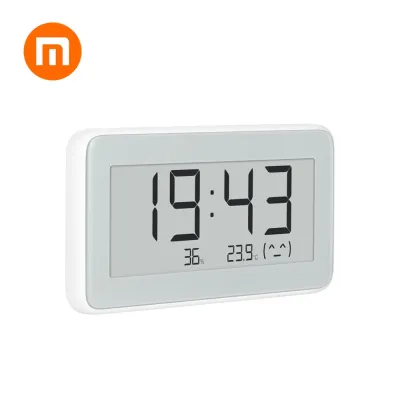
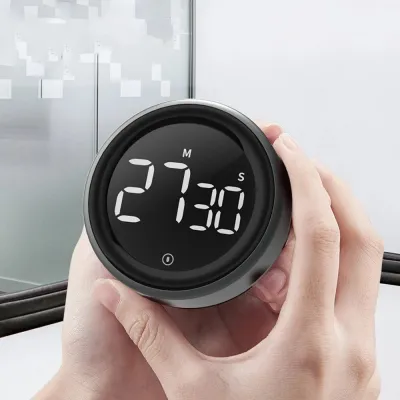
Prices are valid at publication and may change. Please refer to the product page for the latest price.
First, consider the ambient lighting conditions of the room. A space that requires absolute darkness for sleep demands a completely different display technology than a brightly lit home office or a sun-drenched living room. Second, assess the physical footprint and power availability. A crowded desk benefits from a compact, wireless, battery-operated device, whereas a central living room hub can accommodate a larger, corded unit near a power outlet. Finally, define the primary task of the clock. Is it meant to help you wake up, keep you on schedule during deep-focus work, or serve as an informational dashboard for the entire household?
To guide your decision, focus on three primary dimensions of the Xiaomi clock lineup:
- Display Technology: Xiaomi utilizes three main display types. Electronic Ink (e-ink) mimics physical paper, offering exceptional contrast and wide viewing angles under ambient light without emitting any glare. Liquid Crystal Displays (LCD) are highly legible in well-lit rooms and often feature soft backlights. Light Emitting Diode (LED) displays offer vibrant, self-illuminated digits that are highly visible in the dark but require careful brightness management.
- Smart Integration: Some models function as standalone digital clocks, while others connect to the Mi Home app via Bluetooth or Wi-Fi. The smartest variants feature full touchscreens, built-in speakers, and voice assistant compatibility, allowing them to act as central controllers for other smart home appliances.
- Environmental Sensors: Many models integrate high-precision temperature and humidity sensors. These sensors do more than just display local climate data; they can serve as triggers for smart home automation, such as turning on a fan or a humidifier when specific thresholds are crossed.
Prioritizing these dimensions based on the room’s primary function ensures you invest in features you will actually use while avoiding unnecessary complexity.
Bedroom Setup: Sleep Hygiene, Night Lights, and Gentle Alarms
In the bedroom, a clock must support rest and recovery rather than disrupt it. The primary challenge in a sleeping environment is light pollution. Exposure to artificial blue light or overly bright displays at night can suppress melatonin production and compromise your sleep quality. Therefore, display selection is the most critical factor for a bedside clock.

E-ink displays are highly recommended for sensitive sleepers because they do not emit light. Instead, they rely on the room’s ambient light during the day, remaining completely dark at night unless you turn on a bedside lamp. If you prefer a display that is visible in the dark, look for Xiaomi clocks equipped with automatic dimming capabilities. These models use built-in ambient light sensors to dynamically adjust the screen brightness, dropping to a faint, non-disruptive glow once the bedroom lights are turned off. Alternatively, models with scheduled night modes allow you to program specific hours during which the display dims or shuts off entirely.
Audio design is another crucial element of bedroom sleep hygiene. Traditional alarms that startle you awake with loud, abrupt noises can trigger a spike in cortisol and leave you feeling groggy. Many smart Xiaomi clocks address this by offering progressive alarms that start at a barely audible whisper and gradually increase in volume over several minutes. Some advanced models also support customizable sleep aids, allowing you to play soothing white noise, rainfall, or gentle nature sounds directly from the bedside unit to help you drift off to sleep.
Environmental comfort is also vital for high-quality rest. Singapore’s warm, humid climate often requires running an air conditioner overnight, which can dry out the air and cause respiratory discomfort. A bedroom clock with integrated temperature and humidity sensors allows you to monitor these variables at a glance. By observing these metrics, you can make informed adjustments to your air conditioner’s thermostat or your dehumidifier settings.
Decision Checkpoint: If you are highly sensitive to light or sound, prioritize a clock with physical buttons or a touch-sensitive top surface. Relying solely on a smartphone app to snooze an alarm or turn off a display is highly counterproductive, as unlocking your phone exposes your eyes to bright screen light and potential digital distractions in the middle of the night. A physical button allows you to interact with the clock entirely by touch, preserving your sleep state.
Office Desk: Focus Timers, Minimalist Displays, and Productivity
An office desk demands an environment optimized for focus, organization, and visual ergonomics. A desk clock should serve as a subtle productivity companion rather than a source of visual clutter or constant digital distraction. When selecting a clock for your workspace, the emphasis shifts toward clean design, compact footprints, and task-management features.
Visual ergonomics are essential when you are staring at screens for hours. A minimalist digital desk clock with a high-contrast e-ink or anti-glare LCD display provides clear, instant time and date readings without adding to the visual noise of your workspace. Because these displays do not emit harsh light, they do not compete with your computer monitor for your eyes’ attention, reducing overall eye strain during long working sessions.
Productivity features can transform a simple timekeeper into an active work assistant. Several Xiaomi clocks support countdown timers and stopwatch functions that are highly useful for time-blocking techniques, such as the Pomodoro method (working for 25 minutes followed by a 5-minute break). Instead of using your smartphone for timers—which frequently leads to checking notifications and losing focus—you can initiate a countdown directly on your desk clock. Some smart models allow you to configure custom work-interval reminders and meeting alerts via the companion app, syncing your daily schedule directly to your desk.
Power delivery and desk organization are also key practical considerations. A cluttered desk with tangles of cables can negatively impact mental focus. Battery-operated Xiaomi clocks, which typically run on standard AA, AAA, or button-cell batteries, offer the ultimate placement flexibility. Because e-ink displays consume incredibly little power, these battery-operated models can run for months or even a year before requiring a battery change, keeping your desk entirely cord-free. If you opt for a USB-powered model, look for one with a USB-C port, which allows you to share a single cable with your laptop, phone charger, or monitor hub to minimize cable clutter.
Decision Checkpoint: Match the display type to your workspace lighting. If your home office is brightly lit by natural sunlight or overhead fixtures, an e-ink or high-contrast LCD display is ideal because it remains perfectly readable without glare. However, if you frequently work late at night in a dimly lit room, select an LED model with adjustable brightness or a manual backlight so you can check the time without needing to turn on your main office lights.
Living Room: Smart Home Hubs, Large Displays, and Climate Monitoring
As the central gathering space of the home, the living room requires a clock that serves the needs of multiple household members. Here, the primary requirements are high legibility from a distance, aesthetic integration with your home decor, and advanced smart home integration.
In a spacious living room, a small desk clock is impractical because it cannot be read from the sofa or the dining table. A living room clock must feature a large-format display with bold, high-contrast digits. The design should complement your interior styling, whether you have a modern Scandinavian, industrial, or minimalist home. Clean, white frames and borderless digital displays allow these clocks to blend seamlessly onto TV consoles, bookshelves, or walls, acting as a polished design element rather than looking like utility office equipment.
For households invested in a smart home ecosystem, a smart display clock can serve as a central command center. These advanced models feature full-color touchscreens and built-in speakers, allowing you to interact with your entire smart home network. You can use the screen to view live feeds from your Mi Home security cameras (such as monitoring a baby sleeping in another room or checking who is at the front door), display real-time weather forecasts, view family calendars, and control other connected appliances like smart lights, fans, or robot vacuums.
Climate monitoring is especially valuable in the living room, which is typically the largest air-conditioned zone in a Singaporean home. A clock equipped with precise temperature and humidity sensors helps you maintain a comfortable environment for family and guests. When integrated into the Mi Home app, these sensors can act as automation triggers. For example, you can program a rule that automatically turns on a smart standing fan or adjusts your smart air conditioner’s fan speed when the living room temperature rises above 28°C, or activates a smart humidifier if the air becomes too dry.
Decision Checkpoint: Evaluate your existing smart home infrastructure before choosing a high-end smart display clock. If you already own a dedicated smart speaker or a large smart assistant hub in your living room, a secondary smart display clock might be redundant and unnecessarily complex. In that case, a large, simple digital clock focused purely on excellent legibility and local climate tracking is a more practical and cost-effective choice. However, if you want to consolidate multiple devices into a single, elegant desktop dashboard, a smart display clock is the ideal solution.
Pre-Purchase Checklist: Power, Network, and App Compatibility in Singapore
To ensure a seamless setup and avoid compatibility issues, review this practical checklist before purchasing your Xiaomi clock.
Power Supply and Adapter Safety
Many modern Xiaomi clocks ship with a USB cable (either USB-C or Micro-USB) but do not include a wall adapter in the box. You will need to supply your own 5V charging brick.
- Voltage and Amperage: Ensure your USB adapter matches the exact voltage and current requirements specified in the clock's user manual (typically 5V/1A or 5V/2A).
- Safety Certification: In Singapore, always use a wall adapter that carries the Enterprise Singapore Safety Mark to ensure protection against electrical short circuits and overheating.
- Fast Chargers: Avoid plugging simple digital clocks into high-wattage fast chargers (such as those meant for laptops) unless the manufacturer explicitly states compatibility, as some basic devices lack the internal power-negotiation chips required to handle high-wattage inputs safely.
Network Requirements and Signal Strength
Smart Xiaomi clocks rely on wireless connectivity to sync time, update weather data, and communicate with other smart devices.
- Wi-Fi Band: Almost all smart clocks and hubs only support the 2.4GHz Wi-Fi band. They cannot detect or connect to 5GHz networks. Ensure your home router broadcasts a dedicated 2.4GHz signal, and that your smartphone is connected to this band during the initial setup process.
- Physical Obstructions: Singaporean HDB flats and private apartments are constructed with thick reinforced concrete walls, which can significantly degrade Wi-Fi signals. If you are placing a smart clock in a bedroom far from your main router, verify that the location has a stable Wi-Fi signal, or consider installing a Wi-Fi mesh node to ensure reliable connectivity.
App and Server Region Compatibility
This is one of the most critical factors for Singaporean buyers, especially when purchasing devices online.
- Server Alignment: The Mi Home app requires you to select a server region during setup. Global models officially distributed in Singapore work perfectly on the local "Singapore" server. However, parallel imports or models purchased directly from overseas e-commerce platforms are often hardcoded to the "Chinese Mainland" server.
- The Regional Dilemma: If you purchase a Chinese Mainland model, you may have to switch your Mi Home app region to China to pair the device. If your existing smart home appliances (like robot vacuums or smart fans) are registered on the Singapore server, they will not appear when your app is set to the China server. Devices on different servers cannot interact or trigger automations together. Always verify the regional compatibility of the clock with your current smart home setup before buying.
Placement Safety
- Cord Management: For corded clocks, ensure the power cable is routed safely behind furniture and kept away from high-traffic walkways to prevent tripping hazards or damage to the device's charging port.
- Ventilation: Smart display clocks contain processors and screens that remain powered on continuously, generating mild, localized heat. Ensure these devices are placed in well-ventilated areas, away from direct sunlight, heat sources, or flammable materials.
Frequently Asked Questions (FAQ)
Do Xiaomi smart clocks require a constant Wi-Fi connection to tell time?
No, Xiaomi smart clocks do not require a permanent Wi-Fi connection for basic timekeeping. They are equipped with an internal real-time clock (RTC) chip that continues to track time accurately even if your internet connection drops or if you take the clock offline. However, without an active Wi-Fi connection, you will lose access to all smart features, including real-time weather updates, voice assistant commands, remote app adjustments, and smart home automation triggers. Additionally, over several weeks or months of continuous offline use, the internal clock may experience a minor time drift of a few seconds or minutes. This drift is corrected automatically as soon as the device reconnects to the network and synchronizes with online time servers.
Can I use a Xiaomi bedside clock as a smart home hub in the living room?
While you can physically place a bedside clock in your living room, it is generally not recommended if you want a fully functional living room hub. Bedside models are engineered specifically for close-range viewing and quiet, personal environments. Their screens are typically too small to read comfortably from across a large room, and their built-in speakers lack the volume, range, and clarity required to fill a larger living space or to serve as a clear smart home speaker. Furthermore, some bedside models rely on Bluetooth gateway functionality rather than direct Wi-Fi, which can limit their range and response speed when managing devices across a larger home. For a living room, it is highly recommended to choose a dedicated smart display clock designed with a larger screen, wider viewing angles, and a more powerful speaker system.
Community discussion
Share your experience or ask a question. Comments are reviewed before publication.