
Planning a whole-home lighting scheme requires balancing aesthetics, functionality, and structural limits. Spotlights offer a clean, modern way to illuminate living spaces, but installing too many can make a home feel like a commercial showroom, while too few leaves rooms dark. Achieving the perfect balance depends on calculating the correct number of fixtures based on room dimensions and positioning them strategically to avoid glare.
By taking a systematic approach to your layout, you can create a layered, inviting atmosphere. This guide walks you through the essential calculations, spacing rules, room-by-room strategies, and critical safety checks needed to plan your home’s spotlight layout.
How to Calculate the Number of Spotlights per Room
Determining the exact number of spotlights for a room requires moving away from wattage-based rules of thumb. Modern LED spotlights are highly efficient, meaning wattage no longer directly correlates with brightness. Instead, base your calculations on lumens (visible light emitted) and lux (lumens per square meter).
Products mentioned in this guide
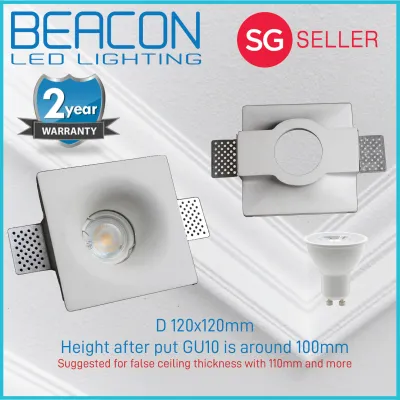
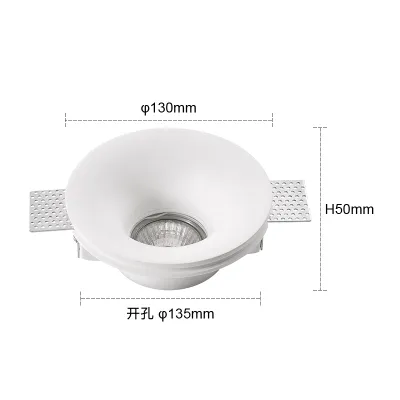
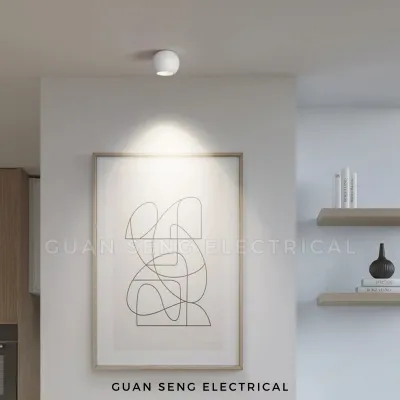
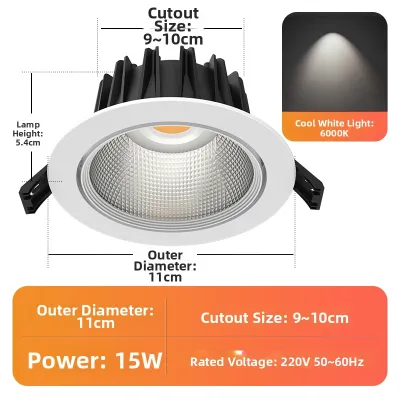
Prices are valid at publication and may change. Please refer to the product page for the latest price.
Start by identifying the target lux level for the room. General living areas and bedrooms typically require a softer ambiance of around 100 to 150 lux. High-activity zones like kitchens, home offices, and bathrooms demand brighter, task-oriented illumination of around 300 lux.
Multiply the target lux by the room’s area in square meters to find the total required lumens. For example, a living room measuring 20 square meters requiring 150 lux needs 3,000 lumens. Next, check the spotlight packaging to find the lumen output of your chosen fixture. If your preferred spotlight produces 500 lumens, dividing 3,000 by 500 indicates you will need approximately six spotlights.
Ceiling height also plays a critical role. Standard residential ceilings of 2.6 to 2.8 meters allow light to spread naturally. However, if you are working with double-volume ceilings, the light must travel further. In these scenarios, select spotlights with higher lumen outputs or narrower beam angles to ensure the light remains concentrated when it reaches living zones.
General Placement Rules and Spacing Guidelines
Proper spacing ensures even light distribution, eliminates dark corners, and prevents harsh, overlapping pools of light. A reliable baseline rule for general ambient lighting is to space your spotlights at a distance equal to half the height of your ceiling. For a standard 2.8-meter ceiling, space the fixtures approximately 1.4 meters apart.

The distance between spotlights and walls is equally important. To prevent harsh shadows, position fixtures at a distance from the wall that is roughly one-third to one-half of the spacing distance. Placing spotlights 50 to 60 centimeters away from the wall allows light to wash down vertical surfaces gently, making the room feel larger.
Before finalizing your layout, verify the physical constraints of your ceiling. Use a stud finder or consult architectural drawings to map out the locations of ceiling joists, metal support frames, air-conditioning ducting, and plumbing lines. Discovering a structural obstruction after cutting a hole in your plasterboard false ceiling is a costly mistake that can disrupt your entire symmetrical layout.
Aesthetically, spotlights look best when arranged in clean, symmetrical lines or structured geometric patterns that align with the architectural features of the room. Avoid scattering fixtures randomly. Even if a specific corner requires extra light, integrate that fixture into the broader grid or address the localized need with a dedicated task light or floor lamp.
Room-by-Room Spotlight Layout Strategies
Every room in your home serves a different purpose, meaning a uniform grid of spotlights rarely provides the best results. Adjusting the density, beam angles, and positioning of your fixtures based on the primary activities in each space is key to achieving a balanced home lighting design.
Living Areas and Bedrooms
In relaxation zones like living rooms and bedrooms, comfort is the primary focus. Placing spotlights directly above sofas, armchairs, or the head of a bed causes uncomfortable glare when you are sitting or lying down. Instead, position the fixtures to direct light toward walls, decorative features, or artwork. This wall-washing technique bounces soft, indirect light back into the room, creating a warm atmosphere.
To maximize flexibility, avoid wiring all your spotlights to a single switch. Divide the fixtures into separate switching zones, allowing you to control different groups of lights independently. For instance, you can have one zone for general ambient lighting and another dedicated to highlighting architectural features.
Integrating compatible dimmer switches is highly recommended for living areas and bedrooms. Dimming allows you to adjust the light intensity to match the time of day, helping your body transition from daytime productivity to evening relaxation. Always verify that both your chosen spotlights and your dimmer switches are explicitly rated as compatible by the manufacturer to prevent flickering.
Kitchens and Bathrooms
Kitchens and bathrooms require a highly functional, task-oriented approach. In the kitchen, position spotlights directly over countertops, prep islands, and sinks. Ensure the fixtures are placed slightly in front of where you stand rather than directly behind you; this prevents your head and shoulders from casting shadows over your workspace.
Bathrooms present unique environmental challenges due to high humidity. When planning bathroom lighting, always check the Ingress Protection (IP) rating on the spotlight label. For fixtures installed directly above showers or bathtubs, look for a minimum rating of IP44, which protects against splashing water, or IP65 for areas exposed to low-pressure water jets.
Additionally, keep all light fixtures a safe distance away from direct water spray and intense heat sources, such as cooktops. High temperatures and moisture can degrade the electronic drivers inside LED spotlights, shortening their lifespan. Ensuring proper ventilation in these damp areas will also help protect your lighting investment.
Pre-Installation Checks and Professional Boundaries
Before purchasing fixtures or cutting holes, perform critical structural and electrical checks. First, identify your ceiling material. Many modern apartments feature concrete structural ceilings, which lack the recessed depth required for standard spotlight housing. In these cases, you must install a gypsum false ceiling to create the necessary cavity depth—typically at least 100mm—or opt for surface-mounted spotlight tracks.
Electrical safety must always be your top priority. Before undertaking any inspection or preparation work near electrical wires, turn off the main power supply at your home’s distribution board. Use a reliable, non-contact voltage tester to verify that the circuits are completely dead before touching any components. Never assume a circuit is safe simply because the wall switch is turned off.
While planning your layout can be done independently, the actual installation involves strict professional boundaries. In Singapore, any new electrical wiring, circuit modifications, load calculations, or drilling into concrete structural slabs must be carried out by a licensed electrician. A professional installer ensures that your home’s electrical system can safely handle the new load, that all connections are properly grounded, and that the installation complies with local safety standards.
Frequently Asked Questions (FAQ)
Can I mix different beam angles in the same room?
Yes, mixing beam angles is an excellent way to create depth. Narrow beam angles (typically 15 to 24 degrees) produce a concentrated cone of light, making them ideal for accent lighting to highlight artwork or architectural features. Wide beam angles (36 to 60 degrees) distribute light over a broader area, making them better suited for general ambient illumination. When mixing angles, ensure the fixtures are positioned carefully to avoid creating mismatched, distracting pools of light on your floors or walls.
What is the ideal color temperature for whole-home spotlights?
The ideal color temperature depends on the function of each room. Warm white light (2700K to 3000K) creates a cozy, inviting atmosphere perfect for bedrooms and living rooms. Neutral white light (4000K) offers a clean, balanced appearance that enhances focus in kitchens, home offices, and bathrooms. Cool white light (5000K or higher) is highly clinical and rarely recommended for residential living spaces. Always check the Kelvin (K) rating on the product packaging and maintain a consistent color temperature within the same open-plan sightline to ensure visual harmony.
Community discussion
Share your experience or ask a question. Comments are reviewed before publication.