
When comparing Wiz and Philips Hue smart bulbs for energy efficiency, there is no single universal winner because both brands primarily use LED technology, which is inherently highly efficient. The actual energy savings depend less on the brand name and more on the specific model’s wattage, lumen output, standby power consumption, and the smart features you use to automate your lighting. This guide breaks down the specifications, system architectures, and automation capabilities you need to evaluate to determine which brand aligns best with your home’s energy-saving goals.
Transitioning to smart lighting is one of the simplest ways to modernize your living space, especially in urban environments like Singapore where monthly utility bills are a constant consideration. However, because smart bulbs remain connected to your home network even when the light is turned off, they introduce unique energy dynamics that traditional bulbs do not have. Understanding these factors will help you make an informed decision that keeps your home bright and your energy consumption low.
Understanding Smart Bulb Energy Consumption
To accurately evaluate the energy efficiency of any smart bulb, you must look at its two distinct operating states: active power consumption and standby power consumption. Active consumption is the electricity the bulb draws when it is actively emitting light. This is measured in watts, and it directly correlates with the brightness level, measured in lumens, and the color settings you select.
Products mentioned in this guide
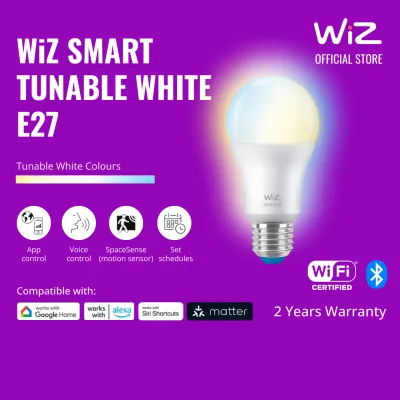
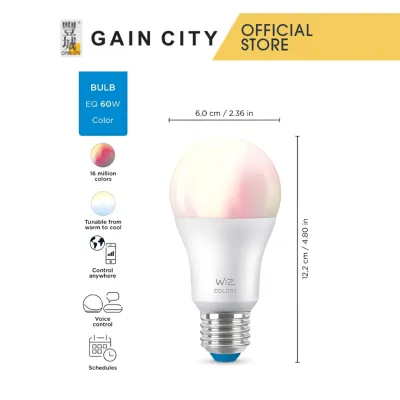
Prices are valid at publication and may change. Please refer to the product page for the latest price.
Standby power consumption, often referred to as vampire draw, is the small amount of electricity the bulb uses when the light is turned off via an app or voice command. Because the bulb must keep its internal wireless receiver active to listen for your next command, it never truly shuts down completely unless you turn off the physical wall switch. While this standby draw is minimal for a single bulb, it can accumulate if you have dozens of smart devices installed throughout your home.
Additionally, the color temperature and color rendering settings you choose will affect real-time power draw. Adjusting your bulb to a warm white or a dimmed pastel color uses different combinations of internal LED diodes than running the bulb at its maximum cool white brightness. By understanding how these variables interact, you can better interpret the technical specifications listed on product packaging.
Comparing Wiz and Philips Hue Specifications
When shopping for smart bulbs, you should always compare specific product specifications rather than relying on generalized brand assumptions. Start by checking the rated wattage and the maximum lumen output on the packaging or the manufacturer’s official product pages. This allows you to calculate the luminous efficacy, which is the ratio of lumens produced per watt of electricity consumed.

For example, if you are comparing an 800-lumen bulb from Wiz with an 800-lumen bulb from Philips Hue, look closely at the active wattage required to reach that brightness. A bulb that achieves 800 lumens using 8.5 watts is technically more efficient than one that requires 9 watts for the exact same output. These minor differences might seem negligible for a single bulb, but they become more significant when multiplied across multiple light fixtures in a large household.
Standby power is another critical specification to verify. Because Wiz bulbs connect directly to your home Wi-Fi network, their internal chips must maintain a relatively robust connection to your router. Philips Hue bulbs, which primarily use the low-power Zigbee protocol, generally require less standby power per bulb to maintain their network connection. You can often find these standby power ratings declared in the manufacturer’s technical documentation or local energy database registries.
In Singapore, you can also look for official energy efficiency labels or certifications on the packaging. These labels provide a standardized way to verify the energy performance of specific bulb models. Always ensure you are comparing equivalent models, such as comparing a color-changing bulb to another color-changing bulb, as basic white bulbs inherently have different power profiles.
Features That Impact Real-World Energy Savings
While technical specifications tell you how efficient a bulb is in a laboratory, your real-world energy savings will depend heavily on how you use the smart features of each ecosystem. Automation and scheduling are the most effective tools for reducing unnecessary energy use. Both Wiz and Philips Hue allow you to set precise schedules, ensuring that lights in empty rooms, balconies, or carports turn off automatically at designated times or at sunrise.
Integrating sensors into your smart lighting setup can dramatically cut down on wasted electricity. By pairing your bulbs with motion sensors in transitional spaces like hallways, bathrooms, or walk-in wardrobes, you ensure that lights are only active when someone is physically present. Philips Hue offers a highly responsive ecosystem of dedicated motion and ambient light sensors, while Wiz supports its own range of budget-friendly motion sensors and smart scheduling options.
Dimming capabilities also play a massive role in energy conservation. Unlike older incandescent bulbs, dimming a smart LED bulb directly and proportionally reduces its active power draw. Both brands offer wide dimming ranges, allowing you to lower the brightness to create a cozy evening ambiance while simultaneously lowering your electricity consumption. Ensuring your bulbs can dim smoothly to very low levels without flickering is key to maximizing these savings.
System Requirements and Hidden Power Costs
When calculating the total energy footprint of your smart lighting, you must consider the entire system architecture, including any required hub hardware. Wiz bulbs operate on a direct-to-Wi-Fi architecture, meaning each bulb connects directly to your home router without the need for an intermediary device. This eliminates the purchase cost and the continuous standby power draw of an extra hardware hub.
In contrast, the Philips Hue ecosystem is designed to work best with the Philips Hue Bridge, a dedicated Zigbee hub that plugs directly into your router and a wall outlet. This Bridge runs continuously to manage the mesh network of your bulbs. While the Bridge itself draws a small, constant amount of electricity, this continuous power draw must be factored into your overall household energy calculations.
However, the trade-off comes down to scale. If you only plan to install two or three smart bulbs, a hub-free Wi-Fi setup like Wiz is generally more energy-efficient and cost-effective because you avoid the constant standby draw of a hub. But if you are installing thirty bulbs throughout your home, thirty individual Wi-Fi bulbs constantly communicating with your router will not only congest your home network but also draw more cumulative standby power than thirty Zigbee bulbs connected to a single, low-power Philips Hue Bridge.
Network stability also influences power consumption. If a Wi-Fi bulb is placed in a spot with poor signal strength, it may consume more energy as it repeatedly attempts to reconnect to the router. Zigbee mesh networks, like the one used by Philips Hue, allow bulbs to pass signals to one another, which can improve connection stability and maintain consistent, low-power operation across large homes.
How to Choose the Most Efficient Option for Your Setup
To choose the most energy-efficient smart lighting setup for your home, you should evaluate your specific living space, budget, and long-term automation goals. Your decision should be based on the scale of your installation and how you plan to control your lights daily.
Choose Wiz if you prefer a straightforward, hub-free setup for a smaller apartment or a limited number of fixtures. It is an excellent, cost-effective choice if your primary goal is to establish basic schedules, control lights remotely, and avoid the continuous power draw of an extra hardware bridge. Wiz provides a highly accessible entry point into smart lighting without requiring a significant upfront investment.
Choose Philips Hue if you plan to build a comprehensive, whole-home smart lighting system with advanced automation, multiple sensors, and switches. The Zigbee mesh network is highly efficient at scale, keeping your Wi-Fi network clear and minimizing the cumulative standby power of your bulbs. The advanced sensor integrations and reliable performance make it ideal for larger homes where automated energy-saving scenes are a priority.
Before purchasing any smart bulbs, always verify your existing home infrastructure. Ensure the bulbs you select match the voltage of your local grid and fit the physical base types of your light fixtures, such as E27 screw bases or GU10 spotlights. Additionally, remember that smart bulbs must never be used with traditional physical dimmer switches, as this can cause electrical conflicts, flickering, or permanent damage to the bulb’s internal electronics. If you have legacy dimmers, they should be bypassed or replaced by a qualified professional, and you should always isolate the mains power at the distribution board before installing or replacing any electrical fixtures.
Frequently Asked Questions (FAQ)
Do smart bulbs use electricity when turned off?
Yes, smart bulbs consume a small amount of electricity even when they are turned off via an app, voice assistant, or automation schedule. This is known as standby power or vampire draw, and it is necessary to keep the bulb’s internal wireless receiver active so it can respond to your commands instantly. While this standby draw is typically very low—often under one watt per bulb—it does run continuously, so the cumulative consumption will scale with the total number of smart bulbs installed in your home.
Does dimming a smart bulb actually save energy?
Yes, dimming a smart LED bulb directly reduces its active power consumption. Modern smart bulbs use advanced electronic drivers to control the flow of electricity to the LED diodes. When you lower the brightness level using your smart app or a compatible smart switch, the bulb draws proportionally less wattage from your electrical outlet. Utilizing automated dimming schedules, especially during the evening hours, is an excellent way to reduce your overall energy footprint while maintaining a comfortable home environment.
Community discussion
Share your experience or ask a question. Comments are reviewed before publication.