
Quick Answer: Choosing the Right Wood Diffuser for Daily Use
Selecting an essential oil wood diffuser requires balancing visual appeal with practical performance. To find the right device for your daily routine, focus on how you intend to use the diffuser throughout the day.
- Choose a large-capacity tank (300mL to 500mL) with an intermittent mist setting if your primary goal is overnight relaxation in a bedroom. This combination ensures the device runs continuously for eight hours or more without requiring a midnight refill.
- Choose a compact model (100mL to 200mL) with precise timer settings and continuous mist if you want to boost focus in a home office or study. This setup delivers a concentrated burst of fragrance for a designated block of time, such as one or two hours, before shutting off automatically.
- Choose high-quality wood-grain plastic (PP or ABS) if you prioritize low maintenance and durability, especially in humid environments like Singapore where natural wood is highly susceptible to moisture damage.
- Choose genuine hardwood if you want an authentic, premium aesthetic piece for a dry, air-conditioned living room and are willing to perform regular wipe-downs to prevent warping.
The ultimate utility of your diffuser depends on matching its mist output rate and water capacity to the dimensions of your room and your personal schedule.
Core Functional Features to Compare Across Brands
While the warm, organic aesthetic of a wood-finish diffuser often influences the initial purchase, daily satisfaction depends entirely on functional design. A beautiful exterior cannot compensate for a device that requires constant refilling, fails to scent the room adequately, or presents safety risks when left unattended.
Products mentioned in this guide
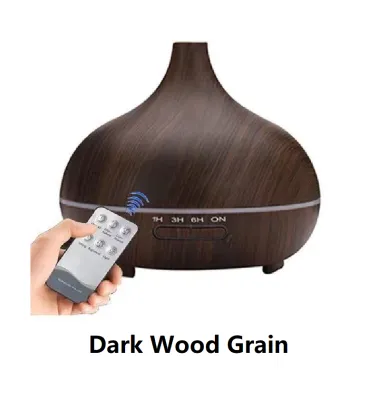
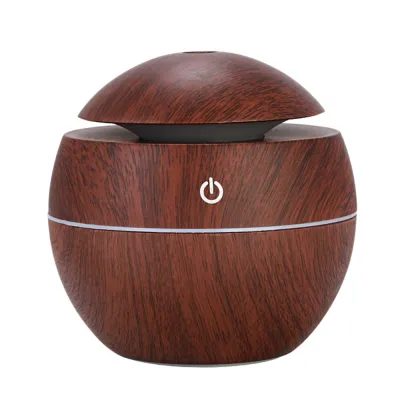
![[SG Seller] Essential Oil Diffused Wood Aroma Essential Oils Diffuser Wooden Essential Oil Aromatherapy Diffuser](https://img.lazcdn.com/g/p/7d9d516a223080d3a0d24d9aa764023f.jpg_400x400q80.jpg_.webp)
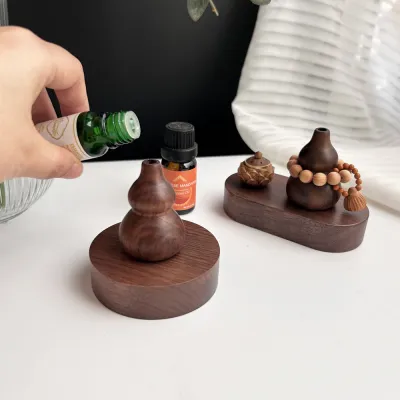
Prices are valid at publication and may change. Please refer to the product page for the latest price.

To make an informed investment, you must look beyond the outer shell and evaluate how different brands manage water, mist, and operating time. Comparing these core operational elements allows you to select a model that integrates seamlessly into your home environment.
Mist Output Modes: Continuous vs. Intermittent
The method by which a diffuser releases mist directly impacts how quickly your essential oils are consumed and how intensely the fragrance fills your space. Ultrasonic diffusers typically offer two primary misting modes: continuous and intermittent. Understanding the mechanical differences between these options helps you control both scent saturation and oil conservation.
Continuous mist mode delivers a steady, uninterrupted stream of micro-fine vapor from the moment you turn the device on until the water tank is empty. This setting is ideal when you need immediate, robust scent dispersion to mask odors or quickly alter the mood of a room. However, because the ultrasonic plate vibrates constantly, continuous mode depletes both water and essential oils rapidly, often limiting the total runtime of a standard 150mL diffuser to roughly three to four hours.
Intermittent mist mode operates on a programmed cycle, typically alternating between 30 seconds of misting and 30 seconds of rest. This cycling action significantly extends the operating life of a single water tank, often doubling the total runtime compared to continuous mode. This mode also helps prevent scent fatigue, a common sensory phenomenon where your olfactory receptors become desensitized to a constant fragrance, making it seem as though the scent has vanished.
When comparing brands, look closely at whether the device allows you to adjust the mist volume independently of the cycle settings. Premium models often feature high and low mist output toggles, giving you granular control over the volume of vapor released per hour. This dual-layer adjustment allows you to customize the scent intensity to match both small, enclosed studies and larger, open-concept spaces.
Timer Settings and Auto-Shutoff
Operating a diffuser should not require constant supervision or manual tracking. Timer settings provide a convenient way to run the device for a predetermined period, allowing you to go about your day or fall asleep without worrying about turning it off.
Basic wood diffusers often feature fixed timer intervals, typically labeled as 1H, 3H, or 6H. These settings are highly practical for structured routines, such as a one-hour yoga session or a three-hour winding-down period before bed. More advanced models from premium brands may offer customizable scheduling through smartphone applications or interval programming, allowing you to set specific start and stop times throughout the day.
Regardless of the timer complexity, an automatic shut-off mechanism is the most critical safety feature to verify before purchasing. This system uses an internal sensor to detect when the water level in the tank falls below a safe minimum threshold. Once triggered, the sensor immediately cuts power to the ultrasonic plate. Without this feature, the ultrasonic transducer would continue to vibrate in a dry tank, leading to rapid overheating, permanent damage to the internal electronics, and potential electrical hazards.
Some entry-level or budget-friendly models feature a mist-only mode that lacks any timer functionality, running continuously until the water is entirely depleted. While these models are often less expensive, they demand closer manual monitoring and carry a higher risk of dry-running if the auto-shutoff mechanism fails. Prioritizing models with both clear, physical timer buttons and certified auto-shutoff sensors ensures a safer, more reliable user experience.
Water Tank Capacity and True Runtime
A common misconception when shopping for essential oil diffusers is that a larger water tank automatically translates to a longer operating time. While tank capacity is a major factor, the true runtime of any device is determined by the relationship between the physical volume of the water tank and the hourly mist output rate.
Water tank capacity is measured in milliliters (mL), with common sizes ranging from compact 100mL office models to substantial 500mL or even 1000mL household units. The mist output rate, measured in milliliters per hour (mL/h), dictates how quickly that water is converted into vapor. For example, a diffuser with a 300mL tank that outputs mist at a rate of 30mL/h will theoretically run for 10 hours on a continuous setting. However, if a different brand’s 300mL model has a high-output mode that vaporizes 60mL/h, it will run for only 5 hours before emptying.
To calculate the expected runtime of any model you are considering, use this simple formula: divide the total tank capacity by the manufacturer’s stated hourly output rate for your preferred misting mode. Keep in mind that intermittent settings will generally double this calculated figure by pausing the output for half of the operating cycle.
When filling your diffuser, it is vital to respect the internal MAX water line marked inside the tank. Overfilling the tank, even by a few milliliters, can restrict the space required for the ultrasonic plate to vibrate and generate mist. This restriction often results in a weak, barely visible vapor stream, or can cause water to pool around the air outlet, potentially leaking into the base and damaging the internal fan motor.
Evaluating Brand Specifications and Build Quality
To ensure your wood diffuser performs reliably over several years, you must carefully evaluate the materials used in its construction and verify its electrical specifications for your local environment.
Real Wood vs. Wood-Grain Plastic
The choice between genuine wood and wood-grain plastic involves a trade-off between aesthetic authenticity and long-term durability. Genuine wood diffusers—often crafted from bamboo, oak, or walnut—offer a premium, tactile quality and unique grain patterns. However, natural wood is sensitive to environmental conditions. In humid climates like Singapore, untreated or poorly sealed real wood can absorb airborne moisture, leading to warping, cracking, or mold growth.
In contrast, wood-grain diffusers made from high-grade plastics like polypropylene (PP) and acrylonitrile butadiene styrene (ABS) provide excellent durability and water resistance. These materials withstand constant exposure to moisture and essential oils without degrading, cracking, or staining. They require minimal upkeep and are immune to warping. High-quality wood-grain plastic is often the more practical choice for daily, hassle-free use.
Power and Voltage Compatibility
Electrical safety and compatibility are paramount when integrating any new appliance. In Singapore, the standard domestic electrical supply operates at a voltage of 230V and a frequency of 50Hz, utilizing Type G three-pin plug sockets. When purchasing a wood diffuser, verify that the included power adapter is rated for this voltage range.
Many modern diffusers utilize a standard USB power connection rather than a dedicated wall plug. While USB connections offer excellent versatility, you must pair them with a compatible, high-quality Type G wall adapter. Ensure the adapter’s output wattage matches the manufacturer’s specifications—typically 5W to 10W for compact models—to prevent underpowering, which can lead to weak mist output. For larger, high-output diffusers requiring a dedicated DC wall adapter, look for recognized safety certifications to guarantee protection against overcurrent and short-circuits.
Noise Levels
Although ultrasonic diffusers are generally marketed as near-silent appliances, they are not completely noiseless. The internal mechanism relies on a small fan to push the mist upward and out of the nozzle, which generates a faint, continuous hum. Additionally, as the water is vaporized, you will occasionally hear a gentle bubbling or dripping sound inside the tank.
Most reputable brands list the operating noise level of their diffusers in decibels (dB). For a bedroom or quiet study, look for a device rated below 35 dB, which is roughly equivalent to a soft whisper. If you are highly sensitive to sound while sleeping, check user reviews specifically for complaints regarding high-pitched fan whines or excessively loud water dripping sounds, as these minor acoustic details can significantly disrupt a quiet environment.
Matching Diffuser Specs to Your Space and Routine
The ideal combination of water capacity, mist modes, and material quality is not universal; it depends heavily on where the diffuser will be placed and how it fits into your daily schedule. By analyzing the unique demands of different rooms, you can select a model with specifications tailored to that specific environment.
Bedrooms and Quiet Zones
A bedroom diffuser should promote relaxation and undisturbed rest, requiring features that support a peaceful sleeping environment over an extended period.
To ensure the diffuser runs throughout the night without interruption, prioritize models with an intermittent mist mode and a water tank capacity of at least 300mL. This combination easily delivers 8 to 10 hours of continuous operation on a low setting, keeping the air subtly scented until morning. An automatic shut-off feature is absolutely non-negotiable for overnight use, as it guarantees the device will power down safely the moment the water runs dry, allowing you to sleep with complete peace of mind.
Light control is another critical factor for sleeping quarters. Many wood diffusers feature integrated LED bands that emit a soft glow; however, even dim lights can disrupt sleep patterns. Opt for a model that allows you to turn the LED lights off completely while maintaining the misting function, or choose one with a dedicated night mode that dims the display to a minimal level.
Living Rooms and Open Areas
In contrast to the quiet, contained environment of a bedroom, a living room or open-plan dining area demands a diffuser capable of projecting scent across a much larger square footage.
For these spacious zones, prioritize diffusers with a high-volume continuous mist mode and a larger water tank, typically 500mL or more. A powerful ultrasonic plate is necessary to generate a strong enough vapor stream to overcome natural air currents and disperse the essential oils effectively throughout the room. A larger tank also reduces the need for frequent refills during family gatherings or long weekends at home.
Because the living room is a highly visible, social space, the aesthetic appeal of the diffuser carries greater weight. This is the ideal setting for a genuine wood exterior, where the natural timber can serve as an elegant decor piece on a coffee table, console, or bookshelf. Since living rooms are generally well-ventilated and air-conditioned during use, the risk of moisture retention on the wood exterior is lower than in damp, enclosed spaces, making the maintenance of natural materials much more manageable.
Care, Maintenance, and Safety Checks
Proper care and regular maintenance are essential to preserve the performance of your wood diffuser, protect its exterior finish, and ensure safe operation over its lifespan.
Cleaning the Tank To prevent the buildup of essential oil residue, mineral scale, and bacteria, clean the water tank at least once a week. Before cleaning, turn off the power and unplug the adapter. Pour out any remaining water from the side opposite the air outlet to prevent water from entering the internal electronics. Wipe the interior surfaces with a soft, damp cloth and a few drops of mild dish soap or white vinegar to dissolve oily buildup. Never use harsh chemicals, abrasive scrubbing pads, or aerosol sprays, as these can degrade the plastic lining and damage the delicate ultrasonic plate. Never submerge the base in water.
Managing Moisture on Wood If your diffuser features a genuine wood exterior, take extra precautions to protect the natural fibers. Wipe the exterior dry immediately with a clean microfiber cloth if condensation forms. When refilling, ensure the outer rim and the underside of the lid are completely dry before reassembling the unit. Trapped moisture between the plastic inner tank and the wood outer shell can lead to water stains, warping, or mold.
Electrical and Placement Safety Always unplug the diffuser when not in use, during refills, or when cleaning. Place the device on a flat, stable, and water-resistant surface, such as a ceramic tray or sealed tabletop. Avoid placing the diffuser directly on unfinished wood furniture, delicate fabrics, or near electrical appliances. Keep the unit away from direct sunlight, open windows, and direct heat sources to protect the plastic housing and essential oils.
When to Stop and Consult If your diffuser emits a burning smell, produces unusual grinding noises, or fails to shut off automatically when empty, stop using it immediately. Unplug the power cord from the wall and inspect the device for visible damage or leakage. Do not attempt to open the base or repair the internal wiring yourself, as this can void the warranty and pose a risk of electrical shock. Instead, consult the manufacturer’s manual or contact their support team.
Frequently Asked Questions (FAQ)
Can I use tap water in a wood essential oil diffuser?
Most modern ultrasonic wood diffusers are designed to operate safely using clean, room-temperature tap water. The natural minerals present in tap water actually help the ultrasonic plate generate an effective mist. However, you must always consult your specific brand’s user manual before first use. In areas with hard water, manufacturers may recommend using filtered or distilled water to prevent mineral scale from building up on the ultrasonic transducer, which can restrict vibration and reduce mist output over time.
Do wood diffusers use more electricity than plastic ones?
The material of the outer shell has absolutely no influence on the power consumption of an essential oil diffuser. A genuine wood diffuser and a wood-grain plastic diffuser with identical internal components will consume the exact same amount of electricity. Power consumption is determined entirely by the wattage of the internal ultrasonic motor, the LED lighting system, and the active mist settings. Standard ultrasonic diffusers are highly energy-efficient appliances, typically consuming between 5W and 15W of power during active use.
Community discussion
Share your experience or ask a question. Comments are reviewed before publication.