
Selecting the ideal frame for your wall art is a design decision that directly influences how a piece is perceived and how well it integrates into your living space. While many focus solely on finding a frame that matches the colors of a print, the material of the frame itself defines the room’s visual weight and style. In a tropical climate like Singapore, this choice also carries practical implications, affecting how the frame handles high humidity and how it must be mounted on different wall types. Understanding the distinct properties of wood and metal frames allows you to make an informed choice that protects your investment and elevates your home decor.
The Short Answer: Which Frame Material Suits Your Space?
The choice between wood and metal frames depends on your artwork’s style, your room’s design language, and the structural capacity of your walls. Wood frames are the premier choice for adding warmth, texture, and an organic or traditional feel. They pair exceptionally well with classic oil paintings, delicate watercolors, botanical prints, and warm-toned interior styles like Scandinavian, rustic, or classic contemporary.
Conversely, metal frames offer sleek, ultra-thin profiles and clean lines that provide a minimalist, modern, or industrial aesthetic. They keep the visual focus entirely on the artwork, making them the standard choice for modern photography, abstract prints, and gallery-style exhibitions. Additionally, metal frames are often lighter and structurally stiffer in oversized formats, making them highly suitable for large-scale displays on partition walls.
Products mentioned in this guide
![[SG Stock] Wooden Picture Frame Wooden Photo Frame- Wall Art Poster Painting Hanging Stand Table Decor A3 A4 4R 5R](https://img.lazcdn.com/g/p/7e82d3ea8ef383b11bfd2b9f17d6a169.jpg_400x400q80.jpg_.webp)

![[SG Stock]4R/5R/6R/A4 Wooden Photo Frame Picture Frame Wood White Black Simple Picture Frame Birthday Gift present Christmas gift](https://img.lazcdn.com/g/p/18a672b2ee155101dfd5e3af7b150d07.jpg_400x400q80.jpg_.webp)
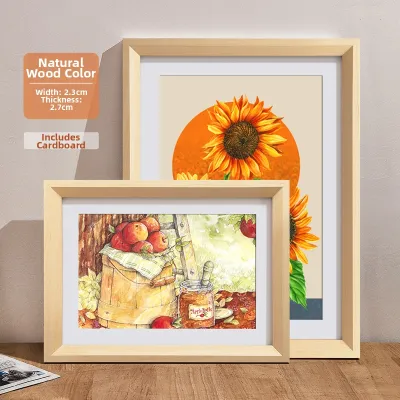
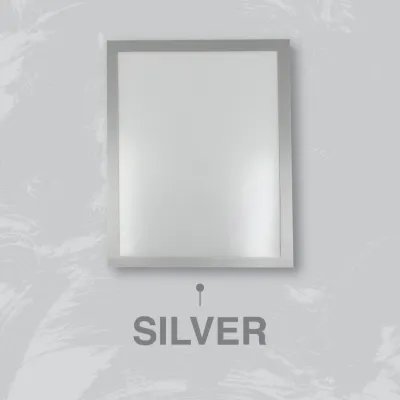
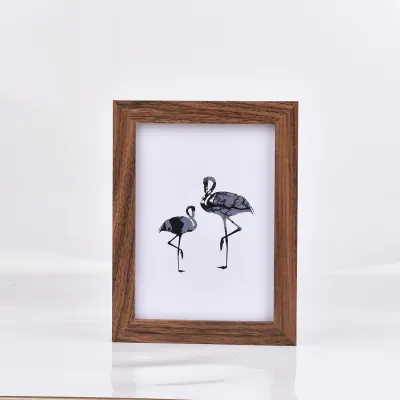
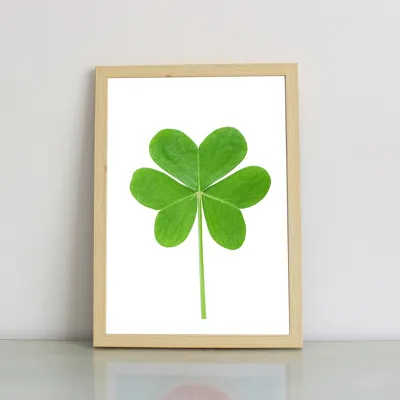
Prices are valid at publication and may change. Please refer to the product page for the latest price.
Visual Aesthetics: Matching Frames to Your Decor Style
Frames act as a visual bridge, connecting the artwork to the surrounding room and establishing a cohesive design narrative. Selecting the right material ensures your wall art feels like an intentional part of your home rather than an afterthought.

Wood Frames: Warmth, Texture, and Organic Appeal
Wood frames are highly valued for their natural variations in grain, texture, and tone, which imbue a room with an organic, grounded atmosphere. The inherent warmth of timber can soften the hard surfaces of a room, creating a cozy and inviting environment. Because wood can be carved, stained, or painted, it offers an incredibly diverse range of design possibilities.
For example, a light oak or ash frame with a clear matte finish is a staple of Scandinavian and Japandi interiors, emphasizing simplicity and bright spaces. On the other hand, a dark walnut or mahogany frame brings a sense of luxury, heritage, and gravitas, making it ideal for traditional, mid-century modern, or transitional dining rooms. Painted wood frames, such as distressed white or bold primary colors, allow you to introduce specific accent tones that coordinate with your soft furnishings.
When matching wood frames to your art, consider the medium and the subject matter. Classic oil or acrylic paintings on canvas, vintage maps, botanical illustrations, and family portraits benefit from the substantial border that a wood frame provides. The physical depth of a wood frame complements the layered textures of painted mediums, creating a harmonious, classic display.
Metal Frames: Sleek Lines and Modern Focus
Metal frames, typically crafted from aluminum, are celebrated for their thin profiles and crisp, sharp corners. By minimizing the border around an image, metal frames create a contemporary, unobtrusive boundary that directs the viewer’s eye straight toward the artwork. This makes them an excellent tool for achieving a clean, modern, or high-end gallery look.
The finish of a metal frame significantly influences its stylistic impact. A matte black metal frame is highly versatile, providing a sharp contrast that works beautifully with black-and-white photography, architectural drawings, and minimalist graphic design. For a touch of warmth and sophistication, brushed gold or brass finishes complement mid-century modern or contemporary luxury decors without the heavy visual weight of traditional gilded wood. Silver or polished chrome finishes offer a sleek, industrial vibe that pairs well with cool-toned color schemes.
Metal is particularly suited for modern art forms. Abstract prints, silk-screened posters, limited-edition graphic art, and high-contrast photography look exceptionally sharp when encased in a slim metal border. The clean, unadorned edges of metal frames align perfectly with minimalist design philosophies, where every element is stripped down to its essential function.
Practical Considerations: Weight, Durability, and Climate
Beyond visual appeal, the physical properties of your framing materials dictate how they perform over time, especially when subjected to environmental conditions and structural limitations.
Weight Limits and Wall Compatibility
When planning your wall layout, the weight of the frame and the composition of your walls are critical safety factors. In Singapore, residential construction varies. Housing & Development Board (HDB) flats feature structural concrete walls or solid pre-cast internal panels, which are exceptionally strong but require a masonry drill and robust plastic wall plugs to hang heavy objects. Conversely, private condominiums and landed properties often utilize drywall or gypsum partition walls for internal room dividers, which have much lower load-bearing capacities.
Solid wood frames can be heavy, especially when paired with thick glass or when constructed from dense hardwoods like oak or teak. For large-scale art, a heavy wood frame can exert significant downward force. If you are mounting a large wood-framed piece on a drywall partition, you must locate the internal wall studs or use specialized heavy-duty hollow-wall anchors, such as toggle bolts, to distribute the load safely.
Metal frames, particularly those made of extruded aluminum, are inherently lightweight yet structurally rigid. Even at larger dimensions, an aluminum frame remains relatively light, reducing the stress on your hanging hardware and walls. This makes metal frames a highly practical choice for oversized prints or gallery walls in homes with gypsum board partitions, as they are much easier to secure safely without risking wall damage.
Humidity, Moisture, and Daily Maintenance
Singapore’s tropical climate features consistently high relative humidity, which can present challenges for preserving both art and framing materials. While air conditioning helps control indoor moisture, the cycling between cool, dry air and warm, humid air can accelerate material wear.
Solid wood is a natural, hygroscopic material, meaning it absorbs and releases moisture from the surrounding air. If wood is unfinished or poorly sealed, extreme humidity fluctuations can cause it to warp, expand, or contract over time, potentially opening up the mitered corner joints. To mitigate this, ensure any wood frames you select are high-quality, fully sealed with lacquer, varnish, or paint, and sourced from reputable manufacturers.
Metal frames are highly stable and completely impervious to humidity-induced warping, rotting, or swelling. This makes them exceptionally durable in tropical environments. However, metal finishes can be sensitive to other factors. Polished or dark matte metal surfaces easily show fingerprint oils, dust, and superficial scratches.
For daily maintenance of both materials, follow these low-risk care guidelines:
- Use a dry, clean, ultra-soft microfiber cloth to gently dust the frame surfaces weekly.
- If a spot clean is necessary, use a slightly damp microfiber cloth wrung out almost completely with plain water. Wipe the area gently and immediately dry it with a separate dry cloth.
- Avoid spraying glass cleaners, aerosol dusters, or harsh chemical solvents directly onto the frame, as overspray can seep behind the glass, damage the artwork, or strip the protective lacquer off wood and anodized metal finishes.
- Never use abrasive pads or steel wool, which will permanently scratch metal finishes and ruin the protective coating on wood.
Cost and Value: What Drives the Price?
When budgeting for custom or ready-made frames, understanding the underlying material and manufacturing quality helps you assess true value. Frame prices generally fall into broad bands, driven by material sourcing, construction complexity, and finishing techniques.
For wood frames, the price is primarily determined by the species of wood and the manufacturing method. At the lower end of the price spectrum are frames made of Medium-Density Fibreboard (MDF) wrapped in a paper or plastic wood-grain veneer. While highly affordable, these composite frames lack the durability of real wood and can swell permanently if exposed to moisture. Mid-range wood frames are typically constructed from softwoods like pine, which are easy to work with but prone to denting. The premium tier consists of solid hardwoods like oak, walnut, maple, or cherry. These frames feature superior strength, beautiful natural grains, and precise, reinforced corner joinery (such as splines or biscuits) that will last for decades.
For metal frames, pricing is driven by the grade of the aluminum extrusion, the precision of the corner hardware, and the quality of the surface finish. Budget metal frames may use thin aluminum that can flex under pressure, with simple painted finishes. High-quality metal frames feature thicker, rigid extrusions that do not bow under the weight of glass. They utilize advanced finishing techniques like anodization, which chemically bonds the color to the metal surface, making it highly resistant to chipping, fading, and corrosion. Premium metal frames also feature precision-engineered corner brackets that ensure perfectly flush, seamless joints.
When shopping, always check the product specifications and labels. Be cautious of cheap frames labeled “wood finish” or “metallic look,” which are often made of polystyrene (plastic) that can warp easily under heat or stress. Investing in genuine wood or aluminum ensures structural integrity and a premium look.
Decision Framework: Choose Wood if… / Choose Metal if…
To help you finalize your choice, use this structured decision matrix to align your artwork, interior style, and practical needs.
Choose Wood if:
- You want to add warmth and texture: Your room features hard surfaces like tile or polished concrete, and you want to introduce organic elements to soften the space.
- Your decor is traditional, rustic, or cozy: Your home aligns with Scandinavian, Japandi, classic contemporary, or rustic farmhouse aesthetics.
- You are framing classic art mediums: The artwork is an oil painting on canvas, a watercolor, a botanical print, a vintage map, or a formal family portrait.
- You prefer substantial visual borders: You want the frame itself to be a prominent design feature with visible grain, depth, and character.
Choose Metal if:
- You prefer a minimalist, modern, or industrial vibe: Your interior design features clean lines, metal accents, and a highly organized, contemporary aesthetic.
- You are framing modern photography or graphic prints: The artwork consists of black-and-white photos, architectural blueprints, abstract art, or minimalist posters.
- You need a lightweight option for oversized art: You are hanging a very large piece on a drywall partition and need to minimize the structural load.
- You want the frame to disappear: You want a razor-thin border that keeps the viewer's focus entirely on the artwork without visual distraction.
Verify first if:
- You are hanging exceptionally heavy or oversized pieces: Always verify your wall type (concrete vs. drywall) and ensure you use the correct wall anchors, heavy-duty brackets, or professional hanging systems.
- The artwork requires conservation-grade protection: If you are framing valuable, original, or sentimental art, ensure the frame is paired with acid-free matboards, backing boards, and UV-protective glass to prevent yellowing and fading over time. Both wood and metal frames can be outfitted with these protective components.
Safe Installation and Hanging Guidelines
Proper installation is essential to protect your artwork, your walls, and the safety of your household. Hanging art—especially heavy frames or working at height on ladders—carries inherent risks of falling objects or wall damage if not done correctly.
First, inspect the back of your frame to identify the built-in hanging hardware. Common options include D-rings, sawtooth hangers, and hanging wire. Heavy-duty metal D-rings are screwed directly into the frame sides, making them ideal for heavy wood frames. They should be hung directly onto wall hooks rather than strung with wire to prevent bowing. Sawtooth hangers are small, jagged metal plates centered at the top, suitable only for small, lightweight frames. Hanging wire is a wire tensioned between two side-mounted eyelets, allowing for easy leveling of medium-weight frames.
When mounting frames on concrete walls (common in Singapore HDB flats), you must use a rotary hammer drill with a masonry drill bit to create a hole, insert a plastic wall plug (wall anchor), and drive in a suitable screw. For drywall partitions, use specialized self-drilling drywall anchors or toggle bolts. Always use a spirit level to ensure the frame sits perfectly horizontal, and measure twice before drilling to avoid unnecessary holes.
For your safety, observe these critical boundaries:
- Work at Height: If you are hanging art high on a wall or ceiling, ensure you use a stable, slip-resistant step ladder and have a second person assist you.
- Suspended Loads: Ensure all hooks, anchors, and wires are rated for at least double the actual weight of the framed artwork to provide a safe margin of error.
- Professional Boundary: If your frame is exceptionally heavy (e.g., over 10 kg), if your wall material is brittle or unknown, or if you feel uncomfortable using power tools, stop immediately. Consult a qualified professional handyman or professional art installer to complete the installation safely and securely.
Frequently Asked Questions (FAQ)
Can I mix wood and metal frames on the same gallery wall?
Yes, mixing wood and metal frames is an excellent way to create a dynamic, curated, and eclectic gallery wall. To prevent the arrangement from looking chaotic, maintain visual cohesion through other design elements. For instance, use the same color or style of matboard (such as off-white with a bevel cut) for all the pieces, or stick to a consistent color palette within the artwork itself. You can also establish a sense of order by keeping the spacing between the frames uniform (typically 5 to 8 centimeters) and aligning the outer edges of the overall gallery layout.
Which frame material is better for large, oversized artwork?
Metal is generally the superior choice for large, oversized artwork due to its high strength-to-weight ratio. Extruded aluminum frames maintain their structural rigidity and will not bow, warp, or sag under the weight of large glass or acrylic panels, all while keeping the overall weight manageable. If you choose a large wood frame, ensure it is made of solid hardwood with reinforced corner joints and internal back-bracing to handle the tension. Additionally, always use heavy-duty hanging hardware like D-rings and wall anchors rated for heavy loads when mounting large wooden frames.
Community discussion
Share your experience or ask a question. Comments are reviewed before publication.