
Choosing the right Catholic cross for your home involves balancing personal devotion with the practical realities of your living space. The ideal material is not a one-size-fits-all choice; rather, it depends on where you plan to display the cross, your home’s interior design, and how much time you want to spend on routine maintenance. While wood brings a traditional, organic warmth that has comforted believers for centuries, metal offers a sleek, modern, or classically ornate presence with exceptional structural durability. Meanwhile, modern resin provides unmatched versatility, allowing for highly detailed, colorful, and moisture-resistant designs at an accessible price point. By evaluating how these materials perform under specific environmental conditions—such as high humidity—and matching them to your aesthetic preferences, you can select a sacred piece that serves as a beautiful, lasting focal point for prayer and reflection.
Understanding the Core Physical Differences
Before selecting a Catholic cross, it is essential to understand how wood, metal, and resin differ in weight, texture, and structural behavior. These physical characteristics directly influence where and how you can safely display your cross. A solid wood cross, depending on the timber species, carries a substantial, grounding weight that feels reassuring in the hand but requires secure mounting when hung on a wall. Metal crosses can range from lightweight hollow aluminum or brass designs to incredibly heavy solid wrought iron or cast bronze pieces. Resin, which is a synthetic polymer, is typically lighter than solid metal or dense hardwoods of the same size, making it highly manageable for standard wall hangings, though hollow-cast resin pieces must be handled carefully to avoid puncture or cracking.
Texture also plays a major role in how the cross interacts with light and touch. Natural wood features organic grain patterns, pores, and subtle ridges that give each piece a unique tactile quality. Metal surfaces can be polished to a mirror-like shine, brushed for a matte finish, or textured to look antique, reflecting light in ways that draw immediate attention. Resin offers the most uniform surface texture, but because it is cast from molds, it can be engineered to mimic almost any texture, from the rough grain of weathered timber to the smooth coldness of quarried stone. Understanding these tactile and structural differences ensures that the cross you choose matches your physical expectations and mounting capabilities.
Products mentioned in this guide
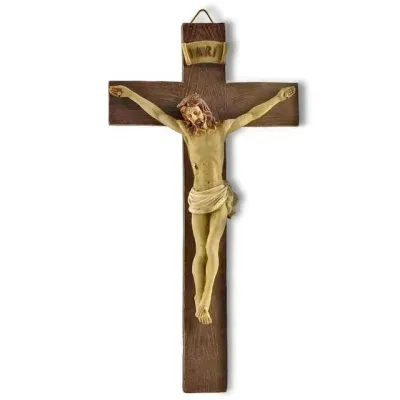
![[SG 🚚] Alloy Crosses Ornament Metal Crucifix with Base for Christian Home Decoration](https://img.lazcdn.com/g/p/3fa6b9c5531b832fa68841a8f6d5b3a9.jpg_400x400q80.jpg_.webp)
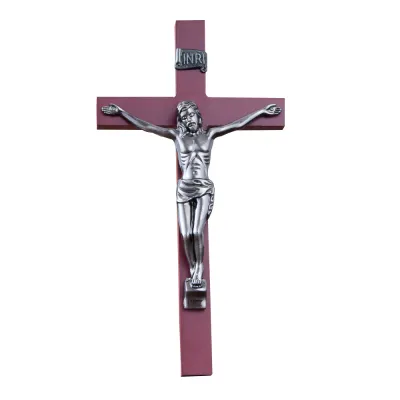
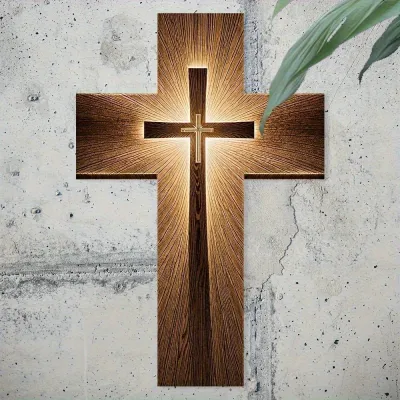
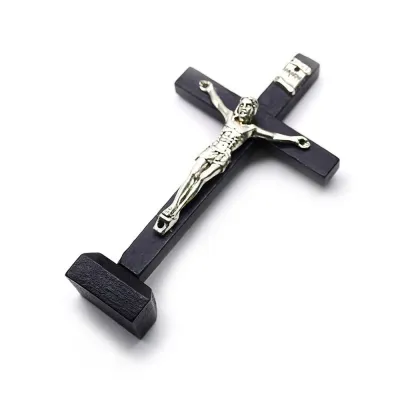
Prices are valid at publication and may change. Please refer to the product page for the latest price.
Comparing Aesthetics and Design Versatility
The visual style of a Catholic cross should harmonize with your home’s existing decor while reflecting your personal devotional style. Wood crosses excel in creating a rustic, traditional, or organic atmosphere. The natural variations in wood grain, knots, and warm color tones—ranging from pale ash to deep walnut—ensure that no two wooden crosses are identical. This organic variation makes wood an excellent fit for traditional homes, cozy prayer corners, or spaces featuring natural materials and warm color palettes.

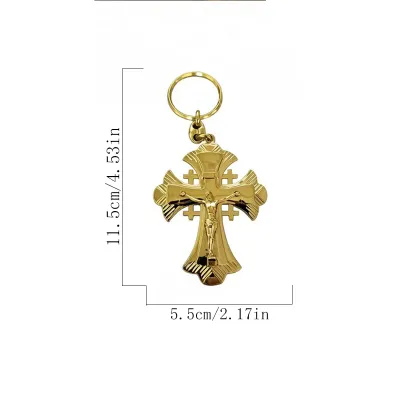
Metal crosses offer a wide aesthetic spectrum, from ultra-modern minimalist designs to highly ornate classical styles. A sleek, polished stainless steel or brass crucifix fits seamlessly into contemporary interiors characterized by clean lines and metallic accents. Conversely, detailed cast bronze or wrought iron crosses evoke a sense of historical permanence and classical reverence, making them ideal for formal altars or prominent entryway displays. The sharp edges and reflective qualities of metal allow it to stand out as a bold architectural statement on your wall.
Resin provides the highest level of design versatility among the three materials. Because liquid resin is poured into highly detailed molds, it can capture intricate facial expressions, flowing robes, and complex theological symbols that would require hundreds of hours of manual carving in wood or metal. Furthermore, resin can be painted in vibrant, multi-colored finishes or treated with additives to perfectly mimic more expensive materials like marble, alabaster, or antique bronze. If you prefer a highly detailed crucifix with colorful depictions of the corpus, saints, or angels, resin is often the most visually expressive option.
Evaluating Durability and Maintenance in Humid Environments
In tropical or high-humidity environments, such as Singapore, the durability and maintenance requirements of each material become critical factors in your decision. Wood is a living, hygroscopic material, meaning it naturally absorbs and releases moisture from the surrounding air. In sustained high humidity, untreated or poorly sealed wood is susceptible to warping, cracking, or developing mold. To preserve a wooden cross, it must be kept in a climate-controlled indoor space away from direct splashes, requiring regular dusting with a dry, soft cloth and occasional polishing with specialized wood oils to maintain its protective barrier.
Metal crosses are highly durable but are not entirely immune to environmental factors. Depending on the specific alloy and protective coatings used, metal can be vulnerable to tarnishing, oxidation, or rust when exposed to humid air or salty coastal breezes. Polished brass and copper, for instance, naturally develop a patina over time, which some collectors appreciate, while others prefer to maintain the original shine using specialized metal polishes. It is crucial to avoid harsh chemical cleaners or abrasive pads that can scratch the metal or strip away protective lacquer coatings.
Resin is highly resistant to moisture, making it an excellent choice for humid rooms, such as covered patios or areas near open windows. It will not warp, rust, or rot when exposed to damp air. However, resin has its own vulnerabilities: prolonged exposure to direct UV sunlight can cause the colors to fade or yellow, and the material can become brittle over time. Additionally, while resin is structurally stable, it lacks the impact resistance of metal or wood; a fall onto a hard tile floor can easily chip or shatter intricate details. Cleaning resin is straightforward, requiring only a gentle wipe-down with a damp microfiber cloth.
Budget and Value Considerations
When planning your purchase, understanding the cost landscape helps you align your budget with your expectations for craftsmanship and longevity. Resin crosses generally represent the most accessible price tier, often starting under S$30 for small to medium-sized pieces. Because resin is mass-produced through molding processes, manufacturers can offer highly detailed and colorful designs without the high labor costs associated with manual carving or metal casting, making it an excellent budget-friendly option.
Wood and metal crosses span a much wider price range, often positioning themselves as premium investments. A simple, machine-cut wooden cross may be relatively inexpensive, but hand-carved pieces made from premium hardwoods or imported olive wood can easily exceed S$150 to S$300. Similarly, while lightweight aluminum or steel crosses are affordable, solid cast bronze, brass, or pieces featuring precious metal plating (such as gold or silver leaf) command premium prices due to material costs and the specialized foundry work required.
Evaluating long-term value involves balancing this initial cost against the expected lifespan of the cross. A high-quality solid wood or metal cross can last for generations, becoming a cherished family heirloom that gains character with age. Resin crosses, while highly durable and cost-effective in the short term, may eventually need replacement if they suffer UV damage or accidental impact. If you are looking for a temporary or highly detailed decorative piece, resin offers outstanding immediate value; if you seek a permanent, multi-generational heirloom, investing in premium wood or metal is often more rewarding.
How to Choose the Right Catholic Cross for Your Space
To finalize your decision, you should systematically evaluate your display environment and aesthetic priorities. Start by conducting an environmental check of the intended room. Assess the humidity levels, the amount of direct sunlight the wall receives, and the structural capacity of the wall itself. For instance, a heavy solid metal or wood cross requires secure mounting into a wall stud or the use of heavy-duty anchors, whereas a lightweight resin cross can safely hang on standard drywall or a simple adhesive hook.
Use the following decision guidelines to match your needs to the right material:
- Choose Wood if you prioritize organic warmth, traditional aesthetics, and have a stable, climate-controlled indoor space where the wood is protected from extreme humidity and direct sunlight.
- Choose Metal if you want a durable, structurally resilient piece with sharp, modern lines or classical elegance, and you are comfortable with occasional polishing to prevent tarnish.
- Choose Resin if you desire highly detailed, colorful, or sculptural designs on a practical budget, or if you need a moisture-resistant piece for a humid indoor area.
Always verify the manufacturer’s specifications if you intend to place the cross in an outdoor or semi-outdoor setting, such as a garden altar or a covered balcony. Standard indoor finishes on wood, metal, and resin can degrade rapidly when exposed to rain, wind, and direct sunlight.
| Material | Weight | Maintenance Level | Best Environment | Relative Price Tier |
|---|---|---|---|---|
| Wood | Moderate to Heavy | Moderate (Dusting, oiling) | Climate-controlled indoor spaces | Mid to Premium |
| Metal | Light to Very Heavy | Low to Moderate (Polishing) | Dry indoor or protected spaces | Mid to Premium |
| Resin | Light to Moderate | Low (Simple damp wipe) | Humid or dry indoor spaces | Budget to Mid |
Frequently Asked Questions (FAQ)
Can I hang a heavy metal or solid wood cross on standard drywall?
Yes, but you must take proper safety precautions to prevent the cross from falling and damaging your wall or injuring someone. Standard drywall alone cannot support the weight of a heavy solid wood or metal cross without proper reinforcement. Always locate a wall stud using a stud finder, or use high-quality, load-rated drywall anchors (such as toggle bolts or threaded anchors) that match or exceed the weight of the cross. Check the manufacturer’s weight specifications before purchasing hanging hardware, and if the piece is exceptionally heavy or oversized, consider hiring a professional installer to ensure it is securely mounted.
How do I clean an intricately painted resin cross without damaging the finish?
Cleaning an intricately painted resin cross requires a gentle touch to avoid stripping the paint or clouding the surface. Always use a soft, dry, lint-free microfiber cloth to wipe away surface dust, and avoid abrasive sponges or scrub brushes that can scratch the painted details. Never use harsh chemical cleaners, alcohol-based solutions, or solvents, as these can dissolve the protective clear coat or paint layers. For deep crevices and hard-to-reach areas around the corpus or decorative elements, use a soft-bristled makeup brush, a clean paintbrush, or a can of compressed air to safely blow away accumulated dust.
Community discussion
Share your experience or ask a question. Comments are reviewed before publication.