
When the lights go out in an HDB block, having a reliable light source is not just a convenience—it’s essential for safety. The Wurkkos T1, a compact and powerful flashlight, is often considered for emergency kits. Its suitability for a power outage depends entirely on whether its specific features align with the unique challenges of navigating a darkened HDB environment. For many, its blend of size, versatile brightness levels, and modern charging capabilities makes it a strong contender for this critical role.
This article evaluates the Wurkkos T1 against the practical needs of an HDB resident during a power failure. We will explore its design, performance characteristics, and what you need to know to use it safely and keep it ready for any unexpected blackout.
Lighting Challenges During HDB Power Outages
A power outage in a high-rise building presents a unique set of obstacles. The primary challenge is safe movement through completely dark, windowless spaces. Navigating internal corridors to check on neighbours, descending multiple flights of concrete stairs, or crossing a void deck requires a dependable light source to avoid trips and falls.
Products mentioned in this guide
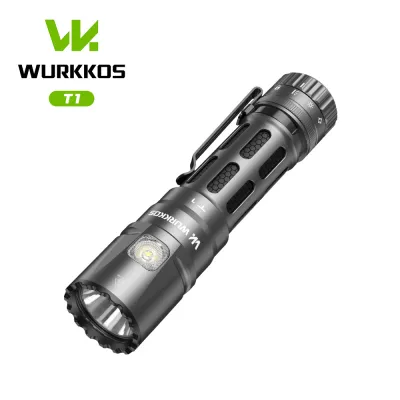
Prices are valid at publication and may change. Please refer to the product page for the latest price.
In confined areas like lift lobbies and narrow hallways, an overly bright or focused beam can be counterproductive. The glare reflecting off polished floors or glass surfaces can temporarily blind you, making it harder for your eyes to adjust. Harsh, moving shadows created by a narrow beam can also be disorienting, turning familiar spaces into confusing obstacle courses.
Furthermore, power failures are unpredictable in duration. An outage could last minutes or extend for several hours. This uncertainty makes flashlight runtime a critical factor. A light that burns through its battery on the highest setting is impractical. You need a tool with sustainable, lower-power modes that can provide usable illumination for an extended period, ensuring you’re not left in the dark when you need light the most.
Assessing the Wurkkos T1 for Emergency Use
To determine if the Wurkkos T1 is the right tool for your HDB emergency kit, we must assess its core features against the practical demands of a blackout. Its physical design, brightness options, and power system are the key factors that define its readiness.

Form Factor and Quick Accessibility
In a sudden blackout, you need a light you can find and use immediately, without fumbling in the dark. A flashlight’s size and weight are crucial. A compact model like the Wurkkos T1 is designed to be easily stored in a bedside drawer, kitchen cabinet, or even carried in a pocket without being cumbersome.
When evaluating any emergency light, check the manufacturer’s specifications for its dimensions and weight to ensure it fits your storage plan. Look for practical design elements that improve handling during a stressful situation. Features like a sturdy pocket clip allow you to attach the light to clothing for quick access, while a textured body or grip pattern helps prevent it from slipping from your hand. A lanyard hole provides an extra layer of security, letting you loop it around your wrist to avoid dropping it down a dark stairwell.
Brightness Modes and Beam Control
The most important feature of an emergency light is not its maximum brightness but its range of usable light levels. For navigating HDB interiors, a flashlight with a balanced or wide (flood) beam is generally more useful than a long-distance (throw) beam. A flood beam illuminates a broad area in front of you, revealing potential obstacles at your feet and to your sides, which is ideal for stairwells and corridors.
Critically, the Wurkkos T1 offers multiple brightness modes. The highest “turbo” modes are often too intense for indoor use and can create harsh glare. The real value lies in the lower settings. A low or “moonlight” mode is essential for preserving your night vision, performing close-up tasks without blinding yourself, and moving through shared corridors without disturbing neighbours. Medium modes typically provide an excellent balance of brightness and runtime for general navigation.
Before purchasing, verify the manufacturer’s stated lumen levels for each mode and, just as importantly, how you access them. A simple user interface, such as a tail switch for on/off and a side switch to cycle through modes, is ideal for operation in complete darkness. You need to be able to switch to a suitable low mode without having to look at the flashlight.
Power Source and Runtime Reliability
An emergency light is only as good as its power source. The Wurkkos T1 uses a rechargeable lithium-ion battery, which offers high power density in a small package. This means it can produce bright light from a compact body. However, this type of battery requires a different maintenance strategy than one using standard disposable cells.
When reviewing the specifications, pay close attention to the manufacturer’s estimated runtime for each brightness level. Ignore the runtime for turbo mode, as it’s typically very short and generates significant heat. Instead, focus on the runtimes for the medium and low modes—the ones you’ll actually use. A good emergency light should offer many hours of continuous operation on a practical setting of 50 to 150 lumens.
Another key feature to check is the charging interface. The inclusion of a built-in USB-C port on the Wurkkos T1 is a significant advantage. It allows you to conveniently recharge the flashlight using the same cables as your other electronic devices. During a prolonged outage, you can top up the battery using a portable power bank, ensuring you have a continuous and reliable source of light.
Navigating HDB Stairwells and Corridors Safely
Having a good flashlight is only the first step; using it effectively is what ensures your safety. In the narrow, enclosed corridors of an HDB, pointing the beam directly ahead can create harsh reflections and deep, disorienting shadows. Instead, use a technique called “bounce lighting.” By pointing the Wurkkos T1’s beam at the ceiling, you can fill the entire hallway with soft, diffused light. This reduces glare and eliminates frightening shadows, making the space feel much more normal and easier to navigate.
When approaching a stairwell, safety is paramount. Always keep one hand free to hold the handrail. Sweep the light beam downwards, a few steps ahead of you, so you can clearly see each step and landing. Avoid swinging the light around rapidly, as this can cause disorientation for both you and anyone else with you.
If you are assisting others, such as children or elderly family members, your technique needs to adapt. If you are leading the way, use the ceiling bounce method so they can see too. If you need both hands free—perhaps to carry supplies or hold a child’s hand—a flashlight with a two-way pocket clip can be attached to the brim of a cap for a makeshift headlamp. This keeps the light pointing where you look, freeing your hands for more important tasks.
Keeping Your Emergency Light Ready for Action
A powerful flashlight is useless if its battery is dead when you need it. Proper maintenance is key to ensuring your Wurkkos T1 is always ready for an emergency. The most important habit is to establish a regular charging routine. Set a reminder to check the battery level and recharge the light every two to three months. This prevents the lithium-ion battery from draining completely, which can affect its long-term health.
Designate a specific, consistent, and easily accessible storage location for your emergency light. Good options include a drawer in the kitchen, a hook near your front door’s distribution board, or a box with other emergency supplies. Everyone in the household should know where it is. Avoid storing the flashlight in places with extreme temperatures, like a car glove box or in direct sunlight, as heat can degrade the battery and electronics.
For optimal battery longevity, especially if the flashlight is a dedicated backup that isn’t used often, it’s generally best to follow the manufacturer’s storage guidance. For many lithium-ion batteries, this means storing them at a partial charge (around 50-80%) rather than fully charged or completely empty. Always consult the user manual for the Wurkkos T1 for specific instructions on long-term storage and battery care to ensure it serves you reliably for years.
Frequently Asked Questions (FAQ)
Can the Wurkkos T1 be used hands-free during an outage?
Yes, there are several ways to use the Wurkkos T1 hands-free, which is incredibly useful for tasks like checking a fuse box, carrying supplies, or comforting a child. You should check if the model you are considering comes with a two-way pocket clip. This type of clip allows you to attach the light to the brim of a baseball cap, effectively turning it into a headlamp. Additionally, check the manufacturer’s website for official accessories, such as magnetic tailcaps that let you stick the light to a metal surface, or compatible headbands designed to hold the flashlight securely.
Is it safe to leave the emergency light plugged in continuously?
Modern flashlights with integrated charging, like the Wurkkos T1, are typically equipped with a battery management system that includes overcharge protection. This safety feature is designed to stop the charging process once the battery is full. However, for maximizing the long-term health and lifespan of a lithium-ion battery, it is often recommended to unplug the device once it has finished charging. For the most accurate and safest information, you must consult the user manual provided with your Wurkkos T1. The manufacturer’s instructions will provide the definitive guidance on its specific charging system and recommended practices.
Community discussion
Share your experience or ask a question. Comments are reviewed before publication.