
Finding a reliable desk or alarm clock in Singapore requires looking beyond aesthetic appeal to evaluate movement precision, power configuration, and material durability. A dependable clock ensures you remain on schedule without the distraction of loud ticking or the risk of a missed alarm due to a sudden power disruption. By focusing on established horological manufacturers, certified smart home brands, and reputable lifestyle designers, you can select a timepiece that balances functional accuracy with your bedroom or workspace decor.
To make an informed purchase, it is essential to understand how different movements, materials, and power systems perform over time. Whether you need a silent companion for a study desk or a fail-safe wake-up call on your nightstand, verifying key technical specifications and sourcing your clock through authorized local channels will ensure long-term satisfaction and reliable performance.
How to Evaluate Brand Reliability and Build Quality
The internal movement is the most critical factor determining a clock’s reliability. Quartz movements are the industry standard for modern timekeeping, offering exceptional accuracy by utilizing a tiny quartz crystal regulated by an electronic oscillator. When evaluating brands, look for those that source their movements from established Japanese or European manufacturers, as these components are built to tighter tolerances and are less prone to sudden failure. For sleeping environments, a continuous-sweep quartz movement is highly recommended over a traditional step-second movement, as it eliminates the repetitive ticking sound that can disrupt rest.
Products mentioned in this guide
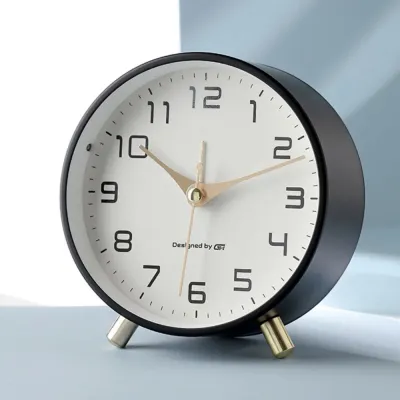
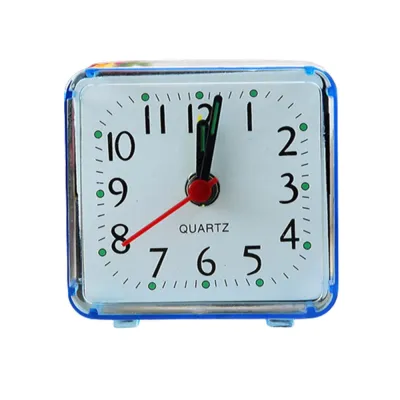
![[Powermatic] CASIO TQ-140-1B MINI TRAVELLERS BEEPER SOUND ALARM TABLE CLOCK](https://img.lazcdn.com/g/p/127da21fd62f01c85f6d095258e86296.jpg_400x400q80.jpg_.webp)
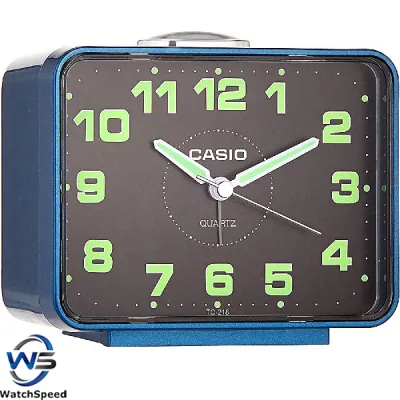
![[𝐏𝐎𝐖𝐄𝐑𝐌𝐀𝐓𝐈𝐂]Casio TQ-218-2D TQ-218 Table Top Travel Alarm Clock Blue](https://img.lazcdn.com/g/p/6fdbf7dcc9a06afea7df123a91c7c93e.jpg_400x400q80.jpg_.webp)
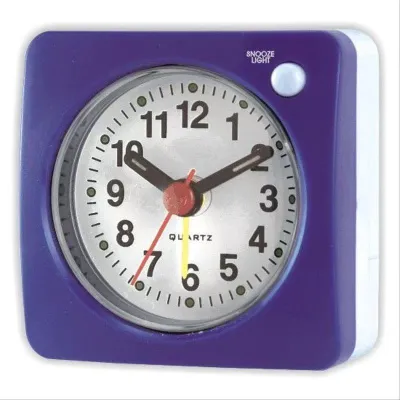

Prices are valid at publication and may change. Please refer to the product page for the latest price.
Build materials and structural finishing play an equally vital role in a clock’s longevity, especially in Singapore’s tropical climate. High-quality ABS plastics, anodized aluminum, solid wood, and real glass covers resist the yellowing, warping, and degradation that often plague cheaper materials exposed to humidity. The physical stability of the clock is also important; a desk or bedside clock should have a low center of gravity and non-slip silicone or rubber feet to prevent it from sliding or tipping over when you interact with it in the dark.
Warranty terms and the availability of local after-sales support serve as strong indicators of a brand’s confidence in its manufacturing standards. Reliable brands typically offer a minimum of a one-year warranty backed by an official local distributor or service center in Singapore. This local presence ensures that if a defect arises, you can easily obtain a replacement or repair without dealing with international shipping. Furthermore, established brands maintain a steady supply of replacement parts, such as battery covers or specialized power adapters, extending the usable life of your timepiece.
Finally, brand heritage and long-term user feedback provide valuable insights into real-world durability. Brands with decades of experience in horology or consumer electronics have refined their manufacturing processes to minimize out-of-box failures and component degradation. Reviewing feedback from long-term users can help you identify common issues, such as buttons that lose tactile feedback over time or displays that dim prematurely, allowing you to bypass brands with inconsistent quality control.
Understanding Brand Categories and Market Positioning
Traditional horology and consumer electronics brands focus primarily on precision, durability, and straightforward functionality. These manufacturers design clocks that do one job exceptionally well: keep accurate time and sound an alarm when programmed. Their products typically feature highly intuitive physical interfaces, such as dedicated slide switches to enable or disable alarms, and clear, high-contrast analog dials or digital LCD screens. Because they avoid unnecessary software complexity, these clocks are incredibly robust, boast long battery lives, and are highly resistant to electronic glitches.

Smart home and technology brands offer a different set of advantages, emphasizing connectivity, automated routines, and multi-functional displays. These modern devices often integrate with home Wi-Fi networks, allowing them to synchronize their time automatically with online servers and interface with voice assistants or smart lighting systems. They can serve as central hubs for your morning routine, gradually raising your smart bedroom blinds or playing your favorite news broadcast as you wake up. However, this high level of integration introduces dependencies on continuous mains power and stable network connections, making them more complex to operate than traditional models.
Lifestyle, designer, and boutique brands prioritize aesthetic appeal, premium materials, and seamless integration into contemporary interior design styles, such as Japandi or minimalist modern. These clocks are designed to be decorative statements as much as functional timepieces, often utilizing natural materials like solid oak, ceramic, or brushed brass. While they generally employ standard, reliable quartz movements, their primary appeal lies in their visual craftsmanship. When selecting a designer clock, it is important to verify that readability and basic usability have not been sacrificed for the sake of minimalist styling, ensuring the hands and hour markers remain clearly visible under various lighting conditions.
Key Specifications to Verify for Your Desk and Nightstand
Power source configuration is a critical specification that directly impacts the reliability of your alarm. Clocks generally operate on disposable or rechargeable batteries, direct mains electricity, or USB power. For a dedicated alarm clock, battery-powered models or mains-powered models equipped with an integrated battery backup are the safest choices. A temporary electrical trip or a loose power cable can instantly reset a mains-only digital clock, clearing your programmed alarms and causing you to oversleep. If you select a USB-powered clock, ensure the power source is stable and the cable is securely connected.
Display readability and brightness control are essential for maintaining good sleep hygiene on a bedside table. Analog clocks with luminescent hands or an on-demand backlight that only illuminates when a physical button is pressed are excellent for keeping bedrooms dark. For digital displays, look for models that offer adjustable brightness levels, automatic dimming sensors that adjust to ambient light, or a complete display-off mode that activates only when tapped. Avoid displays that emit a constant, bright blue light, as this wavelength can interfere with melatonin production and disrupt your sleep patterns.
Alarm customization and sound design are also vital for a pleasant waking experience. A progressive or gradual wake-up alarm, which starts with a soft tone and slowly increases in volume, is far less jarring to the nervous system than a sudden, loud blast. Additionally, check the configuration of the snooze function; the snooze button should be large and easily accessible, while the main switch to deactivate the alarm entirely should require a deliberate, physical action to prevent you from accidentally turning it off while half-awake.
Physical dimensions and base design must be matched to your specific furniture layout. Singaporean bedrooms and study areas often feature compact nightstands or busy desks where space is at a premium. A clock with a wide, stable base and a low profile is much less likely to be knocked over during a groggy morning reach. Verify the physical footprint of the clock before purchasing to ensure it fits comfortably alongside other bedside essentials like a reading lamp, a water glass, or a phone charger.
Secure Purchasing Channels and Warranty Verification in Singapore
To ensure you receive a genuine product with a valid warranty, it is highly recommended to purchase your clock from authorized physical retailers, established department stores, or official brand boutiques located in Singapore’s major shopping districts. These brick-and-mortar establishments source their inventory directly from official local distributors, guaranteeing that the products are authentic and specifically configured for the local market. Shopping in person also allows you to physically inspect the build quality, test the alarm volume, and verify the smoothness of the clock’s movement before making a decision.
When purchasing any mains-powered or USB-rechargeable clock, you must verify that the power adapter carries the Singapore Safety Mark. This certification indicates that the electrical component has been rigorously tested and approved for safe operation under Singapore’s standard voltage of 230V and frequency of 50Hz. Using uncertified power adapters poses a risk of electrical short circuits or overheating. Additionally, always ensure that the retailer provides an official receipt and a local distributor warranty card, which are necessary documents should you need to claim repairs or replacements during the warranty period.
Buying from unauthorized online marketplaces or grey market importers carries significant risks that can compromise your purchase. Parallel imports are often designed for foreign markets and may include incompatible power plugs, lack the necessary safety certifications, or operate on different voltages. Furthermore, local service centers and official distributors generally refuse to honor warranties for products purchased through unauthorized channels, leaving you without recourse if the clock malfunctions. Investing in an officially distributed model ensures peace of mind, electrical safety, and reliable long-term support.
Frequently Asked Questions (FAQ)
Are mechanical desk clocks more reliable than quartz ones?
Quartz desk clocks are far more reliable, accurate, and practical for daily use than mechanical alternatives. Quartz movements utilize a battery-powered crystal oscillator that maintains time to within a few seconds per month, whereas mechanical clocks rely on a complex system of springs and gears that can drift by several minutes a week. Mechanical clocks also require regular manual winding—often daily or weekly—and are highly sensitive to environmental factors such as temperature changes, humidity, and physical vibrations. Furthermore, mechanical movements require periodic professional servicing and lubrication to prevent wear, making quartz the more practical choice for a hassle-free, low-maintenance timepiece.
Will a smart alarm clock still ring if the Wi-Fi disconnects?
Most reputable smart alarm clocks are designed with local fail-safe mechanisms that allow their programmed alarms to sound even if the Wi-Fi connection drops overnight. These devices store your active alarm schedules directly on their internal memory rather than relying on a continuous cloud connection to trigger the alarm. However, without a Wi-Fi connection, the clock will be unable to synchronize its time with online servers, which can lead to minor time drift over extended offline periods, and smart features like streaming internet radio or triggering connected smart home routines will not function. To ensure absolute reliability, choose a smart clock model that also includes a physical battery backup to keep the internal timekeeping active during both network and power outages.

Community discussion
Share your experience or ask a question. Comments are reviewed before publication.