
Quick Answer: Evaluating Banker's Lamp Value
Finding the right banker’s lamp in Singapore is not about finding a single, universally perfect brand, but rather balancing material authenticity with local electrical safety. The market is divided between premium heritage reproductions that use solid brass and hand-blown glass, and budget-friendly modern interpretations that utilize plated alloys and plastics. Your choice should depend on whether you prioritize historical accuracy or modern convenience.
To secure true value, you must prioritize local electrical compatibility. Singapore operates on a 230V, 50Hz electrical grid, requiring a Type G plug. Buying an imported lamp without verifying these specifications can lead to safety hazards or require costly rewiring.
Before committing to a purchase, always verify the manufacturer’s material claims. Many online listings advertise “brass” when they actually mean brass-plated steel, which behaves differently over time, especially in Singapore’s humid climate. True value lies in matching the build quality to your intended usage and budget.
Products mentioned in this guide
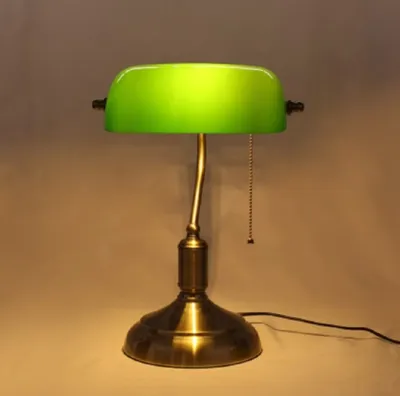
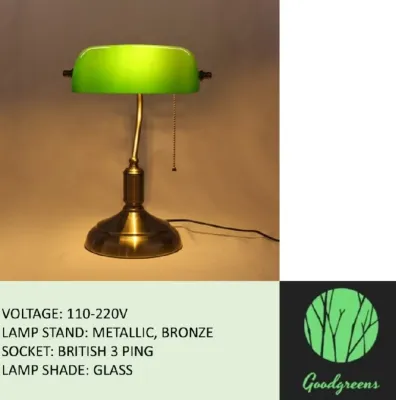
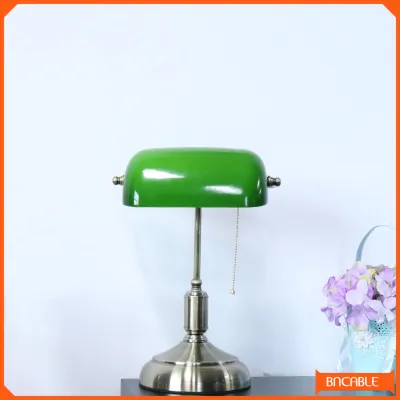
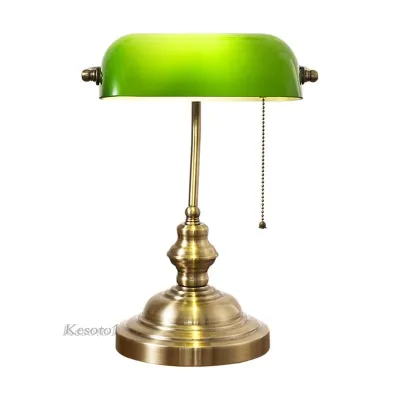
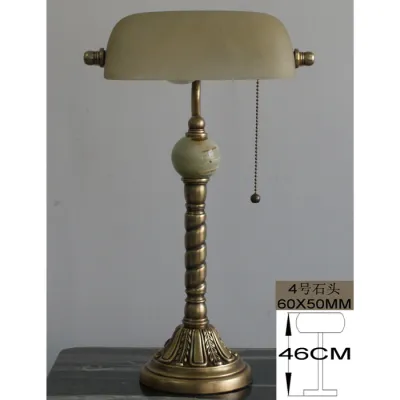
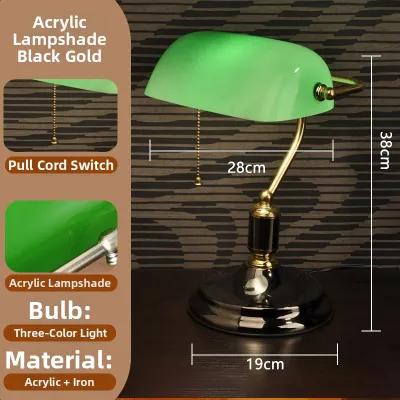
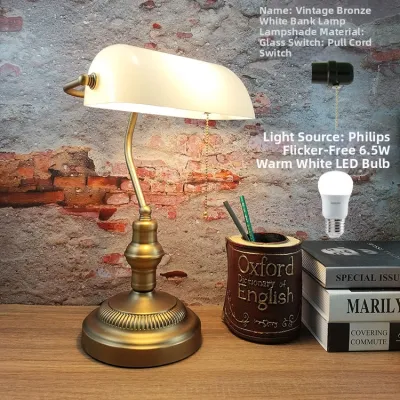
Prices are valid at publication and may change. Please refer to the product page for the latest price.
Evaluating Build Quality and Material Integrity
A high-quality banker’s lamp should feel remarkably heavy. Solid brass or heavy die-cast zinc alloy bases provide the necessary stability to prevent the lamp from tipping over when you pull the cord. Lightweight, hollow alloy bases often feel flimsy and can slide across your desk. Look for a base lined with thick felt or high-density leather; this protects polished wood or glass desks from scratches and dampens sound when the lamp is moved.

The iconic green shade, historically known as emerald glass, is a hallmark of this design. Premium brands use hand-blown cased glass, which consists of at least two layers: an outer green layer and an inner white layer. This hand-blown process sometimes leaves tiny, unique air bubbles, which are a sign of craftsmanship rather than a defect. In contrast, budget alternatives often use molded plastic or single-layer glass painted green on the outside. Painted glass scratches easily and fails to produce the rich, warm glow characteristic of authentic cased glass.
The mechanical parts of a banker’s lamp are its primary failure points. Test the pull chain mechanism; it should glide smoothly with a satisfying click, without catching or requiring excessive force. The hinges holding the glass shade must be robust and adjustable, allowing you to tilt the shade to direct light without slipping over time. Examine the socket area; high-quality lamps feature ceramic or heavy-duty phenolic sockets rather than cheap, thin plastic ones that can degrade under heat.
Because these lamps sit directly on your workspace, electrical safety is paramount. Ensure the lamp is rated for 230V and comes with a properly grounded three-pin Type G plug. Look for recognized safety certifications, such as the Enterprise Singapore SAFETY Mark, which indicates the appliance has been tested and approved for local household use. Avoid unbranded imports that lack clear safety labeling, as faulty internal wiring poses a genuine fire risk.
Authentic Design vs. Modern Reproductions
Classic banker’s lamps, originating from early 20th-century designs, follow strict geometric proportions. The shade should be wide and gently curved, casting a broad pool of light across a flat desk surface. The base is typically weighted and square or stepped, balancing the horizontal orientation of the shade. Modern, low-cost reproductions often distort these proportions, featuring overly narrow shades or spindly stems that look unbalanced and fail to provide adequate light coverage.
The metal finish defines the lamp’s visual character. Authentic heritage brands often apply hand-rubbed antique brass finishes that develop a rich, natural patina over the years. This finish reacts beautifully with the environment, gaining character as it ages. On the other hand, mass-produced modern versions frequently rely on thin electroplated coatings. In Singapore’s humid tropical climate, cheap electroplating is highly susceptible to pitting, chipping, and uneven tarnishing, which can ruin the lamp’s appearance within a few years.
The inner layer of the glass shade plays a critical role in light distribution. Authentic designs feature a white or opal glass interior. This white layer acts as a natural reflector, softening and diffusing the light downward to reduce eye strain during long working hours. Cheaper reproductions often skip this dual-layer construction, leaving the interior green or applying a thin, uneven white paint that flakes off or creates harsh, uneven glare.
While traditional banker’s lamps were designed for incandescent bulbs, modern usage demands LED compatibility. Ensure the lamp’s socket (typically an E27 or E14 base) can accommodate modern LED bulbs without the bulb protruding past the edge of the shade. The shade must also provide sufficient ventilation; even though LEDs run cooler than incandescent bulbs, enclosed glass shades can still trap heat, which can shorten the lifespan of the bulb’s internal driver if ventilation is poor.
Assessing Pricing Tiers and Local Value
Understanding what you get at different price points helps manage expectations. Budget options, often found on general online marketplaces, are typically lightweight, use plated plastics or thin metals, and offer basic functionality with minimal safety testing. Mid-range options introduce solid metal components, better glass quality, and standard electrical certifications. Premium heritage brands focus on solid brass, hand-blown cased glass, authentic historical proportions, and comprehensive warranties, making them heirloom-quality investments.
When purchasing from international brands online, the initial price tag can be misleading. Shipping heavy items like solid brass lamps with fragile glass shades to Singapore can incur high freight charges. Additionally, you must account for potential import taxes and the cost of adapting or rewiring the lamp if it arrives with a non-compliant plug or voltage rating. Buying from a local distributor often mitigates these risks by bundling shipping and compliance costs into the retail price.
A lamp is a long-term fixture, and mechanical parts like pull chains and sockets can wear out. Local distributors or brands with a physical presence in Singapore provide invaluable after-sales support. Having access to replacement glass shades—which are easily broken during moves or cleaning—and local repair services ensures your investment does not become useless due to a single damaged component.
While a budget lamp saves money upfront, its shorter lifespan often results in higher long-term costs. Thinly plated metals tarnish quickly in local humidity, and fragile plastic parts break easily. Investing in a solid brass lamp with a high-quality glass shade ensures the fixture remains functional and aesthetically pleasing for decades, offering far better cumulative value.
Decision Framework: Choosing the Right Brand Profile
To finalize your choice, align your purchase with your specific use case, budget, and quality expectations:
- Choose a Premium Heritage Brand if: You are looking for an heirloom-quality centerpiece for an executive desk or study. If you value exact historical proportions, solid brass construction that patinates beautifully over time, and hand-blown cased glass, a premium brand is worth the investment. These lamps are built to last generations and are backed by robust manufacturer support.
- Choose a Mid-Range Modern Interpretation if: You want the classic aesthetic of a banker's lamp but prefer modern conveniences like integrated touch dimmers, USB charging ports, or adjustable color temperatures. This profile suits daily office use where practical functionality and modern electrical safety are prioritized alongside a reasonable budget.
- Choose a Budget Decorative Option if: The lamp is intended purely for occasional ambient lighting, home staging, or temporary decorative use. If the lamp will rarely be turned on or adjusted, a lightweight, plated model can provide the desired visual style without a significant financial commitment.
- Verify First if: The product listing does not explicitly state the materials used, lacks clear electrical safety certifications (such as the SAFETY Mark), or does not offer a clear return policy for fragile items. Always clarify these details with the seller before finalizing your purchase to avoid receiving a non-compliant or damaged product.
Frequently Asked Questions (FAQ)
Are LED bulbs suitable for traditional banker's lamps?
Yes, LED bulbs are highly suitable and widely recommended for traditional banker’s lamps. To preserve the classic, warm ambiance of the green glass shade, choose an LED bulb with a warm white color temperature, ideally between 2700K and 3000K. Cooler color temperatures (above 4000K) can make the green glass look harsh, clinical, and visually unappealing.
Using LEDs also offers significant safety and longevity benefits. Traditional incandescent bulbs generate substantial heat, which can stress the hand-blown glass shade and accelerate the degradation of the socket’s wiring. LEDs emit very little heat, protecting the glass from thermal shock. When selecting a bulb, ensure its physical dimensions fit entirely within the shade so it remains hidden from view, maintaining the lamp’s clean, classic silhouette.
How do I maintain the brass finish on my banker's lamp?
Maintaining the brass finish depends entirely on whether the metal is lacquered or unlacquered. Most modern and mid-range banker’s lamps feature a protective lacquer coating. For these, maintenance is simple: dust the surface regularly with a soft, dry microfiber cloth. If necessary, wipe it gently with a slightly damp cloth, then dry it immediately. Never use brass polishes, abrasive cleaners, or harsh chemicals on lacquered brass, as these will strip the protective coating and cause uneven tarnishing.
If you own a premium, unlacquered solid brass lamp, the metal will naturally oxidize and develop a dark patina over time. If you prefer a bright, polished look, you can apply a specialized brass polish according to the manufacturer’s instructions. Always test any polish on a small, inconspicuous area first, such as the underside of the base, and ensure no polishing compounds come into contact with the glass shade or electrical components.

Community discussion
Share your experience or ask a question. Comments are reviewed before publication.