
Placing a high-quality full size mirror is one of the most effective ways to instantly transform a cramped or dimly lit room into an open, airy sanctuary. By strategically reflecting light and extending sightlines, the right mirror style can make compact living spaces feel twice their actual size. While any reflective surface offers some benefit, specific design elements—such as arched silhouettes, ultra-thin frames, leaning angles, and window-pane grids—excel at creating different spatial illusions. Selecting the ideal style requires understanding how these designs interact with the architectural lines, light sources, and layout of a home.
How Full-Size Mirrors Create the Illusion of Space
The primary mechanism behind this transformation is the physical redirection of light. When natural light from windows or artificial light from fixtures hits a reflective glass surface, it bounces back into the room rather than being absorbed by dark walls or furniture. This specular reflection illuminates shadows and brightens dark corners, making the entire room feel more open and less restrictive.
Beyond light distribution, mirrors manipulate human depth perception. The human brain interprets a mirror’s reflection as a continuation of the physical space, effectively doubling the visual depth of the room. When a mirror is positioned to reflect a compelling focal point, such as an outdoor view, a piece of artwork, or an open doorway, it tricks the eye into perceiving a seamless transition into another room or outdoor area.
Products mentioned in this guide
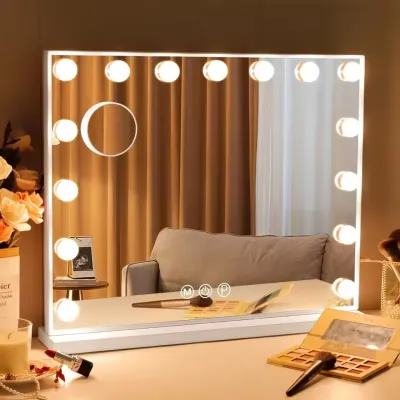
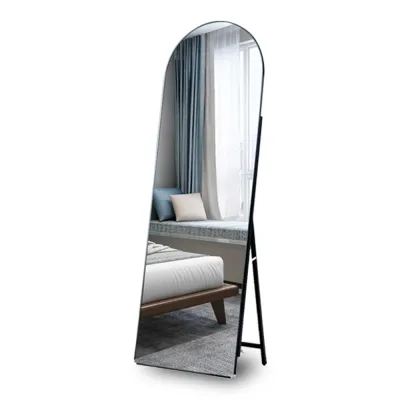
![[Delivered in 1 days]Standing Mirror Full length Mirror Floor Mirror Home Bedroom Large Mirror Hanging Wall Hanging Fitting](https://img.lazcdn.com/g/p/2b3c0b3d64e68bf2de2ea1ee27ce44e1.jpg_400x400q80.jpg_.webp)
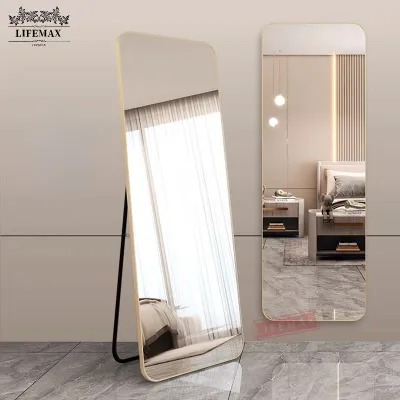
![[Delivered in 1 days]Standing mirror whole body floor mirror bedroom mirror wall hanging household solid wood makeup mirror](https://img.lazcdn.com/g/p/b67426b066f1420153482ae694c80d26.jpg_400x400q80.jpg_.webp)
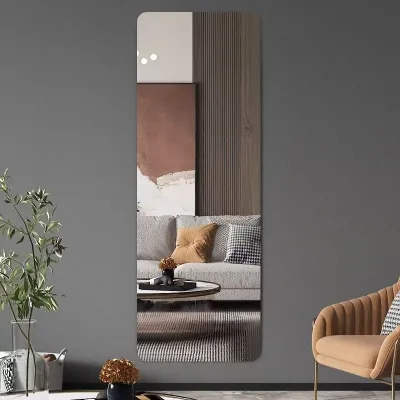
![[SG Seller]HD Full-Length Mirror/Floor Mirror/Wood Style Wall Hanging Mirror/Home Japanese style simple Decorative Mirror](https://img.lazcdn.com/g/p/9387708ab2cc55f579ddcb62d5e932f5.jpg_400x400q80.jpg_.webp)
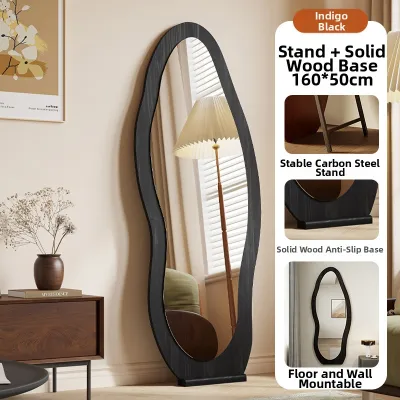
Prices are valid at publication and may change. Please refer to the product page for the latest price.
Another critical concept is visual weight, which refers to how much attention an object demands within a space. Heavy, dark, or highly ornate objects can make a small room feel cluttered and closed in. Conversely, a large mirror with minimal visual boundaries acts as a visual “void,” drawing the eye through the frame rather than stopping it at the wall. Minimizing heavy borders and maximizing the reflective surface area ensures that the mirror expands the room rather than overwhelming it.
Best Full-Size Mirror Styles to Maximize Space
Choosing the right shape and structure of a full size mirror depends heavily on the specific architectural challenges of the room. Different designs manipulate light and lines in distinct ways to target low ceilings, narrow walls, or a lack of natural light.

Arched and Curved Full-Size Mirrors
Arched and curved mirrors introduce soft, organic lines that break up the rigid, boxy geometry typical of modern apartments and compact rooms. The rounded top of an arched mirror draws the eye upward, mimicking the classic architectural lines of vaulted ceilings, grand doorways, or traditional arched windows. This upward movement creates a strong vertical line that visually lifts low ceilings, making a room feel loftier and more spacious.
This style is highly recommended for rooms characterized by sharp angles, rectangular furniture, and flat walls. By softening these hard edges, an arched mirror adds a sense of architectural interest and depth that standard rectangular designs cannot achieve. It acts as both a decorative focal point and a spatial enhancer, particularly when placed in minimalist or contemporary interiors.
Frameless and Thin-Framed Mirrors
For ultra-compact rooms where every square inch of visual space is critical, frameless and thin-framed mirrors offer the most efficient solution. By eliminating or minimizing the border, these designs maximize the active reflective surface area of the glass. The lack of a heavy frame allows the mirror to blend seamlessly into the surrounding wall, creating a continuous, uninterrupted transition that tricks the mind into seeing an open passageway rather than a decorative object.
Thin metal frames, often crafted from slender aluminum or brushed steel, provide just enough structural support without adding unnecessary visual weight. This sleek, modern aesthetic is ideal for minimalist bedrooms, narrow entryways, and compact living areas. The clean edges ensure that the mirror performs its spatial expansion duties quietly and effectively, without competing with other design elements in the room.
Leaning Floor Mirrors
Leaning floor mirrors offer a unique optical advantage due to the slight tilt of their installation angle. When a full-size mirror leans against a wall, it tilts upward by a few degrees, reflecting the ceiling and the upper portions of the opposite walls rather than just the eye-level furniture. This upward-angled reflection expands the upper visual field of the room, creating an illusion of heightened ceilings and relaxed, airy depth.
This style is particularly suited for bedrooms, dressing areas, or casual living rooms where a relaxed, layered design aesthetic is desired. The leaning posture avoids the formal rigidity of wall-mounted pieces, contributing to a comfortable, lived-in atmosphere. Because the reflection includes more of the ceiling and light fixtures, it also captures and redistributes overhead light more effectively throughout the space.
Window-Style and Grid Mirrors
Window-style and grid mirrors utilize psychological association to expand a room. By featuring a frame divided into multiple panes by metal or wood mullions, these mirrors closely mimic the appearance of multi-pane windows. When placed on a solid, windowless wall, the brain instinctively processes the mirror as an actual architectural opening leading to the outdoors or an adjacent room, instantly dissolving the boundary of the wall.
These grid-patterned mirrors are exceptionally effective in windowless basements, dark hallways, or narrow corridors. They simulate natural light sources and break up expansive, blank walls that would otherwise feel oppressive. By reflecting the existing room through a structured grid, they add architectural character and a sense of external connection, making even the most enclosed spaces feel connected to a larger environment.
Best Frame Finishes and Colors to Expand a Room
The material, finish, and color of a mirror’s frame play a decisive role in whether it helps expand a room or inadvertently closes it in. The goal is to select finishes that either reflect light or blend harmoniously with the wall color, minimizing stark visual boundaries.
Light-colored frames, such as matte white, light oak, bleached ash, or soft beige, are excellent choices for small spaces. These tones mimic the light-colored walls common in compact homes, allowing the frame to recede into the background and keeping the focus entirely on the reflection. Reflective metallic finishes, such as brushed brass, polished chrome, satin nickel, and warm gold, work similarly by catching and bouncing ambient light, adding a touch of brightness without creating a heavy visual barrier.
Conversely, thick, dark wood or matte black frames should generally be avoided in very small, narrow, or poorly lit rooms. These heavy borders act as bold frames around a picture, clearly defining where the wall ends and the mirror begins. This stark boundary can draw attention to the physical limits of the room, neutralizing the spatial expansion effect.
However, dark frames are not entirely off-limits. They can work beautifully as a deliberate, high-contrast anchor in a well-lit, slightly larger living area. When placed against a light wall in a room with ample natural light, a slender black or dark bronze frame can provide a sophisticated, graphic element that defines the space without making it feel cramped. The key is moderation; the frame must remain thin and proportional to avoid dominating the room’s visual landscape.
Strategic Placement for Compact Homes and Apartments
In compact homes, such as Singapore HDB flats and modern condominiums, strategic placement is just as important as the style of the mirror itself. Thoughtful positioning ensures that the mirror maximizes light and depth while avoiding common design pitfalls.
Placing a mirror opposite or adjacent to a window is the most effective way to maximize natural light. By capturing incoming daylight and projecting it deep into the room, this placement brightens the entire space and creates the illusion of an additional window. If a direct opposite placement is not possible, angling the mirror adjacent to the window can still capture and scatter light across darker walls.
Narrow hallways and entryways benefit immensely from large mirrors placed on side walls. These areas often suffer from a “tunnel” effect, feeling tight and uninviting. A full-size mirror on a long side wall breaks up the continuous solid surface, widening the visual path and making the transition through the home feel open and airy.
Another powerful technique is positioning a large mirror behind furniture, such as a console table in the entryway or a low-profile sofa in the living room. This placement creates a layered effect, making it appear as though the furniture is sitting in the middle of a much larger room rather than pressed against a wall. It doubles the visual depth of the furniture arrangement, adding a sense of luxury and breathing room.
However, it is crucial to avoid reflecting cluttered areas. A mirror reflects everything in its path; placing it directly opposite open utility shelves, cluttered kitchen counters, or the back of a television set with tangled cords will double the visual chaos. Before finalizing a mounting position, stand where the mirror will go and look at what it will reflect, ensuring the view remains clean, organized, and visually restful.
Safety, Sizing, and Installation Checklist
To ensure a successful and safe installation, several practical and structural factors must be verified before purchasing and hanging a large glass piece.
Proportional Sizing
- Width: When placing a mirror above or behind furniture, aim for a balanced proportion. The mirror's width should typically cover 2/3 to 3/4 of the width of the console table, sofa, or bed it accompanies. A mirror that is too small will look lost, while one that is wider than the furniture beneath it can create a top-heavy, unbalanced appearance.
- Height: For freestanding or leaning mirrors, a minimum height of 65 to 70 inches is recommended to ensure a full-body view and adequate vertical light reflection.
Wall-Mounted Safety
- Wall Type: In Singapore, residential walls are commonly made of solid concrete or precast panels, though some interior partition walls are drywall. Always identify your wall type before drilling.
- Concrete Walls: Always use a masonry drill bit, plastic or metal wall plugs (anchors), and heavy-duty screws.
- Drywall Partitions: Locate the wooden or metal studs using a stud finder and secure the mounting brackets directly into them. If studs are unavailable, use heavy-duty toggle bolts rated for the mirror's specific weight.
- Professional Installation: If a mirror is exceptionally heavy or oversized, or if the installation requires working at heights, hire a qualified professional installer to ensure the mounting brackets are safely secured.
Leaning Mirror Safety
- Anti-Tip Kits: Leaning floor mirrors must never be left completely unsecured, especially in households with children, elderly residents, or active pets. Always secure the top of the frame to the wall using an anti-tip kit, heavy-duty wall straps, or discreet anchors.
- Slip Prevention: Ensure the base of the mirror rests on a non-slip surface, such as a rug or rubber pads, to prevent the bottom from sliding outward.
Glass Quality
- Distortion Check: Before final installation, inspect the glass pane carefully for optical distortion or warping. Inexpensive, low-quality glass can bend slightly across large surfaces, creating a distorted reflection that causes visual discomfort.
- Thickness: Look for high-quality, silver-backed glass with a thickness of at least 4mm to 6mm to ensure a perfectly flat, clear, and realistic reflection.
Frequently Asked Questions (FAQ)
What is the ideal height for a full-size mirror to make a room look bigger?
To maximize the vertical illusion, a full-size mirror should stand at least 65 to 70 inches (approximately 165 to 178 cm) tall. This height ensures that the mirror reflects the upper portion of the walls and ceiling, drawing the eye upward and creating a strong vertical line that makes low ceilings feel significantly higher.
Can a mirror make a small room look too busy or cluttered?
Yes. Because mirrors duplicate everything in their line of sight, reflecting cluttered shelves, busy wallpaper patterns, or multiple overlapping mirrors can cause visual fatigue and make a room feel chaotic. To prevent this, ensure the reflected view is kept clean, simple, and organized.
Are leaning mirrors safe in homes with pets or young children?
Leaning mirrors pose a serious tipping hazard if left unsecured. In homes with pets or young children, they must be securely anchored to the wall using manufacturer-approved anti-tip hardware or wall straps. Alternatively, opt for a securely wall-mounted mirror to eliminate the tipping risk entirely.

Community discussion
Share your experience or ask a question. Comments are reviewed before publication.