
When designing narrow corridors in Singaporean HDB flats and condominiums, selecting the right wall lights is critical to balancing physical clearance with visual comfort. Corridors are transitional zones that connect living areas to bedrooms, meaning they experience high foot traffic throughout the day and night. Standard ceiling fixtures can sometimes feel oppressive in these tight spaces, whereas strategically placed wall lights offer an elegant, space-saving alternative that enhances safety and visual depth.
To find the ideal fixtures, you must prioritize low-protrusion designs that do not encroach on walking space, paired with optical configurations that eliminate direct glare. This guide covers the spatial constraints of Singaporean homes, the technical features to look for in a corridor light, and the best local and international brands to consider for your next renovation.
Understanding the Lighting Challenges in HDB and Condo Corridors
Singaporean residential layouts, particularly in modern Build-To-Order (BTO) HDB flats and compact condominiums, often feature highly streamlined floor plans. Corridors in these homes typically measure between 1.1 and 1.4 meters in width. In such confined dimensions, every centimeter of physical space matters. Installing bulky, outward-protruding wall fixtures can turn a functional walkway into an obstacle course, increasing the risk of residents accidentally knocking into the lights while carrying laundry, moving furniture, or navigating the home in the dark.
Products mentioned in this guide
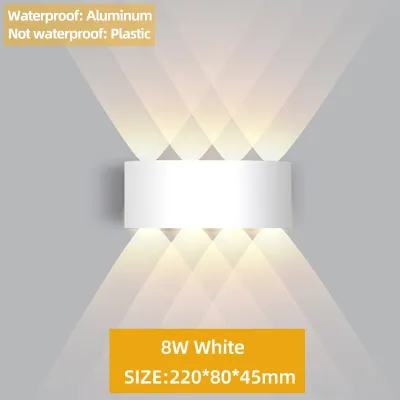
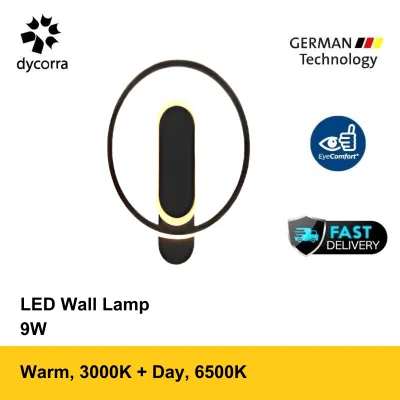
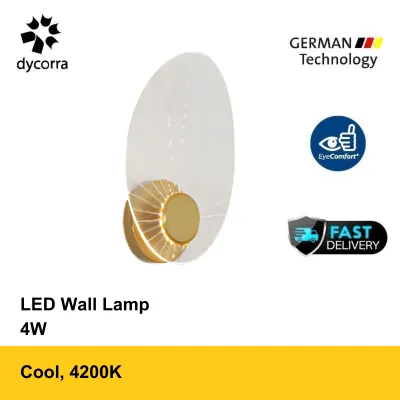
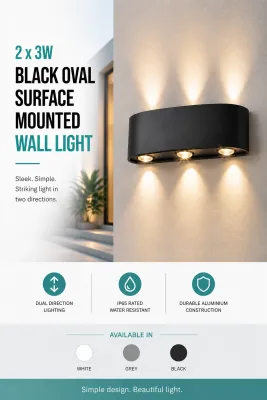
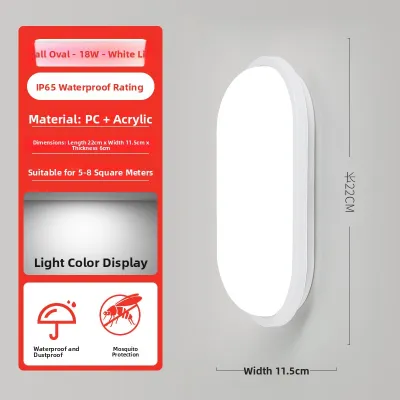
Prices are valid at publication and may change. Please refer to the product page for the latest price.
Beyond physical obstruction, narrow corridors present unique optical challenges. Because the walls are close together, any light source with an exposed bulb or an unshielded diffuser will shine directly into a person’s line of sight as they walk down the hall. This direct exposure causes harsh glare and visual discomfort. Furthermore, poorly positioned or overly intense light sources can cast long, dramatic shadows that make the corridor feel even narrower, darker, and more enclosed than it actually is.
Choosing the right space-saving wall lights solves both the physical and visual limitations of these transitional spaces. By selecting slim-profile fixtures that distribute light indirectly—such as casting illumination upward onto the ceiling or downward toward the floor—you can create a soft, inviting glow. This technique, known as wall washing, visually expands the boundaries of the corridor by drawing the eye to the illuminated vertical surfaces, making the entire passage feel wider, brighter, and more open.
Essential Features for Space-Saving and Glare-Free Corridor Lights
Selecting the right wall lights requires looking closely at technical specifications rather than relying solely on aesthetic appeal. To ensure safety, comfort, and longevity, prioritize the following design and electrical features.

Slim Profiles and Protrusion Limits
Before purchasing any wall-mounted fixture, check the manufacturer’s product datasheet for its depth or protrusion measurement. For narrow HDB and condo corridors, look for fixtures with a maximum depth of 10 centimeters (approximately 4 inches). Choosing ultra-slim or flush-mount designs ensures that the fixtures remain safely out of the primary walking path, preserving the maximum possible clearance for daily movement.
Glare-Free and Indirect Lighting Designs
To maintain visual comfort in a tight hallway, avoid fixtures that project light directly outward. Instead, opt for one of the following optical configurations:
- Uplights: These direct light upward, bouncing it off the ceiling to create a soft, ambient glow that makes low ceilings feel higher.
- Downlights: These cast a focused beam downward to illuminate the floor path clearly, which is highly beneficial for night-time navigation.
- Up-and-Down Lights: These dual-emission fixtures cast light in both directions, creating a balanced, decorative pattern on the wall while keeping the source of light shielded.
- Fully Diffused Fixtures: These use opaque, frosted, or fabric covers to scatter light evenly in all directions, eliminating harsh hot spots.
Color Temperature and Brightness
Corridors do not require the high-intensity task lighting needed in kitchens or study rooms. For a warm, welcoming transition, select a color temperature between 2700K and 3000K (warm white). If your corridor lacks natural light and you prefer a crisper, cleaner look during the day, a neutral white of 4000K is also suitable. Keep the brightness moderate; a luminous flux of 300 to 600 lumens per fixture is generally sufficient to provide clear visibility without causing eye strain.
Material and Finish Durability
Because corridor walls are high-traffic areas prone to accidental physical contact, the materials and finishes of your wall lights must be highly durable. Matte powder-coated metals, brushed aluminum, and high-quality polycarbonates are excellent choices because they resist fingerprints, dust accumulation, and minor impacts. Avoid highly polished chrome or delicate, unshielded glass shades that require constant cleaning and are easily damaged.
Electrical and Compatibility Checks
Always verify that the electrical specifications of your chosen wall lights match Singapore’s domestic standards:
- Voltage: The fixture and its driver must be rated for 220V–240V AC at 50Hz.
- Base and Interface: Determine whether the fixture uses integrated LEDs or replaceable bulbs (such as GU10 or E27). Integrated LEDs allow for much slimmer profiles, while replaceable bulbs offer easier maintenance over time.
- Wattage Limits: Ensure the total wattage of the fixtures does not exceed the capacity of your corridor's lighting circuit.
- Dimming Method: If you plan to adjust the brightness, verify that the fixture is compatible with your wall dimmer (e.g., trailing-edge, leading-edge, or smart digital dimming).
- Installation Environment: If your corridor is located near an open-air common area or a balcony where wind-driven rain or high humidity is common, select fixtures with an Ingress Protection (IP) rating of at least IP44 to protect against moisture.
Recommended Wall Light Brands for Singaporean Corridors
Finding the right balance of form, function, and dimensions is easier when you target brands that specialize in architectural precision, smart integration, or curated local designs. Below are the leading brand categories available in Singapore.
Premium and Designer Lighting Brands
For homeowners looking to make a subtle architectural statement while ensuring flawless optical performance, premium international brands offer unmatched design quality. These manufacturers invest heavily in advanced optical engineering, ensuring their slim-profile fixtures deliver glare-free light with exceptional color rendering.
- Flos: This Italian design powerhouse is celebrated for its minimalist aesthetic and innovative form factors. Iconic models like the Flos Foglio or the Flos Button series provide beautiful, indirect illumination with incredibly shallow depths, making them ideal for tight corridors.
- Artemide: Another legendary Italian brand, Artemide excels in architectural lighting. Their Talo wall light series features an ultra-slim, elongated profile that hugs the wall closely while projecting powerful, glare-free up-and-down light.
When choosing premium designer brands, always verify the exact protrusion depth and optical technologies of the specific collection you are considering. Because these fixtures represent a significant financial investment, it is crucial to purchase them through authorized local distributors in Singapore. This ensures that you receive genuine products, compatible 230V LED drivers, and valid local warranty coverage.
Mainstream and Smart Lighting Brands
If versatility, ease of use, and integration with modern home automation are your primary goals, mainstream smart lighting brands offer reliable performance at an accessible price point.
- Philips and Philips Hue: As a global leader in lighting, Philips offers a wide range of reliable, slim-profile wall fixtures. For those interested in smart home integration, the Philips Hue ecosystem (including models like the Hue Liane or Hue Play wall bars) allows you to customize your corridor’s lighting environment. You can program the lights to dim automatically late at night, change color temperatures, or integrate with motion sensors for hands-free path lighting.
Before purchasing smart wall lights, check whether the fixtures require a dedicated smart hub (such as the Philips Hue Bridge) to access their full suite of features. Additionally, measure the physical footprint of the smart driver, as some smart fixtures require slightly larger backplates or junction boxes. Mainstream brands are highly advantageous because of their widespread availability, straightforward installation processes, and the ease of sourcing replacement parts or compatible smart accessories locally.
Local Lighting Specialists and Showrooms
Visiting local lighting showrooms in Singapore provides a distinct advantage: it allows you to see the fixtures in person, assess their physical scale, and observe how their light behaves against actual wall surfaces.
- Curated Showrooms: Singapore features several highly regarded lighting hubs along Balestier Road, Jalan Besar, and Geylang. Specialists like Sol Luminaire, Lightcraft, or Sembawang Lighting curate collections specifically tailored to the compact spatial constraints of local HDB flats and condominiums.
When visiting these showrooms, bring your floor plan and consult with the sales representatives. Ask them to show you collections designed specifically for narrow hallways or low-ceiling applications. Most importantly, verify that the fixtures and their accompanying LED drivers carry the Enterprise Singapore Safety Mark. This certification guarantees that the electrical components have been rigorously tested and approved for safe use in Singaporean homes. Additionally, confirm the specific warranty terms provided by the local retailer for peace of mind.
Installation Guidelines and Electrical Safety for HDBs and Condos
Installing wall lights in Singaporean residential properties requires careful planning, adherence to local building codes, and strict electrical safety protocols.
Existing Wiring and Junction Boxes
Before purchasing your fixtures, assess the existing electrical infrastructure of your corridor. If your home already has wall-mounted light points, replacing the fixtures is relatively straightforward. However, if you are converting ceiling points to wall points or adding entirely new fixtures, you must plan how the wiring will reach the new locations.
In many HDB flats and concrete condo units, structural walls are made of reinforced concrete. Hacking into these load-bearing walls to conceal electrical conduits is strictly regulated and often prohibited by housing authorities. If hacking is not permissible, you will need to run the wiring through neat, surface-mounted PVC casing or trunking along the wall. Alternatively, you can install a false gypsum wall or a wooden feature panel to conceal the wiring without compromising the building’s structural integrity.
HDB Renovation Guidelines
All electrical installation and modification works in Singapore must comply with the guidelines set by the Housing & Development Board (HDB) and the Energy Market Authority (EMA). Any new wiring or relocation of light points must be carried out by an approved contractor and must not interfere with the structural safety of the building.
Professional Installation Boundaries
For all fixed wiring installations, it is strongly recommended—and often legally required—to hire a Licensed Electrical Worker (LEW) or a qualified, certified electrician. Singapore’s standard domestic electrical supply operates at a potentially lethal 230V AC. A professional installer will ensure that:
- The circuit is not overloaded.
- The fixtures are properly grounded (earthed) to prevent electrical shocks.
- The connections are securely insulated within approved junction boxes.
- The physical mounting can safely support the weight of the fixture over time.
Safety Protocols
If you are inspecting an existing light point, cleaning a fixture, or performing basic maintenance, always prioritize safety by isolating the power supply. Turn off the corresponding Miniature Circuit Breaker (MCB) and the main Residual Current Circuit Breaker (RCCB) at your home’s distribution board (DB box) before touching any electrical components. Never rely solely on the wall switch to isolate the power. If you encounter degraded, brittle, or unlabeled wiring, or if the manufacturer’s installation instructions conflict with your home’s wiring setup, stop immediately and consult a professional electrician.
Frequently Asked Questions (FAQ)
Can I install wall lights in the shared HDB corridor outside my main door?
No, you cannot install private wall lights in the shared corridor outside your flat. The external corridors, stairwells, and lift lobbies of HDB estates are classified as common property and serve as critical emergency evacuation and fire escape routes. Under Town Council and HDB regulations, residents are strictly prohibited from drilling into common walls, running private electrical wiring, or installing personal light fixtures in these shared areas. All personal lighting solutions must be kept strictly within the private boundaries of your own unit, such as your indoor foyer or entrance hallway.
What is the ideal mounting height for corridor wall lights?
As a general guideline, corridor wall lights should be mounted between 1.7 and 1.8 meters (approximately 5.5 to 6 feet) above the finished floor level. Placing the fixture at this height ensures that the light source remains slightly above the average adult’s eye level, preventing direct glare from the bulb or internal LED module. However, you should adjust this height based on your corridor’s ceiling height and the specific light distribution of your fixture. For example, if you are installing pure downlights, you can mount them slightly higher to maximize the spread of light across the floor. Always refer to the manufacturer’s specific installation instructions for the best results.
Are wireless or rechargeable wall lights suitable for narrow corridors?
Yes, wireless or rechargeable wall lights are excellent, practical alternatives if you want to avoid the cost and hassle of running new electrical wiring or installing surface trunking. They are particularly beneficial for renters or for solid concrete walls where hacking is impossible. These fixtures typically mount using secure, damage-free adhesive strips or magnetic brackets, allowing for easy removal when recharging is needed.
However, wireless options have lower light output (lumens) compared to hardwired fixtures and require manual battery maintenance. To maximize battery life and avoid frequent recharging, look for wireless models equipped with built-in passive infrared (PIR) motion sensors. This feature ensures the light only activates when someone walks into the corridor, conserving battery power during inactive hours.

Community discussion
Share your experience or ask a question. Comments are reviewed before publication.