
A compact entryway or narrow apartment corridor can instantly feel twice as large and significantly brighter with the strategic addition of a high-quality wall mirror. By reflecting light and extending sightlines, the right mirror transforms a cramped transition zone into an inviting, open space. Choosing the ideal mirror requires balancing frame styles, precise dimensions, and strategic placement to ensure the piece complements your home’s layout without adding visual clutter.
In many modern homes, particularly high-density apartments and HDB flats, the entryway is often a narrow, windowless passage. This architectural constraint can make the transition into your living space feel dark and restrictive. A well-chosen wall mirror for the hall serves as both a functional decor piece and an essential spatial tool, tricking the eye into perceiving depth where none exists.
To successfully expand your hallway, you must look beyond simple aesthetics. The shape, frame profile, size, and mounting height all play critical roles in how light bounces through the space. By understanding these design principles, you can select a mirror that maximizes your hallway’s potential, turning a functional necessity into a stunning design feature.
Products mentioned in this guide

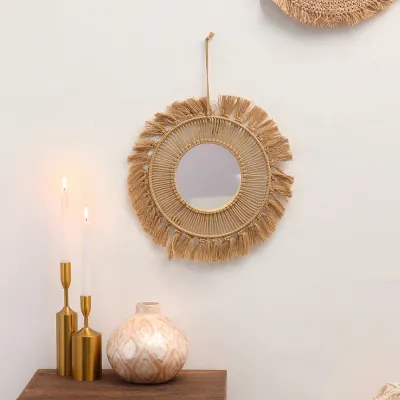
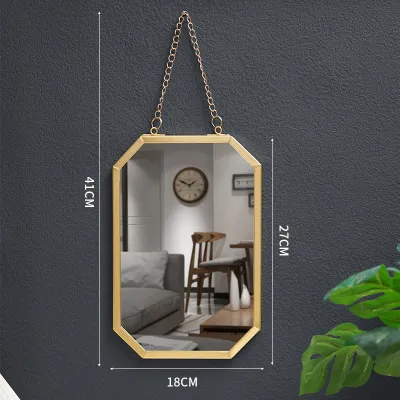
![[SG Seller]Bathroom HD Wall Mounted Mirror Log Wall Mounted Mirror Walnut Wall Mounted Round Mirror Square Mirror](https://img.lazcdn.com/g/p/63f9c6534b92d2bb39b82b977af7fb45.jpg_400x400q80.jpg_.webp)
![[SG Stock]New Chinese wall mirror oval wall mirror home makeup mirror wall mirror wall wall mirror](https://img.lazcdn.com/g/p/c30058103c8b90e3c3b6aadc65b72fa8.jpg_400x400q80.jpg_.webp)
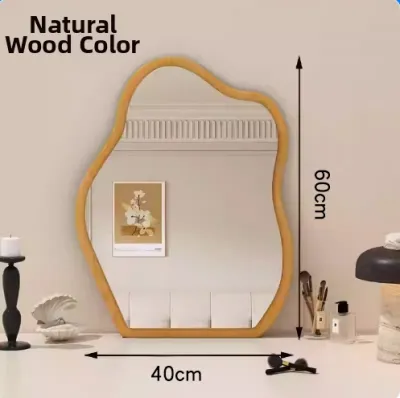
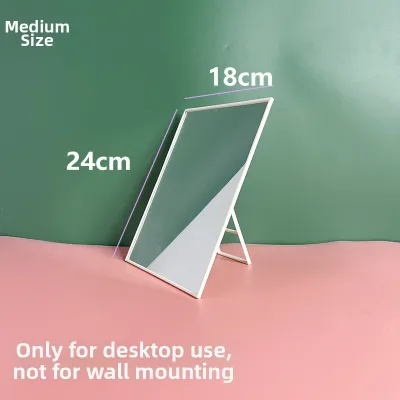
Prices are valid at publication and may change. Please refer to the product page for the latest price.
How Mirrors Create the Illusion of Space
The magic of a hallway mirror lies in basic optical physics. When light hits a reflective surface, it bounces back into the room rather than being absorbed by dark wall paint or matte finishes. This light amplification is particularly effective in narrow corridors, where natural light from adjacent living rooms or kitchens can be captured and redirected into darker corners, reducing harsh shadows.
Beyond brightness, mirrors create a powerful illusion of depth. When you look into a mirror, your brain perceives the reflected space as a continuation of the room, effectively doubling the visual width of a narrow passage. This trick of the eye is highly effective when the mirror is positioned directly opposite an open doorway or a light-colored wall, as it breaks up the solid, enclosing boundaries of the corridor.
Additionally, a strategically placed mirror acts as a tool for focal point redirection. In a cramped hallway, the eye naturally focuses on the close proximity of the walls, which reinforces the feeling of confinement. Introducing a beautiful, large-scale mirror gives the eye a clear destination to rest upon, drawing attention away from the tight physical dimensions and focusing it instead on an open, airy reflection.
Best Mirror Styles to Expand a Compact Hallway
Selecting the right mirror style is a balancing act between enhancing spatial perception and managing visual clutter. A frame that is too heavy or ornate can overwhelm a narrow wall, making the hallway feel more crowded rather than more open. Conversely, a completely plain mirror might lack the design presence needed to anchor the space.

The ideal style depends heavily on your hallway’s specific architectural constraints, such as ceiling height, wall length, and the presence of built-in furniture like shoe cabinets. By matching the mirror’s design characteristics to your space’s needs, you can create a harmonious look that feels intentional and expansive.
Oversized and Leaning Mirrors
Oversized mirrors offer a dramatic way to introduce depth into a compact entryway. By covering a significant portion of the wall, these large-scale pieces maximize the reflective surface area, making the entire wall seem to disappear. For a balanced look, aim for a mirror that covers at least half to two-thirds of the wall’s height, leaving comfortable margins on either side to prevent a cramped appearance.
Leaning mirrors, which rest on the floor and tilt slightly against the wall, provide a casual, contemporary aesthetic that feels incredibly open. The slight upward angle of a leaning mirror reflects more of the ceiling and upper walls, which can make a low-ceilinged hallway feel taller. However, this style does require a small amount of dedicated floor space, making it less suitable for exceptionally tight corridors where every centimeter of walkway is precious.
If floor space is at a premium, wall-mounted oversized mirrors are the preferred alternative. Mounting a large mirror securely to the wall keeps the floor completely clear, preserving valuable foot traffic space while still delivering the same dramatic spatial expansion. This approach is particularly useful in busy households where bags, shoes, and umbrellas frequently clutter the entryway floor.
Arched and Curved Mirrors
Arched and curved mirrors are highly effective at breaking up the rigid, linear geometry of a typical hallway. Most corridors are dominated by straight lines—long walls, rectangular doors, and sharp floorboards—which can emphasize the narrowness of the space. Introducing soft, organic curves helps to relax these harsh lines, creating a more welcoming and visually interesting transition zone.
The arched shape is particularly beneficial for height enhancement. The upward curve of an arch naturally draws the eye upward, creating a vertical flow that makes standard or low ceilings feel significantly loftier. This vertical pull is an excellent design trick for compact apartments where ceiling heights may feel somewhat restrictive.
To maximize this effect, try pairing an arched mirror with a minimalist console table or a low-profile shoe cabinet. Placing the flat base of the arch just above the furniture creates a grounded, cohesive look, while the curved top floats elegantly above, adding a sense of airiness and architectural interest to an otherwise plain wall.
Frameless and Beveled Mirrors
For the ultimate minimalist approach, frameless and ultra-thin frame mirrors are unmatched in their ability to expand a tight space. Without a thick frame to define its boundaries, a frameless mirror blends seamlessly into the surrounding wall, making the transition between the wall and the reflection almost invisible. This lack of visual weight is crucial in dark, narrow hallways where heavy frames can feel oppressive.
If you want a decorative touch without the bulk of a traditional frame, a beveled mirror is an excellent alternative. The angled, polished edges of a beveled mirror catch and refract light in a subtle, elegant way, acting as a built-in decorative border. This style provides the clean, space-saving benefits of a frameless design while still offering a touch of classic sophistication.
Frameless designs are particularly effective when mounted on light-colored walls, such as soft whites, creams, or light grays. Because there is no contrasting frame to draw a hard boundary, the mirror appears to float on the wall, allowing the reflected light to merge effortlessly with the room’s natural color palette.
Grid and Window-Pane Mirrors
Grid and window-pane mirrors use divided-light designs to create the illusion of an extra window. In windowless hallways, this style can completely transform the atmosphere by simulating a view into an adjacent room or even the outdoors. The structured grid pattern adds architectural depth, making the wall feel like an opening rather than a solid barrier.
When choosing a window-pane mirror for a small space, it is important to select the right frame materials and colors. Heavy, dark metal grids can sometimes look too industrial and visually heavy, which may counter the goal of opening up the space. Instead, opt for thin, delicate metal frames in light tones, soft metallics, or painted wood that matches your wall color to keep the look light and airy.
Additionally, pay attention to the scale of the grid pattern. The grid lines should be thin enough to avoid fragmenting the reflection too much, as overly busy patterns can create visual noise that makes a small hallway feel cluttered. A simple four-to-six-pane grid is often the perfect balance, offering the window-like illusion without disrupting the flow of reflected light.
Sizing Rules for Narrow Walls and Tight Spaces
To ensure your wall mirror for the hall looks intentional and functions effectively, you must follow precise sizing rules. A mirror that is too small will look lost and fail to bounce enough light, while a mirror that is too large can overwhelm the wall and make the corridor feel top-heavy. Measuring your space carefully before purchasing is the key to a balanced installation.
When hanging a mirror above furniture, such as a console table, shoe cabinet, or radiator cover, apply the two-thirds rule. The width of the mirror should be approximately two-thirds to three-quarters the width of the furniture piece below it. This ratio ensures that the mirror feels anchored by the furniture, creating a cohesive visual unit rather than two competing elements.
Clearance is another critical factor to consider. Always leave a comfortable gap of at least 15 to 20 cm between the bottom of the mirror frame and the top of your furniture or radiator. This clearance prevents the area from looking crowded and provides space for small decorative items, like a key bowl or a small vase, without blocking the reflective surface.
For narrow walls without furniture, pay close attention to width limits. The mirror should never extend to the very edge of the wall or touch adjacent door frames, as this can make the wall look cramped. Leave a margin of at least 10 to 15 cm of visible wall space on either side of the mirror to frame the piece properly and maintain a sense of balance.
Finally, calculate the correct height to ensure the mirror is fully functional for everyone in your household. The center of the mirror should ideally sit at average eye level, which is approximately 150 cm from the floor. If you are installing a vertical mirror, ensure that the top of the glass is high enough to reflect the tallest household member fully, preventing them from having to bend down to see themselves.
Placement and Lighting Tricks for Maximum Depth
Where you hang your mirror is just as important as the style you choose. To maximize the illusion of depth, position the mirror so that it reflects something visually appealing or open. Hanging a mirror directly opposite an open doorway, a window, or a brightly lit living room allows it to pull those open views and natural light deep into the hallway, instantly doubling the perceived space.
Pairing your mirror with the right lighting fixtures can dramatically amplify its brightness. Placing wall sconces on either side of the mirror or hanging a pendant light nearby allows the reflective surface to catch and scatter the artificial light, eliminating dark corners. If you are installing new lighting fixtures, always verify the voltage, base interface, and wattage limits, and ensure the installation environment is dry and safe.
Be mindful of what your mirror will reflect, and avoid positioning it opposite cluttered zones, blank dead-ends, or harsh utility areas like laundry doors or electrical DB boxes. Reflecting clutter will only double the visual noise, making your hallway feel more chaotic. Instead, aim to reflect a piece of wall art, a clean entryway console, or a glimpse of greenery from an adjacent room.
If you are using a leaning mirror, you can use a simple angling trick to enhance the light in your hallway. By leaning the mirror slightly backward against the wall, the glass tilts upward, reflecting more of the ceiling and overhead light fixtures. This upward angle bounces light down into the walkway, making the entire corridor feel brighter, loftier, and more open.
Safe Mounting and Wall Preparation
Mounting a heavy or oversized mirror in a high-traffic area like a hallway requires careful preparation and strict adherence to safety guidelines. Because hallways experience constant movement, doors opening and closing, and people passing by, ensuring your mirror is securely anchored to the wall is paramount to preventing accidents.
Before you begin, identify your wall type, as this determines the mounting hardware you will need. In many modern apartments, walls may consist of drywall, plaster, or solid concrete masonry. Use a stud finder to locate wooden studs behind drywall, as mounting directly into a stud provides the strongest support; if no stud is available, you must use heavy-duty hollow-wall anchors or toggle bolts rated for the mirror’s specific weight.
Always check the weight limit of both the mirror and your selected mounting hardware. Never rely on simple nails or adhesive strips for heavy glass mirrors, as temperature fluctuations and humidity can cause adhesives to fail over time. For solid concrete or masonry walls, use a hammer drill to create pilot holes and insert high-quality masonry plugs and heavy-duty screws to ensure a permanent, secure hold.
Take care to position the mirror where it will not obstruct walkways or interfere with the swing of adjacent doors. A mirror that protrudes too far from the wall can easily be bumped by passing family members or guests carrying bags. If your installation involves working at height, handling exceptionally heavy glass, or integrating fixed electrical wiring for a backlit mirror, always isolate the power at the main breaker and consult a qualified professional to complete the work safely.
Frequently Asked Questions (FAQ)
Can I use a full mirrored wall in a very narrow hallway?
Yes, a full mirrored wall can create a dramatic, near-infinite sense of space in an extremely narrow corridor, but it requires careful consideration. While it maximizes light and visual depth, a full-wall mirror also requires high maintenance, as fingerprints, smudges, and dust will be highly visible in a high-traffic entryway. For safety, ensure the glass panels feature shatter-resistant backing and are professionally installed to handle the structural load. If a full wall feels too intense or difficult to maintain, a highly effective alternative is to hang multiple large, staggered mirrors along one side of the wall to achieve a similar expansive effect with a more contemporary look.
What frame color is best for a small, dark hallway?
For a small, dark hallway, light-colored or metallic frames are generally the best choice to complement and brighten the space. Metallic finishes like gold, brass, or polished silver are excellent because they catch and bounce additional light, adding a subtle sparkle to low-light entryways. If you prefer a painted frame, opt for soft whites, creams, or light wood tones that blend with your wall paint to minimize visual contrast. To create a cohesive and polished look throughout your entryway, try matching the frame’s finish to your existing hallway hardware, such as door handles, light switches, or the metal accents on your shoe cabinet.

Community discussion
Share your experience or ask a question. Comments are reviewed before publication.