
Quick Guide: Maximizing Space with Whole Body Mirrors
A carefully selected whole body mirror can instantly transform a compact Singapore HDB flat or condominium, creating the illusion of double the square footage. To achieve this spatial expansion, the most effective solutions are large, frameless, or ultra-slim framed mirrors placed strategically to capture and redirect light. While no single brand holds a monopoly on space-enhancing designs, homeowners in Singapore can find ideal options across three main avenues: local curated furniture retailers, global home stores, and custom glass specialists. The ultimate goal when selecting a mirror for a small apartment is to maximize light reflection while minimizing the physical and visual weight of the frame, ensuring the piece integrates seamlessly into your living space without causing clutter.
Key Design Features That Make Small Apartments Feel Larger
When shopping for a whole body mirror, understanding how specific design elements influence spatial perception is crucial. The right combination of size, frame, shape, and glass clarity can make a cramped room feel open and airy, while a poor choice can make it feel even more confined.

Size and Proportion
In small-space interior design, scale is often counterintuitive. While it might seem logical to choose a small mirror for a small room, a larger, oversized, or floor-to-ceiling mirror is actually far more effective at expanding a space. A standard-sized dressing mirror often creates a fragmented reflection, which can make a room feel disjointed.
Products mentioned in this guide
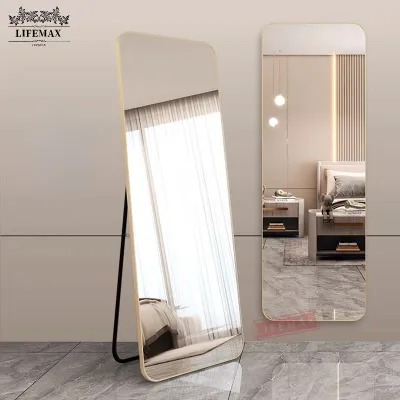
![[OKLIFE.SG] Floor Stand Mirror Home Bedroom Wall Hanging Mirror Full Length Mirror](https://img.lazcdn.com/g/p/585357ae4f483a530b7e0e7cde45369b.jpg_400x400q80.jpg_.webp)
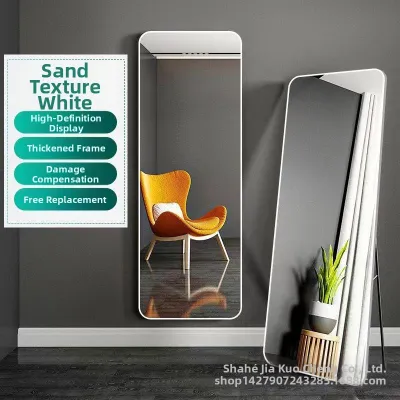
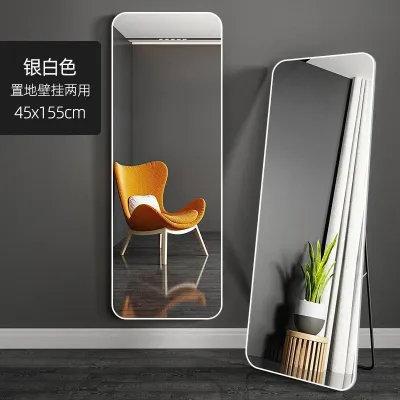
![SG [ READY STOCK ] HD Acrylic soft mirror attached to wall self-adhesive full body dressing mirror non perforated](https://img.lazcdn.com/g/p/10f5a09c2f952c5c8f6fe9a8d334827a.jpg_400x400q80.jpg_.webp)


Prices are valid at publication and may change. Please refer to the product page for the latest price.
In contrast, a tall, wide mirror that covers a significant portion of a wall reflects a continuous view of the floor and ceiling. This uninterrupted reflection tricks the brain into perceiving the room as extending far beyond its actual physical boundaries, making it an excellent choice for compact HDB bedrooms or narrow condo entryways. A mirror that is at least 1.8 meters tall allows a person standing close to see both their entire body and the ceiling line, establishing a vertical continuity that visually breaks the boxy boundaries of a standard room.
Frame Styles
The frame of a mirror determines its visual weight, which is the amount of visual space it appears to occupy in a room. For small apartments, minimizing visual weight is essential. Frameless mirrors are the gold standard for space-saving because they blend directly into the wall, creating a seamless transition that maximizes the reflective surface.
If you prefer a framed look, ultra-slim metal frames in matte black, brass, or brushed chrome offer a modern, minimalist aesthetic without adding bulk. A frame that is less than 1 centimeter wide is ideal for maintaining maximum light reflection. On the other hand, thick, heavy wooden or ornate plaster frames should generally be avoided in tight quarters, as they act as visual stop-signs, drawing attention to the physical limits of the mirror and making the room feel more crowded. Deep frames, such as shadow boxes, should also be approached with caution, as they can cast shadows on the mirror surface itself, reducing the overall brightness of the reflection.
Shape and Edges
The geometric shape of your mirror can alter the architectural feel of a room. Rectangular mirrors are highly functional and emphasize clean, vertical lines, which can make low HDB ceilings feel taller when the mirror is mounted vertically. However, in narrow corridors or boxy rooms, too many sharp angles can feel rigid.
Arched or capsule-shaped whole body mirrors have become increasingly popular because their curved tops soften the harsh angles of standard apartment layouts. These organic shapes draw the eye upward, creating an organic focal point that distracts from the narrowness of a hallway or entryway. Additionally, consider mirrors with beveled edges; these catch light at different angles, creating a subtle prism-like effect along the perimeter that adds a touch of elegance and makes the mirror feel like a custom architectural feature rather than an afterthought.
Tint and Clarity
Not all mirror glass is created equal, and the level of clarity directly impacts how much light is bounced back into your home. For maximum spatial expansion, standard high-clarity silver mirrors are highly recommended. These mirrors feature a silver backing that provides maximum light reflection and accurate color representation, which is essential for brightening dark, windowless corners.
When comparing glass quality, look for low-iron glass (often marketed as ultra-clear glass). Standard glass has a slight green tint due to iron oxide content, which can slightly dull the reflected light. Low-iron glass provides maximum light transmission and a much brighter, truer reflection, which is highly beneficial for small, dark spaces. While tinted mirrors—such as bronze, grey, or antique finishes—add a sophisticated, moody aesthetic to a room, they absorb more light than they reflect. Consequently, tinted mirrors are better suited as decorative accent pieces rather than primary tools for spatial enlargement.
Best Brand Categories and Where to Shop in Singapore
Finding the perfect whole body mirror in Singapore involves exploring different retail categories. Each shopping channel offers distinct advantages and trade-offs in terms of design, customization, and cost.
Local and Regional Furniture Brands
Local and regional furniture brands with physical showrooms in Singapore are excellent sources for curated, design-forward mirrors. These retailers understand the typical layouts and dimensions of modern HDB flats and condominiums, offering pieces that are scaled appropriately for local homes.
- Curated Aesthetics and Showroom Experiences: Shopping at local boutique furniture brands allows you to see the quality of the glass and the finish of the frames in person. Many of these brands curate modern, Scandinavian, Japandi, or mid-century modern designs that align perfectly with contemporary Singaporean interior trends. Their whole body mirrors often feature high-quality materials, such as sustainably sourced timber or powder-coated aluminum, providing a premium look that elevates your home's decor.
- Sizing and Proportional Fit: Because these brands cater specifically to the local market, their standard mirror sizes are typically optimized for typical HDB bedroom walls, living room alcoves, and entryway niches. This reduces the risk of buying a mirror that is too wide or awkwardly tall for your space.
- Quality Inspection: In a physical showroom, you can stand 2 to 3 meters back from the mirror and look at the edges of the reflection. If the reflection warps or distorts as you move your head, the glass is likely too thin or of lower quality. High-quality mirrors should have a perfectly flat, distortion-free reflection across the entire surface.
- Limitations and Lead Times: The primary trade-off with boutique local brands is the lack of customizability. You are generally limited to their off-the-shelf dimensions and finishes. Additionally, because these retailers maintain smaller inventories, popular mirror designs may frequently go out of stock, resulting in lead times of several weeks or even months if the items need to be imported from regional manufacturing hubs.
Global Retailers for Accessible Designs
For budget-conscious homeowners or those looking for immediate, functional solutions, global home furnishing retailers with large-scale operations in Singapore are highly accessible options.
- Functional and Space-Saving Innovations: International home brands excel at creating highly functional, multi-purpose furniture designed specifically for compact living. In their inventories, you will find versatile options such as leaner mirrors with built-in storage hooks on the back, lightweight over-the-door mirrors that require no drilling, and mirrored wardrobe doors that serve a dual purpose. These designs are highly efficient, allowing you to incorporate a full-length reflection without sacrificing precious floor space.
- Affordability and Availability: One of the greatest benefits of global retailers is affordability. Because they manufacture at scale, they can offer stylish whole body mirrors at very competitive price points. Furthermore, these retailers typically maintain high stock levels, allowing you to purchase a mirror online or in-store and have it in your home the same day.
- Quality and Environmental Considerations: While highly convenient, mass-produced mirrors may feature lighter, thinner glass (typically 3mm to 4mm) to keep shipping costs and weight down. This makes them more prone to warping if not mounted on a perfectly flat surface. In Singapore’s hot and humid tropical climate, it is essential to verify if the mirror backing is adequately sealed. Unprotected mirror backings can easily degrade when exposed to ambient moisture, leading to premature desilvering. Additionally, many of these options require self-assembly, meaning you must ensure you have the correct tools and hardware to mount them securely.
Custom Glass and Mirror Specialists
When off-the-shelf retail options do not fit your specific spatial needs, turning to local custom glass and mirror specialists or contractors is the most effective solution.
- Bespoke Spatial Integration: Custom glass specialists can cut mirrors to your exact specifications, allowing you to create stunning, built-in features. This is particularly useful for awkward HDB nooks, structural pillars, or windowless corridors where a standard retail mirror would look out of place. A custom contractor can install a true floor-to-ceiling mirror wall, a giant seamless arch, or a recessed mirror that fits perfectly within custom carpentry, maximizing light reflection and creating an unparalleled sense of openness.
- Material and Finish Control: Working with a specialist gives you complete control over the materials used. You can choose the exact glass thickness (typically 5mm or 6mm for large installations to prevent warping), specify safety backing films, select high-grade copper-free silver glass, and request specialized edge polishing or beveling. This level of customization ensures a premium, long-lasting product tailored to your home's exact environmental conditions.
- The Trade-Off: Cost and Permanence: The primary drawback of custom mirror installations is the cost. Custom measuring, cutting, delivery, and professional installation by skilled glass glasiers command a significant premium over retail mirrors. Furthermore, wall-to-wall or glued-on custom mirrors are permanent installations. If you rent your home or plan to renovate in the future, removing these mirrors can damage the underlying wall and requires professional removal, making them a long-term commitment.
Strategic Placement to Maximize Spatial Illusion
Simply buying a beautiful whole body mirror is not enough; its placement is what unlocks its space-expanding potential. Strategic positioning ensures the mirror works in harmony with your home’s layout and lighting.
Reflecting Natural Light
To make a compact living room or dark bedroom feel brighter and larger, position your mirror where it can capture natural light. The ideal placement is directly opposite or adjacent to a window. When sunlight streams into the room, the mirror will bounce that light deep into the interior, illuminating dark corners and making the entire space feel more open. This technique is especially effective in deep, narrow HDB layouts where natural light struggles to reach the entryway or dining area.
Creating Depth in Narrow Spaces
Narrow corridors and small entryways can feel claustrophobic. Placing a whole body mirror at the end of a long hallway creates a visual extension of the corridor, making it appear twice as long. In a small entryway, mounting a mirror on the wall adjacent to the front door reflects the open living area, providing an immediate sense of spaciousness the moment you step inside. This placement also serves a practical purpose, allowing for a quick outfit check before leaving the house.
Avoiding the Clutter Trap
A mirror reflects whatever is in front of it. If a mirror is placed opposite an open utility rack, a cluttered desk, or a busy kitchen counter, it will visually double the clutter, defeating the purpose of making the space feel open and serene. Instead, aim the mirror toward a clean accent wall, a minimalist dining area, or a green corner with potted plants, which visually extends the natural elements and brings a calming outdoor feel inside.
Bedroom and Wardrobe Integration
In compact bedrooms, floor space is at a premium, making the choice of mirror style critical.
- Leaning Mirrors: Leaning a large mirror against the wall adds a relaxed, stylish vibe. However, because the base of the mirror must sit away from the wall, it consumes valuable floor space and can be a safety hazard in high-traffic areas or homes with pets and young children.
- Over-the-Door Mirrors: Hanging a mirror over a bedroom or closet door is an excellent space-saver that requires no drilling. However, these mirrors can sometimes rattle when the door is moved and are limited in size.
- Wardrobe-Mounted Mirrors: Attaching a full-length mirror to the exterior or interior of your wardrobe doors is highly efficient. Sliding wardrobe doors with integrated mirror panels are particularly effective, as they provide a massive reflective surface without taking up any additional floor or wall space.
Installation Safety and Humidity Protection
Installing a large whole body mirror in a Singapore home requires careful attention to structural safety and environmental factors. Proper installation prevents accidents and ensures your investment lasts for years.
HDB and Condo Wall Constraints
Before mounting a heavy mirror, you must identify the type of wall you are drilling into. You can test your wall by tapping on it; a dull, solid thud indicates concrete or brick, while a hollow, echoing sound indicates drywall.
- Solid Concrete Walls: Most structural walls and boundary walls in HDB flats and condos are made of solid concrete or precast panels. These walls are incredibly strong and can support heavy, oversized mirrors, but they require a hammer drill, masonry drill bits (typically 6mm or 8mm), and high-quality nylon wall plugs (such as Fischer plugs) or masonry anchors that expand reliably in concrete.
- Hollow Drywall Partitions: Internal partition walls, often found separating bedrooms or study areas, are typically made of gypsum board mounted on metal studs. Standard wall plugs will pull out of drywall under the weight of a large mirror, leading to a dangerous collapse. To mount a mirror on drywall, you must use specialized toggle bolts or hollow-wall anchors, and ideally, screw directly into the vertical metal studs. If you are unsure of your wall's construction or are mounting an exceptionally heavy piece, always hire a qualified professional handyman or contractor to handle the installation.
Humidity and Desilvering
Singapore’s tropical climate features high relative humidity year-round, which can be detrimental to mirrors. Over time, moisture can penetrate the backing of a mirror, causing the silver reflective layer to oxidize and peel away from the glass. This process, known as desilvering or “black edge rot,” typically starts at the edges and looks like unsightly dark spots or streaks.
To prevent this, especially if the mirror is installed near an ensuite bathroom or in a room with natural ventilation, look for mirrors with copper-free silver glass, which is highly resistant to corrosion. Alternatively, ensure the mirror has a fully sealed backing or a protective moisture-resistant coating applied to the edges.
Secure Mounting Practices
For heavy whole body mirrors, safety should always be the top priority.
- Avoid Adhesive-Only Mounting: For large, heavy glass panels, never rely solely on double-sided adhesive tapes or standard liquid glue, as the humid climate can weaken adhesives over time, leading to sudden falls. Adhesives should only be used in combination with mechanical fasteners like mirror clips, J-channels, or heavy-duty brackets. When using adhesives, ensure you use a "neutral-cure" silicone or specialized mirror mastic. Standard silicone adhesives contain acetic acid, which will eat through the silver backing of a mirror over time, causing rapid desilvering.
- Use Proper Hanging Hardware: Ensure the hanging wire, D-rings, or brackets attached to the back of the mirror are rated for the mirror's specific weight. When hanging, use two separate anchor points on the wall rather than a single hook to distribute the weight evenly and keep the mirror level.
- Secure Leaning Mirrors: If you choose to lean a heavy mirror against a wall, use safety anchor straps or brackets attached to the top of the frame and secured to the wall. This prevents the mirror from sliding outward on slippery tile or vinyl flooring.
Frequently Asked Questions (FAQ)
Can I mount a heavy whole body mirror on an HDB drywall partition?
Yes, but you must not use standard plastic wall plugs, which cannot support heavy glass on hollow gypsum board. To mount a heavy mirror safely, you must locate the internal metal studs using a stud finder and screw directly into them. If stud placement does not align with your mirror, you must use heavy-duty toggle bolts or hollow-wall anchors rated for the mirror’s weight, or consult a professional installer.
Are arched mirrors better than rectangular ones for making a room look bigger?
Both shapes are excellent for expanding space, but they achieve it differently. Rectangular mirrors emphasize clean, vertical lines, which can make low ceilings feel taller when mounted vertically. Arched mirrors, however, draw the eye upward and soften the rigid, boxy architecture typical of HDB flats, making narrow corridors or entryways feel more open and organic.
How do I clean a large mirror without leaving streaks in a humid climate?
To clean a large mirror without streaks, use a clean microfiber cloth slightly dampened with a mild, ammonia-free glass cleaner or a mixture of equal parts distilled water and white vinegar. Avoid spraying the cleaner directly onto the mirror’s edges, as liquid can seep behind the glass and cause desilvering. Wipe in a tight, S-shaped pattern, and dry immediately with a second dry microfiber cloth.

Community discussion
Share your experience or ask a question. Comments are reviewed before publication.