
Finding the right certificate frame requires matching the exact physical dimensions of your document with the inner measurements of the frame. Whether you are displaying a standard A4 university degree, an A3 professional license, or a traditional letter-sized diploma, choosing the correct size ensures your achievement is displayed securely without awkward gaps, overlapping text, or buckling. The ideal frame size depends on whether you want a direct fit where the document touches the frame border, or a mounted look that uses a decorative mat board to create a clean border around your document.
Understanding Document vs. Frame Dimensions
When shopping for a certificate frame, you will encounter three distinct sets of measurements: the document size, the inner frame size, and the outer frame size. Confusing these dimensions is the most common reason for purchasing an incorrect frame, which often leads to returns or damaged documents.
The inner frame dimensions represent the actual usable space inside the frame, which is where your document, mat board, glazing, and backing board sit. If a frame is labeled as an “A4 frame,” its inner dimensions are designed to accommodate an A4 sheet, measuring exactly 210 by 297 millimeters. This is the primary measurement you must match to your document or mat board.
Products mentioned in this guide
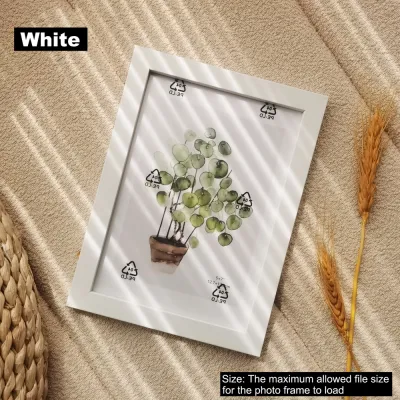

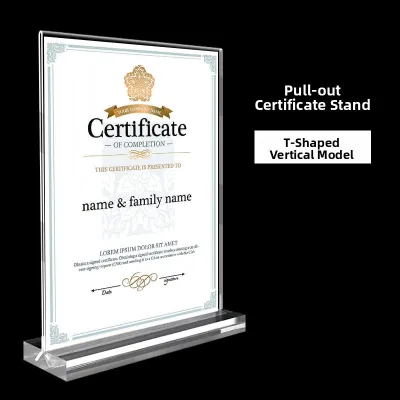
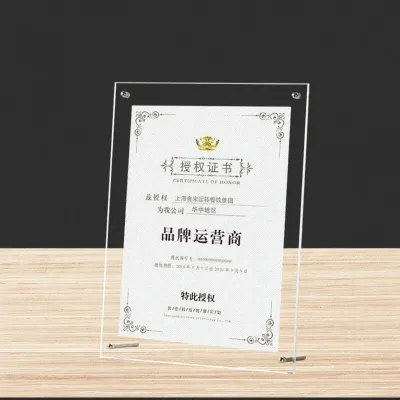

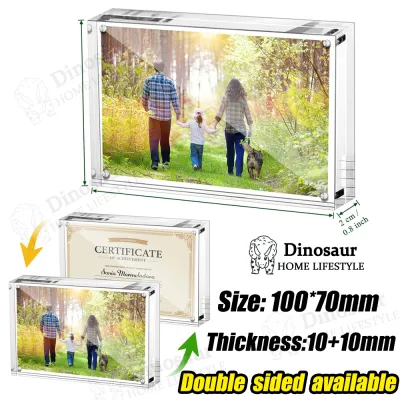

Prices are valid at publication and may change. Please refer to the product page for the latest price.
The outer frame dimensions refer to the total physical footprint the frame occupies on your wall. This measurement is determined by adding the width of the frame moulding to the inner dimensions. A thick, ornate wooden frame will have much larger outer dimensions than a slim, minimalist aluminum frame, even if both are designed to hold the exact same A4 document.
The frame moulding width affects only the visual weight on your wall and does not change the inner capacity. When planning your wall layout, always use the outer dimensions to ensure the frame fits your physical wall space, but rely strictly on the inner dimensions to ensure your document fits inside.
Standard Document Sizes and Matching Frame Dimensions
Certificates and diplomas come in several standard paper sizes depending on the issuing institution and region. In Singapore and many international systems, the ISO 216 standard is most common, with A4 being the standard for degrees and A3 often used for larger licenses, architectural drawings, or design certificates.

North American institutions frequently issue certificates in Letter size (8.5 by 11 inches, or 216 by 279 millimeters) or occasionally Legal size (8.5 by 14 inches, or 216 by 356 millimeters). Because these standards differ significantly in aspect ratio and physical size, you must measure your specific document in millimeters or inches before purchasing a frame.
Once you have the exact measurements of your document, you can choose between two primary framing approaches. The first is a direct fit, where the document fills the entire frame window, and the second is framing with a mat, which adds a decorative border around the document to elevate its presentation.
Framing Without a Mat (Direct Fit)
A direct-fit frame is designed so that the inner frame size matches the document size exactly. For example, if you have a standard A4 certificate, you will purchase a frame with an inner dimension of 210 by 297 millimeters, allowing the paper to sit flush against the edges.
To hold the document in place, frames feature an inner lip called a rabbet or rebate. This lip extends slightly inward from the frame edge, typically overlapping the document by about 5 millimeters on all sides. This overlap is necessary to prevent the document from falling through the front of the frame.
Because of this overlap, any text, signatures, or decorative borders located within 5 millimeters of the edge of your certificate will be hidden by the frame lip. Always inspect your document to ensure that no critical information or official seals are positioned too close to the outer edges before choosing a direct-fit frame.
Framing With a Mat (Mount)
Framing with a mat, or mount, involves placing a decorative cardboard border around the certificate, which sits between the document and the frame glass. This method provides a highly professional appearance and prevents the document from touching the glazing directly, protecting it from moisture transfer.
To calculate the correct mat window opening, you must select an opening size that is slightly smaller than your certificate. If your certificate is A4 (210 by 297 millimeters), a standard mat window opening might measure 200 by 287 millimeters, providing a 5-millimeter overlap on all sides to secure the paper behind the mat.
To determine the total inner frame size required, you must add your desired mat border width to the dimensions of the certificate. For instance, if you want a balanced 50-millimeter mat border on all sides of an A4 certificate, you will add 100 millimeters to both the width and height, requiring a frame with inner dimensions of 310 by 397 millimeters.
Key Checks Before Buying or Assembling Your Frame
Before finalizing your purchase, you must verify the frame’s rebate depth, which is the physical thickness the frame can accommodate. A standard frame must have enough depth to securely hold the glazing, the mat board (if used), the certificate itself, and the backing board without causing the rear clips to bulge or fail.
The choice of glazing material is another critical factor for both safety and preservation. Traditional glass offers excellent clarity and scratch resistance but is heavy and fragile, whereas lightweight acrylic is shatterproof and ideal for high-traffic areas or offices. For valuable certificates, look for glazing that specifies UV protection to prevent the ink from fading over time.
The materials that come into direct contact with your certificate must be acid-free and lignin-free. Standard cardboard backing and cheap mats contain acids that migrate into the paper over time, causing irreversible yellowing, brittle edges, and dark stains. Choosing conservation-grade, acid-free mat boards and backing boards preserves the integrity of your document for decades.
When mounting the certificate to the mat board, avoid standard adhesive tapes or glue sticks, which contain harsh chemicals that will ruin the paper. Instead, use acid-free artist’s hinging tape or archival photo corners, which secure the document firmly while allowing it to expand and contract naturally with changes in humidity.
Common Sizing Mistakes and How to Avoid Them
One of the most frequent mistakes is confusing the outer frame dimensions with the inner capacity when shopping online. Product listings on online marketplaces often highlight the overall frame size to assist with wall planning, which can lead buyers to purchase a frame that is far too small for their actual document.
Another common error is assuming that all certificates of a standard size have identical margins. Even if two diplomas are printed on A4 paper, one may have text that runs very close to the edge, making a direct-fit frame unsuitable because the inner lip would cover important signatures or seals. Always measure the active design area of your document, not just the paper edges.
Using flimsy, low-quality frames can also lead to long-term damage. Thin plastic or cheap composite frames often warp under temperature and humidity changes, which can cause the backing board to lose its tight seal, leading to moisture entry, paper buckling, and slipping inside the frame.
Finally, using a flexible tape measure can introduce small measurement errors that prevent a perfect fit. Always use a rigid metal ruler to measure your document and the frame’s inner rebate, as even a two-millimeter discrepancy can cause the certificate to buckle or slip out of place.
Frequently Asked Questions (FAQ)
Can I use an A4 frame for a slightly smaller certificate?
Placing a smaller document directly into an A4 frame without proper support will cause the paper to slip, wrinkle, or sit crookedly against the backing. The lack of physical tension allows the document to sag over time, and the exposed backing board may look unfinished or unprofessional.
To use a smaller certificate in an A4 frame, you should have a custom mat board cut to fit the inner A4 dimensions of the frame. The mat’s inner window should be cut slightly smaller than your document, allowing you to center, secure, and elevate the presentation of the smaller certificate beautifully.
Do I need to remove the certificate from its presentation folder?
Many prestigious certificates are delivered inside thick leatherette or heavy cardstock presentation folders. You must assess the thickness of this folder against the frame’s rebate depth; most standard frames do not have a deep enough rebate to accommodate a thick folder, which will prevent the backing board from closing securely.
For a flat, professional, and secure display, it is generally best to carefully remove the certificate from its folder before framing. If you wish to preserve the folder, store it safely in a climate-controlled environment, or choose a deep shadow-box style frame specifically designed to hold thicker objects.

Community discussion
Share your experience or ask a question. Comments are reviewed before publication.