
A large wall mirror is one of the most effective design tools for visually expanding Singapore’s compact residential spaces, from cozy HDB flats to modern condominiums. By reflecting light and extending sightlines, a well-placed mirror can make a room feel twice its actual size. However, achieving this spatial illusion requires more than simply buying the largest piece of glass available. It demands a careful balance of precise sizing, strategic placement, rigorous quality evaluation of local suppliers, and secure installation.
To find the right mirror, you must navigate a variety of local sourcing options, from specialized glass fabricators to premium home decor showrooms. You also need to understand how Singapore’s humid tropical climate affects mirror backing and how to safely mount heavy glass on different wall types, such as structural concrete or partition drywall. This guide provides a comprehensive framework to help you select, verify, and install a large wall mirror that enhances both the light and the perceived volume of your home.
Sizing and Placement Strategies to Maximize Perceived Space
When selecting a big mirror for a wall, proportion is key. A mirror that is too small will look lost, while one that is too large can overwhelm the room. For a mirror placed above a piece of furniture, such as a sideboard, console table, or sofa, a reliable rule of thumb is to choose a mirror that is approximately two-thirds to three-quarters the width of the furniture below it. This creates a balanced visual anchor without making the arrangement top-heavy. If you are mounting a mirror on an empty wall without adjacent furniture, aim to cover about half to two-thirds of the wall’s total width to establish a clear focal point.
Products mentioned in this guide
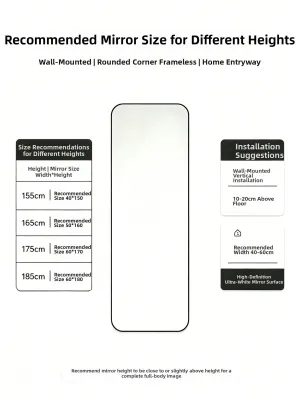
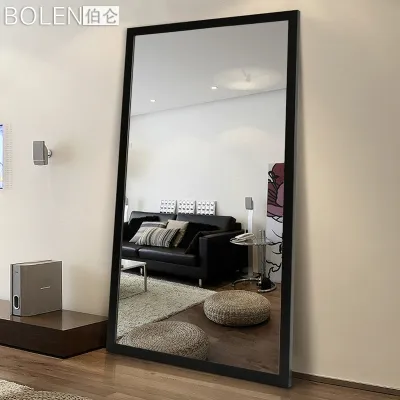
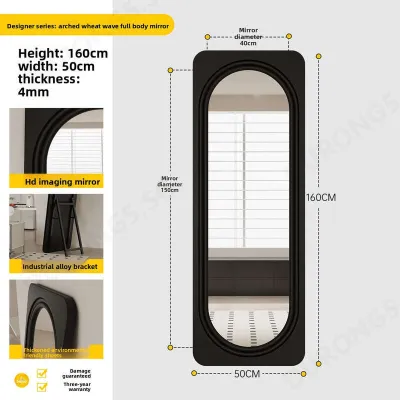
![[SG Seller]HD Full-Length Mirror/Floor Mirror/Wood Style Wall Hanging Mirror/Home Japanese style simple Decorative Mirror](https://img.lazcdn.com/g/p/9387708ab2cc55f579ddcb62d5e932f5.jpg_400x400q80.jpg_.webp)
![[SG Seller]Log full-length mirror/High-definition mirrors/Wall-mounted full-length mirror/Shaped full-length mirror](https://img.lazcdn.com/g/p/689f1b309238448b51eba8d2a6bdec50.jpg_400x400q80.jpg_.webp)
![[SG Stock]Floor mirror,bedroom mirror,fitting mirror,Nordic solid wood full-length mirror,wall-hanging mirror](https://img.lazcdn.com/g/p/5086731c12ff9174ea287f88d28890da.jpg_400x400q80.jpg_.webp)
![[SG Seller]Oval Bathroom Mirror Living Room Vestibule Decoration Mirror Dressing Table Mirror Wall Mirror Nordic Bathroom Mirror](https://img.lazcdn.com/g/p/0eb07dce709eaa636e41804ae1590b97.jpg_400x400q80.jpg_.webp)
Prices are valid at publication and may change. Please refer to the product page for the latest price.
The vertical dimension of the mirror should also complement your ceiling height. In typical Singapore apartments with standard ceiling heights of 2.6 to 2.8 meters, a tall vertical mirror can draw the eye upward, creating an illusion of loftiness. For horizontal placements, ensure the top of the mirror sits comfortably below the ceiling line, leaving at least 30 to 45 centimeters of breathing room to prevent the space from feeling cramped.
To maximize the perception of space, position the mirror where it can capture and bounce natural light. Placing a large mirror directly opposite or adjacent to a window allows it to reflect the outdoor view and scatter daylight deep into the interior. This is particularly effective in narrow living rooms or dining areas, where a single window might otherwise leave corners in shadow.
In tight entryways or long, narrow hallways, a large wall mirror can break up the tunnel-like feel. Mounting a mirror along one side of a corridor visually doubles the width of the passage. For these areas, consider a frameless design or a mirror with a very slim profile to avoid physical and visual obstruction in high-traffic zones.
The frame of a mirror significantly influences its visual weight. Thick, ornate frames can protrude into the room, eating into precious physical space and casting heavy shadows. For a modern, spacious feel, opt for slim metal frames—such as anodized aluminum or powder-coated steel—with a depth of 2 centimeters or less. Alternatively, a frameless mirror with a polished or beveled edge offers a seamless transition from glass to wall, allowing the reflection to blend perfectly with the surrounding decor. Beveled edges, in particular, catch the light at the borders, adding a subtle touch of elegance without adding physical bulk.
Evaluating Mirror Brands and Retailers for Quality and Service
High-quality glass is essential for large wall mirrors, as any minor imperfection is magnified over a large surface area. When visiting local showrooms or glass merchants, inspect the mirror from various angles and distances. Look for any warping or waviness in the reflection, which indicates low-grade float glass or uneven cooling during manufacturing. The reflection should remain perfectly crisp and true to life, even when you view it from a sharp angle or walk past it.

The backing of the mirror, known as the silvering, must be applied evenly to ensure long-term clarity. In Singapore’s high-humidity environment, poorly sealed backing is highly susceptible to oxidation, which manifests as black spots or cloudy patches along the edges—a process known as desilvering. Ask retailers if their mirrors feature copper-free backing or specialized protective coatings designed to resist moisture and humidity.
Depending on your wall dimensions, you may need to choose between off-the-shelf retail mirrors and custom-cut glass. Fixed-format mirrors from home decor brands are convenient and come with pre-installed mounting hardware, but their dimensions might not perfectly fit your space. If you have a specific architectural niche or want a floor-to-ceiling installation, look for suppliers that offer custom fabrication. This allows you to specify the exact height, width, and corner cutouts to accommodate light switches or power outlets.
Transporting a large, fragile sheet of glass through Singapore’s residential buildings requires careful planning. Before finalizing your purchase, measure your building’s elevator door, interior cabin dimensions, and stairwell clearances to ensure the mirror can physically reach your unit. Many retailers charge delivery fees, which can range from S$50 to S$150 or more, depending on the size of the item and the complexity of the carry. If the mirror cannot fit into the lift and must be carried up the stairs, expect additional manual handling charges per floor.
Given the weight and fragility of large mirrors, professional installation is highly recommended. Inquire whether the retailer’s delivery fee includes mounting, or if they charge a separate installation fee, which often starts around S$80 to S$200 depending on the wall type. Professional installers have the specialized tools and experience to secure heavy glass safely, reducing the risk of accidental damage or injury.
Always clarify the warranty coverage before buying. A robust warranty should cover manufacturing defects, frame warping, and premature desilvering for at least one to two years. Be sure to ask if the warranty remains valid if you choose to install the mirror yourself, as some brands only honor guarantees when their authorized installers handle the mounting.
Where to Source Large Wall Mirrors Based on Your Design Needs
For homeowners seeking a sleek, minimalist look or a precise custom fit, local glass and mirror fabricators are the ideal choice. These industrial workshops specialize in cutting, polishing, and installing raw glass sheets. They can create massive, frameless mirrors that cover entire walls, which is a popular technique for making small dining rooms or home gyms feel expansive. Working directly with a fabricator is often more cost-effective for large-scale projects, as you bypass retail markups and gain access to specialized glass types, such as tinted bronze or grey mirrors that offer a softer, moodier reflection.
If you want a mirror that serves as a decorative statement piece, premium home decor showrooms across Singapore offer curated collections of framed mirrors. These retailers focus on design trends, offering unique shapes—such as arched, organic, or asymmetrical profiles—and high-quality frame materials like solid oak, brass, or textured plaster. While these pre-framed options are generally more expensive than raw glass, they provide an instant design upgrade and are ready to hang, making them a convenient choice for living rooms and entryways.
For a truly bespoke framed mirror, consider visiting a local custom framing workshop. These businesses, which typically frame fine art and photographs, can also source high-quality mirror glass and build a custom frame around it. This option gives you complete control over the frame’s material, color, width, and style, allowing you to match the mirror perfectly with your existing furniture, cabinetry, or architectural details. It is an excellent way to bridge the gap between industrial glass cutting and high-end retail design.
For budget-conscious shoppers, local online home decor platforms and e-commerce marketplaces offer a wide selection of large mirrors at competitive prices. When shopping online, pay close attention to customer reviews, particularly those with photos that show the actual product in a home setting. Verify the seller’s return policy and transit damage guarantees, as shipping large glass items carries an inherent risk of breakage.
Structural and Safety Checks for Mounting Heavy Wall Mirrors
Before hanging a heavy mirror, you must identify the composition of your wall. In Singapore, residential walls are typically made of either solid concrete (structural walls and columns), lightweight concrete blocks, or gypsum drywall partitions (often found in newer condos or renovated rooms). Concrete walls offer excellent load-bearing capacity but require a masonry drill bit, a hammer drill, and heavy-duty plastic wall plugs or expansion anchors. Drywall partitions, on the other hand, are much weaker and require specialized hollow-wall anchors, such as toggle bolts or self-drilling drywall anchors, to prevent the mirror from pulling out of the plasterboard.
If you are mounting a heavy mirror on a drywall partition, it is critical to anchor the mounting hardware directly into the vertical timber or metal studs behind the plasterboard. Use a stud finder to locate these supports. If the mirror’s mounting brackets do not align with the stud spacing, you can mount a wooden cleat or backing board to the studs first, and then secure the mirror to the cleat.
Never guess the weight of a large mirror. Use a bathroom scale to weigh the mirror before attempting to hang it. Check the weight rating of your mounting hardware and ensure it exceeds the mirror’s weight by a safe margin, ideally double the weight for peace of mind. Distribute the load by using at least two separate mounting points rather than hanging the mirror from a single wire or hook. This not only prevents the mirror from tilting but also halves the stress placed on each individual wall anchor.
For exceptionally heavy mirrors, French cleats are highly recommended. A French cleat consists of two interlocking metal or wooden brackets: one is secured level on the wall, and the other is attached to the back of the mirror. When slid together, they interlock to distribute the weight evenly across a wide horizontal span, providing a flush, incredibly secure mount that is highly resistant to accidental knocks.
While minor DIY projects can be satisfying, mounting a large, heavy mirror is a high-stakes task. A falling mirror can cause severe property damage and catastrophic injuries. If your mirror weighs more than 15 to 20 kilograms, if you are mounting it on a high wall or ceiling, or if you are dealing with a delicate substrate like a tiled bathroom wall, it is best to halt DIY efforts. Hiring a qualified local handyman or professional installer ensures the job is done safely with the correct tools, laser levels, and heavy-duty fasteners, giving you long-term peace of mind.
Frequently Asked Questions (FAQ)
What is the ideal hanging height for a large wall mirror?
As a general rule of thumb, a large wall mirror should be hung so that its center point is at eye level, which is approximately 1.5 meters (60 inches) from the floor. This standard works well in entryways, hallways, and living areas where people are standing. If you are placing the mirror above a piece of furniture like a console table or sofa, position the bottom edge of the frame about 15 to 20 centimeters above the top of the furniture to create a cohesive visual grouping. If the mirror is exceptionally tall, such as a full-length leaner mirror, you can rest it securely on the floor and anchor the top to the wall to create a dramatic, space-expanding vertical line.
How do I clean a large mirror without leaving streaks or damaging the edges?
To clean a large mirror without leaving streaks or damaging the delicate silver backing, avoid spraying liquid cleaners directly onto the glass surface. Excess liquid can run down the face of the mirror and pool along the bottom edge or seep behind the frame, leading to moisture damage and desilvering over time. Instead, spray a small amount of a mild, ammonia-free glass cleaner or a 1:1 mixture of distilled water and white vinegar onto a clean microfiber cloth. Wipe the glass in a tight, S-pattern motion from top to bottom. Use a second, dry microfiber cloth to buff away any remaining moisture and ensure a streak-free finish.

Community discussion
Share your experience or ask a question. Comments are reviewed before publication.