
To find a reliable rechargeable work light for emergency use in a Singapore Housing & Development Board (HDB) flat, you must look beyond generic brand names and focus on verifiable safety certifications, battery management systems, and physical form factors that suit high-rise residential layouts. Because power outages in modern HDB estates are rare but highly disruptive when they occur, the ideal emergency light is one that can sit unused for months without losing its charge, remain safe in Singapore’s humid tropical climate, and provide hands-free illumination in windowless household shelters or bathrooms. Rather than relying on unverified online rankings, identifying a dependable brand requires evaluating the manufacturer’s technical specifications, local safety marks, and warranty terms.
By focusing on practical verification steps, you can build a personalized shortlist of products that offer genuine reliability when the power goes out. This guide outlines how to assess your specific household needs, interpret product labels accurately, verify electrical safety standards, and maintain your device so it is always ready for an emergency.
Identifying Your HDB Emergency Lighting Needs
Many HDB flats, especially newer Build-To-Order (BTO) layouts, feature specific architectural zones that become pitch black during a power failure. Windowless bathrooms, deep household shelters, and long internal corridors are completely cut off from external ambient light, such as streetlights or corridor lamps. When a circuit breaker trips or a localized block outage occurs, navigating these tight spaces safely requires immediate, reliable illumination.
Products mentioned in this guide
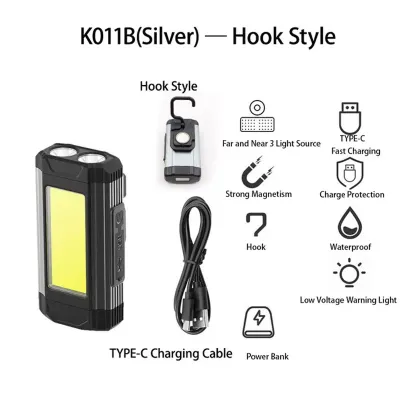
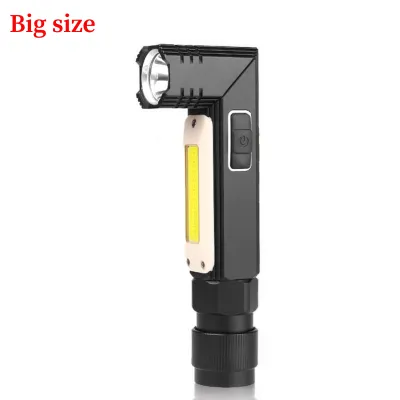
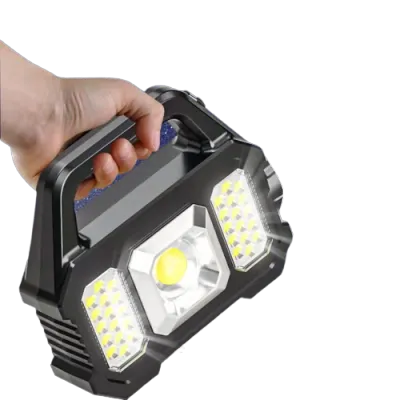
![[SG Stocks]Multifunctional usb rechargeable COB work lamp mini keychain led light strong magnetic camping fishing lampu](https://img.lazcdn.com/g/p/6a445dfc4834488929d93cc031c73841.jpg_400x400q80.jpg_.webp)
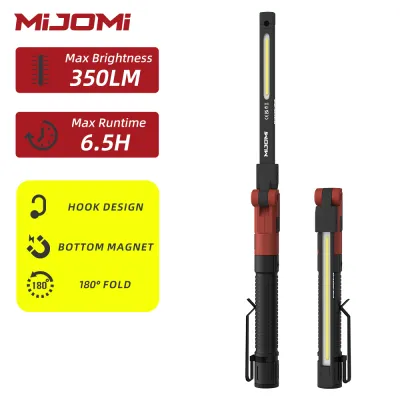
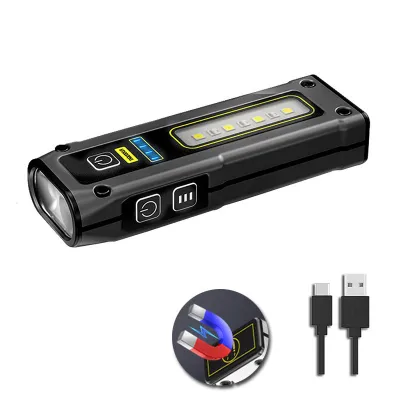
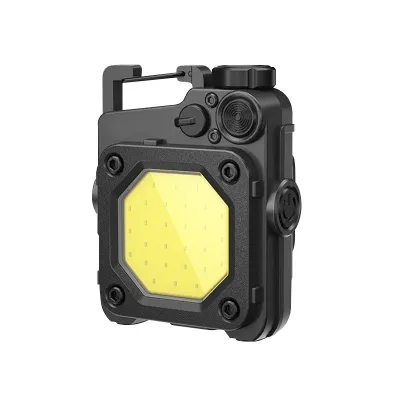
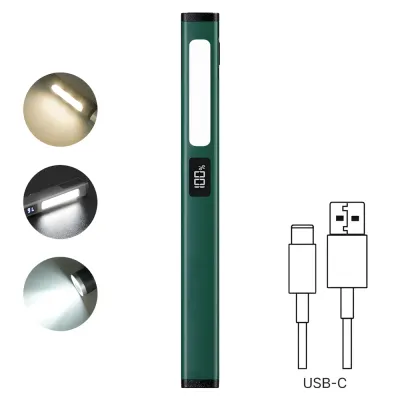
Prices are valid at publication and may change. Please refer to the product page for the latest price.
Consider the kitchen worktop, where sharp knives or hot appliances might be in use when the lights go out. A portable work light must be easily positioned to illuminate these critical task areas without requiring you to hold it. This hands-free capability is essential for managing household tasks or attending to family members safely during an outage.
Runtime requirements depend on your household size and the nature of the outage. While most HDB power disruptions are resolved within a few hours by town council technicians or utility providers, a household with elderly members or young children may require a longer, more consistent light source to maintain comfort and safety. A minimum runtime of three to four hours on a medium brightness setting is generally recommended to cover typical restoration windows.
Mounting features are crucial in an HDB environment. Look for work lights equipped with strong magnetic bases, which can easily adhere to metal door frames, window grilles, or the steel shelving commonly found in household shelters. Integrated hooks allow you to hang the light from ceiling fan brackets or clothes drying racks, while a stable, flat base ensures the unit can sit securely on a dining table or kitchen countertop without tipping over.
Checking Key Specifications on Product Labels
When shopping on online marketplaces or at local hardware stores, product labels can be misleading if you do not know how to interpret the specifications. The most common pitfall is choosing a light based solely on its maximum lumen output. High-lumen settings (such as 1,000 lumens or more) generate significant heat and drain the battery rapidly, often reducing runtime to under an hour. For indoor emergency use, a moderate setting of 200 to 500 lumens is more than sufficient and allows the battery to last much longer.

Examine the battery chemistry specified on the packaging. Lithium-ion (Li-ion) batteries are standard for modern rechargeable work lights due to their high energy density and low self-discharge rate. However, ensure the product features a modern charging interface like USB-C. This standardizes your charging setup, allowing you to use the same cables and wall adapters as your smartphone, which is incredibly convenient during an emergency when finding a proprietary charger is difficult.
Beam angle and light diffusion are critical for comfort in compact HDB rooms. A raw, focused spotlight beam can cause intense glare and eye strain when reflected off light-colored tiled walls in a bathroom or kitchen. Look for work lights that feature adjustable heads or built-in frosted diffusers. A diffused, wide-angle floodlight beam distributes light evenly across a room, making the space feel more natural and reducing harsh shadows.
Do not overlook the Ingress Protection (IP) rating, especially if you plan to use the light in humid or wet areas. A rating of IP54 or higher indicates that the device is protected against dust ingress and splashing water, making it safe to use in a steamy bathroom or near a kitchen sink where water splashes are common. For any fixed wiring or permanent fixtures in damp areas, always consult a qualified professional, but for portable work lights, checking the IP rating is a sufficient safety measure.
Evaluating Brand Reliability and Electrical Safety
In Singapore, electrical safety is paramount due to the potential fire hazards associated with low-quality lithium-ion batteries and charging circuits. When evaluating brands, check if the accompanying power adapter or charger carries the Enterprise Singapore Safety Mark. This certification ensures the adapter has been tested and approved for safe use with Singapore’s 230V/50Hz electrical grid, protecting your home from short circuits and overcharging hazards.
A reliable manufacturer will stand behind its product with a clear warranty policy. Look for brands that offer at least a 12-month warranty that explicitly covers battery performance and capacity retention. Avoid brands that offer no warranty or only cover the physical casing, as the battery is the most critical and vulnerable component of a rechargeable work light.
When researching user feedback on ecommerce platforms, filter reviews to look for long-term experiences rather than initial impressions. Pay close attention to comments mentioning how well the battery holds its charge after six months or a year of storage. Brands with poor battery management systems often suffer from rapid self-discharge, meaning the light may be completely dead when you actually need it during an emergency.
Verify the manufacturer’s stated operating and storage temperature ranges. Singapore’s tropical climate means indoor temperatures can rise significantly, especially in closed storage cabinets or utility closets. A reliable work light should be rated to withstand storage temperatures of up to 45 degrees Celsius without degrading the battery cells or risking thermal runaway.
Building Your Conditional Shortlist
To build a practical shortlist, start by categorizing your options based on where the light will be primarily deployed. For instance, a wide-area floodlight with a high-capacity battery is ideal for the living room, where the family gathers. Conversely, a compact, highly directional task light with a strong magnetic base is better suited for the kitchen or household shelter.
Establish a realistic budget. High-quality, reliable rechargeable work lights typically range from S$30 to S$80. While cheaper options under S$15 are widely available, they often compromise on battery safety, build quality, and actual runtime. Within your budget, prioritize must-have features like a reliable battery indicator and USB-C charging over nice-to-have additions like integrated Bluetooth speakers or multi-colored party lights.
A useful secondary feature to look for is a power bank function. Some high-capacity work lights allow you to draw power from the internal battery to charge your mobile phone via a USB-A output port. This can be a lifesaver during an extended power outage, keeping your communication lines open while you wait for power to be restored.
Finally, cross-reference the physical dimensions of the shortlisted models with your available storage space. The light should be compact enough to fit into an easily accessible emergency drawer or cabinet near the entrance of your flat, ensuring you can locate it quickly in complete darkness.
Safe Charging and Storage Practices
Proper maintenance is essential to ensure your rechargeable work light is ready when an emergency strikes. Always follow the manufacturer’s instructions regarding charging times. Avoid leaving the light plugged into the wall charger indefinitely or charging it unattended overnight, unless the manufacturer explicitly states that the device has an automatic overcharge protection circuit that cuts off power completely.
Lithium-ion batteries naturally degrade over time, and leaving them in a completely discharged state for extended periods can permanently damage the cells, rendering the light useless. Establish a routine to check and top up the battery every three to six months. Keeping the battery level between 50% and 80% during long-term storage is generally optimal for preserving battery health.
Store the work light in a cool, dry location away from direct sunlight, moisture, and heat-generating appliances like ovens or refrigerators. Avoid storing it in damp areas under the kitchen sink or in the bathroom, as prolonged exposure to high humidity can corrode internal electrical contacts and compromise the casing seals.
Regularly inspect the device for physical warning signs of battery failure. If you notice any swelling of the casing, unusual warmth while charging, rapid loss of charge within minutes of use, or a strange odor, stop using the light immediately. Dispose of the device safely at a designated e-waste recycling point in Singapore and replace it with a certified unit.
Frequently Asked Questions (FAQ)
Can I use a standard rechargeable work light as a primary emergency exit light?
No, a standard rechargeable work light cannot be used as a primary emergency exit light. Dedicated emergency exit signs and escape route lighting in HDB common areas must comply with strict local fire safety regulations, including specific visibility distances, continuous power backup requirements, and automatic activation during a main power failure. Portable work lights are designed solely for temporary, localized task illumination within your flat and do not meet the legal standards required for designated building evacuation routes.
How long should I charge the work light before storing it for emergencies?
You should consult your product’s manual for specific charging instructions, but most manufacturers recommend charging lithium-ion batteries to approximately 50% to 80% capacity before long-term storage. Storing a battery at 100% full charge or completely empty puts additional stress on the cells, accelerating capacity loss over time. Remember to set a calendar reminder to check the battery level and perform a brief top-up charge every three to six months to offset natural self-discharge.
Are solar-powered work lights practical for HDB flats?
Solar-powered work lights are generally impractical for HDB flat emergency use. High-rise apartments often have limited direct sunlight access, and modern window panes with solar-control films or tints significantly block the specific light wavelengths needed for efficient solar charging. Relying on solar charging indoors can take days to achieve a full charge, making standard electrical charging via a wall outlet or power bank a far more reliable and practical method for emergency preparedness.

Community discussion
Share your experience or ask a question. Comments are reviewed before publication.