
When searching for the ideal reading light for book enthusiasts, no single brand universally guarantees the best eye protection. Eye comfort depends on specific optical specifications—such as flicker reduction, color temperature, and glare control—rather than the logo on the base. This guide breaks down the critical features to compare across different table lamp brands, helping you verify manufacturer claims and select a model that truly supports extended reading sessions.
By focusing on verifiable technical metrics rather than marketing buzzwords, you can find a high-quality light source that minimizes visual fatigue. Whether you prefer physical paper books or digital screens, understanding how these features interact with your reading environment is the key to making an informed decision.
Key Eye Protection Features to Compare Across Brands
Flicker-free performance is one of the most critical factors in preventing eye strain during long reading sessions. Many low-quality LED lamps exhibit rapid, invisible flickering caused by low-frequency pulse-width modulation (PWM) dimming. This flicker forces the muscles in your eyes to adjust constantly, leading to headaches, dry eyes, and fatigue. When comparing brands, look for those that utilize high-frequency PWM or constant-current reduction (CCR) dimming, which significantly reduces or eliminates flicker across all brightness levels.
Products mentioned in this guide
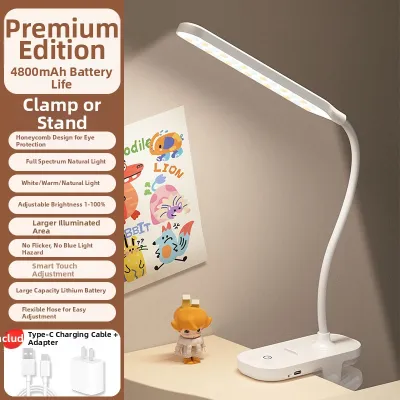
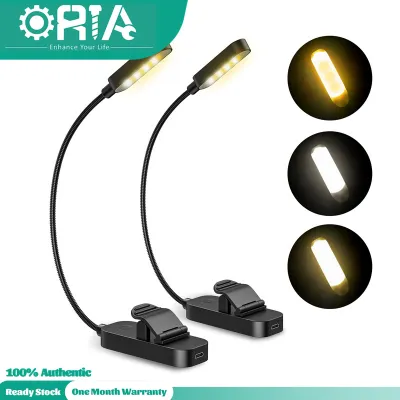
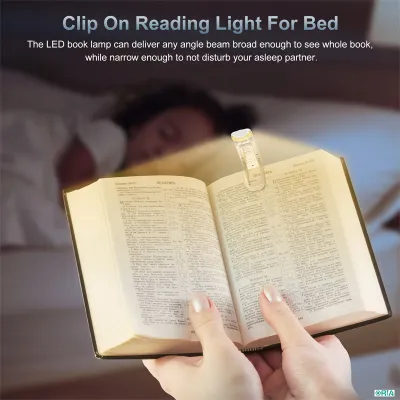
![[SG stock]Teacher day Gift Mini Book Light LED Night Light USB Rechargeable Clip On Reading Lamp Brightness Adjustable Bedroom Travel](https://img.lazcdn.com/g/p/158e98bcbacab16537c08ec35b24cce7.jpg_400x400q80.jpg_.webp)
Prices are valid at publication and may change. Please refer to the product page for the latest price.
Color temperature, measured in Kelvin (K), significantly influences visual comfort and alertness. A reading light with adjustable Correlated Color Temperature (CCT) allows you to customize the light to suit different times of day. Warm white light (around 2700K to 3000K) is gentle on the eyes and ideal for evening reading, as it minimizes blue light exposure that can disrupt sleep. Neutral white light (around 4000K) provides higher contrast and is excellent for daytime study or reading highly detailed texts.
The Color Rendering Index (CRI) indicates how accurately a light source reveals the true colors of objects compared to natural daylight. For reading printed books, a high CRI (typically Ra 90 or above) is essential. It ensures that black text stands out sharply against white or cream pages, reducing the cognitive effort required to decode letters and minimizing eye strain. Additionally, a high R9 value (which measures red color rendering) helps render warm paper tones and illustrations more naturally.
Direct glare from an exposed bulb or indirect glare reflected off glossy pages can quickly cause visual discomfort. High-quality brands design their lamps with advanced diffusers, honeycomb filters, or asymmetrical optical lenses. These technologies distribute light evenly across the reading surface, eliminating harsh hotspots and ensuring that the entire page is illuminated with uniform brightness. Asymmetric lighting is particularly effective as it directs light at an angle, preventing reflections from bouncing directly into your eyes.
How to Verify Brand Claims and Certifications
In Singapore, electrical safety is paramount when choosing any household appliance. When evaluating table lamps, look for the Safety Mark, which indicates that the appliance has been tested and certified to meet local safety standards. This certification ensures that the power adapter, voltage compatibility (typically 220V-240V), and internal wiring are safe for continuous use in your home. Avoid unbranded lamps from online marketplaces that lack this crucial safety certification.

Beyond electrical safety, optical safety certifications are crucial for eye protection. Standardized industry testing, such as the IEC 62471 standard for photobiological safety, evaluates the blue light hazard of LED lamps. Brands that have undergone independent testing by recognized bodies (like TÜV Rheinland or SGS) provide a higher level of assurance than those relying solely on proprietary marketing terms like “eye-safe” or “vision-friendly.” Look for certifications that specifically mention low blue light emission or flicker-free operation.
Always check the manufacturer’s official documentation or product specification sheet for technical details rather than relying on promotional banners. Look for explicit mentions of lumen maintenance (such as L70 lifetime ratings, which indicate how long the LED will maintain at least 70% of its initial brightness) and the warranty period. Because many modern eye-care lamps feature integrated LED modules that cannot be replaced, a robust manufacturer warranty of at least two to three years is a strong indicator of product durability.
If a brand’s product listing lacks clear specifications regarding flicker, CRI, or safety certifications, treat this as a warning sign. Before making a purchase, contact the manufacturer or a qualified lighting professional to request the official technical data sheet. If the seller cannot provide these verified metrics, it is best to look for an alternative model that offers transparent specifications.
Matching Lamp Specifications to Your Reading Environment
The effectiveness of a reading light depends heavily on the surrounding environment. In many Singapore homes, ambient ceiling lights are either very bright or cast shadows over reading desks. Reading with a bright desk lamp in a completely dark room creates high contrast, which forces your pupils to constantly adjust and leads to rapid eye fatigue. To prevent this, ensure your reading lamp’s brightness can be dimmed to complement, rather than overpower, the ambient room lighting.
The type of reading material also dictates your lamp settings. Physical paper books benefit from a focused, warm-to-neutral beam that enhances contrast without washing out the pages. In contrast, electronic readers and tablets with reflective screens require a highly adjustable beam angle and a diffused light source to prevent annoying screen glare. If you switch between paper books and digital screens, prioritize lamps with flexible dimming and adjustable heads.
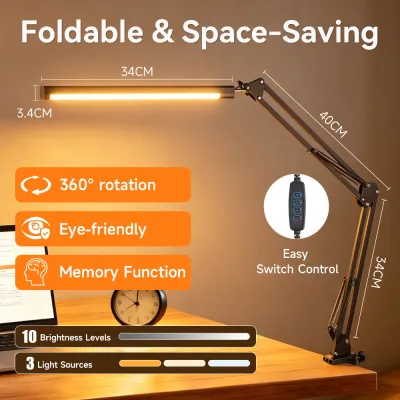
Physical ergonomics play a vital role in eye comfort. Consider your desk’s depth and the lamp’s physical dimensions. A lamp with a long, multi-jointed arm and a pivoting head allows you to position the light source directly over your book while keeping the bulb out of your direct line of sight. This flexibility helps you maintain a comfortable reading posture and prevents the light from shining directly into your eyes.
Additionally, position the lamp on the opposite side of your dominant hand. If you are right-handed, place the lamp on the left side of your desk to prevent your hand from casting shadows across the pages as you write or turn pages. This simple adjustment ensures an unobstructed, evenly lit reading surface.
Decision Framework: Which Lamp Type Fits Your Reading Habits?
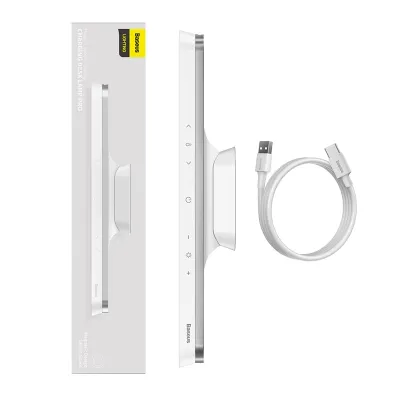
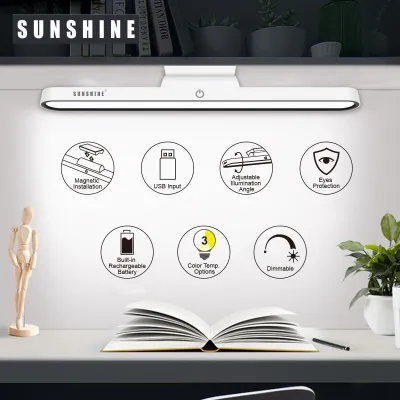
If your reading setup involves a large desk, study table, or if you frequently read large-format books, architectural draftsperson lamps or monitor-mounted light bars are excellent choices. These designs offer wide, uniform light distribution across a broad surface area. Their highly adjustable arms allow you to cast light from a high angle, minimizing shadows and ensuring that every corner of your reading material is evenly illuminated.
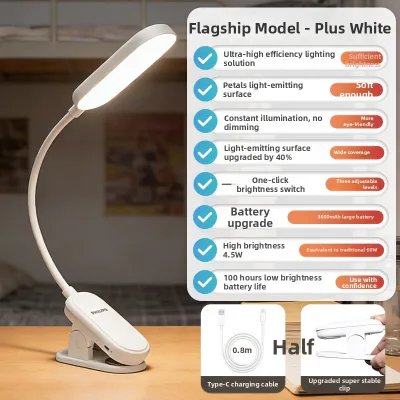
For those with limited desk space or dedicated bedside reading nooks, a compact, fixed-neck or flexible gooseneck lamp with a heavy diffuser is often more practical. These lamps occupy a minimal footprint while allowing you to direct light precisely onto your paperback book. The key is to ensure the diffuser is thick enough to soften the light, preventing harsh hotspots on the page even when the lamp is positioned close to you.
If you prefer automated lighting that aligns with your daily schedule, smart or app-connected lamps can be highly beneficial. These models can automatically shift from a cool, energizing light in the morning to a warm, low-blue light in the evening to support your natural circadian rhythm. However, before choosing a smart model, verify that it includes physical buttons or touch controls on the lamp itself, allowing you to make quick adjustments without needing to open a smartphone app.
Be cautious of lamps that lack basic physical dimming controls or rely entirely on unverified app-based interfaces. If a lamp cannot be dimmed easily, or if its lowest setting is still too bright for comfortable nighttime reading, it will likely cause eye strain. Additionally, avoid any lamp that produces visible glare on glossy pages or has an exposed LED array that shines directly into your eyes when seated.
Frequently Asked Questions (FAQ)
Is a higher wattage always better for reading books?
No, higher wattage does not translate to better eye protection or a superior reading experience. Wattage simply measures electrical power consumption, whereas eye comfort depends on illuminance (measured in lux) and luminous flux (measured in lumens). Modern LED reading lights are highly efficient, producing ample brightness with very low wattage. Excessive brightness from a high-wattage lamp without proper diffusion can cause intense glare, high contrast, and rapid eye fatigue. Instead of focusing on wattage, look for a lamp that offers adjustable brightness levels, allowing you to customize the light output to suit your ambient environment and reading material.
Do I need a smart lamp with app control for eye protection?
A smart lamp is not a necessity for eye protection, though it can offer convenient features. The primary optical factors that protect your eyes—such as flicker-free drivers, high color rendering index (CRI), and effective diffusers—are physical and electrical components that function independently of smart connectivity. While app-controlled scheduling can help automate color temperature shifts throughout the day, reliable physical switches or touch-sensitive sliders on the lamp base are often more practical for immediate, distraction-free adjustments while reading. Prioritize high-quality optical specifications over smart features if you are on a budget.

Community discussion
Share your experience or ask a question. Comments are reviewed before publication.