
Selecting dimmable downlights for a complete home renovation in Singapore requires balancing technical compatibility with visual cohesion. Instead of chasing subjective “best brand” lists, a successful whole-house lighting plan relies on choosing a manufacturer whose fixtures integrate seamlessly with your dimming infrastructure, maintain color consistency across different rooms, and carry the necessary local safety certifications. Standardizing on a single reliable brand family ensures that your living room, kitchen, and corridors fade in unison without distracting flickers or mismatched color temperatures.
To achieve a seamless installation, homeowners must evaluate the technical specifications of both the light fixtures and their corresponding drivers. This guide outlines the essential criteria for selecting downlight brands, establishes a framework for whole-house consistency, and provides practical steps to verify compatibility before finalizing your purchase.
Key Criteria for Evaluating Downlight Brands
Evaluating a downlight brand for a whole-house setup requires looking beyond the aesthetic design of the fixture to its underlying electrical and optical engineering. The most critical technical dimension is the dimming protocol compatibility. Dimmable LED downlights rely on a driver to translate the signal from your wall switch into a smooth reduction in light output. Common protocols include TRIAC (phase-cut) dimming, which is widely used for traditional wall dimmers, and digital protocols like 0-10V or DALI (Digital Addressable Lighting Interface) for advanced architectural setups. Modern smart homes also frequently utilize wireless protocols such as Zigbee or Bluetooth Mesh integrated directly into the driver. You must verify that the brand’s drivers are explicitly rated for the specific dimming protocol of your planned switches or smart home hub.
Products mentioned in this guide
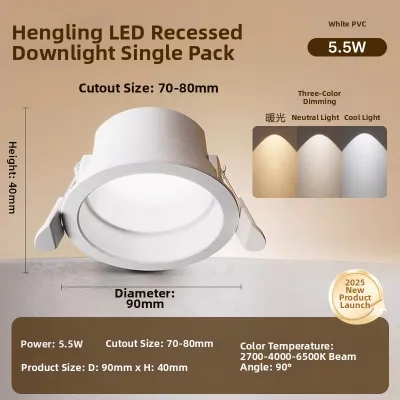
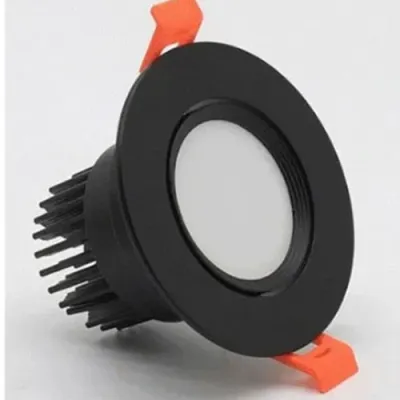
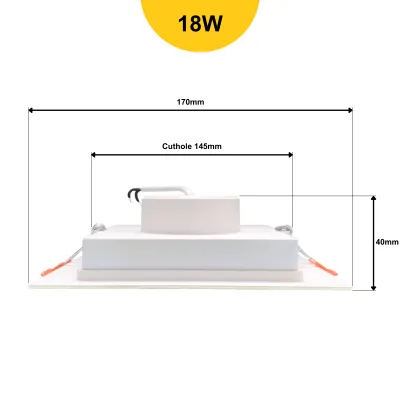
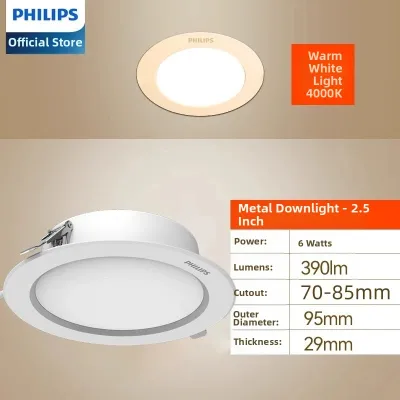
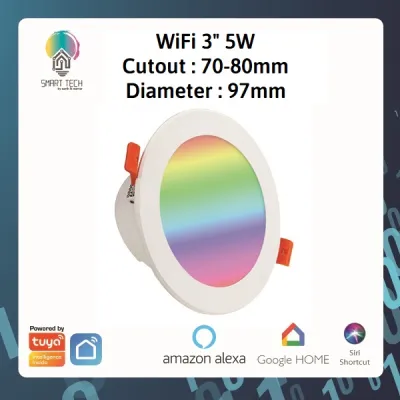
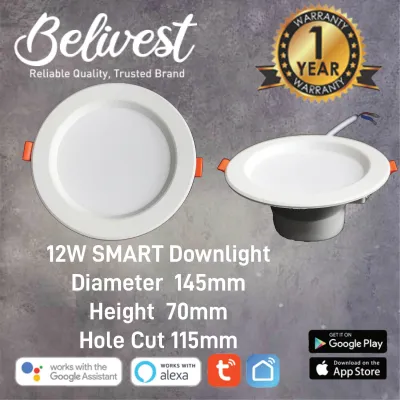
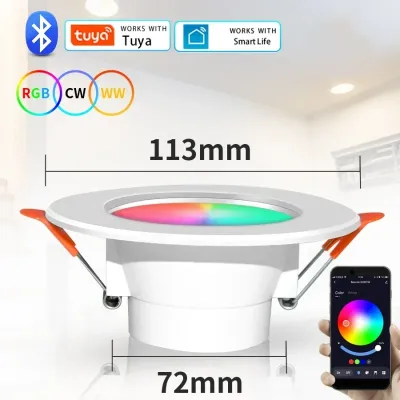
Prices are valid at publication and may change. Please refer to the product page for the latest price.
Color consistency is another vital metric that separates high-quality manufacturers from budget alternatives. When multiple downlights are installed in a single ceiling plane, even minor variations in the white light spectrum can create a patchy, uncoordinated appearance. Reliable brands specify their color consistency using MacAdam ellipse steps, also known as Standard Deviation of Color Matching (SDCM). A rating of 3 SDCM or lower indicates that color variations are virtually imperceptible to the human eye, ensuring a uniform wash of light across your entire living space.
Visual comfort depends heavily on glare control and optical design. The Unified Glare Rating (UGR) is an approximate measure of the glare produced by a lighting installation. For residential living areas, study rooms, and kitchens, selecting fixtures with a UGR of less than 19 is highly recommended to prevent eye strain and headaches. Brands that design fixtures with deep-recessed light sources, physical baffles, or specialized TIR (Total Internal Reflection) lenses offer superior glare control compared to flat-faced downlights that scatter light directly into your line of sight.
Finally, safety and compliance are non-negotiable for fixed lighting installations in Singapore. All LED drivers and integrated downlight fixtures must comply with local electrical safety standards and carry the Safety Mark issued by Enterprise Singapore. This certification ensures the equipment has been rigorously tested against electrical shock, short circuits, and fire hazards under local voltage conditions (220V-240V at 50Hz). Choosing brands that prominently display valid Safety Mark registration numbers on their products is a fundamental step in protecting your property and ensuring compliance with local building regulations.
Planning Framework for Whole-House Consistency
Creating a cohesive lighting environment across different rooms requires a systematic approach to standardizing specifications. A common mistake is selecting different brands or unrelated product lines for individual rooms, which often results in mismatched beam angles and contrasting color temperatures. To maintain a smooth visual flow between open-plan living areas, dining spaces, and connecting corridors, you should standardize your primary ambient lighting on a single brand family. This ensures that the physical appearance of the fixtures and the quality of the light they emit remain identical throughout the home.

Standardizing beam angles is essential for controlling how light is distributed across your floors and walls. Narrower beam angles, such as 24 to 36 degrees, create distinct cones of light that are ideal for highlighting artwork, feature walls, or dining tables. Wider beam angles of 50 to 60 degrees provide a broader, softer wash of light suitable for general ambient illumination in hallways and bedrooms. By sourcing these different beam options from the same product series, you ensure that the color temperature and rendering index remain perfectly matched despite the different light distributions.
While maintaining visual consistency, you must still adjust the lumen output and fixture spacing to suit the specific functional needs of each zone. For instance, a kitchen requires higher lux levels for safe food preparation, demanding brighter downlights spaced closer together. In contrast, a bedroom benefits from lower-output fixtures positioned away from the bed to create a relaxing atmosphere. Using a single brand family allows you to scale the wattage and lumen packages up or down while keeping the exact same trim style, housing depth, and dimming behavior.
Before purchasing, verify the cross-series compatibility within your chosen brand. Many manufacturers offer modular systems where a single LED engine and driver combination can be paired with various trim styles, such as round, square, trimless, or adjustable accent housings. This modularity allows you to adapt the physical look of the downlight to different architectural features while guaranteeing that the light quality and dimming performance remain completely uniform across the entire installation.
There are conditions where a single brand may not cover every architectural requirement in a home. For example, wet areas like bathrooms and covered balconies require fixtures with a minimum rating of IP44 or IP65 to protect against moisture and dust ingress. If your primary downlight brand does not offer high-IP-rated options, you will need to source these specific fixtures from an alternative manufacturer. To manage this transition safely without disrupting visual flow, keep the secondary brand confined to enclosed rooms with physical doors, ensuring they are never viewed in the same direct sightline as your primary living area lights.
Building Your Brand Shortlist in Singapore
When compiling a shortlist of potential downlight brands, focus on practical verification steps that ensure long-term reliability and ease of maintenance. In Singapore’s warm and humid climate, heat dissipation is a critical factor in LED longevity. Review the official specification sheets of each brand to evaluate their thermal management designs. High-quality downlights utilize robust die-cast aluminum heatsinks to draw heat away from the LED chip, whereas lower-grade options often rely on thin aluminum sheets or plastic housings. A well-engineered heatsink directly correlates with the manufacturer’s rated lifespan, typically expressed as an L70/B50 metric of 50,000 hours or more, meaning the light will retain at least 70% of its original brightness after that duration.
Local warranty terms and after-sales support are equally important when planning a whole-house setup. Opt for brands that maintain an active local presence, either through official distributors or dedicated showrooms in Singapore. A reliable brand should offer a comprehensive warranty of at least two to five years covering both the LED chip and the driver. Ensure that the warranty process is straightforward and that replacement parts, particularly compatible drivers, can be sourced locally without long shipping delays. Because LED drivers are typically the first component to fail in an LED system, having immediate access to identical replacement drivers prevents the need to replace the entire ceiling fixture.
To avoid compatibility issues, check the manufacturer-provided dimmer compatibility matrices. Reputable brands publish detailed charts listing the specific wall dimmers and smart switches they have tested and certified to work with their drivers. Cross-reference these charts with widely available local switch brands, such as Legrand or Schneider Electric, to confirm that your preferred combination is officially supported. If a brand cannot provide a clear compatibility matrix or technical documentation for their drivers, it is a strong indicator to look elsewhere.
Finally, evaluate the brand’s track record in providing consistent batch-to-batch color rendering. For large-scale whole-house orders, you want to ensure that all fixtures delivered to your site share the same color binning. Ask your supplier or distributor if they can guarantee that your entire order will be fulfilled from a single production batch. This precaution minimizes the risk of minor color rendering index (CRI or Ra) variations, ensuring that your home’s interior finishes, paint colors, and furnishings are illuminated consistently in every room.
Installation and Dimmer Compatibility Checks
Before finalizing your purchase and commencing installation, it is critical to perform physical compatibility checks between your selected downlights and your dimming infrastructure. Even when specifications match on paper, minor differences in electronic components can lead to undesirable behaviors such as flickering, audible buzzing, or a restricted dimming range. To prevent these issues, obtain a single sample of both the downlight fixture (with its driver) and the planned dimmer switch to conduct a bench test before ordering the bulk quantity for your entire home.
Understanding the distinction between leading-edge and trailing-edge dimmers is essential for troubleshooting LED performance. Leading-edge dimmers, traditionally designed for resistive incandescent loads, cut the electrical waveform at the beginning of the phase, which can cause high current spikes that stress LED drivers. Trailing-edge dimmers cut the waveform at the end of the phase, offering a much smoother power delivery that is highly compatible with electronic LED drivers. Most modern dimmable LED drivers perform optimally when paired with trailing-edge dimmers, resulting in silent operation and a wider dimming range down to 1% or 5% brightness.
During initial testing, observe the system closely for any signs of incompatibility. “Dead travel” occurs when turning the dimmer knob or sliding the control does not change the light output for a significant portion of the switch’s physical range. Another common issue is “ghosting,” where the downlights remain faintly illuminated even when the dimmer switch is turned completely off. If you observe flickering, strobing, or buzzing at any point along the dimming curve, it indicates that the driver and dimmer are mismatched, and you should consult the manufacturer’s technical support or select an alternative driver model.
All fixed electrical wiring and installation work in Singapore must be handled with strict adherence to safety protocols. Working with 220V-240V mains electricity carries inherent risks of severe shock or fire if handled incorrectly. Always isolate the mains power at the main distribution board (DB box) before attempting any installation, wiring modification, or fixture replacement. For any new circuit routing, switchboard modifications, or complex smart dimming integrations, you must engage a Licensed Electrical Worker (LEW) or a qualified professional electrician. They will ensure that the total connected electrical load does not exceed the rated capacity of your dimmer switches and that all installations comply with local wiring standards.
Frequently Asked Questions (FAQ)
Can I mix different downlight brands in the same room?
Mixing different downlight brands within the same room or open visual field is highly discouraged due to the significant risk of visual inconsistency. Even if two different brands claim identical specifications, such as a 3000K color temperature and a 40-degree beam angle, their actual light outputs often differ due to variations in LED chip manufacturing, phosphor coatings, and lens designs. This can result in noticeable color shifts and mismatched light patterns on your walls. Furthermore, different brands utilize distinct dimming curves in their drivers, meaning that when you dim the lights, some fixtures will fade faster or slower than others, disrupting the uniform ambiance of the space.
Do dimmable downlights require special wiring?
Dimmable downlights do not always require special wiring, but the specific requirements depend entirely on the dimming system you choose. Standard phase-cut (TRIAC) dimming systems operate on conventional two-wire or three-wire electrical circuits, making them highly compatible with existing home wiring setups in Singapore. However, if you plan to install smart dimming systems, digital addressable systems (like DALI), or smart switches, they often require a neutral wire at the switch box to power the internal wireless transmitter. Always consult with a Licensed Electrical Worker (LEW) during the early planning stages of your renovation to ensure your home’s electrical conduits are correctly wired for your chosen dimming technology.

Community discussion
Share your experience or ask a question. Comments are reviewed before publication.