
Selecting the right emergency lantern for a Housing & Development Board (HDB) flat in Singapore requires balancing compact storage, reliable battery performance, and strict safety standards. In high-density residential environments where space is optimized and tropical humidity is a constant factor, a dependable backup light source must be easy to store, safe to charge, and capable of illuminating dense layouts during unexpected power outages. Rather than relying on generic outdoor gear, homeowners should evaluate lanterns based on their specific flat layout, storage conditions, and household safety requirements.
Key Selection Criteria for HDB Emergency Lanterns
When preparing for a blackout in an HDB flat, the physical constraints of modern apartment living dictate your lighting choices. Unlike landed properties with expansive storage areas, typical HDB flats—ranging from cozy 2-room Flexi units to larger 5-room or Executive apartments—require space-efficient emergency gear. Homeowners often store emergency supplies in utility closets, shoe cabinets, or the designated household shelter (commonly referred to as the bomb shelter). Therefore, selecting a lantern with a compact footprint, collapsible handles, or a stackable design ensures it remains accessible without cluttering valuable living space.
The light distribution pattern is equally critical when navigating the specific architecture of an HDB flat. A lantern designed for general illumination should offer a wide-flood, 360-degree beam angle to light up communal spaces like the living room or dining area, allowing family members to move safely without casting harsh shadows. Conversely, for narrow corridors, household shelters, or deep utility closets, a lantern that can transition to a focused, directional beam is highly beneficial. This dual-functionality allows you to switch from ambient room lighting to a targeted searchlight when looking for essential supplies or checking electrical distribution boards.
Products mentioned in this guide
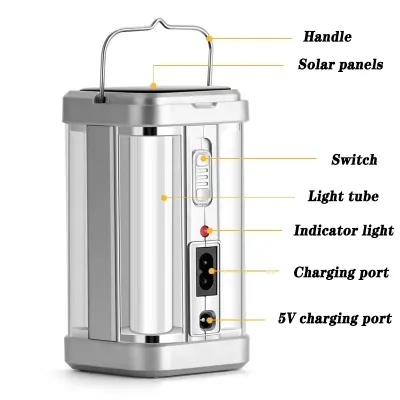
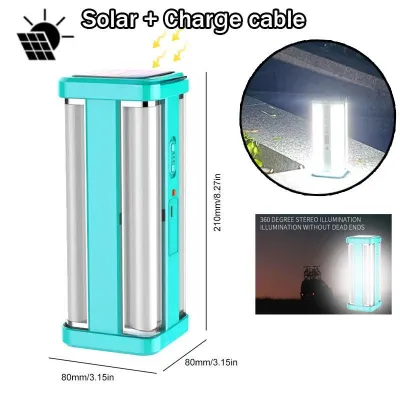
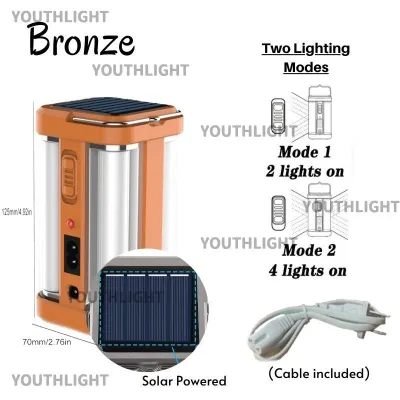
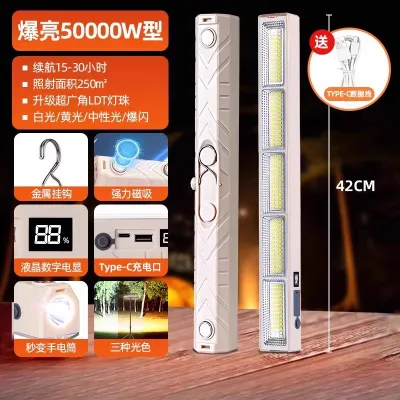

Prices are valid at publication and may change. Please refer to the product page for the latest price.
Power source selection involves a trade-off between convenience and long-term readiness. Built-in rechargeable lithium-ion or lithium iron phosphate (LiFePO4) batteries are highly popular due to their high energy density and convenient USB charging. However, they require regular maintenance to prevent deep discharge. On the other hand, lanterns powered by replaceable standard alkaline cells (such as AA or D batteries) offer indefinite shelf life if stored separately, making them an excellent low-maintenance backup. For most Singapore households, a hybrid model that accepts both rechargeable packs and standard dry cells provides the ultimate peace of mind during extended outages.
Safety and Compliance Checks Before You Buy
In high-density HDB blocks, electrical safety is paramount to prevent fire hazards that could affect entire communities. When purchasing a rechargeable emergency lantern, always verify that the charging adapter or the built-in charging circuit complies with local safety regulations. In Singapore, power adapters and chargers plugged directly into the mains socket are controlled goods that must carry the recognized safety certification mark issued by the local authority. This mark ensures the device has undergone rigorous testing to withstand local voltage standards (220V–240V at 50Hz) and will not pose a shock or short-circuit risk.

The chemistry of the battery inside your lantern deserves close attention, especially given Singapore’s warm, humid tropical climate. Rechargeable lithium-based batteries are sensitive to extreme temperatures and poor heat dissipation. When buying a lantern, check the manufacturer’s specifications for thermal limits and built-in safety mechanisms. High-quality lanterns incorporate battery management systems (BMS) that monitor cell temperature and prevent thermal runaway. Avoid unbranded or extremely cheap rechargeable lanterns that lack clear safety labels, as sub-standard lithium cells are prone to swelling, leaking, or catching fire under continuous charging or high ambient temperatures.
Furthermore, robust charging circuit protection is a non-negotiable feature for any device left plugged into an HDB wall outlet. Look for products that explicitly list overcharge, over-discharge, and short-circuit protection in their technical specifications. Overcharge protection prevents the battery from receiving current once it reaches full capacity, which is vital if you plan to keep the lantern plugged in for auto-activation. Short-circuit protection ensures that if an internal component fails or a power surge occurs in your flat’s electrical riser, the lantern’s circuit will safely shut down rather than overheating or sparking.
Evaluating Brand Reliability and After-Sales Support
Because an emergency lantern is a safety-critical device, evaluating the reliability of the manufacturer and their local support network is far more important than chasing the lowest price. A reputable brand should offer a clear, written warranty that is serviceable within Singapore. Before purchasing, verify whether the brand has an official local distributor or an accessible service center. Having a physical point of contact in Singapore simplifies the process of claiming a replacement or seeking repairs, saving you the hassle of shipping a defective unit overseas.
Component availability is another key indicator of long-term value. Many budget lanterns become useless if a proprietary charging cable is lost or if the internal battery degrades after a few years. Reliable brands often use standardized interfaces, such as USB-C charging ports, and offer replaceable battery packs or parts that can be purchased separately. When researching options on local ecommerce platforms or at home improvement stores, check if the manufacturer provides clear instructions on how to replace the battery and whether those replacement cells are readily available in the local market.
Analyzing user feedback on independent forums and retail platforms can reveal critical long-term performance trends that specifications sheets hide. Look closely at reviews from buyers who have owned the lantern for more than a year. Pay attention to recurring complaints regarding rapid battery capacity loss, switches that become unresponsive, or plastic casings that become sticky or brittle. In Singapore’s humid environment, low-grade plastics and rubberized coatings can degrade quickly, turning a once-sturdy lantern into a sticky, unusable mess. Choosing brands praised for durable housing materials and robust switch designs ensures your investment remains functional when a crisis hits.
Matching Lantern Features to Specific HDB Needs
To maximize the utility of your emergency lighting, match the lantern’s features to your household’s specific demographics and daily routines. For households with elderly family members or young children, manual navigation in sudden darkness can be hazardous. In these scenarios, prioritize lanterns equipped with an automatic power-failure activation feature. These devices remain plugged into a wall socket and automatically switch on their LEDs the moment the main electrical supply cuts out, instantly illuminating the room and preventing trips or falls.
Multi-functional designs can add significant value, but they must be evaluated carefully against your actual needs. Many modern lanterns feature built-in USB output ports, allowing them to double as emergency power banks to charge mobile phones or small USB devices. While this is incredibly useful during prolonged blackouts to keep communication lines open, remember that charging a phone will rapidly deplete the lantern’s primary light source. Ensure the lantern has a sufficiently large battery capacity (measured in milliampere-hours, or mAh) to support both illumination and device charging without leaving you in the dark.
The physical mounting and placement options of the lantern determine how hands-free and versatile it will be during an outage. HDB kitchens and bathrooms often have limited counter space, making freestanding lanterns easy to knock over. Look for models featuring integrated utility hooks, collapsible hanging loops, or strong magnetic bases. A magnetic base is particularly useful in an HDB flat, as it allows you to securely attach the lantern to the metal door frames of your household shelter, metal shelving units, or the side of a refrigerator, providing elevated, shadow-free overhead lighting.
Maintenance and Battery Care for Long-Term Readiness
An emergency lantern is only useful if it works when the power goes out, which makes routine maintenance essential. For rechargeable models, establish a simple testing schedule every three to six months. Fully discharge the lantern by letting it run on a medium setting, then charge it back to full capacity. This process helps calibrate the internal battery management system, prevents the cells from falling into a deep-discharge state—which can permanently ruin rechargeable batteries—and allows you to verify that the LEDs and switches are functioning correctly.
Storage conditions play a massive role in preserving the lifespan of your lantern’s components. While it might seem convenient to store an emergency light in the kitchen or near a service yard, these areas are prone to high humidity, steam, and elevated temperatures, which accelerate battery degradation and corrode internal contacts. Instead, store your lantern in a cool, dry, and well-ventilated spot, such as a living room cabinet or a dedicated shelf in your household shelter. Keep the device out of direct sunlight, as prolonged exposure to UV rays and solar heat can warp plastic housings and overheat battery cells.
Finally, learn to recognize the early warning signs of battery failure so you can replace the unit before an actual emergency. If your lantern’s runtime drops drastically after a full charge, or if it takes an unusually long time to charge, the battery is likely reaching the end of its usable life. Physical indicators are even more critical: inspect the lantern periodically for any signs of casing deformation, cracks, or a bulging battery compartment. If you notice any swelling, leakage, or an unusual chemical odor, stop using the device immediately and dispose of it safely at a designated local e-waste recycling point.
Frequently Asked Questions (FAQ)
How many lumens do I need for an HDB living room during a blackout?
For a standard HDB living room, a lantern emitting between 200 to 500 lumens is generally sufficient to provide comfortable ambient light. Because HDB flats typically feature light-colored walls and ceilings that reflect light efficiently, placing a 300-lumen lantern with a frosted diffuser in the center of the room will distribute soft, even illumination across the entire space. If your flat has dark accent walls or heavy furniture layouts that block light paths, opting for a lantern with adjustable brightness levels allows you to increase the output to overcome these shadows.
Can I leave my emergency lantern plugged in all the time?
Whether you can leave your lantern constantly plugged in depends entirely on its internal circuitry and the manufacturer’s explicit instructions. Lanterns designed with smart overcharge protection can safely remain connected to the mains power, as they automatically stop drawing current once fully charged. However, cheaper models with basic trickle-charge circuits can suffer from accelerated battery degradation, overheating, or swelling if left plugged in indefinitely. Always consult your product manual and check for safety labels to confirm if continuous charging is supported before leaving the device unattended.

Community discussion
Share your experience or ask a question. Comments are reviewed before publication.