
Selecting the right LED recessed light brands for a whole-home installation in Singapore requires a systematic approach that prioritizes safety certifications, local warranty support, and technical consistency. Because a whole-house rollout involves outfitting multiple rooms with dozens of individual fixtures, relying on aesthetic appeal or low prices alone can lead to premature failures and mismatched lighting. By evaluating brands based on established performance standards and local compatibility, you can ensure a reliable, energy-efficient lighting system that enhances your home’s design for years to come.
Core Criteria for Evaluating Brand Reliability
Outfitting an entire HDB flat, condominium, or landed property with LED recessed lights involves a significant upfront investment and long-term structural integration. Unlike standalone lamps, recessed lights are embedded directly into your ceilings, making frequent replacements highly inconvenient and potentially damaging to your plasterwork. A reliable brand must deliver consistent performance across every room, ensuring that the fixtures installed in your living area match the quality and longevity of those in your corridors and bedrooms.
In Singapore, electrical safety is the most critical factor when evaluating any lighting brand. LED drivers and integrated recessed fixtures are classified as controlled goods under the Consumer Protection (Safety Requirements) Registration Scheme. Before purchasing any product, you must verify that it carries a valid Safety Mark issued by Enterprise Singapore. This certification guarantees that the electrical components have undergone rigorous testing to withstand voltage fluctuations and prevent overheating, which is especially vital in Singapore’s humid tropical climate.
Products mentioned in this guide
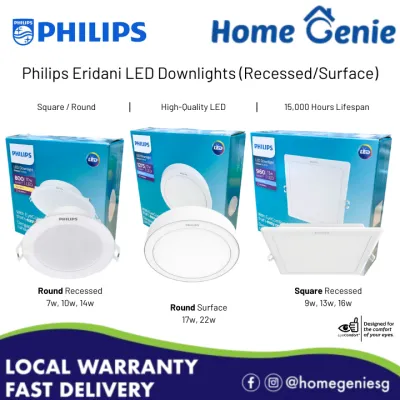
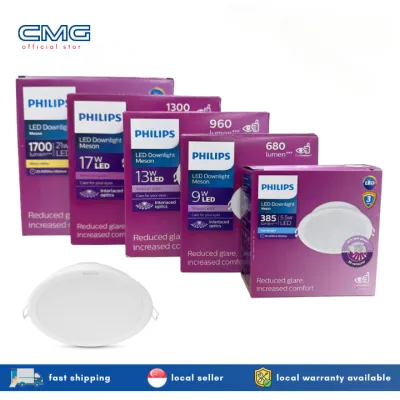
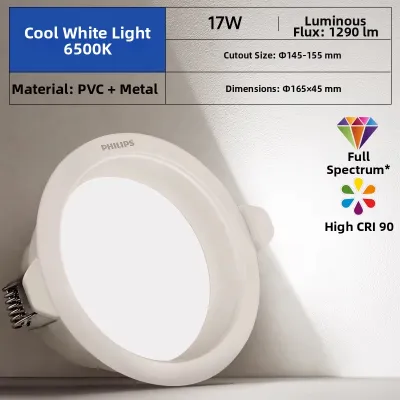
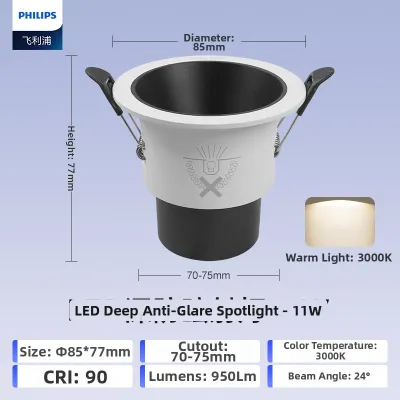
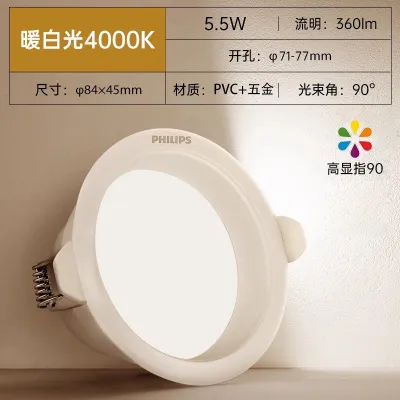
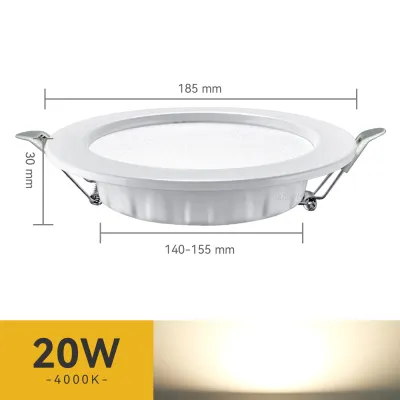
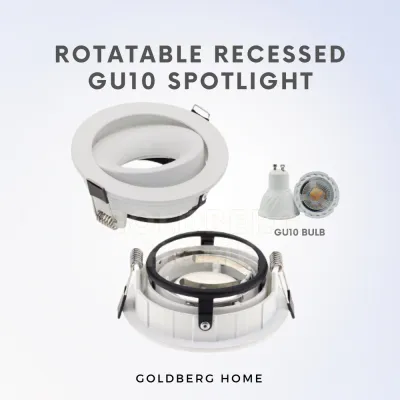
Prices are valid at publication and may change. Please refer to the product page for the latest price.
Warranty structures offer a clear indication of a manufacturer’s confidence in their product’s durability. A trustworthy brand should provide a comprehensive warranty of at least two to five years, covering both the LED chip and the external driver. Furthermore, the reliability of a warranty depends heavily on the brand’s local distribution channels. Brands with established local offices, physical showrooms, or authorized distributors in Singapore can honor warranty claims quickly, providing immediate replacement parts without the long delays associated with overseas shipping.
Color consistency and lumen maintenance are essential technical metrics that prevent visual mismatching over time. High-quality brands specify their color consistency using the Standard Deviation of Color Matching (SDCM) metric, with a rating of SDCM 3 or lower being the standard for premium residential spaces. This ensures that individual fixtures installed side-by-side do not display visible variations in color temperature. Additionally, reliable brands provide clear data on lumen maintenance (such as an L70 rating), indicating how many hours the light will operate before its brightness drops to 70 percent of its original output.
Brand Categories for Whole-Home Lighting Projects
When planning a whole-home lighting project, you will generally choose among three primary brand categories, each presenting distinct advantages and trade-offs. Aligning your project’s budget, technical complexity, and design goals with the right category will streamline the procurement and installation process.

International lighting manufacturers represent the traditional benchmark for high-volume reliability. These global brands invest heavily in research and development, resulting in highly efficient thermal management and exceptionally stable drivers. Their products are widely available across major local retailers, making future replacements straightforward. While their initial cost is typically higher, their standardized quality control and globally recognized safety certifications make them a highly secure choice for long-term residential use.
Local specialized lighting suppliers offer curated product ranges tailored specifically to Singapore’s housing layouts, such as low-ceiling HDB flats or concrete-walled condominiums. These brands often provide personalized project-based support, helping you calculate optimal light placement based on your floor plans. Because they manage their own local distribution, they can offer highly responsive customer service and direct, hassle-free warranty replacements. However, their product catalogs may be smaller, and long-term availability depends on the business’s local continuity.
Smart home ecosystem brands appeal to homeowners seeking integrated automation, voice control, and dynamic color tuning. These brands design fixtures that connect directly to smart home hubs via wireless protocols. While they offer unparalleled convenience, they require careful technical planning. You must verify that their smart drivers are compatible with your home’s physical switch wiring and that your wireless network can handle the device load across concrete walls.
| Brand Category | Key Advantages | Major Trade-offs | Ideal Use Case |
|---|---|---|---|
| International Manufacturers | Standardized quality, wide availability, long-term parts support | Higher initial cost, less customized local project support | Homeowners prioritizing maximum reliability and long-term brand stability |
| Local Specialized Suppliers | Tailored local support, customized specifications, responsive service | Smaller product catalogs, long-term availability tied to local business | Renovations requiring personalized lighting design and direct local contact |
| Smart Ecosystem Brands | Seamless automation, app control, dynamic dimming and color tuning | Higher complexity, network dependency, potential smart driver overhead | Tech-savvy homeowners building an integrated smart home environment |
Essential Specifications to Verify Before Purchasing
Before finalizing your purchase, you must verify several physical and electrical specifications to ensure the chosen fixtures fit your home’s architecture and electrical infrastructure. Singaporean residential properties frequently utilize false ceilings to conceal electrical conduits and air-conditioning ducts, which limits the available ceiling depth. You must measure the clearance space behind the plasterboard and compare it to the overall height of the recessed fixture, including its heat sink, to prevent installation bottlenecks.
Standardizing your cut-out sizes across the home simplifies the ceiling cutting process for your contractor and makes future replacements straightforward. Standard cut-out diameters, such as 75mm or 90mm, are highly recommended. Additionally, consider the visual design of the fixtures. Fixed downlights provide direct downward illumination ideal for general ambient light, while adjustable or gimbal designs allow you to tilt the beam to highlight artwork. For an ultra-minimalist aesthetic, trimless (plaster-in) fixtures sit flush with the ceiling, though they require precise plastering during installation and are more difficult to replace.
Dimming compatibility is a common source of technical frustration in whole-home lighting projects. If you plan to install dimmer switches, you must ensure that the LED driver supplied with the fixture matches the dimming protocol of your wall switches. The most common residential protocol is TRIAC (phase-cut) dimming, but advanced systems may use 0-10V or DALI (Digital Addressable Lighting Interface) for smoother, flicker-free dimming. Always verify with the brand or your electrician that the selected LED driver is explicitly certified to work with your specific dimmer switch model.
Beam angles and anti-glare features play a crucial role in creating a comfortable living environment. A wide beam angle of 60 degrees or more distributes light broadly, making it suitable for general illumination in corridors and kitchens. A narrower beam angle of 24 to 36 degrees concentrates light, creating dramatic pools of light perfect for dining tables or living room seating areas. To prevent eye strain, select fixtures with deep-recessed light sources or anti-glare baffles that maintain a low Unified Glare Rating (UGR).
Installation Safety and Professional Boundaries
Implementing a whole-home lighting rollout involves complex electrical work that must prioritize safety and regulatory compliance. In Singapore, all fixed electrical wiring works, including the installation of new light points, drivers, and switches, must be carried out by a Licensed Electrical Worker (LEW) registered with the Energy Market Authority (EMA). A professional electrician will calculate the total circuit load to ensure your distribution board is not overloaded, install proper circuit breakers, and verify that all fixtures are safely grounded.
Ceiling material compatibility and thermal management are equally vital for long-term safety. False ceilings must be structurally sound and capable of supporting the combined weight of the light fixtures and their external drivers. Because LEDs generate heat at the back of the chip, adequate air circulation within the ceiling cavity is essential to dissipate this heat. In Singapore’s hot and humid climate, trapped heat can cause the LED driver to overheat, drastically shortening its lifespan. Ensure your installer leaves sufficient clearance around the fixture’s heat sink and does not cover it with thermal insulation material unless the fixture is explicitly rated for insulation contact.
Knowing when to halt an installation is crucial for preventing costly damage or safety hazards. If your installer encounters unexpected structural obstacles behind the ceiling, such as metal framing, water pipes, or air-conditioning ducts, do not attempt to force the fixture in or modify the ceiling support structure without consulting your main contractor. Furthermore, if a newly installed fixture exhibits immediate signs of malfunction—such as emitting a burning smell, producing a loud buzzing noise, or flickering violently—isolate the power at the main distribution board immediately. Stop the installation and consult the manufacturer or a qualified professional to diagnose the incompatibility before proceeding.
Frequently Asked Questions (FAQ)
Can I mix different LED recessed light brands in the same home?
While it is technically possible to mix different LED recessed light brands in different rooms, doing so within the same open-plan space is highly discouraged. Different brands utilize different LED chips, phosphors, and optical lenses, which means that even if two fixtures are labeled with the same color temperature, they may emit noticeably different color tones and beam patterns. To maintain visual harmony, always use the exact same brand, model, and ideally the same manufacturing batch for any single visual zone, such as an open-concept living and dining area. You can, however, safely use different brands for isolated spaces like bathrooms or balconies where visual continuity is less critical.
What should I do if a recessed light starts flickering after installation?
If a newly installed recessed light begins to flicker, the first step is to determine whether the issue is localized or widespread. If only one light is flickering, the problem is likely a loose connection or a faulty individual driver, which can often be replaced under the brand’s local warranty. If all lights on a single circuit are flickering, especially when dimmed, there is a high probability of an incompatibility between the LED drivers and the wall dimmer switch. Turn off the power switch immediately to prevent damaging the LED chips. Any physical inspection of the wiring, testing of circuit voltages, or replacement of hardwired drivers must be performed by a licensed electrician to ensure safety.

Community discussion
Share your experience or ask a question. Comments are reviewed before publication.