
Selecting reliable LED square downlight brands for a whole-home lighting project in Singapore requires looking beyond aesthetic appeal to evaluate manufacturing consistency, local warranty support, and certified electrical safety. Because a comprehensive home renovation involves purchasing dozens of fixtures that must operate continuously for years, the most dependable brands are those that offer verifiable local warranties, clear technical specifications, and compliance with local safety standards. Rather than relying on unverified online listings, homeowners must establish a systematic evaluation process based on physical build quality, driver reliability, and optical performance to ensure their lighting investment stands the test of time.
While square downlights offer a modern, architectural aesthetic that complements contemporary interior designs, their installation and long-term performance depend heavily on the quality of the underlying components. A single failing fixture can disrupt the visual harmony of an entire room, making bulk reliability a primary concern. By understanding how to assess manufacturing standards and safety certifications, you can confidently source fixtures that deliver consistent, high-quality illumination throughout your home.
How to Evaluate Downlight Brand Reliability for Bulk Orders
When outfitting an entire flat, condominium, or landed property, you are purchasing lighting fixtures in volume. This scale makes the brand’s warranty terms and local after-sales support structure a critical decision factor. A reliable brand does not merely offer a generic warranty; it provides a clear, locally serviceable guarantee that protects you from the logistical hassle of shipping defective units overseas. Prioritize brands with established local distributors or dedicated showrooms in Singapore that can facilitate immediate, one-to-one replacements if a driver or LED chip fails prematurely.
Products mentioned in this guide
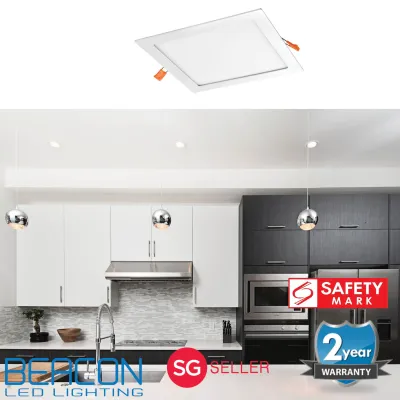
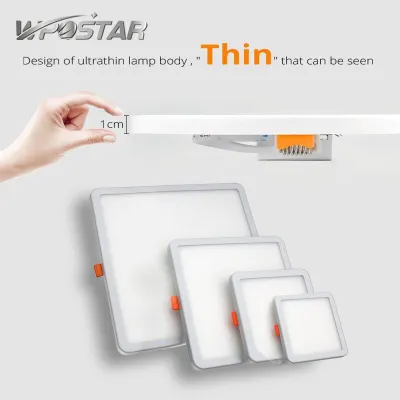
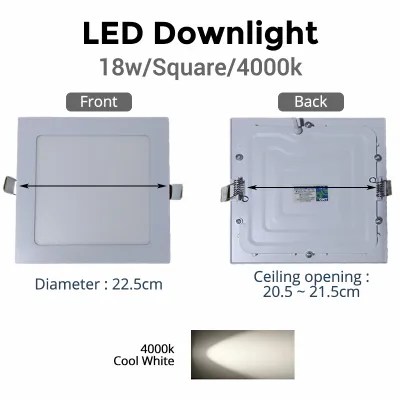
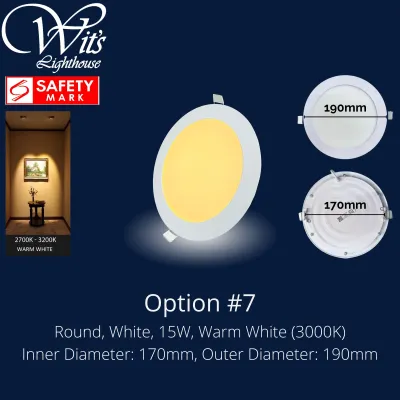
![[BUY 2 FREE 1] DFS LED Recessed Downlight With Safety Mark Driver/Downlight Square/ Round 6W 9W 12W 18W](https://img.lazcdn.com/g/p/1bbba251513d2f446d42ef7aed2d1fe8.jpg_400x400q80.jpg_.webp)
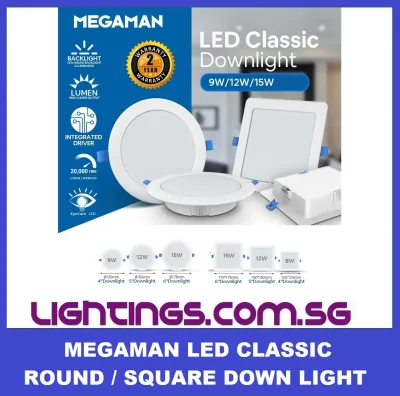
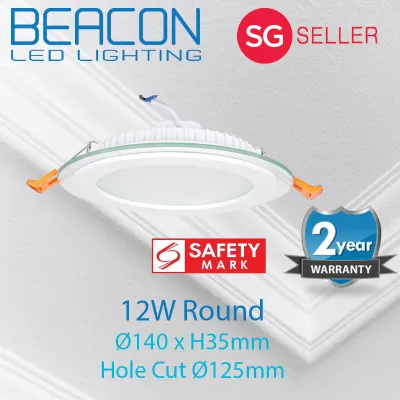
Prices are valid at publication and may change. Please refer to the product page for the latest price.
Manufacturing consistency is another hallmark of a reputable brand. LEDs are produced in large batches, and their color temperature and brightness naturally vary during production. High-quality brands employ strict color binning processes, ensuring that every fixture labeled as 3000K (warm white) emits the exact same shade of light. Lower-tier brands often use wider binning tolerances, which can result in a distracting patchwork of slightly yellow, pink, or green-tinted lights across a single ceiling plane.
To evaluate build quality before committing to a bulk order, closely examine the physical construction of the downlight. The heat sink is the most critical component for longevity, as excessive heat rapidly degrades LED chips and causes premature failure. Look for fixtures featuring robust, die-cast aluminum heat sinks rather than thin sheet metal or plastic-clad housings. Aluminum provides superior thermal conductivity, drawing heat away from the delicate electronics and preserving both lumen output and color accuracy over time.
Additionally, pay close attention to the driver integration. The driver is the electronic device that regulates power to the LED, and it is typically the first component to fail in a low-quality fixture. Reliable brands often utilize external drivers with robust strain relief and high-quality internal capacitors. External drivers are generally preferred for whole-home installations because they isolate the heat-sensitive driver electronics from the heat generated by the LED chips, and they can be replaced individually without discarding the entire downlight housing.
Verifying Electrical Safety and Compliance Standards
Operating electrical fixtures permanently installed in your ceilings requires strict adherence to safety standards to prevent electrical fires and shock hazards. In Singapore, controlled goods must carry the Safety Mark issued by the Enterprise Singapore (Safety Authority). For LED downlights, the driver or power supply is the primary component that must be certified. Always verify that the driver displays the distinctive Safety Mark logo along with a valid, traceable eight-digit registration number.

Beyond the safety label, you must verify the electrical specifications on the product data sheets to ensure compatibility with local infrastructure. Singapore’s standard residential electrical supply operates at 230V AC at 50Hz. Ensure the downlight drivers are rated for this voltage range. Furthermore, check the power factor (PF) rating of the driver; a power factor of 0.9 or higher indicates an efficient design that minimizes electrical waste and reduces strain on your home’s wiring system.
Insulation class is another vital safety specification to check on the product label. Most residential recessed downlights are rated as Class II (double insulated), meaning they do not require a safety connection to electrical earth. However, if your ceiling space contains thermal insulation, you must verify whether the downlights are rated for direct contact with insulation (often designated by specific international symbols) or if they require a physical clearance barrier to prevent heat buildup.
While planning your lighting layout and selecting fixtures is a collaborative process, the actual installation must respect professional boundaries. Before any installation, maintenance, or replacement of fixed wiring, the mains power must be isolated at the main distribution board. All fixed electrical wiring, circuit mapping, and load calculations must be performed by a Licensed Electrical Worker (LEW) or a qualified professional in strict accordance with local wiring standards. Never attempt to modify your home’s electrical distribution board or run new electrical lines yourself.
Matching Optical Specs to Your Room Layouts
Achieving a balanced and comfortable lighting scheme requires matching the optical specifications of your square downlights to the functional demands of each room. Color temperature is a subjective preference, but it significantly influences the atmosphere of a space. For task-oriented areas such as kitchens, home offices, and bathrooms, a cool white light (around 4000K) enhances visual acuity and focus. For living rooms, dining areas, and bedrooms, a warm white light (2700K to 3000K) creates a relaxing, inviting environment.
Beam angles dictate how light is distributed across your floors and walls. Narrow beam angles (ranging from 15 to 36 degrees) concentrate light into tight pools, making them ideal for accentuating artwork, architectural features, or dining tables. Conversely, wider beam angles (40 to 60 degrees) spread light more evenly, providing the broad, ambient illumination necessary for general living spaces. A thoughtful combination of both narrow and wide beams can add depth and texture to your home’s interior design.
Visual comfort is heavily influenced by the physical design of the downlight’s baffle and trim. Standard flat downlights often expose the LED light source directly to your eyes, causing uncomfortable glare. To mitigate this, look for deep-recessed square downlights where the light source is positioned deep within the housing. This design hides the direct glare of the LED chip from normal viewing angles, directing the light downward where it is needed. Matte black or dark bronze inner baffles further reduce unwanted reflections, while matte white trims blend seamlessly into plaster ceilings.
Environmental factors also dictate fixture selection, particularly in damp areas. Bathrooms, covered balconies, and kitchen cooking zones are subject to moisture, steam, and airborne grease. For these environments, standard indoor fixtures are insufficient. You must select downlights with an appropriate Ingress Protection (IP) rating. An IP44 rating indicates protection against splashing water from all directions, making it suitable for general bathroom zones, while dry living areas can safely utilize standard IP20-rated fixtures.
Sourcing Authentic Fixtures and Avoiding Counterfeits
To ensure the safety and reliability of your whole-home lighting system, you must purchase your fixtures through secure, authorized channels. Sourcing directly from brand official stores, authorized local distributors, or established physical lighting showrooms in Singapore is the most reliable way to guarantee product authenticity. These reputable sellers can provide official specification sheets, manufacturer warranties, and direct access to technical support if issues arise during installation.
In contrast, online marketplaces and unverified ecommerce platforms are frequently flooded with unbranded, substandard, or counterfeit lighting products. Be highly skeptical of listings offering square downlights at prices that seem unusually low compared to established market rates. These cheap alternatives often cut corners by using low-grade plastic housings, sub-par LED chips with poor color rendering, and drivers that lack essential safety certifications and thermal protection.
Common red flags on online listings include missing or vague technical specifications, the absence of a verifiable manufacturer name, and a lack of clear contact information for after-sales support. If a seller cannot provide a physical address or a local phone number, resolving a warranty claim or obtaining replacement parts in the future will be exceptionally difficult. Additionally, be wary of products that claim compliance with international standards but cannot provide official test reports or certificates of conformity.
For a whole-home project involving a significant financial investment, never buy your entire inventory sight unseen. Always request or purchase a single physical sample unit of the exact downlight model you intend to use. Inspect the sample’s weight, material finish, and wiring quality. Power the unit in a dark room to evaluate the light quality, color temperature, and dimming performance. This hands-on evaluation allows you to verify that the product matches the manufacturer’s claims before committing to a bulk purchase.
Final Pre-Purchase and Installation Checklist
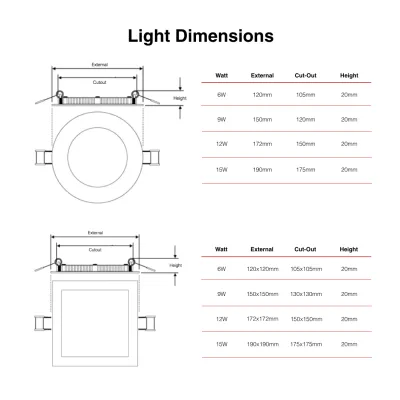
Before finalizing your order and scheduling the installation, you must perform a series of physical and electrical checks to ensure a smooth integration into your home. Square downlights require highly precise ceiling cut-outs compared to their round counterparts. While a round hole can be easily cut with a standard hole saw, a square hole requires manual cutting with a drywall saw and precise alignment. Ensure your contractor has the exact installation template provided by the manufacturer to avoid cutting errors that cannot be covered by the outer trim.
Verify the physical dimensions of the downlight housing, paying close attention to the required ceiling depth. False ceilings in Singapore apartments often have limited clearance due to structural beams, air conditioning trunking, or water pipes. Ensure there is sufficient vertical space not only to accommodate the height of the fixture but also to provide the minimum clearance recommended by the manufacturer for heat dissipation. Covering a downlight with ceiling insulation or crowding it against concrete slabs can lead to overheating and premature failure.
If you plan to dim your lights, you must cross-reference the compatibility of your chosen LED drivers with your dimmer switches. LED dimming is complex, and mismatching components can result in annoying flickering, buzzing noises, or a severely restricted dimming range. Ensure the drivers are explicitly labeled as dimmable (such as phase-cut, 0-10V, or DALI) and that their minimum and maximum wattage loads align with the specifications of your wall dimmers or smart home lighting controllers.
Finally, map out your lighting layout on a reflected ceiling plan (RCP) before any holes are cut. Coordinate the positions of the downlights with other ceiling fixtures, such as ceiling fans, air conditioning vents, and sprinkler heads. Proper spacing is essential to avoid overlapping light pools or creating dark, unlit corners. Ensure that no downlight is positioned directly above a fan blade, as this will create a highly distracting strobe effect when the fan is operating.
Frequently Asked Questions (FAQ)
Can I mix different downlight brands in the same room?
Mixing different downlight brands within the same visual zone is highly discouraged. Even if two different brands label their fixtures with the same color temperature, such as 3000K, their actual spectral output and color rendering index (CRI) can vary significantly. This variance can create a highly inconsistent visual environment, with some areas of the room appearing warmer or cooler than others. Additionally, different brands utilize different driver designs, which can lead to uneven dimming rates, flickering, or electrical imbalances if they are connected to the same dimmer circuit.
Do square downlights require different cut-out sizes than round ones?
Yes, square downlights require square cut-outs, which demand a much higher level of precision during installation. Unlike round downlights, which can tolerate minor rotational misalignment, square downlights must be perfectly aligned with the walls of the room to look visually correct. When preparing for installation, you must measure the inner housing dimensions and the clearance required for the spring clips, rather than relying solely on the outer faceplate dimensions. Always use the manufacturer’s official installation template to guide the cutting process, as even a minor error can result in gaps that the outer trim cannot conceal.

Community discussion
Share your experience or ask a question. Comments are reviewed before publication.