
Selecting recessed ceiling lights—commonly referred to as downlights—for an entire home is a significant decision that shapes your living environment for years to come. In Singapore, where residential properties range from high-density HDB flats to spacious condominiums and landed estates, achieving a cohesive and reliable lighting setup requires careful planning. A successful whole-home installation depends on choosing brands that offer exceptional manufacturing consistency, strict electrical safety compliance, and robust local support.
Rather than focusing solely on brand names, evaluating the technical specifications and verification methods of lighting manufacturers is the most reliable path to a successful installation. This guide outlines the essential criteria for assessing downlight brands, ensuring your chosen products integrate seamlessly with your home’s electrical infrastructure while maintaining visual harmony across every room.
Core Criteria for Evaluating Downlight Brand Reliability
When purchasing dozens of recessed ceiling lights for a complete home renovation, manufacturing consistency is paramount. Minor variations in light output or color temperature might go unnoticed in a single lamp, but when multiple downlights are installed side-by-side along a corridor or living room ceiling, even slight discrepancies become highly distracting. Reliable brands minimize these variations by adhering to strict color binning processes, often measured by the Standard Deviation of Color Matching (SDCM). To ensure a uniform look, look for brands that guarantee a MacAdam ellipse rating of SDCM 3 or lower, which indicates that any color variation between individual fixtures is virtually imperceptible to the human eye.
Products mentioned in this guide
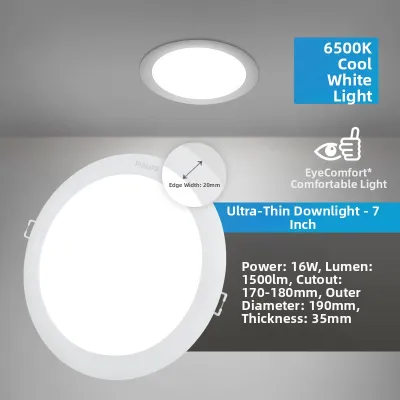
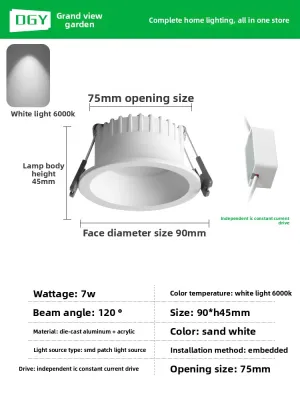
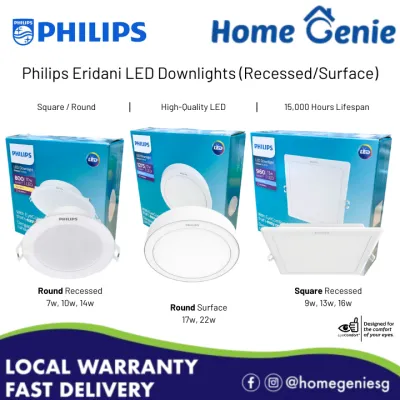
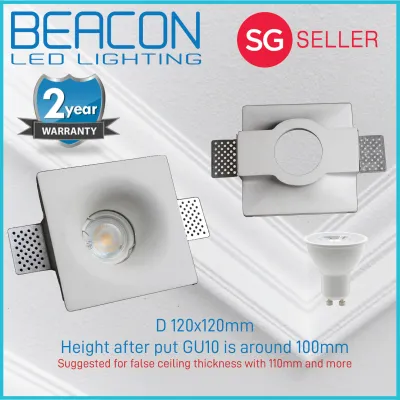
Prices are valid at publication and may change. Please refer to the product page for the latest price.
Evaluating longevity claims requires looking past optimistic marketing slogans and examining verifiable technical metrics. Many manufacturers advertise a lifespan of 50,000 hours, but this figure is meaningless without understanding the lumen maintenance standards used during testing. Reliable brands publish their L70/B50 metrics, which indicate the point at which the light output is expected to drop to 70% of its original brightness. A trustworthy brand backs these performance metrics with a clear, written warranty that outlines the exact terms of coverage, rather than relying on vague verbal promises of durability.
Long-term product availability is another critical factor for whole-home setups. Over a five-to-ten-year period, it is highly likely that at least one or two downlights or their drivers will require replacement due to normal wear or electrical surges. If the brand you choose frequently discontinues its product lines or alters its physical designs, you may find yourself unable to source an identical replacement. This can force you to either live with mismatched ceiling aesthetics or incur the significant expense of replacing all the fixtures in a room to maintain visual symmetry. Opting for established brands with stable, long-running product catalogs is the best way to safeguard your home against future maintenance headaches.
Electrical and Installation Compatibility Checks
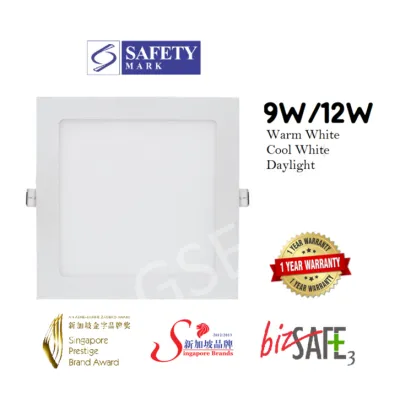
Before committing to a bulk purchase, you must verify that the downlights are fully compatible with Singapore’s electrical infrastructure and your home’s physical constraints. Singapore operates on a 230V AC, 50Hz electrical system. Any lighting fixture or external LED driver you install must be rated for this voltage range. Crucially, look for products that carry the Safety Mark issued by Enterprise Singapore. This certification indicates that the electrical components have undergone rigorous testing to meet local safety standards, significantly reducing the risk of electrical short circuits, overheating, or fire hazards.

Physical dimensions require precise measurement before any ceiling cutting begins. You must coordinate the cut-out hole dimensions of the downlights with your contractor’s ceiling plans. Additionally, measure the ceiling void depth—the space between the concrete soffit and the plasterboard false ceiling. False ceilings in Singapore apartments often have limited clearance due to the presence of air conditioning ducting, water pipes, or structural beams. Ensure the downlight’s overall height, including its heat sink, fits comfortably within this void while leaving at least 10mm to 20mm of air space above the fixture to allow for adequate heat dissipation.
Understanding driver configurations and dimming compatibility is essential for a flicker-free lighting experience. Downlights generally feature either integrated drivers built into the light body or external drivers connected via a wiring harness. External drivers are highly recommended for whole-home setups because they are easier to replace individually if a failure occurs, without requiring you to discard the entire light fixture. If you plan to install wall dimmers, you must verify that the LED driver is explicitly compatible with your dimming system, whether it uses traditional phase-cut (TRIAC) dimming, 0-10V analog control, or digital protocols like DALI.
Safety must always be your top priority during any electrical installation. Before handling any wiring or replacing fixtures, ensure that the power is completely isolated at the main distribution board (DB box). For installations in damp areas such as bathrooms or covered balconies, select downlights with an appropriate Ingress Protection (IP) rating, such as IP44 or IP65, to protect against moisture and dust. For any fixed wiring modifications, work at height, or complex dimming configurations, always engage a Licensed Electrical Worker (LEW) registered with the Energy Market Authority (EMA) to ensure the work is performed safely and in compliance with local regulations.
Planning a Consistent Whole-Home Lighting Layout
Achieving visual harmony throughout your home requires matching the color temperature of your downlights to the specific functions of each space. Color temperature is measured in Kelvin (K), and maintaining consistency within shared visual zones is crucial. For resting areas such as bedrooms and living rooms, warmer tones ranging from 2700K to 3000K create a cozy, inviting atmosphere. For task-oriented spaces like kitchens, home offices, and bathrooms, cooler tones around 4000K provide excellent clarity and focus. Avoid mixing different color temperatures within the same open-plan area, such as a combined living and dining room, to prevent a jarring visual contrast.
Beam angles play a vital role in determining how light is distributed across your rooms. A wide beam angle of 60 degrees or more is ideal for general ambient lighting, as it disperses light broadly to illuminate floors and walls evenly. Conversely, a narrow beam angle of 15 to 24 degrees is perfect for accent lighting, allowing you to highlight artwork, architectural features, or decorative objects. Medium beam angles of 36 to 40 degrees work exceptionally well for task lighting over kitchen countertops or dining tables, providing focused illumination without excessive spill.
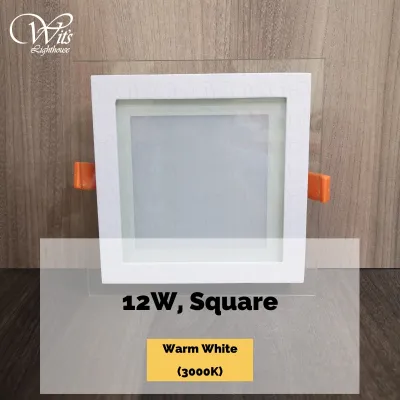
To maximize visual comfort, pay close attention to anti-glare features and physical design styles. High-quality downlights often feature deep-set light sources, baffle designs, or frosted diffusers that minimize direct glare, resulting in a low Unified Glare Rating (UGR) of less than 19. This prevents eye strain and creates a more comfortable living environment. Additionally, choose a consistent trim style across all visible ceilings. Trimmed downlights feature a visible outer bezel that covers minor imperfections in the ceiling cut-out, making them easier to install and maintain. Trimless downlights plaster directly into the ceiling for a completely flush, minimalist look, but they require highly precise installation by skilled plasterers.
Navigating Warranties and After-Sales Support
When purchasing dozens of downlights for a complete residential project, understanding the structure of your warranties is essential for long-term peace of mind. It is important to distinguish between the manufacturer’s product warranty and your contractor’s installation workmanship guarantee. The manufacturer’s warranty typically covers only the physical hardware—the downlight fixture and the LED driver—against manufacturing defects. It does not cover the labor costs associated with climbing ladders, removing faulty units, or reinstalling replacements. Your contractor’s workmanship guarantee, on the other hand, covers the physical installation work, usually for a shorter period of one year.
To ensure smooth warranty claims in the future, establish a clear documentation process from the day of purchase. Keep all original invoices, product packaging, and warranty cards in a safe place. Note down the specific batch numbers or model codes of the installed units. If a downlight fails prematurely, a reliable brand with local representation in Singapore will typically offer a straightforward replacement process. This often involves bringing the defective unit to a local service center or authorized distributor for a direct one-to-one exchange, saving you from the lengthy delays associated with shipping items back to overseas manufacturers.
When planning a large-scale purchase, inquire whether the brand or distributor offers dedicated support channels or project-based assistance. Some distributors provide specialized services for bulk residential orders, such as pre-testing drivers and fixtures before delivery, or offering extended warranty periods for complete home packages. Securing these services upfront can significantly reduce the likelihood of encountering out-of-box failures and streamline the resolution process if any issues arise during or after the installation phase.
Sourcing and Purchasing Strategies for Bulk Orders
To guarantee the authenticity and quality of your lighting fixtures, always purchase directly from authorized distributors, official brand showrooms, or verified online flagship stores. Avoid buying from unverified third-party sellers or parallel importers on online marketplaces. While parallel imports may appear cheaper initially, they often lack the necessary local Safety Mark, may not be optimized for Singapore’s specific voltage and climate conditions, and are rarely covered by local manufacturer warranties. Purchasing through official channels ensures you receive genuine products backed by full local support.
When placing a bulk order for your entire home, explicitly request that the supplier fulfill your order from a single manufacturing batch. Manufacturers produce LED chips and drivers in runs, and minor variations in color rendering index (CRI) or color temperature can occur between different production batches. By ensuring all your fixtures come from the same batch, you eliminate the risk of subtle color shifts across your ceilings, maintaining a perfectly uniform lighting aesthetic throughout your home.
Finally, always calculate a sensible overage allowance when ordering your lights. A practical rule of thumb is to purchase an extra 5% to 10% of the total number of downlights and drivers required for your layout. Store these spare units in a cool, dry place inside your home. Having identical spares on hand allows your contractor to replace any faulty units immediately during the installation process, and ensures you have matching replacements ready years down the road without having to search for discontinued models or wait for new stock to arrive.
Frequently Asked Questions (FAQ)
Can I mix different recessed ceiling light brands in the same room?
Mixing different downlight brands within the same room is highly discouraged due to the significant visual and electrical risks involved. Even if two different brands claim to offer the exact same color temperature (such as 3000K) and lumen output, their actual color rendering index (CRI), spectral distribution, and beam patterns will likely differ. This results in a patchy, inconsistent ceiling appearance that detracts from the room’s design. Furthermore, connecting different brands of LED drivers to a single dimming circuit can cause electrical conflicts, leading to flickering, buzzing, or premature driver failure.
Do smart recessed lights require a different brand approach than standard ones?
Yes, smart recessed lights require a distinct evaluation process that focuses heavily on software longevity and network stability. Unlike standard downlights, smart fixtures rely on continuous wireless communication (via protocols like Zigbee, Wi-Fi, or Thread) and dedicated mobile applications. When choosing a smart lighting brand, you must assess the manufacturer’s track record of software updates and ecosystem compatibility with platforms like Apple Home, Google Home, or Samsung SmartThings. Additionally, ensure the brand’s products support safe fallback physical switch behavior, meaning the lights will still turn on and off via standard wall switches even if your home internet or smart hub temporarily fails.

Community discussion
Share your experience or ask a question. Comments are reviewed before publication.