
Selecting a suitable glass incense holder depends on matching the physical form of your incense—whether stick, cone, or coil—to the holder’s structural design. While glass is highly valued for its clean, modern aesthetic and non-porous surface, its performance relies on its ability to safely manage heat and contain falling ash. In typical indoor environments where ceiling fans or air conditioning units create subtle drafts, choosing a holder with the correct dimensions is essential to prevent ash from scattering onto your furniture.
For homeowners seeking a minimalist or contemporary look, glass offers a unique transparency that blends seamlessly with various interior styles. However, because glass is sensitive to rapid temperature changes, understanding the physical demands of your preferred incense type is the first step toward a safe and clean aromatic experience.
Matching Glass Holders to Your Incense Type
Every incense format burns differently, creating distinct ash patterns and heat profiles. A stick burns along a linear path, shedding ash along its entire length, whereas a cone burns downward in a single spot, concentrating heat at its base. Coils burn outward in a spiral, requiring suspended support and a wide catchment area.
Products mentioned in this guide
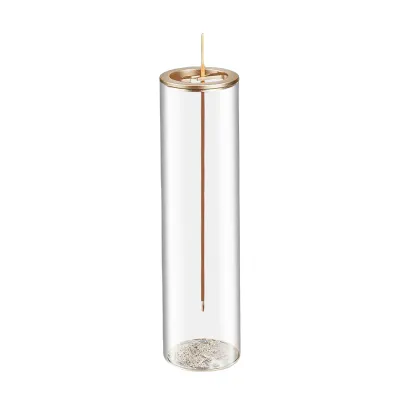
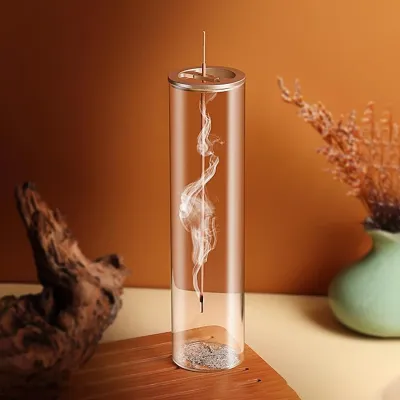
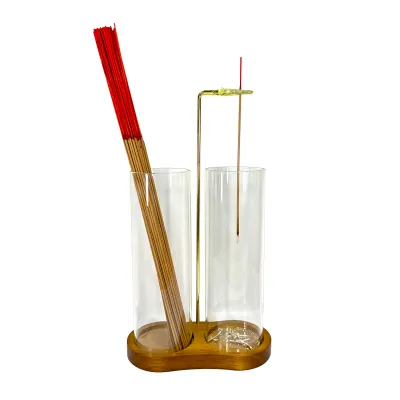
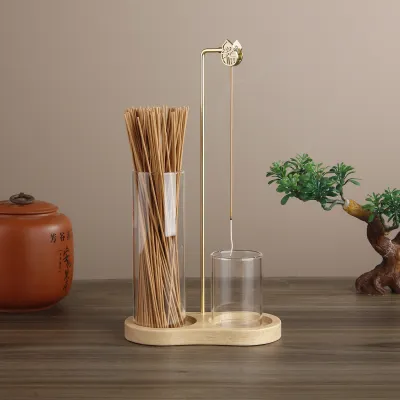
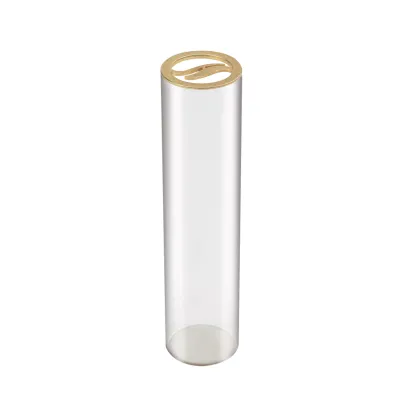
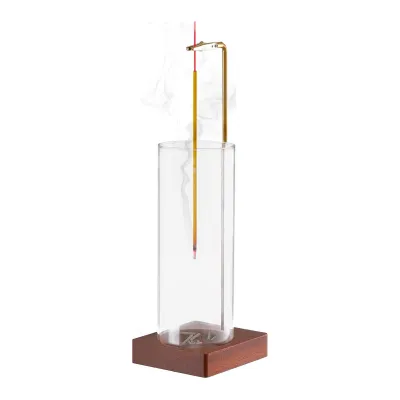
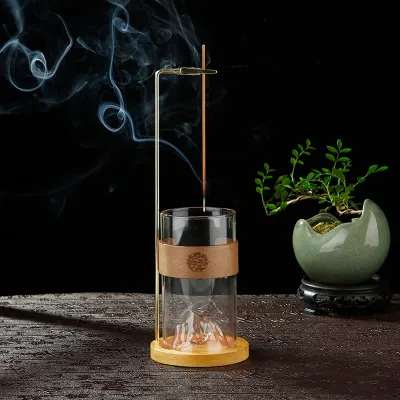
Prices are valid at publication and may change. Please refer to the product page for the latest price.
Selecting a glass holder without considering these mechanics often leads to messy cleanups or cracked glass from thermal stress. By understanding how each incense type behaves, you can select a glass vessel that safely contains the heat and keeps all residue confined to the holder.
Glass Holders for Stick Incense
Stick incense, whether featuring a bamboo core or made of solid compressed herbs, requires a holder that can accommodate its length and angle. As the stick burns, gravity pulls the ash downward, but the angle of the stick determines the trajectory of the falling debris. A proper glass holder for sticks must feature a secure resting point—such as a drilled hole, a brass insert, or a molded groove—that keeps the stick stable. If the stick wobbles or sits at too shallow an angle, ash will easily overshoot the edges of the holder.
The distinction between bamboo-core sticks and solid dhoop sticks is also important when choosing a holder. Bamboo-core sticks leave behind an unburned wooden end that is easy to remove, but they tend to burn at a higher angle. Solid incense sticks burn completely down to the base, meaning the holder itself will come into direct contact with the final glowing ember. For solid sticks, ensure the glass holder has a heat-resistant metal grommet or insert to prevent the hot ember from resting directly against the glass surface.
For standard sticks, a long, narrow glass tray is highly effective. The length of the tray must exceed the length of the burning portion of the stick. If you prefer extra-long sticks, look for a wider glass tray or a vertical glass burner. Vertical glass burners, where the stick is suspended upside down inside a glass cylinder, are increasingly popular. This design completely shields the burning stick from indoor drafts, ensuring that every speck of ash falls straight down into the collection cup at the base. When choosing a horizontal glass tray, verify that the channel is deep enough to prevent drafts from blowing the accumulated ash out of the holder. A shallow, flat glass plate is rarely sufficient for sticks unless it is exceptionally wide.
Glass Holders for Cone Incense
Cone incense burns from the top down, creating a highly concentrated pile of hot ash at its base. Because the heat is focused in a single, small area for the duration of the burn, the glass holder must be designed to withstand localized thermal stress. The primary structural requirement for a cone holder is a flat, stable base or a recessed bowl. This prevents the cone from tipping over while burning, which could pose a fire hazard.
As the cone burns down to its final millimeters, the heat transfers directly to the surface beneath it. Without a proper barrier, this concentrated heat can cause standard glass to experience thermal shock and crack. A recessed glass bowl or a small dish with raised edges is ideal, as it keeps the concentrated ash pile contained even if the holder is bumped. The depth of the bowl should be sufficient to prevent drafts from scattering the fine, powdery ash left behind by the cone.
If you plan to use backflow cone incense, you will need a specialized glass holder. Backflow cones are designed to release smoke downward through a hollow center, creating a cascading waterfall effect. A backflow glass holder must feature a tiered, channeled, or stepped design that guides the heavy, cool smoke downward. These holders often combine glass with ceramic or metal accents to create the necessary pathways. When selecting a glass backflow burner, ensure the glass surfaces are smooth and easy to access, as backflow smoke leaves a heavy, oily residue that requires frequent cleaning.
Glass Holders for Coil Incense
Coil incense presents a unique challenge due to its spiral shape and extended burn time. Unlike sticks or cones, a coil must be suspended in the air to burn continuously; if any part of the burning coil touches a cold surface, the ember will extinguish. To accommodate this, a glass coil holder must feature a central stand, a metal clip, or an elevated insert that holds the coil securely above the glass base. This suspension allows air to circulate freely around the entire spiral.
Because coils burn in an expanding spiral, they require a wide and deep glass bowl to catch the sprawling ash. The diameter of the glass base must be significantly larger than the maximum diameter of the coil to ensure that ash falling from the outer rings does not spill onto your tabletop. The size of the coil you intend to burn—whether a small two-hour coil or a larger multi-hour variety—will dictate the required diameter of the glass bowl.
Furthermore, coil incense burns for a much longer duration than sticks or cones, often lasting several hours. This prolonged burning generates continuous, radiating heat. You must verify that the glass base is thick and robust enough to handle this sustained thermal exposure. Look for designs where the metal suspension stand keeps the burning ember at a safe distance from the glass surface, minimizing direct heat transfer.
Key Features to Check Before Buying
When shopping for a glass incense holder on any online marketplace or specialty decor store, you must look beyond aesthetics and verify specific material and structural details to ensure safety. First and foremost, check the product specifications or labels for heat-resistant glass. Borosilicate glass is highly recommended for incense burners because it has a very low coefficient of thermal expansion, making it highly resistant to thermal shock and cracking under sudden temperature changes. Avoid thin, delicate novelty glass that does not explicitly state its heat resistance. Standard soda-lime glass can easily crack if a hot ember or a burning cone base comes into direct contact with it.

Next, evaluate the overall footprint and weight of the holder. A safe incense holder must have a low center of gravity and a heavy, stable base to prevent accidental tipping. This is especially important if you have pets or young children, or if the holder will be placed on a surface near household activity. Inspect the thickness of the glass. Thick-walled glass vessels not only feel more substantial but also absorb and dissipate heat more evenly than thin glass. Look for a minimum glass thickness of three to five millimeters, particularly for cone and coil burners.
Examine the finish of the glass. Ensure there are no sharp, unfinished edges, micro-cracks, or air bubbles trapped within the glass structure. Air bubbles can act as weak points, expanding when heated and causing the glass to shatter unexpectedly. If the holder features metal inserts or brass grommets to hold the incense, verify that these components are securely fitted and do not put undue mechanical stress on the surrounding glass.
Always review the manufacturer’s stated maximum temperature limits and intended use cases. Some glass holders are designed strictly for light stick incense and may not be rated for the intense, localized heat of charcoal tablets or heavy resin burning. Verifying these details beforehand prevents premature damage and ensures a safe aromatic experience.
Cleaning and Maintaining Glass Incense Holders
One of the greatest advantages of glass incense holders is their non-porous surface, which does not absorb oils or odors. However, maintaining their pristine, transparent appearance requires regular cleaning and careful handling to prevent damage. Before attempting to clean your glass holder, always allow it to cool completely to room temperature. Pouring cold water onto a hot glass holder can cause immediate thermal shock, leading to cracks or complete shattering.
Once cooled, empty the loose ash into a waste bin. For routine cleaning, wash the holder in warm, soapy water using a mild dishwashing liquid and a soft microfiber cloth or sponge. Never use abrasive scrubbers, steel wool, or harsh scouring powders on glass. These materials can create micro-scratches on the surface. Over time, these tiny scratches weaken the structural integrity of the glass, making it far more susceptible to cracking when exposed to heat.
Incense smoke, particularly from resin-rich cones or backflow coils, leaves behind a sticky, yellowish residue. If warm soapy water does not remove these stubborn stains, you can use a soft cloth dipped in isopropyl alcohol to dissolve the oils. After cleaning, rinse the holder thoroughly with clean water and dry it completely with a lint-free towel. Drying the glass immediately prevents water spots and mineral deposits from forming, which can quickly dull the clear, reflective quality of the holder.
Inspect your glass holder regularly under good lighting. If you detect any visible cracks, deep scratches, or chips along the edges, you must stop using the holder immediately. A compromised glass vessel can fail catastrophically under the heat of a burning incense stick or cone, posing a fire hazard.
Frequently Asked Questions (FAQ)
Can I use a glass plate or dish I already own as an incense holder?
Repurposing standard household glassware, such as a decorative plate or a small dessert dish, as an incense holder is generally not recommended due to safety risks. Standard household glass is typically soda-lime glass, which is not treated to withstand the concentrated, direct heat of a burning incense ember or cone base. If a hot ember falls directly onto a cold household plate, the sudden temperature differential can cause the glass to crack or shatter, potentially scattering hot ash onto flammable surfaces. Furthermore, standard plates lack the dedicated grooves, holes, or secure resting points required to hold incense sticks at a stable, safe angle.
You should only repurpose a household dish if it is explicitly labeled as oven-safe, highly heat-resistant (such as tempered or borosilicate glass), and exceptionally thick. Even then, you must use a separate, stable metal stand or a bed of clean sand inside the dish to support the incense and prevent direct contact between the burning ember and the glass surface.
How do I remove stubborn incense resin stains from glass?
Over time, the essential oils and resins in incense will deposit a sticky, amber-colored film on the glass, which can become baked-on after repeated exposure to heat. To remove these stubborn stains without damaging the glass, avoid using metal scrapers, knives, or harsh chemical solvents like acetone, which can scratch the surface or leave toxic residues. Instead, soak the affected area in isopropyl alcohol (rubbing alcohol) or a mild oil-based cleaner for a few minutes to break down the organic resins. For a natural alternative, a paste made of baking soda and water can be gently rubbed onto the stain with a soft cloth; the baking soda acts as a very mild, non-damaging abrasive.
After the resin has dissolved, wash the holder thoroughly with warm, soapy water to remove any remaining cleaning agents. Always rinse the glass completely and dry it with a lint-free towel before using it again, ensuring no flammable alcohol residue remains on the holder.

Community discussion
Share your experience or ask a question. Comments are reviewed before publication.