
An outdoor LED flood light must withstand rain, dust, and high humidity to operate safely and last over time. In tropical climates like Singapore, where sudden downpours and intense humidity are common, choosing the correct Ingress Protection (IP) rating is essential to prevent electrical short circuits and premature fixture failure. For most residential garden installations, an IP65 rating serves as the baseline standard for semi-sheltered areas, while an IP66 rating is highly recommended for fully exposed locations. Understanding the specific environmental demands of your installation site will help you select a fixture that remains safe and functional through every season.
Understanding IP Ratings for Outdoor Lighting
The Ingress Protection (IP) rating system is an international standard used to define the sealing effectiveness of electrical enclosures against intrusion from foreign bodies and moisture. Every IP rating consists of two digits, each representing a distinct level of protection. The first digit, ranging from 0 to 6, indicates the level of protection against solid particles such as dust, dirt, and accidental contact. A rating of 6 represents a completely dust-tight enclosure, which is the standard requirement for any reliable outdoor light fixture.
The second digit, ranging from 0 to 9, measures the fixture’s resistance to liquid ingress, specifically water. It is important to recognize that a higher second digit does not always represent a simple linear upgrade in overall durability; instead, it indicates compliance with different testing protocols. For instance, a fixture certified to withstand high-pressure water jets may undergo different testing than one certified for temporary submersion. For outdoor lighting, checking both digits ensures that the fixture can handle both the fine dust carried by wind and the heavy rainfall typical of outdoor environments.
Products mentioned in this guide
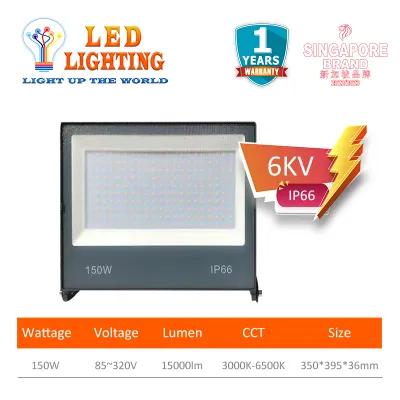
![Very Bright IP67 LED Flood Light | LED Light | LED 30W 50W 100W 150W 200W [Rainproof] *2 YEAR WARRANTY*](https://img.lazcdn.com/g/p/a94f935be2c8201b20af86a112c95844.jpg_400x400q80.jpg_.webp)
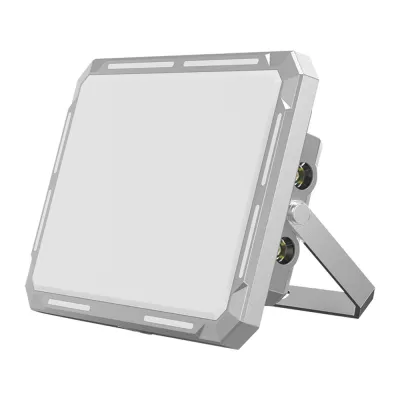
![LEDVANCE Floodlight ECO LED 20W [830/840/865]](https://img.lazcdn.com/g/p/ce55bf604dd2a9e2d7a62b2a3a4d084b.jpg_400x400q80.jpg_.webp)
![LEDVANCE Floodlight ECO LED 30W [830/840/865]](https://img.lazcdn.com/g/p/a66ce7dc9889045ff871e841fedbb108.jpg_400x400q80.jpg_.webp)
Prices are valid at publication and may change. Please refer to the product page for the latest price.
Comparing IP65, IP66, and IP67 for Garden Flood Lights
When shopping for an outdoor led flood light, you will primarily encounter three ratings: IP65, IP66, and IP67. Each of these ratings offers a different level of defense against water, making them suitable for distinct areas of your garden or home exterior.

An IP65-rated fixture is designed to resist low-pressure water jets projected from any angle. This level of protection is highly effective for semi-sheltered areas, such as under deep roof eaves, covered patios, or carports. While it can handle light rain, it may struggle over time if subjected to direct, high-pressure water or continuous, driving tropical storms without any overhead shelter.
An IP66-rated fixture provides a significant step up in water resistance, certified to withstand powerful water jets from any direction. This makes IP66 the ideal choice for fully exposed outdoor installations, including garden walls, open driveways, perimeter fences, and unshaded poles. In regions prone to intense monsoon seasons and heavy downpours, an IP66 rating ensures that water does not penetrate the housing even when subjected to high-velocity rain.
An IP67-rated fixture offers protection against temporary immersion in water, typically up to a depth of one meter for a duration of thirty minutes. While this level of protection is generally unnecessary for wall-mounted flood lights positioned high above the ground, it is highly relevant for low-level garden lights, ground-recessed uplights, or fixtures installed in low-lying areas of the yard where water tends to pool temporarily during heavy storms.
How to Choose the Right IP Rating for Your Installation
Selecting the appropriate IP rating requires a careful assessment of your specific physical environment and mounting conditions. The height and angle of your installation play a major role in determining the level of exposure your fixture will face. Fixtures mounted high under deep architectural eaves are naturally shielded from the worst of the weather, allowing you to safely use an IP65-rated light. Conversely, fixtures mounted lower to the ground, near splash zones, or on exposed garden posts are highly vulnerable to both splashing water and wet soil, making IP66 or IP67 the safer choice.
You must also evaluate the direct weather exposure of the site. An open garden path or an unshielded exterior wall receives the full force of wind-driven rain, requiring at least an IP66 rating to prevent moisture from seeping into the internal electronics. Additionally, consider the proximity of your lighting to automated irrigation systems. If your garden flood lights are positioned within the direct spray path of high-pressure lawn sprinklers, they will be subjected to regular, targeted water jets, necessitating an IP66 rating to ensure long-term reliability.
Safety and Installation Considerations for Outdoor Flood Lights
Before purchasing any outdoor led flood light, it is crucial to verify its technical specifications and local compliance standards. Ensure the fixture is compatible with local voltage requirements (typically 220V-240V) and carries recognized electrical safety certifications, such as the local safety mark. You should also check the base or interface type, wattage limits, physical dimensions, and whether the dimming method matches your existing control systems. Keep in mind that decorative styles, perceived color temperatures, and spatial lighting effects are highly subjective preferences that do not guarantee physical durability or safety.
It is vital to remember that an IP rating only applies to the light fixture itself. The entire electrical circuit, including the wiring, connectors, and junction boxes, must also be rated for outdoor and wet-location use. Using an IP66 light fixture with an unrated or poorly sealed junction box defeats the purpose of the waterproof rating and poses a severe electrical hazard.
For any fixed wiring installation, work in damp areas, or installations requiring work at height, always isolate the power supply at the main circuit breaker before beginning. Because outdoor electrical work involves high risks of shock and short circuits, you should consult a qualified professional electrician to handle the installation. A certified professional will ensure that all conduits are properly sealed, drip loops are correctly formed, and the entire system complies with local electrical safety codes.
Frequently Asked Questions (FAQ)
Can I use an indoor LED flood light outside if it is under a roof?
No, you should never use an indoor-rated LED flood light in an outdoor environment, even if it is completely sheltered under a deep roof or patio ceiling. Indoor fixtures are not sealed against ambient humidity, temperature fluctuations, or condensation. Over time, moisture from the air will accumulate inside the unsealed housing, leading to corrosion of the internal circuitry, premature LED failure, and potential electrical short circuits. For sheltered outdoor spaces, always use a fixture rated at least IP44 to ensure basic protection against splashing water and moisture.
Does a higher IP rating mean the light is more durable?
An IP rating only measures a fixture’s resistance to dust and water ingress; it does not indicate overall physical durability, impact resistance, or resistance to UV degradation. A light fixture can have a high IP66 rating but still be made of fragile plastics that degrade under intense sunlight. To evaluate physical toughness against impacts, vandalism, or flying garden debris, look for the IK rating (Impact Protection). Additionally, check the manufacturer’s specifications for UV-stabilized materials and corrosion-resistant housings to ensure long-term outdoor durability.

Community discussion
Share your experience or ask a question. Comments are reviewed before publication.