
Selecting the right Sofirn flashlight for your Housing & Development Board (HDB) flat emergency kit requires balancing compact storage, reliable battery runtime, and intuitive operation. During a sudden power outage in Singapore’s high-density residential estates, a dependable light source ensures your household can navigate dark rooms, access utility risers, and maintain safety without relying solely on smartphone screens. By focusing on key specifications such as battery form factors, charging interfaces, and beam profiles, you can identify a model that fits seamlessly into your household’s emergency preparedness plan.
When evaluating flashlights for residential use, look for models that offer a balance of broad area illumination and focused light. Sofirn produces a wide range of portable lighting tools utilizing modern light-emitting diode (LED) technology and rechargeable lithium-ion batteries. Choosing the right model involves assessing your specific living space, understanding how different battery capacities affect runtime, and establishing safe storage practices suitable for Singapore’s warm, humid climate.
Understanding HDB Emergency Lighting Needs
Preparing an emergency kit for an HDB flat requires a clear understanding of the spatial layout and unique constraints of high-rise residential living. Unlike detached houses, HDB flats often feature compact layouts with internal rooms, household shelters (bomb shelters), and service yards that may not receive natural light from windows. During a nighttime power failure, these spaces become pitch black instantly, making safe navigation the immediate priority for your family.
Products mentioned in this guide
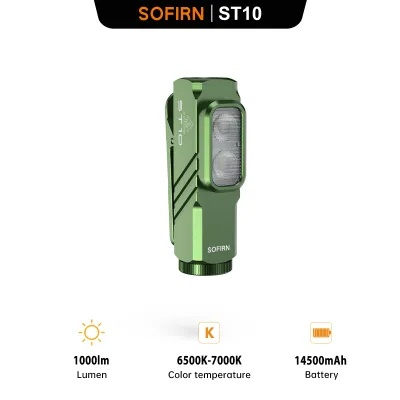
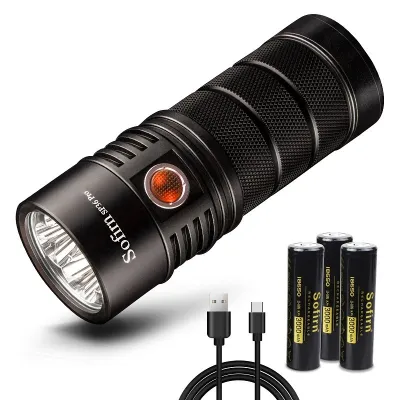
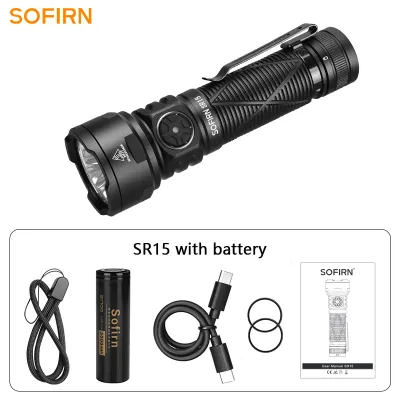
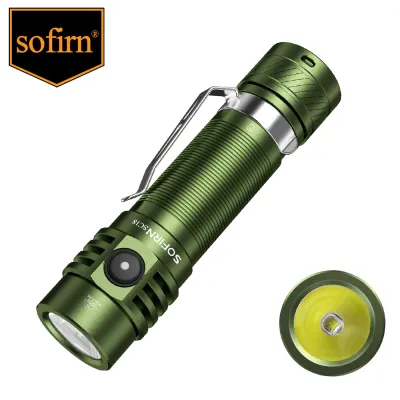
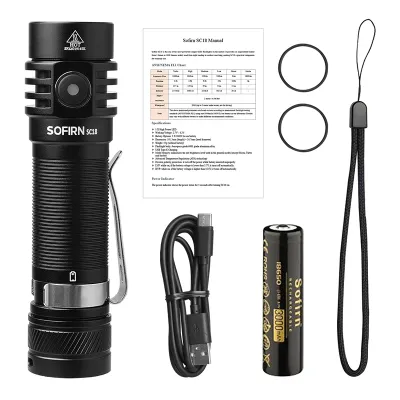
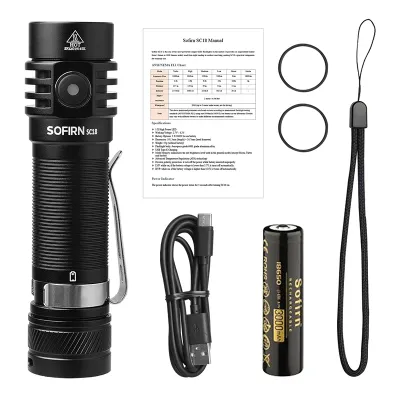
Prices are valid at publication and may change. Please refer to the product page for the latest price.
To navigate these spaces safely, you must evaluate the balance between a flood beam and a throw beam. A flood beam distributes light widely across a broad area, making it ideal for illuminating an entire living room or kitchen. You can achieve this hands-free by standing the flashlight vertically on its flat tail cap—a technique known as tail-standing—and bouncing the light off the white ceiling to create soft, ambient room lighting. Conversely, a throw beam projects a concentrated hotspot over a longer distance, which is highly useful for inspecting deep utility closets, checking electrical distribution boards (DB boxes), or looking down long common corridors.
Physical storage constraints also dictate the size of the flashlight you should choose. Most HDB households store emergency supplies in utility cabinets, shoe racks near the main entrance, or dedicated grab-to-go emergency bags. A flashlight that is too bulky may be left in a distant cupboard, rendering it inaccessible when the lights go out. Selecting a compact, pocket-sized tool ensures it can be stored in easily accessible locations, such as a bedside drawer or a small pouch inside your household shelter.
Primary household use cases during an outage range from hands-free reading to performing basic repairs. If you need to inspect a leaking pipe under the sink or reset a tripped circuit breaker in the DB box, you will require a light that can be held comfortably in the hand or clipped to a shirt pocket. Understanding these diverse scenarios helps you prioritize features like magnetic tail caps, pocket clips, or diffuser attachments that transform a directional beam into a 360-degree lantern.
Key Sofirn Features to Prioritize for Home Emergencies
When browsing the Sofirn catalog, battery compatibility is one of the most critical technical decisions you will make. Most modern high-performance flashlights run on either 18650 or 21700 rechargeable lithium-ion cells. The 18650 battery is a long-standing industry standard, offering a compact physical size that keeps the flashlight slim and lightweight. If pocketability and minimal weight are your primary concerns, a model utilizing an 18650 cell is highly practical and easy for all family members to handle.

On the other hand, the larger 21700 battery offers a significant increase in energy capacity, which translates directly to longer runtimes. While a 21700-powered flashlight is slightly thicker and heavier, the extended battery life provides peace of mind during prolonged power outages. For an emergency kit, the added runtime of a 21700 cell often outweighs the minor increase in physical size, especially if the flashlight is intended to serve as the primary light source for the entire household.
Charging convenience is another essential factor to consider for emergency preparedness. Prioritizing Sofirn models with built-in USB-C charging ports eliminates the need for a separate, external battery charger. During a blackout, you can easily recharge the flashlight using standard USB-C cables connected to portable power banks, laptop ports, or multi-port wall chargers once power is restored. This universal compatibility ensures you can keep the light operational without searching for specialized charging equipment in the dark.
Size and form factor must be balanced against heat dissipation. High-output LED flashlights generate substantial heat when operated on high or turbo modes. Smaller flashlights have less surface area to dissipate this heat, meaning they will warm up quickly and automatically step down their brightness to protect the internal electronics. A slightly larger model provides better thermal management, allowing it to sustain useful brightness levels for longer periods without becoming uncomfortably hot to hold.
Finally, the user interface (UI) must be intuitive for every member of your household. Some Sofirn models feature highly customizable, complex firmware (such as Anduril), which offers advanced programming options but can be confusing or frustrating for children or elderly family members. For emergency kits, look for models with a simple, straightforward UI—typically featuring a single electronic or tactical tail switch that allows users to turn the light on, cycle through low, medium, and high modes, and access a strobe mode for signaling if necessary. A physical or electronic lockout feature is also vital to prevent the flashlight from turning on accidentally while stored in a drawer or bag.
Building and Verifying Your Flashlight Shortlist
Before purchasing any flashlight, it is crucial to verify the manufacturer’s official specifications to ensure the tool meets your safety and performance expectations. Check the product documentation for the maximum light output (measured in lumens) and, more importantly, the sustained output levels. Many manufacturers advertise high peak lumen ratings that can only be maintained for a few minutes before thermal regulation reduces the brightness. Look for detailed runtime charts in the user manual to confirm that the medium and low modes provide sufficient light for several hours.
Verify the included accessories to ensure you are getting complete utility out of your purchase. A standard package should ideally include the flashlight body, a compatible rechargeable lithium-ion battery, a USB-C charging cable, a lanyard to prevent accidental drops, and spare rubber O-rings to maintain the light’s water resistance. Some models also include a pocket clip, which can be used to attach the light to the brim of a cap for hands-free headlamp-style illumination, or a silicone diffuser cap that softens the beam for area lighting.
Cross-referencing the user manual is also necessary to confirm the presence of essential safety features. Ensure the model you select includes low-voltage protection (LVP), which automatically shuts off the light when the battery voltage drops too low, preventing permanent damage to the lithium-ion cell. Additionally, verify that the flashlight features active thermal regulation (ATR) or a timed step-down mechanism. These safety systems monitor the internal temperature and automatically lower the power output if the device gets too hot, preventing potential burns or fire hazards during indoor use.
When finalizing your purchase, confirm the local warranty terms and the status of the seller. Purchasing from authorized dealers in Singapore ensures you receive genuine products, reliable customer support, and valid warranty coverage, which typically ranges from one to two years. Avoid purchasing from unverified third-party listings on online marketplaces, as counterfeit batteries or sub-standard charging circuits can pose significant safety risks. Expect to budget approximately S$30 to S$60 for a high-quality, complete Sofirn flashlight kit including the battery and charging accessories.
Safe Storage and Battery Maintenance for Emergencies
Proper storage and regular maintenance are vital to ensure your emergency flashlight functions reliably when a crisis occurs. Singapore’s tropical climate, characterized by high relative humidity and ambient temperatures averaging around 30°C, presents unique challenges for storing electronic devices and lithium-ion batteries. High humidity can accelerate contact corrosion, while excessive heat can degrade battery capacity and shorten the overall lifespan of the cells.
To maintain battery health, follow the manufacturer’s guidelines for long-term storage. If you plan to store the flashlight unused for several months, it is best to keep the lithium-ion battery charged to approximately 50% to 70% of its capacity (around 3.7V to 3.8V) rather than storing it completely full or entirely empty. However, for an active emergency kit where immediate readiness is required, keeping the battery fully charged is acceptable, provided you implement a routine inspection schedule to monitor its condition.
Establish a quarterly maintenance routine to inspect your emergency lighting equipment. Remove the battery from the flashlight body and check for any signs of physical damage, swelling, or leakage. Clean the threaded metal connections and the gold-plated springs inside the tail cap and head using a clean, dry microfiber cloth or a cotton swab dipped in a small amount of isopropyl alcohol. This removes accumulated dirt, oxidized grease, and dust, ensuring optimal electrical conductivity and preventing flickering or power loss.
Store your flashlight and spare batteries in a cool, dry, and easily accessible location. Avoid storing them in damp areas like under-sink cabinets, laundry yards, or directly on the floor of a household shelter where moisture can collect. A sealed, airtight plastic container with a few packets of silica gel desiccant is an excellent storage solution for keeping moisture away from the contacts. Ensure all family members know exactly where this container is located.
If you discover a battery that is swollen, dented, or showing signs of corrosion, stop using it immediately. Damaged lithium-ion batteries pose a severe safety hazard, including the risk of short circuits, thermal runaway, and fire. Never dispose of lithium-ion batteries in standard household waste bins. Instead, wrap the battery terminals in electrical tape and deposit the damaged cell at a designated e-waste recycling point, which can be found at various community clubs, supermarkets, and retail malls across Singapore.
Frequently Asked Questions (FAQ)
Can I leave the battery inside the flashlight for long-term storage?
Leaving a lithium-ion battery inside a flashlight for extended periods can lead to gradual power loss due to a phenomenon known as parasitic drain. Many modern flashlights use electronic side switches that require a tiny, continuous electrical current to detect when the button is pressed, even when the light is turned off. Over several months, this slow drain can completely deplete the battery, potentially dropping its voltage below safe limits and rendering it unusable when an emergency occurs.
To prevent parasitic drain during long-term storage, you should implement a physical lockout. You can achieve this easily on most Sofirn flashlights by slightly unscrewing the tail cap by a quarter to a half turn. This small adjustment breaks the physical contact between the battery and the flashlight’s electrical circuit, completely stopping any current draw. Alternatively, you can store the battery in a dedicated plastic protective case next to the flashlight inside your emergency kit, inserting it only when needed.
What should I do if my flashlight gets too hot during use?
It is normal for high-performance LED flashlights to generate heat, particularly when operated on their highest brightness settings. If the flashlight body becomes uncomfortably warm to hold, the first step is to manually lower the brightness level to a medium or low setting. Operating the light at lower outputs significantly reduces power consumption and heat generation, allowing the aluminum body to cool down while still providing adequate illumination for navigating your home.
Most Sofirn flashlights are equipped with active thermal regulation (ATR) or automatic step-down features that protect the device from overheating. If the internal temperature reaches a pre-set limit, the flashlight will automatically reduce its lumen output without user intervention. To ensure safe operation, avoid leaving a high-output flashlight running unattended on high modes, especially when placed face-down on flat surfaces or near flammable materials like bedsheets, curtains, or paper, as the intense light concentrated at the bezel can generate enough localized heat to cause damage.

Community discussion
Share your experience or ask a question. Comments are reviewed before publication.