
Choosing a reliable digital clock in Singapore requires looking beyond aesthetic appeal to evaluate display technology, power configuration, and local safety certifications. While many brands compete in the home decor space, true reliability is defined by how well a clock maintains time during power fluctuations, how readable it remains under bright tropical light, and whether it carries the necessary safety marks for continuous mains operation. Rather than relying on subjective popularity, buyers should assess technical specifications like quartz crystal accuracy, LED versus LCD longevity, and the availability of local warranty support.
By understanding these core engineering factors, you can select a timepiece that offers long-term durability and consistent performance. This guide provides a structured framework to compare digital clock features, verify brand trust, and choose the right model for your specific living or working environment.
Key Factors That Define Digital Clock Reliability
Power management is a primary indicator of long-term reliability. Mains-powered clocks operating on Singapore’s standard 220V-240V supply provide continuous, bright displays but require an internal battery backup to retain time settings during brief power interruptions. Without this backup, a minor power fluctuation will reset the clock, requiring manual reconfiguration. Purely battery-operated units offer excellent portability and zero cable clutter, but they require periodic battery replacements and often feature dimmer, on-demand backlights to conserve energy.
Products mentioned in this guide
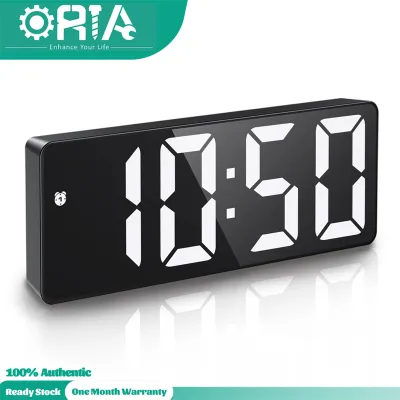
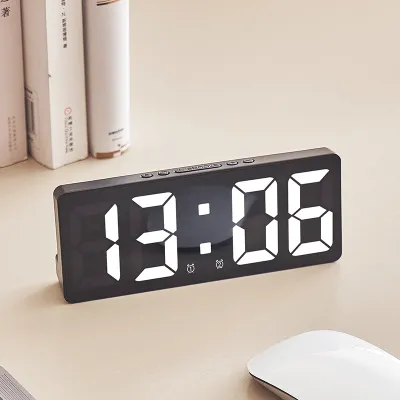
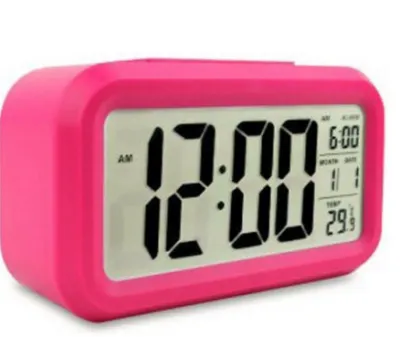
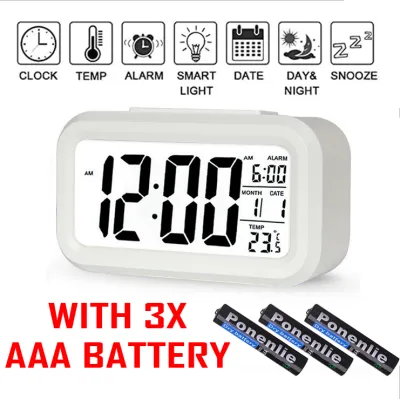
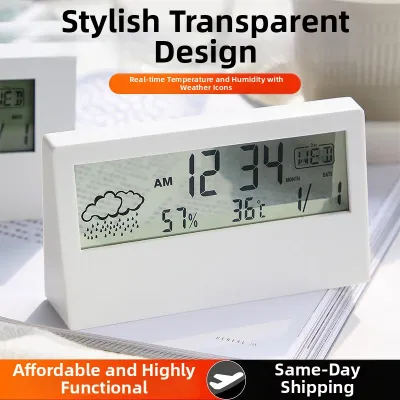
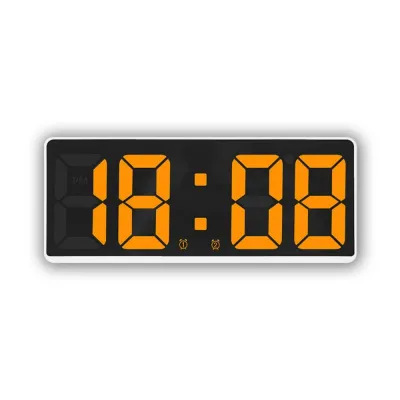
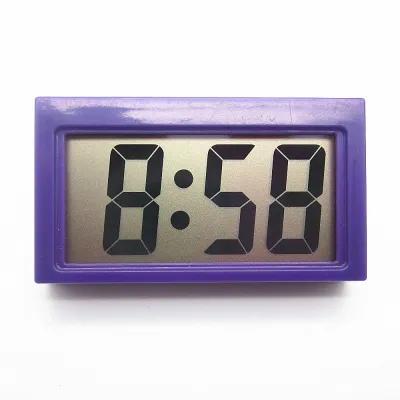
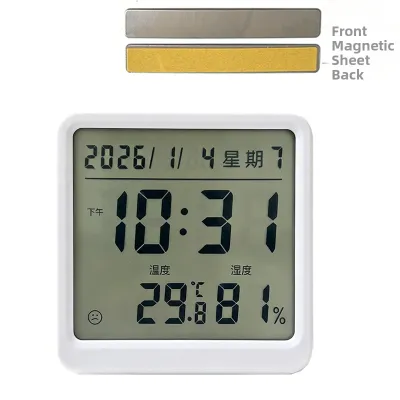
Prices are valid at publication and may change. Please refer to the product page for the latest price.
Display longevity varies significantly between LED segment displays and LCD screens. LED displays are highly visible from a distance and in the dark, making them ideal for living rooms or bedside tables. However, continuous high-brightness operation can lead to gradual dimming or uneven segment wear over several years. LCD screens, especially those without continuous backlighting, consume minimal power and do not suffer from burn-in, but they require ambient light or an active backlight to be readable in the dark. High-quality brands use UV-resistant plastics and premium polarizers to prevent LCD fading under direct sunlight.
Physical build quality directly affects a clock’s lifespan. A reliable digital clock should feature a robust housing—such as high-grade ABS plastic or brushed aluminum—that resists yellowing and structural degradation in warm, humid climates. Tactile feedback on buttons is crucial; mushy or unresponsive buttons often indicate cheap membrane switches that fail prematurely. For mains-powered units, proper internal heat dissipation is essential to prevent the internal transformer or circuitry from overheating during continuous 24/7 operation.
Matching Digital Clock Features to Your Environment
Sleep hygiene requires careful control of ambient light in the bedroom. When choosing a digital clock for the bedside table, prioritize brands that offer auto-dimming light sensors or multiple manual brightness levels. A clock that is too bright can disrupt sleep cycles, while one that is too dim is unreadable during the day. Additionally, look for progressive alarm systems that start softly and gradually increase in volume, rather than jarring, high-decibel buzzers that cause sudden sleep disruption.

Large spaces like living rooms or offices demand high-contrast, wide-angle displays. A living room clock should be easily readable from several meters away, even when viewed from an angle. Look for models that integrate ambient light sensors to automatically adjust brightness between bright daylight and dim evening conditions. Some premium models also include environmental sensors to display indoor temperature and relative humidity, which is particularly useful for monitoring air conditioning efficiency in Singapore homes.
Weigh the pros and cons of Wi-Fi-enabled smart clocks against traditional offline models. Smart clocks automatically synchronize their time via Network Time Protocol (NTP) servers, ensuring absolute accuracy without manual adjustments for drift. They may also integrate with smart home ecosystems. However, they rely heavily on a stable home network and external servers; if your Wi-Fi drops or the manufacturer discontinues cloud support, some smart features may fail. Traditional quartz-based digital clocks remain completely independent of network issues, offering straightforward, offline reliability.
Verifying Brand Trust and After-Sales Support in Singapore
A reliable brand is backed by a clear, local warranty. When purchasing a digital clock, check if the manufacturer offers a local warranty (typically 12 months) that covers electronic component failures, display defects, and power adapter issues. Ensure there is an authorized local service center or distributor in Singapore to handle repairs or replacements, avoiding the high shipping costs and long wait times associated with overseas returns.
To avoid counterfeit or sub-standard electronics, purchase only from official brand stores or authorized retailers on major online marketplaces and physical department stores. Look for listings that explicitly state they are local sellers offering genuine stock. In Singapore, mains-powered electrical appliances must comply with local safety regulations; look for the SAFETY Mark issued by the Enterprise Singapore safety authority on the power adapter to ensure the device has been tested for electrical safety.
Before finalizing your choice, look past the initial unboxing reviews. Search for long-term user feedback that mentions how the clock performs after six months or a year of continuous use. Pay attention to complaints regarding time drift (losing or gaining minutes over time), display segments failing, or buttons becoming unresponsive. A brand with consistently positive long-term reviews is far more likely to deliver a durable product.
Decision Framework: Choosing the Right Digital Clock
Choose a basic mains-powered LED clock if you need a highly visible, always-on display for a fixed location like a desk, shelf, or bedside table. Ensure the power adapter carries the local SAFETY Mark and that the unit features a battery backup slot to preserve your settings during power cuts.
Opt for a battery-operated LCD clock if you prefer a clean look without visible cables, or if you need to place the clock in an area without nearby power outlets. If absolute time accuracy and automatic updates are your priorities, select a smart Wi-Fi clock, keeping in mind that it requires a stable home network.
Before buying, verify the installation environment. If placing the clock in a high-humidity area like a kitchen or near a bathroom, ensure the casing is sealed against moisture. For wall-mounted digital clocks, verify the mounting hardware and ensure any power cables are safely routed to prevent tripping hazards. Always match the clock’s voltage requirements (220V-240V) with Singapore’s standard electrical supply.
Frequently Asked Questions (FAQ)
Do digital clocks consume a lot of electricity?
No, digital clocks are highly energy-efficient. A typical mains-powered LED digital clock draws very little power, usually between 1 to 5 watts depending on the display size and brightness level. LCD models without continuous backlighting consume even less, often running for a year or more on a single set of AA or AAA batteries. To find the exact power consumption of a specific model, check the manufacturer’s specification label or the power adapter’s input/output ratings.
Why does my digital clock lose time when the power goes out?
If your digital clock resets or loses its time settings during a power outage, it is usually because the internal backup battery is missing, depleted, or improperly installed. Many mains-powered digital clocks rely on a small auxiliary battery (such as a CR2032 lithium coin cell or standard AAA batteries) to keep the internal quartz oscillator running when primary power is lost. To prevent this, check the battery compartment annually and replace the backup battery periodically even if power outages are rare.
Are smart digital clocks more reliable than traditional ones?
Smart digital clocks offer superior timekeeping accuracy because they regularly sync with online atomic clocks via Wi-Fi. This eliminates the natural time drift (usually a few seconds per month) experienced by traditional quartz clocks. However, traditional digital clocks are often more reliable in terms of simplicity; they do not suffer from network disconnection issues, firmware bugs, or app compatibility problems. If you want a set-and-forget timepiece that works independently of your internet connection, a traditional offline digital clock is generally the more reliable choice.

Community discussion
Share your experience or ask a question. Comments are reviewed before publication.