
When shopping for a bedside reading lamp, navigating the sea of marketing claims can be overwhelming. Many brands promise “eye-safe” illumination, “zero flicker,” or “natural light simulation,” but these terms are often self-defined rather than standardized. To make an informed decision, you must look past the promotional slogans and evaluate the actual engineering behind each product.
The most reliable way to compare bedside reading lamps is to analyze their core eye care technologies against established industry benchmarks. By focusing on measurable specifications—such as driver design, spectral output, and optical diffusion—you can identify which lamp will genuinely minimize eye strain during late-night reading sessions. This approach ensures you invest in a fixture that supports both your visual health and your sleep quality.
Core Eye Care Technologies to Evaluate Across Brands
To compare different brands effectively, you need to understand the three primary pillars of eye protection: flicker mitigation, blue light management, and glare reduction. Each of these features addresses a distinct cause of eye strain and fatigue.
Products mentioned in this guide
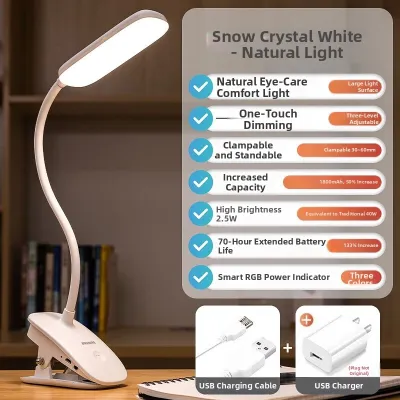
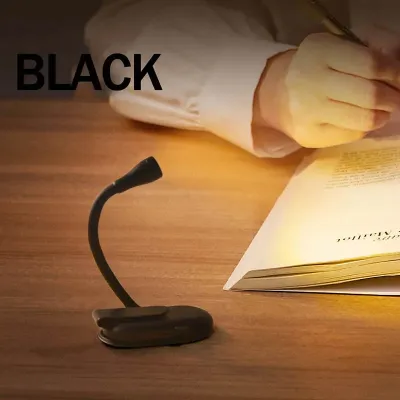
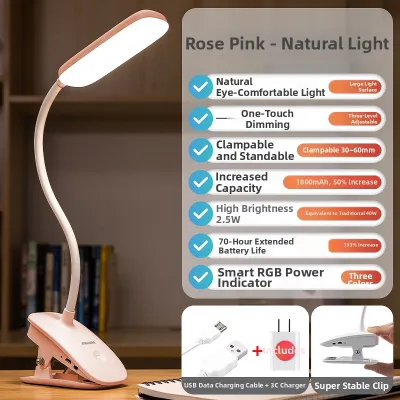
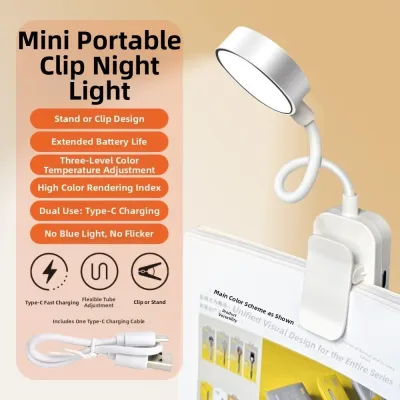
![[SG stock]Teacher day Gift Mini Book Light LED Night Light USB Rechargeable Clip On Reading Lamp Brightness Adjustable Bedroom Travel](https://img.lazcdn.com/g/p/158e98bcbacab16537c08ec35b24cce7.jpg_400x400q80.jpg_.webp)
Prices are valid at publication and may change. Please refer to the product page for the latest price.
Flicker-free lighting is critical because rapid, invisible fluctuations in light output force the muscles in your eyes to adjust continuously. This constant micro-adjustment can lead to headaches, dry eyes, and general fatigue, even if you do not consciously perceive the flickering. When evaluating lamps, look for manufacturers that specify compliance with IEEE PAR 1789, a standard that defines safe limits for high-frequency modulation in LED drivers. While some consumers attempt to detect flicker using a smartphone camera, these quick tests have significant technical limitations and cannot replace certified laboratory measurements.
Blue light filtering is another essential feature, particularly for bedside lamps used in the hours leading up to sleep. High-energy blue wavelengths can suppress the production of melatonin, disrupting your natural circadian rhythm. When comparing brands, distinguish between hardware-level spectrum shifting and simple software-level dimming. Hardware-level solutions physically alter the LED phosphor mix to emit less blue light while maintaining a bright, clear output, whereas software dimming simply lowers the overall light intensity. To verify these claims, check if the product has been tested under the IEC 62471 photobiological safety standard, which classifies lamps into risk groups from RG0 (exempt from risk) to RG3 (high risk).
Glare reduction focuses on how the light is distributed and diffused before it reaches your eyes. Direct glare occurs when the bare light source is visible, while reflective glare bounces off the pages of your book or screen. High-quality bedside lamps employ physical diffusers, honeycomb louvers, or indirect optical designs to scatter the light evenly. These mechanisms prevent harsh hot spots and ensure that the illumination remains soft and uniform across your entire reading surface.
Verifying Manufacturer Claims and Safety Certifications
Once you understand the core technologies, the next step is to verify the specifications listed on product labels and instruction manuals. Reliable manufacturers provide detailed technical data rather than vague marketing promises.

Begin by checking the Color Rendering Index (CRI), often denoted as Ra. This index measures how accurately a light source reveals the true colors of objects compared to natural daylight. For comfortable reading, aim for a lamp with a CRI of Ra 90 or higher, as lower values can make text look muddy and increase visual fatigue. Additionally, examine the Correlated Color Temperature (CCT) range, which is measured in Kelvin (K). A versatile bedside lamp should offer an adjustable CCT range, allowing you to transition from a cool, alert light during the day to a warm, relaxing light of 2700K or lower in the evening.
Safety certifications are equally important, especially for electrical appliances used close to your bed. In Singapore, look for the Safety Mark on the power adapter or the lamp itself, which indicates that the product has been tested and approved for local electrical safety standards. Whether you are investing in a premium fixture or a budget model under S$100, these certifications are crucial for preventing overheating and ensuring long-term reliability.
If you encounter a product with unclear, conflicting, or missing specifications, it is best to exercise caution. A lack of visible certification marks or a refusal by the manufacturer to provide technical data sheets is a strong signal to look elsewhere. In such cases, stop and consult the manufacturer directly or seek advice from a qualified lighting professional before making a purchase.
Matching Lamp Technologies to Your Bedside Reading Habits
Not every reader has the same needs, and the ideal lamp technology depends heavily on your preferred reading medium and sleep hygiene goals. A conditional decision framework can help you match the right features to your specific routine.
If you primarily read physical, printed books, your main priority should be high color rendering and effective glare reduction. Physical pages require sufficient contrast to make the text stand out clearly against the paper. A lamp with a high CRI and a warm-to-neutral adjustable CCT (around 3000K to 4000K) will provide the necessary contrast without casting harsh, distracting shadows. Look for models with adjustable arms so you can direct the light precisely onto the page.
For those who prefer reading on e-ink readers or backlit tablets, the requirements are different. Because these screens often have their own built-in lighting or reflective properties, you need a bedside lamp with strict hardware-level blue light filtering and a lower maximum brightness limit. This setup prevents the lamp from overpowering the screen and causing excessive reflective glare, which can quickly lead to digital eye strain.
However, you may find that neither technology profile fits perfectly if the lamp lacks independent controls. Some budget models bundle brightness and color temperature together, meaning you cannot lower the brightness without also changing the color warmth, or vice versa. This limitation forces you to compromise between the ideal light level and the correct color tone for your environment.
Another critical factor to verify is the control interface. Many modern lamps rely entirely on smart home applications or wireless connections for adjustments. While convenient, relying solely on a smartphone app to turn off or dim your light can be highly disruptive to your sleep cycle, as the bright screen of your phone can instantly wake you up. Prioritize lamps that feature physical bedside overrides, such as tactile buttons or touch-sensitive sliders on the base, allowing for quick, screen-free adjustments in the dark.
Optimizing Lamp Placement and Ergonomics for Eye Comfort
Even the most advanced eye-protection technology will fail to prevent strain if the lamp is poorly positioned. Proper physical placement and ergonomic adjustments are just as important as the light source itself.
Before purchasing, evaluate the physical dimensions of the lamp, including its arm reach, pivot points, and base stability. The lamp must fit comfortably on your bedside table without crowding other essentials. A heavy, stable base is crucial to prevent the lamp from tipping over when you adjust the angle. Multi-axis pivot points allow you to position the light head precisely, ensuring the beam is directed where you need it most.
To avoid direct glare, position the light source so that the bulb or diffuser is completely shielded from your direct line of sight when you are in your normal reading position. The light should come from the side or from behind your shoulder, rather than directly in front of your face. This positioning also helps prevent distracting shadows from being cast by your head, hands, or the book itself onto the reading material.
Finally, pay attention to the contrast between your reading light and the surrounding room. Reading with a bright lamp in a completely pitch-black bedroom creates a high-contrast environment that forces your pupils to dilate and constrict repeatedly as your eyes move across the page. To prevent this type of fatigue, adjust the lamp’s brightness to a lower, softer level that complements the ambient darkness, or use a very low ambient background light elsewhere in the room to soften the transition.
Frequently Asked Questions (FAQ)
Is blue light filtering necessary for reading physical books?
While physical books do not emit blue light themselves, they reflect the light cast by your bedside lamp. If your lamp emits high levels of blue light, that light will bounce off the white pages and enter your eyes, potentially disrupting your sleep cycle. Using a lamp with a warm color temperature (2700K or lower) or hardware-level blue light filtering helps reduce this exposure, making it easier to wind down and fall asleep after reading.
Can a standard desk lamp replace a dedicated bedside reading lamp?
A standard desk lamp can work in a pinch, but it is often not ideal for a bedside setup. Desk lamps are typically designed for larger work surfaces and may have a bulky footprint that takes up too much space on a small bedside table. Furthermore, their light distribution patterns are often optimized for downward task lighting rather than the angled, diffused illumination needed for reading in bed, which can lead to increased glare and discomfort.
How can I test a lamp for flicker at home?
You can perform a basic screening test by opening your smartphone camera and setting it to slow-motion video mode. Point the camera at the light source; if you see heavy, moving dark bands across the screen, the lamp may have a high level of low-frequency flicker. However, keep in mind that this test is not definitive, as it depends heavily on your phone’s camera sensor and shutter speed. It cannot replace professional photometric testing or certified product labels.

Community discussion
Share your experience or ask a question. Comments are reviewed before publication.