
When shopping for a desk lamp, you will encounter countless brands claiming to offer the ultimate “eye protection” or “eye-care” technology. However, visual comfort is not a vague marketing promise; it is a measurable result of specific lighting characteristics. Choosing the right lamp requires looking past brand names and evaluating verifiable technical specifications such as flicker rates, Color Rendering Index (CRI), color temperature adjustability, and glare control. By understanding these core metrics, you can select a lamp that actively minimizes eye strain and fits your specific daily activities, whether you are reading physical books, working on a computer screen, or engaging in detailed crafts.
Key Eye Comfort Technologies to Evaluate
Flicker-free technology is one of the most critical components of visual comfort. While high-frequency flicker is often invisible to the naked eye, the sensory system still detects it, which can lead to headaches, eye strain, and general fatigue during long study or work sessions. When evaluating lamps, look for models that utilize direct current (DC) dimming or high-frequency pulse-width modulation (PWM) that operates well above the thresholds identified in recognized industry risk guidelines, such as IEEE 1789. A stable, continuous light output ensures that the eye muscles do not have to constantly adjust to rapid micro-fluctuations in brightness.
The Color Rendering Index (CRI) and the spectral composition of the light source directly affect how clearly you perceive colors and contrast. CRI is measured on a scale up to 100, with higher values indicating that the light source renders colors more like natural daylight. For tasks that require high visual acuity, such as reading fine print, drawing, or sewing, a lamp with a high CRI (typically Ra 90 or above) is highly beneficial. It enhances contrast and definition, reducing the cognitive effort required to distinguish details and thereby lowering the risk of eye strain.
Products mentioned in this guide
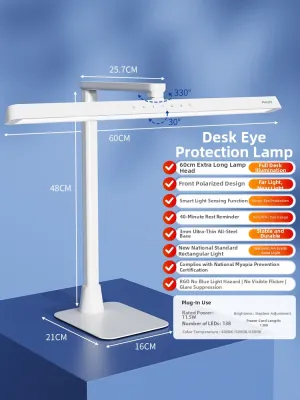
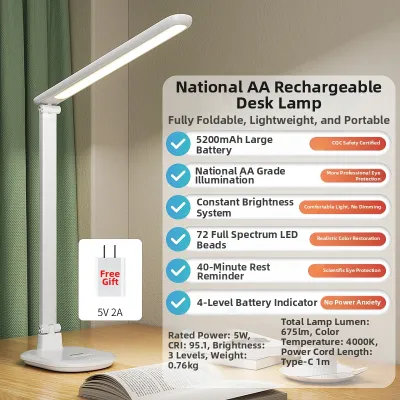
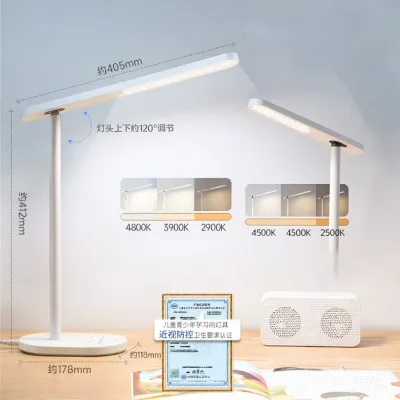
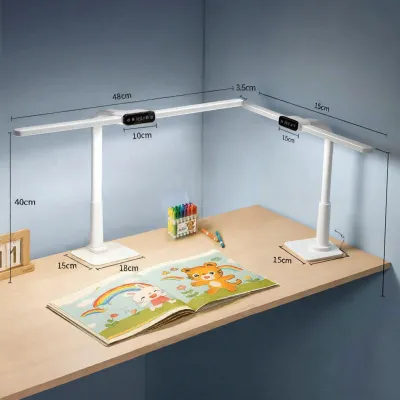
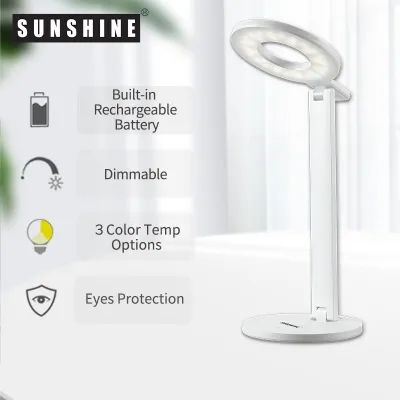
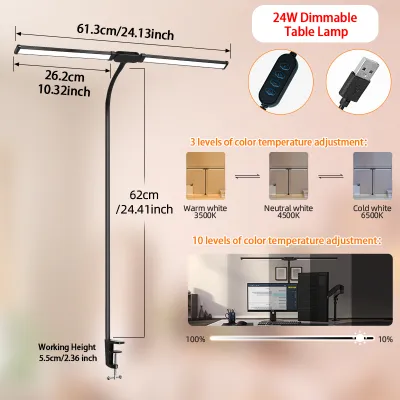
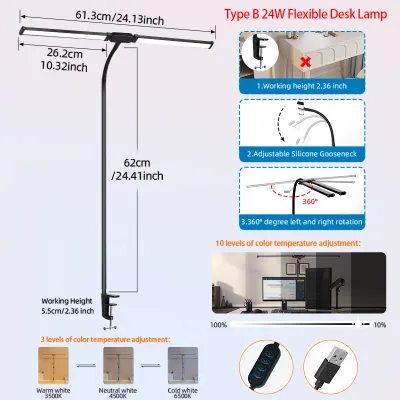
Prices are valid at publication and may change. Please refer to the product page for the latest price.
Color temperature and brightness adjustability allow you to customize your lighting environment to match both your task and the time of day. Color temperature is measured in Kelvin (K). Cooler, bluish light (around 5000K to 6500K) promotes alertness and focus, making it suitable for daytime study or detailed work. Conversely, warmer, yellowish light (around 2700K to 3000K) is gentler on the eyes in the evening and helps support natural circadian rhythms by minimizing exposure to stimulating blue wavelengths before sleep. A quality lamp should offer step-less or multi-level adjustments for both color temperature and brightness.
Glare control and light distribution are essential for preventing direct and indirect glare, which are major contributors to visual discomfort. Direct glare occurs when the light source shines directly into your eyes, while indirect glare is the reflection of light off shiny surfaces like computer screens or glossy paper. Advanced lamps address this through physical design elements, such as recessed light sources, honeycomb diffusers, or asymmetric optical designs. Asymmetric lighting directs light at an angle across the desk surface rather than straight down, illuminating your workspace without casting reflections on your monitor or shining directly into your field of vision.
How to Verify Brand Claims on Product Labels
To avoid falling for empty marketing claims, you must learn to locate and verify technical specifications on product packaging, user manuals, or official manufacturer specification sheets. Reliable manufacturers back their eye-comfort claims with independent certifications. Look for recognized electrical safety and photobiological safety marks, such as IEC 62471 (which assesses blue light hazard levels) or certifications from international testing bodies like TÜV Rheinland (which often certifies low blue light and flicker-free performance). In Singapore, ensure the lamp or its power adapter carries the local safety mark to guarantee compliance with electrical safety standards.

When reading the specification sheet, focus on concrete numbers rather than generic “eye-care” badges. Look for the specific Color Rendering Index (CRI or Ra) value, which should ideally be 90 or higher. Check the illuminance level, measured in lux, which indicates how much light actually reaches your desk surface at a specific height. A good study lamp should provide an illuminance of at least 500 lux over the central working area. Additionally, verify the input voltage and plug type to ensure compatibility with your local electrical outlets, and check the maximum wattage limit to prevent overheating.
It is important to differentiate between standardized scientific metrics and proprietary, unverified brand terms. Phrases like “natural eye technology,” “soft-glow comfort,” or “vision-shield” are often trademarked marketing terms created by brands to sound advanced, but they do not correspond to any industry-standard measurement. If a brand uses these terms, look past the promotional copy to find the actual technical data sheet. If a product listing or packaging fails to provide specific values for CRI, flicker, or photobiological safety, the claims of eye protection remain unverified.
If you find that the specifications are missing, highly inconsistent, or conflict with established safety standards, you should stop and contact the manufacturer for clarification. Using an uncertified electrical device or a lamp with poor thermal management can pose safety risks. If the manufacturer cannot provide clear documentation or if the electrical interface seems incompatible with your home setup, it is best to consult a qualified lighting professional or choose an alternative model with fully transparent, certified specifications.
Matching Lamp Features to Your Daily Tasks
Selecting the right eye protection lamp is not about finding a single “best” model, but rather matching the lamp’s specific features to your primary daily activities. If your routine involves detailed color work, crafting, painting, or reading physical books for extended periods, your priority should be a lamp with a high CRI (Ra 90 or above) and adjustable color temperature. High color rendering ensures that colors appear true to life and text stands out sharply against the page. Being able to adjust the color temperature allows you to switch to a crisp neutral white (around 4000K) for reading, which provides excellent contrast without the harshness of extreme cool light.
For those whose primary tasks are centered around a computer screen, an asymmetric, anti-glare lamp is the most effective choice. Standard desk lamps often cast light directly onto the monitor, creating a distracting veil of glare that forces your eyes to work harder to read the screen. An asymmetric lamp, such as a monitor light bar or a highly adjustable architectural swing-arm lamp, directs light downward and forward, illuminating your keyboard and documents while keeping the screen itself in a shadow zone. This setup eliminates screen reflections and balances the brightness of your physical workspace with the digital display.
If the primary user of the lamp is a child, a student, or someone highly sensitive to visual fatigue during long study sessions, you should prioritize strict flicker-free performance and certified blue-light management. Children’s eyes are more sensitive to high-energy blue light and subtle flicker, which can disrupt sleep patterns and cause early-onset eye strain. For these users, look for lamps that have achieved certified low blue light ratings (such as RG0, indicating exempt risk under photobiological safety standards) and have verified DC dimming circuitry to ensure a completely stable light output across all brightness levels.
However, a lamp may not fit your needs at all if it lacks basic adjustability, fails to provide adequate illuminance for your specific desk height, or lacks verified safety marks. A fixed-height lamp that cannot be angled may cast harsh shadows or shine directly into your eyes, regardless of how advanced its light source is. Furthermore, if a lamp does not offer dimming capabilities, it cannot adapt to changing ambient light conditions throughout the day, rendering it unsuitable for multi-purpose workspaces. Always verify that the physical dimensions and adjustment mechanisms of the lamp match your desk layout before making a decision.
Optimizing Desk Setup for Maximum Comfort
Even the most advanced eye protection lamp will fail to deliver comfort if it is positioned incorrectly on your desk. As a general rule, the light source should be positioned above your eye level but angled in a way that prevents the bulb or LED panel from shining directly into your eyes. If you are right-handed, place the lamp on the left side of your desk (and vice versa for left-handed users) to prevent your hand from casting shadows across your writing or reading material. The lamp head should be adjusted so that light is distributed evenly across your primary working area without creating hot spots of intense brightness.
Another common mistake is using a bright desk lamp in an otherwise completely dark room. This creates a high-contrast environment that forces your pupils to constantly dilate and constrict as your gaze shifts between the bright desk and the dark surroundings, leading to rapid eye fatigue. To prevent this contrast glare, always balance your task lighting with soft ambient background light. You can achieve this by keeping a ceiling light on at a dimmed level, or by using a secondary, warm ambient light source elsewhere in the room to create a balanced, low-contrast visual environment.
Finally, make it a habit to adjust your lamp’s settings to match the natural progression of daylight. In the morning and afternoon, you can use higher brightness levels and cooler color temperatures (around 4000K to 5000K) to complement natural daylight and maintain focus. As evening approaches, gradually dim the lamp and shift the color temperature to a warmer hue (around 2700K to 3000K). This reduction in blue light exposure helps signal to your body that it is time to wind down, supporting a healthy sleep cycle while still providing sufficient light for evening reading or relaxation.
Frequently Asked Questions (FAQ)
Do I need a smart lamp with automatic brightness adjustment?
A smart lamp with an integrated ambient light sensor offers significant convenience by automatically adjusting its brightness to maintain a consistent level of illumination as natural daylight fades. This is particularly useful in rooms with large windows where lighting conditions change constantly throughout the day. However, these sensors are not always perfect and can be fooled by shadows or highly reflective desk surfaces. Therefore, while automatic adjustment is a helpful feature, it is not strictly necessary as long as the lamp offers easy-to-use manual dimming controls that allow you to adjust the brightness to your personal comfort level.
Can an eye protection lamp cure or prevent myopia?
No, an eye protection lamp cannot cure, reverse, or prevent medical eye conditions such as myopia (nearsightedness). Myopia is influenced by a combination of genetic factors, prolonged close-up visual work, and a lack of exposure to natural outdoor sunlight. While a high-quality desk lamp is highly effective at reducing temporary visual fatigue, eye strain, and headaches by providing optimal illumination, it is not a medical treatment. For persistent vision concerns, progressive changes in eyesight, or comprehensive medical advice, you should always consult a qualified eye care professional or optometrist.

Community discussion
Share your experience or ask a question. Comments are reviewed before publication.