
Quick Answer: Is There a Single Best Brand for Study Lamps?
Finding the ideal LED study table lamp in Singapore involves balancing advanced optical technology with long-term physical durability. No single brand universally dominates both aspects. The market is divided between premium ergonomic specialists that invest heavily in custom optical engineering and legacy lighting manufacturers that excel in robust mechanical construction and reliable warranty support.
Premium ergonomic brands often lead the industry in specialized eye-care technologies, such as asymmetrical light distribution and automated brightness adjustment. However, these features come with a higher price tag. On the other hand, established legacy brands focus on straightforward, durable designs with proven electrical safety and long-term mechanical stability.
Rather than relying solely on brand reputation, you must verify specific model specifications to ensure the lamp fits your daily study habits. Evaluating key parameters like lux uniformity, joint materials, and local electrical certifications will help you find a lamp that protects your vision while surviving years of daily adjustment.
Products mentioned in this guide
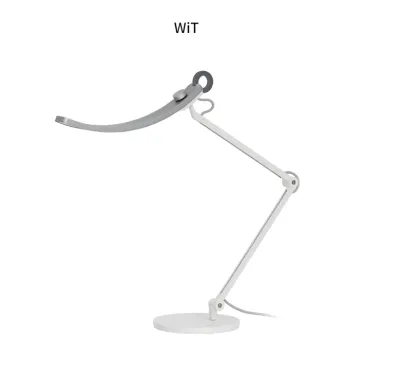
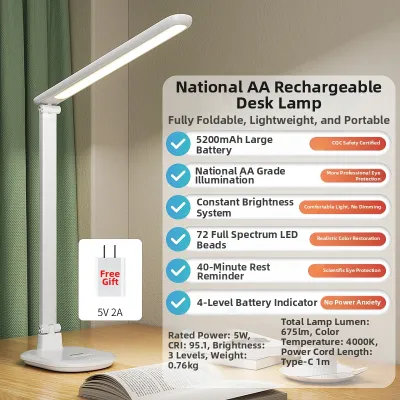
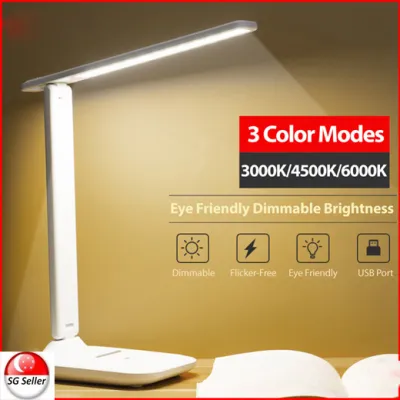
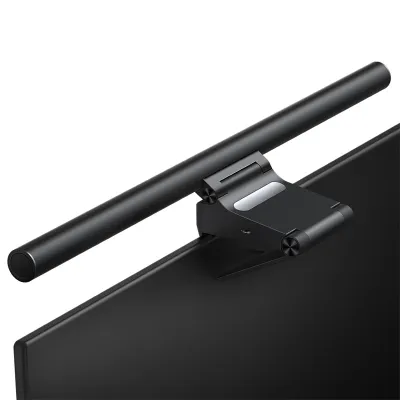
![[SG] 42cm Portable LED Study Lamp Remote Control With Timer Rechargeable Study Light Reading Light](https://img.lazcdn.com/g/p/97707d012bf47866c3aa888280cce7f2.jpg_400x400q80.jpg_.webp)
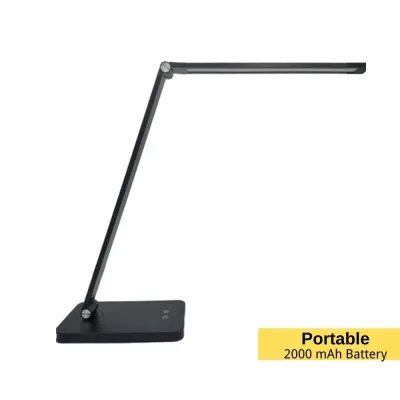
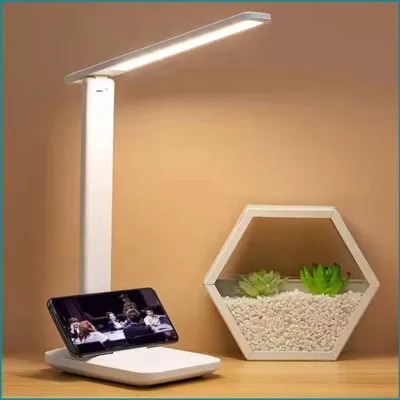
![[SG Local Stock] 2000mAh LED Table Lamp Study Foldable Desk Light Bedroom Bedside Touch Control Dimmable USB Rechargeable 台灯 CNY Gift Present](https://img.lazcdn.com/g/p/254b9aa79170e7ac80d5ab37505c1212.jpg_400x400q80.jpg_.webp)
Prices are valid at publication and may change. Please refer to the product page for the latest price.
Core Metrics for Evaluating Eye Comfort in LED Lamps
Illuminance and Uniformity
To understand eye comfort, you must look beyond simple brightness. The human eye strains when it constantly has to adjust between a highly illuminated book and a dark desk surface. This strain is measured by illuminance—the amount of light reaching a specific surface area—and uniformity, which describes how evenly that light is distributed.

When evaluating a study lamp, look for its lux rating, which measures illuminance. A high-quality study lamp should deliver between 500 and 1,000 lux on your primary reading area. More importantly, check the uniformity ratio, which compares the minimum illuminance to the average illuminance across your desk. A ratio of 0.5 or higher ensures that your eyes do not have to adapt continuously as you look from the center of your textbook to the outer edges of your study space.
Flicker and Blue Light
Many low-grade LED lamps exhibit high-frequency flicker that is invisible to the naked eye but highly fatiguing to the ocular muscles. Over hours of studying, this micro-flicker can cause headaches, eye strain, and difficulty focusing. To avoid this, look for lamps that comply with the IEEE 1789 standard for flicker-free LED drivers, which ensures the light output remains stable across all dimming levels.
Blue light hazard is another critical factor for long-term eye health. High-energy blue light in the 415 to 455-nanometer spectrum can cause photochemical damage to the retina and disrupt your natural sleep cycle. When comparing brands, look for certifications under the IEC/TR 62778 standard. A rating of RG0 (Risk Group 0) indicates that the lamp has no blue light hazard, making it safe for extended nighttime study sessions.
Glare Control and Light Distribution
Direct glare occurs when you look directly at a bright light source, while reflected glare happens when light bounces off glossy textbook pages or computer screens. Both types of glare force your eyes to squint and work harder to process text. Traditional downlighting lamps often create harsh hotspots directly under the bulb, leading to high reflective glare.
To combat this, advanced study lamps utilize asymmetrical light distribution or specialized diffusers. Asymmetrical optics project light forward and downward at a precise angle, illuminating your entire workspace while keeping the light source hidden from your direct line of sight. This design prevents light from bouncing off your computer screen and straight into your eyes, significantly reducing visual fatigue during multi-screen study sessions.
Color Rendering and Temperature
The Color Rendering Index (CRI, measured as Ra) determines how accurately a light source reveals the true colors of objects compared to natural daylight. A low CRI forces your brain to work harder to distinguish colors, which is particularly tiring when studying detailed diagrams, maps, or artwork. For study purposes, prioritize lamps with a CRI of Ra 90 or higher to ensure crisp, natural color representation.
Color temperature, measured in Kelvin (K), directly influences your alertness and cognitive focus. A neutral white light of approximately 4000K is ideal for active learning, as it promotes concentration without causing the eye strain associated with harsh blue-white light. However, for late-evening reading, a warmer color temperature between 2700K and 3000K is preferable, as it reduces blue light emission and helps prepare your body for sleep. Selecting a brand that offers adjustable color temperature allows you to tailor the light to different times of day.
Assessing Build Quality and Long-Term Durability
Materials and Base Stability
A study lamp is a physical tool that must withstand daily handling, adjustment, and the occasional accidental bump. The materials used in the base and stand dictate its physical stability. Lightweight plastic bases are prone to tipping, especially when you fully extend the lamp arm to illuminate a large desk.
Look for lamps constructed with heavy, weighted bases made of die-cast metal or steel. A heavy base acts as an anchor, allowing you to adjust the angle of the lamp head with one hand without shifting the entire unit. If you have a compact study desk, consider brands that offer alternative mounting options, such as heavy-duty desk clamps or grommet mounts, which secure the lamp directly to the desk edge and free up valuable workspace.
Joints and Articulation
The mechanical joints of an adjustable study lamp are its primary failure points. Cheap friction joints rely on plastic-on-plastic tension, which inevitably degrades, loosens, and strips over time, causing the lamp head to droop. Once a joint loses its tension, the lamp can no longer hold its position, rendering its optical features useless.
High-quality lamps utilize metal hinges, internal spring-loaded mechanisms, or counterbalanced gas struts to manage movement. These designs distribute mechanical stress evenly and allow for smooth, precise adjustments. When selecting a lamp, look for models that feature exposed tension-adjustment screws, which allow you to manually tighten the joints if they begin to loosen after years of continuous use.
Thermal Management
Although LED chips are highly efficient, they still generate a significant amount of heat at their internal electrical junctions. If this heat is not dissipated quickly, the temperature of the LED chip rises, leading to rapid degradation of the phosphor coating. This results in permanent color shifting—often turning the light a harsh blue or green—and a dramatic reduction in the lamp’s overall lifespan.
To ensure long-term performance, look for lamps that incorporate robust thermal management. Premium designs feature aluminum housings or dedicated metal heat sinks built into the lamp head. These metal components draw heat away from the sensitive LED diodes and dissipate it into the surrounding air. Fully enclosed plastic lamp heads lack this thermal efficiency, meaning their light output may dim or shift colors much faster than their metal-housed counterparts.
Safety Certifications
Electrical safety is paramount for any appliance used daily on a study desk. In Singapore, the electrical grid operates at 230V and 50Hz. Any study lamp that utilizes an external power adapter must carry the Singapore Safety Mark, complete with a unique certification number issued by Enterprise Singapore. This mark ensures the adapter has been rigorously tested to prevent short circuits, electrical shocks, and overheating.
In addition to local safety marks, international certifications provide further assurance of quality. Look for standards such as CE, UL, or RoHS on the product packaging or official manufacturer listings. The RoHS certification, for instance, guarantees that the lamp’s electronic components are free from hazardous substances like lead and mercury, ensuring a safer environment for children and students.
How Popular Brand Categories Approach Design and Features
Premium and Ergonomic-Focused Brands
Premium ergonomic brands treat study lamps as specialized precision instruments. These manufacturers invest heavily in custom optical lenses, curved light bars, and intelligent sensors that automatically adjust brightness based on ambient room light. Their physical construction is equally robust, typically utilizing high-grade anodized aluminum, heavy steel bases, and counterbalanced joints that glide smoothly into position.
While these brands offer exceptional eye comfort and mechanical longevity, they represent a significant financial investment, with prices often ranging from S$150 to over S$400. They are highly suited for professionals, university students, or anyone spending long hours at a desk with multiple monitors. The primary trade-off is the high upfront cost, though this is often offset by extended warranties and highly durable components.
Smart and Tech-Integrated Brands
Smart and tech-integrated brands focus on seamless home automation and modern, minimalist aesthetics. These lamps frequently feature touch-sensitive control panels, app connectivity, and integration with voice assistants. They allow you to program custom lighting schedules, sync the color temperature with the time of day, and control the lamp remotely.
While these smart features offer great convenience, the build quality in this segment can vary widely. To keep prices competitive, these brands often use a mix of aluminum and plastic in their structural joints, which may not match the mechanical durability of purely ergonomic brands. Before purchasing, it is wise to verify the reliability of the touch sensors and electronic components, as these can be more susceptible to failure than traditional mechanical switches.
Value and Legacy Lighting Brands
Value and legacy lighting brands offer straightforward, reliable performance focused on core lighting tasks. These manufacturers have decades of experience in electrical engineering, meaning their LED drivers are highly stable, and their basic optical diffusers provide safe, comfortable light without unnecessary frills. They prioritize mechanical simplicity, often using robust physical toggle switches and standard friction joints.
These lamps are highly cost-effective, typically priced between S$30 and S$90, making them excellent choices for general desk work, school-aged children, or budget-conscious households. While they may lack advanced features like asymmetrical light bars or automatic dimming, they offer excellent cost-to-durability ratios and reliable local customer service.
Verification Strategy
To cut through marketing claims, you should employ a practical verification strategy before buying. Avoid relying solely on the peak lux numbers highlighted on the packaging, as these are often measured directly under the center of the lamp and do not reflect real-world desk coverage. Instead, search for user reviews on e-commerce platforms to gather feedback on long-term performance.
Look specifically for reviews that mention how well the lamp head maintains its height after six months of use, whether the power adapter gets excessively hot, or if the light emits a high-pitched humming noise when dimmed. Real-world photos uploaded by buyers can also give you a clearer picture of the actual light spread and whether the base takes up too much space on a standard study desk.
Decision Framework: Choosing the Right Brand Profile for Your Needs
Choose Premium/Ergonomic Brands if:
- You spend more than four hours a day at your desk reading, writing, or drafting.
- Your setup includes a computer monitor or multiple screens, and you require precise asymmetrical light to eliminate screen glare.
- You want a heavy-duty mechanical build with metal joints that will not sag over years of frequent adjustment.
- You have the budget to invest in long-term eye health and mechanical durability.
Choose Smart/Tech Brands if:
- You prefer a minimalist, modern aesthetic and want a lamp that integrates with your existing smart home ecosystem.
- You find manual adjustments tedious and want features like automatic ambient light sensing and automated color temperature shifting.
- You primarily use your desk for a mix of digital and physical tasks and appreciate the convenience of app-based customization.
- You are comfortable with touch-sensitive panels and digital controls.
Choose Value/Legacy Brands if:
- You need a straightforward, durable workhorse for general reading, homework, or craft work.
- You prefer mechanical switches and simple physical adjustments over electronic touch panels or smart apps.
- You want a reliable, electrically certified lamp from a brand with a proven track record of safety and local warranty support.
- You are working within a specific budget and want the best possible balance of safety and affordability.
Verify First if:
- Humid Environments: If the lamp will be placed in a non-air-conditioned room or near an open window in Singapore's humid climate, check the materials carefully. Uncoated steel screws and cheap chrome finishes can rust quickly. Opt for powder-coated finishes, anodized aluminum, or high-quality engineering plastics that resist moisture degradation.
- Use by Children: If the lamp is for a young child's desk, prioritize a heavy, wide base or a secure desk clamp to prevent the lamp from being knocked over. Ensure the power cord is robust, features solid strain-relief boots at the connections, and is routed safely behind the desk to prevent tripping hazards. Always verify that the power adapter carries the Singapore Safety Mark before plugging it into your wall socket.
Frequently Asked Questions (FAQ)
Does a higher wattage always mean better eye comfort for studying?
No, wattage only measures how much electrical power the lamp consumes, not the quality or comfort of the light it produces. Modern, highly efficient LEDs can deliver bright, uniform illumination while consuming very little energy. Eye comfort depends entirely on optical design factors such as lux uniformity, glare control, and the absence of high-frequency flicker. A well-engineered 8-watt lamp with an advanced diffuse lens will provide far better eye protection than a poorly designed 15-watt lamp that produces harsh shadows and blinding glare.
How often should I replace the LED modules in a study table lamp?
Most modern LED study table lamps feature integrated LED modules that are permanently soldered to the internal circuit board and cannot be replaced like traditional light bulbs. These integrated modules are designed to last between 25,000 and 50,000 hours, which equates to over a decade of daily use under normal conditions. Because you cannot simply swap out a failed bulb, the initial build quality of the lamp—particularly its thermal management and the quality of its electrical driver—is critical to ensuring you get the full value out of your investment.
Are asymmetrical light bars better than traditional round lamp heads?
Asymmetrical light bars and traditional round lamp heads serve different study environments. Asymmetrical light bars are designed to clip onto or sit directly above a computer monitor, projecting light downward and forward at a precise angle. This completely eliminates screen reflections and direct glare, making them highly superior for digital work and screen-based studying. Traditional round lamp heads, however, cast a broader, more omnidirectional cone of light. This classic design is better suited for hands-on activities, such as drafting, sketching, reading large physical textbooks, or illuminating wide, shared desk spaces where screen glare is not a concern.

Community discussion
Share your experience or ask a question. Comments are reviewed before publication.