
Solar clip lights have become a popular, hassle-free lighting solution for Singaporean homes, offering an easy way to illuminate balconies, corridors, and garden pathways without the need for complex electrical wiring. However, navigating the sea of options on online marketplaces can be challenging, as many products carry lofty claims about brightness, battery life, and weatherproofing. To find a reliable solar light clip that truly withstands the local tropical climate, buyers must look past marketing buzzwords and focus on verifiable technical specifications, physical build quality, and sensor mechanics. Comparing these products effectively requires a systematic approach, evaluating how different housing materials, battery capacities, and motion sensor configurations perform under real-world conditions. By understanding what to look for, you can make an informed decision that balances durability, motion detection accuracy, and long-term value for your specific outdoor space.
Key Specifications to Verify Before Comparing Brands
When shopping for a solar light clip, the technical specifications listed on the product packaging or online store page serve as your first line of defense against poor-quality purchases. Start by examining the battery metrics, which directly dictate how long the light will remain operational after a day of charging. Look for the milliampere-hour (mAh) capacity; a higher mAh rating generally indicates a larger energy storage capacity, allowing the light to run longer into the night or survive consecutive cloudy days. Pay close attention to the battery chemistry as well. Lithium-ion (Li-ion) batteries are highly common and offer excellent energy density and longevity, whereas Nickel-Metal Hydride (NiMH) batteries are sometimes found in budget models but typically have lower energy density and a shorter overall lifespan. Additionally, check the solar panel type; monocrystalline silicon panels generally offer higher conversion efficiency than polycrystalline alternatives, meaning they can generate more power from the same amount of sunlight.
Given Singapore’s intense tropical climate, characterized by sudden heavy downpours and high humidity, verifying the Ingress Protection (IP) rating is absolutely critical. The IP rating consists of two digits: the first represents protection against solid objects like dust, and the second represents protection against liquids. For outdoor solar clip lights exposed to the elements, look for a minimum rating of IP65, which indicates the unit is dust-tight and protected against water jets from any angle. Models rated at IP67 offer even greater protection, capable of withstanding temporary submersion, which provides peace of mind during severe monsoon seasons. Avoid any outdoor light that does not clearly state its IP rating, as unrated enclosures are highly susceptible to water ingress, leading to rapid internal corrosion and electrical failure.
Products mentioned in this guide
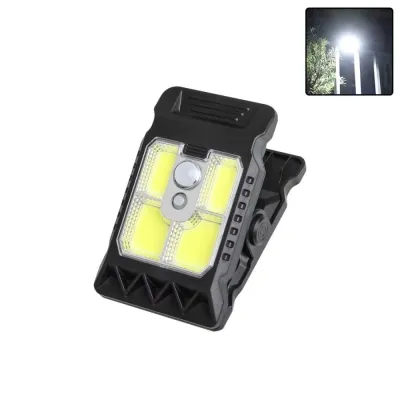
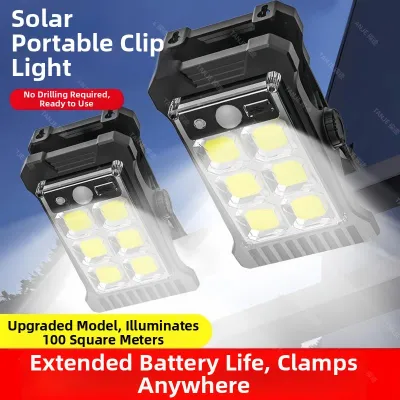
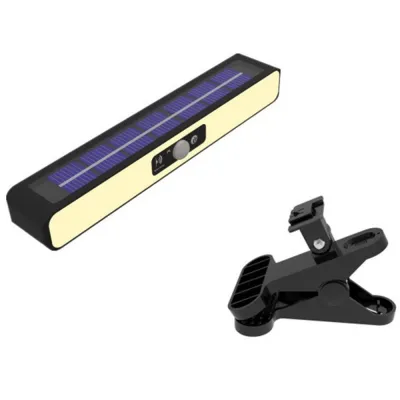
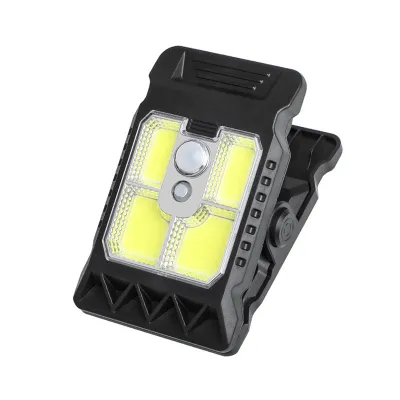
Prices are valid at publication and may change. Please refer to the product page for the latest price.
Finally, evaluate the light output and color temperature specifications to ensure the fixture meets your functional needs. Light output is measured in lumens, not watts; a decorative balcony light might only require 50 to 100 lumens, whereas a security-focused pathway light should ideally offer 300 lumens or more. Color temperature, measured in Kelvin (K), determines the visual warmth of the light. Warm white light (typically 2700K to 3000K) creates a cozy, inviting ambiance suitable for outdoor dining areas or balconies, while cool white light (5000K to 6500K) provides high-contrast, crisp visibility that is better suited for security, driveways, and task-oriented areas.
How to Evaluate Build Quality and Clip Durability
The physical construction of a solar clip light determines how well it will survive constant exposure to intense sunlight, high ambient temperatures, and heavy rain. Most consumer-grade solar clip lights feature housings made of either Acrylonitrile Butadiene Styrene (ABS) plastic or aluminum alloy. ABS plastic is lightweight, highly affordable, and resistant to physical impacts, making it a popular choice for budget-friendly models. However, prolonged exposure to ultraviolet (UV) radiation from the sun can cause low-grade plastics to become brittle, fade, or crack over time. If you choose a plastic model, verify that the manufacturer specifies the use of UV-resistant ABS or polycarbonate. On the other hand, aluminum alloy housings offer superior heat dissipation, which helps keep the internal battery and LED chips cool, thereby extending their operational lifespan. Aluminum is also inherently more robust and premium in feel, though it typically comes at a higher price point and adds weight to the fixture.

The clip mechanism itself is a critical point of failure that requires close inspection before purchase. A weak clip will allow the light to sag, slip, or fall entirely during strong winds or heavy rain. Look for clips equipped with high-tension steel springs that maintain a firm grip over years of use. The interior jaws of the clip should feature thick, textured rubberized grips; these not only prevent the light from sliding along smooth metal railings or glass panels but also protect your home’s surfaces from scratches. Additionally, check the maximum jaw width specified by the manufacturer. If your balcony railing or garden fence is thicker than the clip’s maximum opening, you will not be able to mount the light securely.
To ensure long-term outdoor survival, you must also verify the quality of the smaller structural components. Check if the assembly screws and pivot joints are made of rust-proof materials, such as stainless steel or brass, rather than cheap plated steel that will quickly rust and seize in humid environments. If the light head is adjustable, the locking joint must be sturdy enough to hold its angle without drooping under the weight of the light or the force of wind-blown rain. Reading user reviews specifically for mentions of clip breakage, sagging, or rust can provide valuable clues about real-world durability that standard spec sheets omit.
Assessing Motion Sensor Accuracy and Detection Range
A solar clip light with a motion sensor relies on a Passive Infrared (PIR) sensor to detect changes in heat signatures within its field of view. To ensure the sensor triggers reliably when you approach, you must carefully analyze its detection specifications. Most standard PIR sensors offer a detection angle of approximately 120 degrees, which is sufficient for straight pathways or narrow entryways. If you need to cover a wider area, such as a corner balcony or a broad driveway, look for models with wide-angle sensors that cover up to 180 degrees or even feature dual sensors. The maximum detection distance is another key metric; standard models typically detect motion within a range of 3 to 8 meters. Keep in mind that these maximum ranges are often measured under optimal conditions, and real-world performance can vary based on ambient temperature and the speed of the moving object.
The physical placement of your solar clip light heavily influences sensor accuracy and the occurrence of false triggers. Installing the light too high can create a blind spot directly underneath the fixture, while mounting it too low may restrict its forward range. You must also consider the surrounding environment; wind-blown tree branches, passing street traffic, or even large pets can trigger the sensor unnecessarily, draining the battery prematurely. To mitigate this, look for lights that allow you to adjust the physical angle of the sensor head independently of the solar panel, enabling you to aim the detection zone away from busy streets or moving foliage.
Furthermore, the availability of adjustable lighting modes plays a vital role in managing both utility and battery life. Many modern solar clip lights offer three distinct operating modes: a motion-activated bright mode where the light remains completely off until motion is detected, a dim-to-bright mode where the light casts a low glow continuously and switches to full brightness upon detection, and a constant-on mode that bypasses the sensor entirely. Using the motion-activated bright mode is the most energy-efficient option, ensuring the battery lasts throughout the night even after overcast days. Conversely, constant-on modes drain the battery rapidly and are generally not recommended for solar-powered fixtures unless the solar panel receives exceptional daily sunlight.
Navigating Installation Constraints and Sunlight Exposure
While the primary appeal of a solar light clip is its tool-free installation, successful operation depends entirely on proper placement and adequate sunlight exposure. Because the solar panel is typically integrated directly onto the top of the light fixture, clipping the light to a railing or gutter means the panel’s orientation is fixed. You must ensure that the chosen mounting location receives several hours of direct, unobstructed sunlight daily. Placing a solar clip light under a deep balcony overhang, beneath thick tree canopies, or on the shadow-casting side of a building will severely limit its ability to charge, resulting in dim light output and short runtimes at night. If your ideal lighting spot is permanently shaded, you may need to look for specialized models that feature a detached solar panel connected by a long wire, allowing you to mount the panel in a sunny spot while clipping the light where it is needed.
Weight distribution is another practical constraint that is easily overlooked. Because the clip mechanism supports the entire weight of the fixture, a light with a heavy head or an oversized battery compartment can create a high center of gravity. If the mounting surface is too thin or flexible, the light may tip forward, altering the angle of both the solar panel and the motion sensor. Always check the weight of the fixture and ensure the mounting structure—whether it is a metal railing, a wooden fence, or a plastic gutter—is rigid enough to support the load without bending or warping.
Safety must always remain a priority when installing temporary outdoor fixtures. Avoid clipping solar lights onto fragile structures, such as thin glass panels, decorative plaster moldings, or loose plastic sheeting, as the clamping pressure could cause damage. Do not mount clip lights in high-wind zones, such as high-rise balcony edges, without secondary safety tethers, as a strong gust could dislodge the fixture and create a dangerous falling hazard. Finally, remember that solar clip lights are designed for low-voltage, self-contained operation; never attempt to modify them to connect to fixed household wiring. If your lighting needs require permanent, high-power illumination or structural modifications, always consult a qualified professional electrician.
Decision Framework: Matching Features to Your Space
To select the ideal solar clip light, you must match the fixture’s specific features to the physical characteristics and functional requirements of your outdoor space. If your primary goal is to illuminate a broad driveway, a main entrance, or a wide garden walkway for security, prioritize a high-lumen model with a wide-angle PIR sensor. Look for fixtures that offer at least 300 to 500 lumens of cool white light to ensure maximum visibility and contrast. These models should feature a robust aluminum housing to withstand constant exposure to the elements and a high-capacity battery to support the frequent, high-power sensor triggers throughout the night.
For more intimate spaces like a small balcony, a cozy patio, or even temporary indoor ambient lighting near a sunny window, a compact, dim-to-bright model is often the superior choice. In these settings, a soft, warm white light of 50 to 150 lumens creates a relaxing atmosphere without causing harsh glare. Look for a highly sensitive motion sensor with a narrower detection angle to prevent the light from triggering every time someone moves inside the adjacent room. A lightweight ABS plastic housing is perfectly adequate for these sheltered areas, helping to keep the overall cost down while minimizing the load on delicate railings.
Before finalizing any purchase, always perform a physical compatibility check. Measure the thickness of your intended mounting surface and compare it directly against the manufacturer’s specified maximum jaw width for the clip. If the railing is too thick, the clip will not close securely; if it is too thin, the clip may lack the necessary clamping force to stay upright. Finally, conduct an honest assessment of the daily sunlight exposure at your mounting site. If the area receives less than four to six hours of direct sunlight daily, even the highest-quality solar clip light will struggle to perform reliably. In such cases, it is wiser to bypass solar options entirely and consider low-voltage wired lighting or plug-in alternatives to ensure consistent, dependable illumination.
Frequently Asked Questions (FAQ)
How do I clean the solar panel to maintain charging efficiency?
To keep your solar clip light operating at peak efficiency, you should periodically clean the solar panel to remove accumulated dust, pollen, bird droppings, and environmental residue. Simply use a soft, clean microfiber cloth dampened with plain water to gently wipe the surface of the panel. Avoid using harsh chemical cleaners, window sprays, or abrasive scrubbing sponges, as these can scratch the protective outer coating of the panel, permanently reducing its ability to absorb sunlight. Additionally, never use high-pressure water sprays or submerge the light to clean it, as the force of the water could bypass the weather seals and damage the internal electronics.
Why does my solar clip light only stay on for a few minutes at night?
If your solar clip light suffers from a short runtime, the most common culprit is insufficient daytime charging. This often happens if the solar panel has become dirty, is partially shaded by growing foliage, or if the local weather has been consistently overcast. First, try cleaning the panel and adjusting its position to maximize direct sunlight exposure. If the charging conditions are optimal, check the light’s operating mode; if it is set to a constant-on mode, switch it to a motion-activated setting to conserve power. If the light is several years old, the internal battery may have reached the end of its natural lifespan and degraded. In this case, consult the manufacturer’s instructions to see if the battery can be safely replaced with a compatible cell of the same chemistry and voltage.

Community discussion
Share your experience or ask a question. Comments are reviewed before publication.