
When shopping for a study lamp for your child, there is no single brand that universally guarantees the best eye protection across all its product lines. Many well-known manufacturers produce a wide variety of lighting products, ranging from basic decorative fixtures to highly engineered task lights. Consequently, relying solely on a brand name is not enough to ensure that a specific lamp is safe or comfortable for your child’s developing eyes.
The true quality of eye protection depends entirely on verifiable, model-specific optical parameters and independent safety certifications. To make an informed decision, parents must look past general brand marketing and carefully evaluate technical specifications such as flicker rates, colour rendering capabilities, and glare control. By focusing on these objective metrics, you can select a lamp that actively minimizes eye strain and supports healthy study habits.
Core Eye Protection Specifications to Compare
To compare different study lamp models objectively, you need to understand the key technical metrics that govern light quality. These specifications directly impact how hard your child’s eyes must work during reading, writing, and drawing sessions.
Products mentioned in this guide
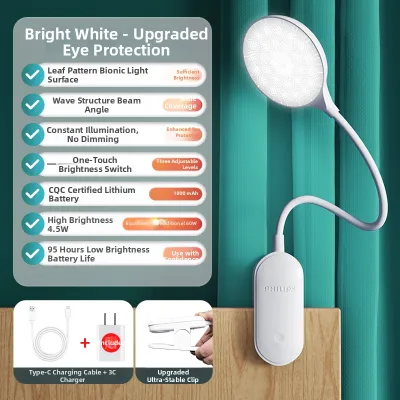
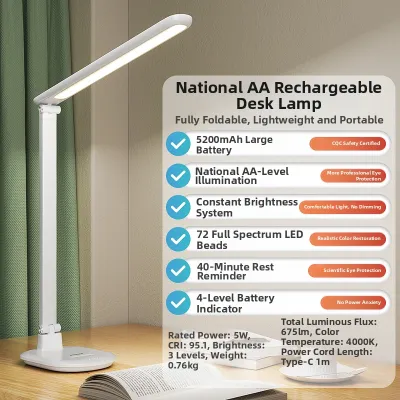
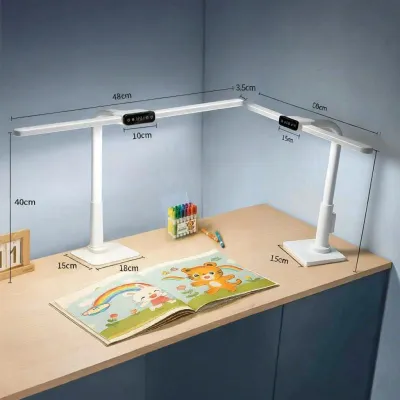
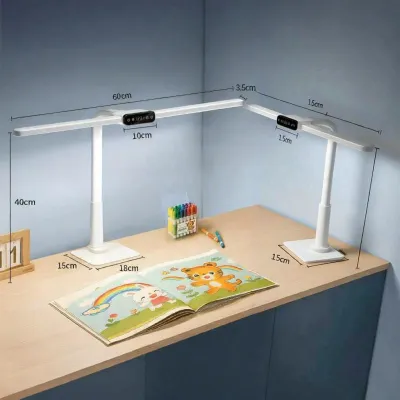
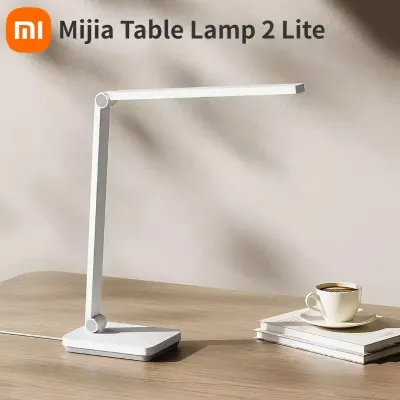
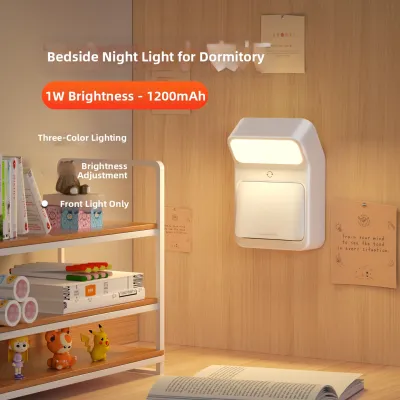
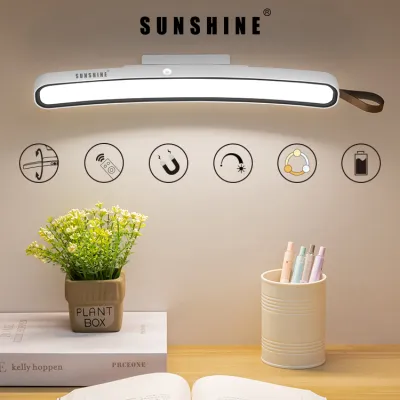
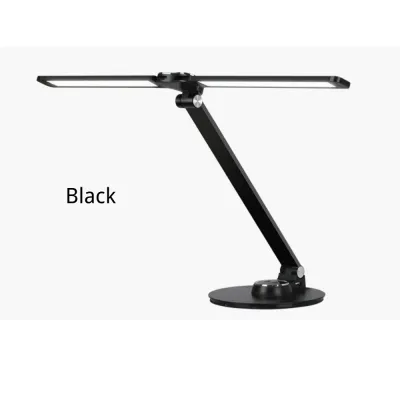
Prices are valid at publication and may change. Please refer to the product page for the latest price.
Colour Temperature
Colour temperature is measured in Kelvin (K) and describes the warmth or coolness of the light. For studying, a range between 3000K and 5000K is generally ideal, but different temperatures serve different purposes. A warmer light of around 3000K is softer on the eyes and is highly recommended for evening study sessions, as it minimizes blue light exposure that can disrupt your child’s natural sleep cycle. Conversely, a cooler light of around 4000K to 5000K mimics natural daylight, which can help enhance alertness and focus during daytime study hours. Choosing a lamp with adjustable colour temperature settings allows you to adapt the lighting to the time of day, though you should treat perceived colour temperature as a conditional preference rather than a universal performance guarantee.
Flicker-Free Technology
Flicker refers to the rapid, often invisible fluctuations in light output caused by alternating current or low-quality LED drivers. Even when flicker is imperceptible to the naked eye, it can cause the ciliary muscles in the eye to contract and dilate rapidly, leading to headaches, fatigue, and eye strain. True flicker-free technology utilizes high-quality direct current (DC) drivers to deliver a constant, stable stream of light. To perform a basic check for flicker, you can open your smartphone camera and point it at the light source. If you see dark, rolling bands moving across the screen, the lamp may have high-frequency flicker. However, keep in mind that this camera test has significant limitations due to automatic phone camera adjustments, and it cannot replace precise laboratory testing.
Colour Rendering Index (CRI)
The Colour Rendering Index, measured as Ra on a scale up to 100, indicates how accurately a light source reveals the true colours of objects compared to natural daylight. For a child’s study lamp, you should look for a high CRI, ideally Ra 90 or higher. Primary school children frequently work with heavily illustrated textbooks, coloured diagrams, maps, and art projects. A low CRI light makes colours look dull and muddy, forcing the brain and eyes to work harder to distinguish subtle colour differences, which rapidly accelerates visual fatigue.
Illuminance and Uniformity
Illuminance refers to the amount of light falling on a specific surface area and is measured in lux. Uniformity describes how evenly that light is distributed across the desk. A high-quality study lamp should provide a wide, even pool of light across the entire working area. If the center of the desk is extremely bright while the surrounding areas are dark, the child’s pupils must constantly dilate and constrict as their eyes move across the page. This continuous adjustment causes rapid eye fatigue. Look for lamps designed with wide optical heads or specialized diffusers that spread light evenly to prevent harsh hot spots and dark corners.
Certifications and Safety Labels to Verify
Because optical performance is difficult to measure at home, independent certifications and safety labels are the most reliable way to validate a brand’s eye protection and safety claims.

Electrical Safety
In Singapore, mains-powered electrical appliances must comply with strict local safety regulations. When comparing study lamps, always check the power adapter or the lamp body for the local SAFETY Mark. This certification ensures that the device has undergone rigorous testing for electrical safety, insulation, and fire hazards, giving you peace of mind during long study sessions. Additionally, always verify that the lamp’s voltage compatibility matches the local 220-240V mains supply and that you do not exceed the recommended wattage limits of the power outlet.
Photobiological Safety
Photobiological safety standards assess whether a light source poses a risk of damage to the skin or eyes, particularly from blue light exposure. Look for compliance with the international standard IEC 62471. This standard classifies lighting products into risk groups. A rating of Risk Group 0 (RG0), also known as the “Exempt Group,” indicates that the lamp poses no photobiological hazard, even during prolonged, continuous use. Avoid lamps that do not list their photobiological risk group or those rated RG1 or higher for close-up task lighting.
Performance Standards
Reputable manufacturers often seek third-party validation for their eye-care claims. Look for compliance with recognized international standards for visual comfort, such as IEEE 1789, which sets strict limits on LED flicker to protect human health. Some brands also obtain certifications from independent testing bodies like TÜV Rheinland for low blue light and flicker-free performance. These certifications provide objective, verifiable proof of a lamp’s engineering quality, far exceeding any self-declared marketing claims.
Evaluating Brand Claims and Product Packaging
When browsing online marketplaces or retail stores, you will encounter a wide array of marketing buzzwords designed to attract parents. Distinguishing between genuine engineering and clever marketing is essential for protecting your child’s vision.
Many brands use terms like “eye-safe,” “natural daylight simulation,” or “pediatrician-approved” on their packaging. These terms are often self-declared and do not guarantee superior performance. Instead of relying on these vague slogans, turn the box over or consult the user manual to find the technical specification table. Look for concrete data, such as the exact lux values at specific distances (for example, “500 lux at a height of 30 cm”) and the specific CRI rating. If a brand cannot provide these basic technical metrics, its eye-protection claims should be treated with caution.
Furthermore, do not assume that a higher price tag or a prestigious brand name automatically guarantees better optical performance. Some expensive lamps prioritize aesthetic design, premium materials, or smart home connectivity over optical engineering. Conversely, a moderately priced lamp that focuses its budget on high-quality LED drivers, advanced diffusers, and certified flicker-free components can offer significantly better eye protection for your child.
Decision Framework: Choosing the Right Lamp for Your Child
To finalize your purchase, use this practical, condition-based framework to match a study lamp to your child’s specific study habits, desk setup, and physical environment.
- Choose an adjustable, high-CRI model if: Your child frequently engages in detailed artwork, reads highly illustrated books, or shares the study desk with an adult. The high colour rendering index will ensure accurate colour perception, while the adjustable brightness and colour temperature settings allow different users to customize the light to their comfort levels.
- Choose a fixed, mid-range colour temperature model if: The lamp is strictly used for standard reading and writing in an already well-lit room. A stable, non-adjustable lamp set to a comfortable neutral white (around 4000K) provides a reliable, distraction-free light source for standard homework tasks.
- Verify first if: Your child's desk is small, cluttered, or positioned in a corner. In these scenarios, measure the available desk space and check the lamp's base size or clamp compatibility. You should also look for lamps that offer asymmetric light distribution. Asymmetric optics direct light at an angle across the desk rather than straight down, which helps prevent harsh reflections and glare on computer screens, tablets, or glossy textbook pages.
- Stop and consult a professional if: Your child has a diagnosed visual impairment, persistent eye strain, or specific medical conditions affecting their vision. In these cases, do not rely on standard consumer study lamps. Seek professional guidance from an optometrist or ophthalmologist for tailored, medical-grade lighting recommendations.
- Installation and Safety Boundaries: If you are considering fixed-wiring options, wall-mounted study lights, or suspended fixtures to save desk space, always isolate the power supply before beginning any installation. Follow the manufacturer's instructions carefully. For any fixed electrical wiring, work at height, or complex installations, always hire a licensed electrical worker or a qualified professional to ensure safety and compliance with local building codes.
Frequently Asked Questions (FAQ)
Does a higher wattage mean better eye protection for kids?
No, wattage is simply a measure of how much electrical power the lamp consumes, not the quality or quantity of light it produces. Modern LED study lamps are highly energy-efficient and can produce high levels of brightness with very low wattage. To evaluate eye protection, ignore the wattage and focus instead on lumens, which measure the total light output, and lux, which measures the intensity of light falling on the desk surface. A lamp that provides the correct lux level with lower wattage is simply more efficient, not less protective.
Are rechargeable study lamps safe for long study sessions?
While rechargeable study lamps offer excellent portability and convenience, they may not be the best choice for primary, long-duration study sessions. As a rechargeable battery drains, the voltage supplied to the LEDs can drop, causing the light output to dim or the colour temperature to shift gradually. This gradual dimming can strain a child’s eyes as they struggle to adjust to the changing light levels without realizing it. For a dedicated study desk where your child spends hours reading and writing, a mains-powered lamp is highly recommended to ensure a consistent, stable, and uninterrupted supply of high-quality light.

Community discussion
Share your experience or ask a question. Comments are reviewed before publication.