
Quick Answer: Matching Study Lamp Brands to Your Budget and Needs
Choosing the right table lamp (台灯) in Singapore requires balancing your specific study habits, desk space, and budget. High-performing study lamps generally fall into three distinct categories: specialized eye-care brands that prioritize optical precision and physical adjustability, traditional general lighting brands that offer reliable baseline illumination at an affordable price, and smart or tech-integrated brands that emphasize automation and app connectivity.
The ideal choice is highly conditional. Intense, multi-hour study sessions or professional design work demand specialized eye-care lamps with superior glare control and high color rendering. Casual reading or secondary desk tasks are well-served by budget-friendly traditional options. If you prefer automated routines, such as lights that dim naturally as the evening progresses, smart brands offer excellent value. Ultimately, the best combination of build quality and lighting performance depends on your specific desk setup, typical usage duration, and budget. Prioritizing your primary activity will help you avoid overpaying for unnecessary smart features or underinvesting in critical eye-protection technologies.
Decoding Lighting Performance: Metrics That Actually Matter
To move beyond subjective marketing claims, you must understand the technical metrics that define high-quality illumination. The first critical metric is illuminance, measured in Lux, which quantifies the intensity of light hitting your desk surface. For standard reading and writing, a central illuminance of 500 to 1000 Lux is recommended. However, raw brightness is only half the equation; uniformity is what prevents eye fatigue. Uniformity is the ratio of minimum illuminance to average or maximum illuminance across the task area. A low uniformity ratio means your eyes must constantly adjust as you look from the bright center of your desk to the darker edges. Look for lamps that specify a uniformity ratio close to 1:1.2 or 1:1.5 across a standard 30cm x 50cm work zone.
Products mentioned in this guide
![[SG Local Stock] 2000mAh LED Table Lamp Study Foldable Desk Light Bedroom Bedside Touch Control Dimmable USB Rechargeable 台灯 CNY Gift Present](https://img.lazcdn.com/g/p/254b9aa79170e7ac80d5ab37505c1212.jpg_400x400q80.jpg_.webp)
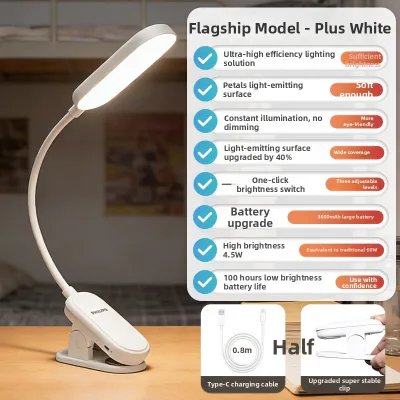
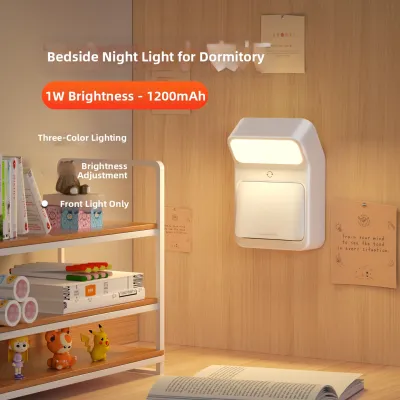
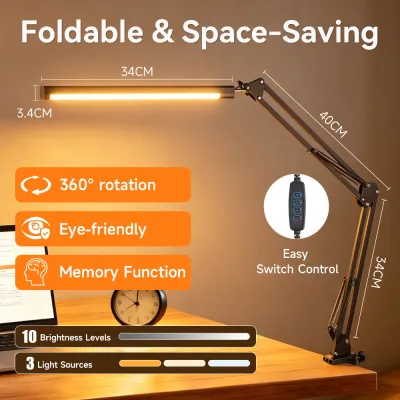
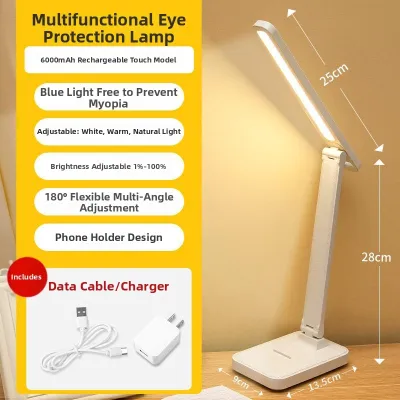
Prices are valid at publication and may change. Please refer to the product page for the latest price.

Color temperature, measured in Kelvin (K), determines the color appearance of the light. Cooler light (around 4000K to 5000K) promotes alertness and focus by mimicking daylight, making it ideal for intensive study. Warmer light (under 3000K) is gentler on the eyes in the evening, helping the body wind down. Alongside color temperature, the Color Rendering Index (CRI, measured in Ra) indicates how accurately a light source reveals the true colors of objects compared to natural daylight. For studying, a CRI of 90 (Ra 90) or higher is highly recommended to reduce eye strain, especially when reading colored diagrams, textbooks, or working on design projects.
Invisible high-frequency flicker from low-quality LED drivers can cause headaches and eye strain over prolonged use. When evaluating table lamps, verify if they meet recognized flicker standards, such as IEEE 1789, or carry certifications indicating “flicker-free” performance. Similarly, blue light exposure can disrupt sleep cycles and cause retinal fatigue. Look for products certified with a Photobiological Safety rating of RG0 (Exempt Group), which indicates the lowest possible risk of blue light hazard under standard operating conditions.
Assessing Build Quality and Ergonomics for Local Desks
The physical build of a table lamp directly affects its longevity and safety. High-quality study lamps often utilize aluminum or magnesium alloy housings for the lamp head. LEDs generate localized heat, and efficient heat dissipation is critical; metal housings act as effective heat sinks, drawing warmth away from the diodes to preserve their lifespan and maintain stable light output. Conversely, cheaper plastic housings can trap heat, accelerating LED degradation and potentially causing the plastic to become brittle or discolored over time.
Ergonomics rely heavily on the mechanical joints and tension dampers within the lamp’s arm. A well-constructed arm should allow smooth, multi-axis adjustments so you can position the light source precisely where needed without casting shadows. High-quality tension dampers prevent the lamp head from sagging over time. When evaluating a lamp, check whether the joints are reinforced with metal screws or custom tension adjustments, as friction-only plastic joints tend to wear down and fail after repeated adjustments.
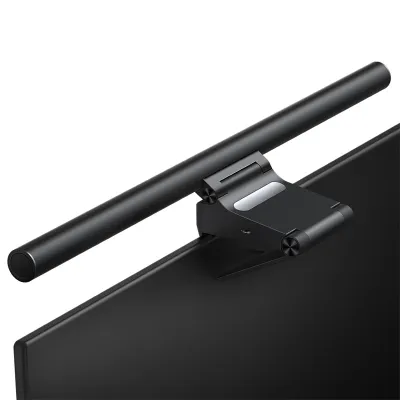
In Singapore, where HDB bedrooms and study nooks often feature compact desks, the lamp’s physical footprint is a vital consideration. A heavy, weighted base prevents the lamp from tipping over when the arm is fully extended, but it occupies valuable desk real estate. To maximize workspace, consider lamps that offer alternative mounting options, such as heavy-duty desk clamps or integrated monitor-clip designs. A clamp-on base secures the lamp to the edge of the desk, freeing up space for textbooks, laptops, and writing materials.
Brand Tiers: What to Expect at Different Price Points
Entry-Level and General Lighting Brands
Entry-level and general lighting brands typically occupy the lower price bracket in Singapore, ranging from S$20 to S$60. These lamps are highly accessible and focus on delivering basic, direct illumination. Physically, they rely heavily on lightweight plastic constructions and simple, single-jointed arms. While they are perfectly adequate for casual reading or occasional desk work, they often lack advanced optical diffusion systems, which can result in harsh glare and visible hot spots on glossy paper. Additionally, their physical controls are usually limited to basic on/off switches or a few stepped brightness levels, without fine-grained control over color temperature or automatic dimming.
Premium Specialized Eye-Care Brands
Premium specialized eye-care brands represent a significant step up, typically priced from S$150 to over S$400. These manufacturers focus heavily on optical engineering to minimize eye strain during long study sessions. You can expect advanced features such as asymmetrical light distribution, which casts light forward across the desk rather than directly down, preventing screen reflections and direct glare. They also incorporate sophisticated multi-layered diffusers, such as honeycomb lenses, to distribute light evenly. The build quality at this tier is exceptionally robust, utilizing anodized aluminum, heavy steel bases, and highly adjustable multi-axis counterbalanced arms that maintain their position perfectly over years of daily use.
Smart and Tech-Integrated Brands
Smart and tech-integrated brands bridge the gap, usually retailing between S$70 and S$200. These lamps prioritize modern connectivity, automation, and smart home integration. Common features include built-in ambient light sensors that automatically adjust the lamp’s brightness based on surrounding room conditions, app-based scheduling, and compatibility with voice assistants. Many also include convenient additions like integrated USB charging ports or wireless charging pads in the base. While these smart features offer immense convenience, buyers should carefully evaluate whether the underlying optical quality—such as color rendering index and light uniformity—matches that of dedicated eye-care brands at a similar price point, as some smart models may compromise slightly on raw optical performance to keep costs competitive.
The Pre-Purchase Checklist: Safety, Power, and Space
When purchasing a table lamp online, particularly from international sellers on e-commerce platforms, it is vital to verify the electrical specifications. Singapore operates on a nominal supply voltage of 230V at 50Hz. Ensure the lamp’s power adapter is rated for this voltage range to prevent electrical damage or fire hazards. Additionally, confirm that the lamp comes with a local Type G 3-pin plug, or includes an approved, safe adapter. Avoid using uncertified or loose travel adapters for long-term, high-draw appliances.
In Singapore, mains-powered electrical accessories, including the AC/DC power adapters supplied with table lamps, are controlled goods that require a valid Safety Mark. This mark indicates that the adapter has been tested and certified to meet local safety standards, protecting against short circuits, overheating, and electrical shocks. Before finalizing your purchase, look for the distinctive Safety Mark logo on the product listing or the adapter itself. If the lamp is powered via a standard USB port, ensure you connect it to a reputable, safety-certified USB wall charger.
Before buying, measure your desk layout carefully. Compare the lamp’s maximum height, arm reach, and base dimensions against your setup. If you use a large desktop monitor, the lamp head must be tall enough or adjustable enough to clear the top of the screen to avoid casting distracting shadows or creating screen glare. Similarly, if your desk is positioned under overhead shelving or a bunk bed, verify that the lamp’s arm has sufficient vertical clearance to articulate freely without hitting obstructions.
Final Verdict: How to Make Your Choice
- Choose a Premium Eye-Care brand if… you or your children spend more than three to four hours daily reading, writing, or studying at a desk. The investment in superior optical diffusers, high CRI (90+), and asymmetrical light distribution is highly effective at reducing long-term eye strain and fatigue.
- Choose a Smart or Tech-Integrated brand if… you want a seamless desk setup with automated brightness adjustments that adapt to changing daylight, or if you value app control, scheduling, and built-in charging ports for your devices.
- Choose an Entry-Level or General brand if… your desk usage is casual, brief, or primarily serves as secondary ambient lighting, and you prefer a straightforward, cost-effective solution without advanced features.
- Verify first if… the lamp’s power adapter carries the mandatory local Safety Mark, the plug type matches Singapore's Type G sockets, and the physical dimensions align with your desk clearance and monitor height. If you are unsure about electrical compatibility or installation requirements, consult the manufacturer's official guidelines or a qualified professional.
Frequently Asked Questions (FAQ)
Do all table lamps in Singapore need a Safety Mark?
In Singapore, the low-voltage lamp body itself (which often runs on 12V or 24V DC) typically does not require a Safety Mark. However, the mains-powered AC adapter or power plug that connects the lamp to your 230V wall socket is classified as a Controlled Goods item. Therefore, the power adapter must carry a valid Safety Mark issued by the local authority to ensure it has passed rigorous electrical safety testing. When purchasing parallel imports or buying from overseas online marketplaces, always check the adapter carefully to verify it complies with local safety regulations.
Is a higher wattage always better for study lamps?
No, a higher wattage is not a reliable indicator of a better study lamp. Wattage simply measures the amount of electrical power the lamp consumes, not the amount or quality of light it produces. Modern LED technology is highly energy-efficient, meaning a high-quality 10-watt LED lamp can produce the same or greater brightness (measured in Lumens) as an older, less efficient lamp with a much higher wattage. When choosing a table lamp, you should ignore raw wattage and instead focus on metrics that directly impact eye comfort, such as illuminance (Lux) on your desk surface, high Color Rendering Index (CRI), and effective optical diffusion.

Community discussion
Share your experience or ask a question. Comments are reviewed before publication.