
Using a decorative mirror is one of the most effective design strategies to instantly make a compact home feel open, bright, and expansive. By reflecting both natural light and interior views, a strategically placed mirror tricks the eye into perceiving double the actual floor area. In compact urban environments like Singapore, where HDB flats and condominiums often feature tight entryways, narrow corridors, and cozy living areas, selecting the right mirror is more than a styling choice—it is a spatial necessity. Rather than focusing on specific brand names that may change their collections seasonally, the key to success lies in identifying specific space-enhancing design features, verifying material quality, and ensuring safe installation. This guide outlines how to evaluate mirror designs, choose the right sourcing channels, and safely mount your selection to transform your living space.
Key Design Features That Amplify Small Spaces
To maximize the spatial impact of a decorative mirror, you must look beyond its basic reflective surface and analyze how its design interacts with the surrounding room. Different styles, shapes, and frames alter the visual weight of a wall, influencing how light and depth are perceived.
Frameless and Minimalist Edges
Frameless mirrors are highly effective for creating an uninterrupted visual flow. By eliminating a heavy border, the mirror blends seamlessly into the wall, making the transition between the physical room and its reflection almost invisible. This lack of visual bulk is particularly beneficial in tight spaces like narrow hallways or small bathrooms, where a thick frame would otherwise crowd the wall and make the area feel more confined. If you prefer a touch of detail without adding bulk, a beveled-edge mirror offers a subtle, polished border that catches and refracts light beautifully without disrupting the illusion of continuous space.
Products mentioned in this guide
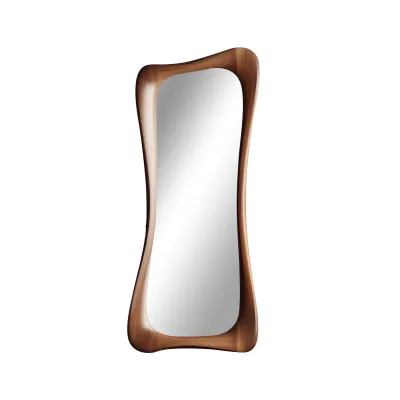
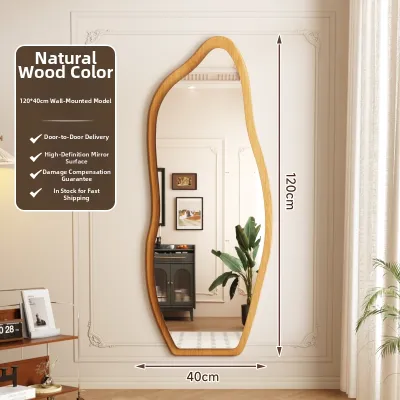
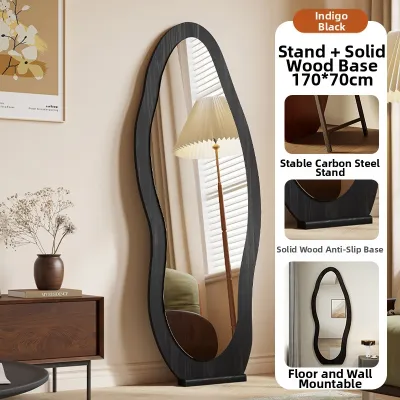
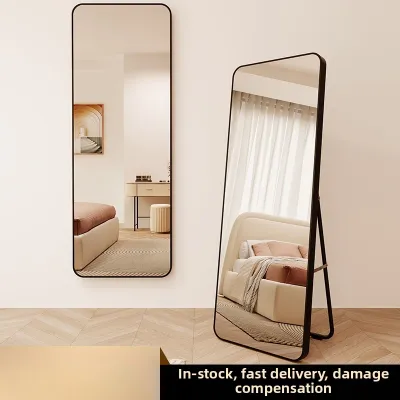
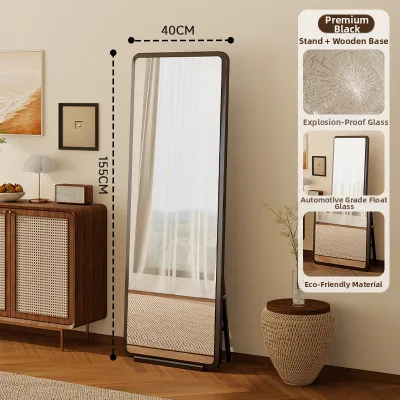
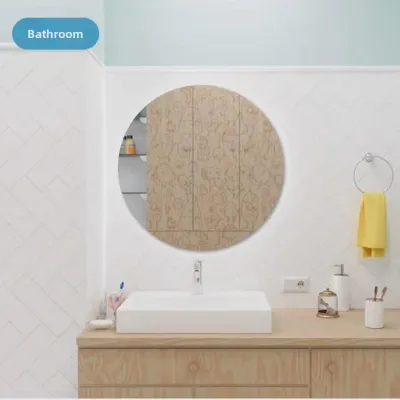
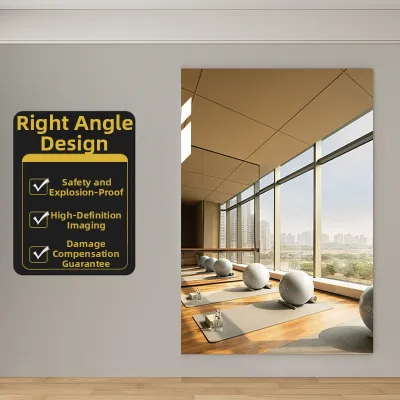
Prices are valid at publication and may change. Please refer to the product page for the latest price.
Oversized and Floor-Leaning Styles
An oversized mirror that extends vertically can dramatically alter the perceived height of a room. Floor-leaning mirrors, also known as leaner mirrors, are excellent for this purpose because they draw the eye upward, making low ceilings feel significantly higher. Because they rest on the floor and lean against the wall, they do not require complex wall-mounting hardware, making them a flexible option for renters or those hesitant to drill into structural walls. The sheer scale of a large mirror creates a powerful focal point that opens up the entire room, making the floor area appear to extend far beyond its physical boundaries.
Strategic Shapes and Grids
The shape of a mirror plays a crucial role in softening the rigid, boxy angles common in modern apartments. Arched and round mirrors introduce organic curves that break up the harsh lines of rectangular rooms, creating a sense of softness and fluid movement. Alternatively, a grid of smaller mirrors—often styled to look like a multi-pane window—can create the illusion of an extra window looking out into another room or garden. This window-pane effect adds architectural interest and depth, making a solid wall feel like an opening to an adjacent space.
Placement and Lighting Synergy
A mirror’s ability to amplify space is directly tied to what it reflects and how it interacts with light. Placing a mirror directly opposite a window allows it to capture natural daylight and bounce it deep into the darker corners of the room, instantly brightening the entire layout. If natural light is limited, positioning a mirror to reflect an attractive artificial light source, such as a pendant light or a warm wall sconce, can double the ambient illumination. When planning placement, always consider the reflection itself; ensure the mirror reflects an uncluttered, visually pleasing view rather than a busy storage area or utility zone, as reflecting clutter will only make the space feel more crowded.
How to Evaluate Mirror Brands and Retailers
When shopping for a decorative mirror, it is easy to be swayed by aesthetic appeal alone. However, the structural integrity, glass quality, and manufacturing standards of the mirror are what determine its longevity and safety in your home.

Glass Quality and Clarity
Not all mirror glass is created equal, and low-quality glass can result in a distorted reflection that ruins the illusion of space. When evaluating brands, look for options made with low-iron glass. Standard glass contains iron impurities that give the reflection a subtle green tint, which can dull the reflected light and make the room feel less vibrant. Low-iron glass, often referred to as high-clarity or HD glass, offers exceptional color accuracy and maximum light transmission, ensuring a bright, true-to-life reflection. Additionally, inspect the mirror from various angles to ensure there is no warping or distortion, which is a common issue in thinner, lower-grade glass sheets.
Customization Capabilities
Compact homes often feature awkward layouts, such as narrow structural pillars, sloped ceilings, or tight niches that cannot accommodate standard off-the-shelf mirror sizes. Brands and retailers that offer custom fabrication or made-to-measure services are highly valuable in these scenarios. A custom-cut mirror can be tailored to fit a specific wall perfectly, such as a full-height mirror in a dining nook or a custom-shaped arch for an entryway. This bespoke approach ensures that no space is wasted and that the mirror integrates seamlessly with your home’s unique architectural features.
Backing and Durability
The environment in which you place your mirror dictates the level of protection it requires. For mirrors placed in high-humidity areas like bathrooms or near open kitchens, it is essential to verify that the backing has a moisture-resistant coating. Without this protection, moisture can penetrate the silver reflective layer, leading to oxidation, which manifests as unsightly black spots or desilvering around the edges. Furthermore, high-quality mirrors should feature a safety film backing. This adhesive layer ensures that if the mirror is accidentally impacted and breaks, the glass shards remain stuck to the backing rather than shattering across the floor, preventing injuries.
Warranty and After-Sales Support
A reputable mirror brand or retailer should stand behind the quality of their products with clear warranty policies. Look for warranties that specifically cover manufacturing defects, such as premature desilvering, frame warping, or joint separation. Because mirrors are fragile and highly susceptible to damage during transit, it is also crucial to clarify the retailer’s delivery policy. Ensure they offer a guarantee against transit damage, allowing you to inspect the mirror upon delivery and secure a replacement immediately if any chips, cracks, or scratches are detected.
Where to Source Space-Enhancing Mirrors in Singapore
Finding the perfect decorative mirror in Singapore involves exploring a variety of retail channels, each offering distinct advantages depending on your budget, design preferences, and customization needs.
Established Home Furnishing Retailers
For those looking for immediate visual impact and trendy designs, large home furnishing showrooms across Singapore are an excellent starting point. These retailers offer a wide selection of ready-made mirrors in popular styles, such as minimalist metal frames, rustic wooden borders, and trendy organic shapes. The primary advantage of buying from established showrooms is convenience; you can view the mirrors in styled room settings to visualize how they look in a home environment, and you can often take the product home the same day or arrange quick delivery. However, these off-the-shelf options are limited to standard sizes, which may not fit perfectly into tight or unusually shaped spaces.
Custom Glass and Mirror Fabricators
If you want to maximize a specific wall with a seamless, wall-to-wall, or floor-to-ceiling mirror, local custom glass fabricators are the ideal choice. These specialists can measure your space precisely, cut the glass to your exact specifications, and handle the complex installation process. Custom fabricators are particularly useful for creating large-scale mirrored walls in dining areas or home gyms, which can make a small room feel twice its actual size. While custom fabrication generally requires a higher investment and longer lead times than ready-made options, the perfect fit and professional finish are often worth the extra cost for long-term spatial enhancement.
Boutique Interior Decor Stores
For homeowners seeking a unique statement piece that doubles as functional art, boutique decor stores and independent design shops offer curated selections of high-end decorative mirrors. These mirrors often feature artisanal frames, hand-finished details, or unusual geometric shapes that serve as a striking focal point in an entryway or living room. While boutique options tend to be more expensive, they add a layer of personality and sophistication to a compact home, ensuring your mirror is not just a tool for reflection but a key element of your interior design.
Online Marketplaces vs. Physical Showrooms
Online marketplaces offer unparalleled convenience and a vast array of designs at competitive price points. However, purchasing a mirror online carries inherent risks, as you cannot physically inspect the glass quality, frame finish, or true scale before buying. To mitigate these risks, look for online sellers with high ratings, detailed customer reviews with photos, and robust return policies. Whenever possible, visit a physical showroom to inspect the mirror in person. This allows you to verify the clarity of the reflection, check for any distortion, feel the weight of the frame, and ensure the color matches your existing decor before making a final decision.
Installation and Safety Checks for Compact Homes
Installing a large decorative mirror requires careful planning and execution, especially in high-rise residential buildings like HDB flats and condominiums where wall structures and building guidelines vary. Ensuring structural safety is paramount to prevent accidents and damage to your property.
Wall Type Identification
Before mounting any mirror, you must identify the type of wall you are working with, as this determines the load-bearing capacity and the type of hardware required.
- Structural Concrete Walls: Common in HDB flats and condo perimeter walls, these are highly solid and can support heavy, oversized mirrors. They require a hammer drill, masonry drill bits, and heavy-duty wall plugs.
- Drywall and Gypsum Board Partitions: Often used to divide rooms or create false walls, these have limited load-bearing capacity. Heavy mirrors should never be hung directly onto drywall without locating the underlying timber or metal studs for secure anchoring.
- Hollow Block or Brick Walls: These require specialized anchors that expand inside the hollow cavities to distribute the weight safely.
Mounting Hardware and Adhesives
Using the correct mounting hardware is critical to keeping your mirror securely on the wall. For heavy mirrors, standard picture hooks are insufficient. Instead, opt for heavy-duty wall anchors, toggle bolts, or French cleats. French cleats are particularly effective for large mirrors because they distribute the weight evenly along a horizontal bracket, ensuring the mirror hangs flush against the wall without tilting forward. If you are installing a frameless mirrored wall, professional-grade mirror mastic (adhesive) must be used in conjunction with mechanical supports. Never use standard construction adhesives, as the chemicals can corrode the mirror’s silver backing over time, causing dark spots and structural failure.
Professional Installation Boundaries
While small to medium-sized mirrors can be a straightforward DIY project, large, heavy, or complex installations should be left to qualified professionals. If your mirror weighs more than 15 kilograms, requires drilling into hard concrete at height, or involves mounting a backlit mirror with fixed electrical wiring, hiring a professional installer is highly recommended. For backlit mirrors, ensure the installer is a licensed electrician who can safely isolate the power, verify the voltage, and ensure the installation complies with local electrical safety standards, especially in damp environments like bathrooms.
Pre-Installation Verification
Before commencing any drilling, always consult your building management or HDB guidelines regarding renovation and drilling restrictions. Some condominiums have strict rules about drilling into structural columns or shared walls. Additionally, use a reliable stud finder and wall scanner to check for hidden water pipes and electrical conduits behind the wall to avoid costly and dangerous accidents. Taking these precautionary steps ensures a smooth, safe, and long-lasting installation that enhances your home without compromising structural integrity.
Frequently Asked Questions (FAQ)
Can a mirror be too large for a small room?
While the primary goal of using a mirror in a compact space is to amplify the area, it is possible for a mirror to overwhelm a room if not proportioned correctly. A mirror that is too large can create visual confusion, making the room feel chaotic rather than spacious, especially if it reflects a cluttered area. To maintain balance, ensure there is adequate negative space around the mirror—leave at least 10 to 15 centimeters of exposed wall on either side of a wall-mounted mirror. This provides a visual frame and breathing room, allowing the mirror to enhance the space without dominating the entire aesthetic.
Do framed or frameless mirrors work better for making spaces look bigger?
Both styles can work effectively, but they achieve different spatial effects depending on your interior design. Frameless mirrors offer a seamless, minimalist look that blends into the wall, creating an uninterrupted reflection that maximizes the illusion of continuous space. This is ideal for modern, clean-lined interiors. On the other hand, framed mirrors can also enhance space if the frame is thin, light-colored, or made of a reflective material like polished chrome or brass. A thin frame adds structure and depth, drawing the eye into the reflection like a picture frame, without adding excessive visual weight to the wall.
How do I clean and maintain large decorative mirrors without streaking?
To keep your mirrors crystal clear and highly reflective, avoid using harsh, ammonia-based glass cleaners, which can seep behind the edges and damage the silver backing over time. Instead, use a clean, lint-free microfiber cloth slightly dampened with warm water or a specialized, non-ammonia glass cleaner. Wipe the mirror in a continuous S-pattern from top to bottom to prevent streaks. Always dry the edges thoroughly with a separate dry microfiber cloth to prevent moisture from sitting on the seams, which is the primary cause of edge desilvering and black spots.

Community discussion
Share your experience or ask a question. Comments are reviewed before publication.