
Selecting the right light holder is a fundamental step in ensuring your home lighting is both functional and safe. The specifications printed on an E27 light holder—such as voltage limits, maximum wattage, and material composition—are not mere technical jargon. They serve as critical safety boundaries that dictate which bulbs you can safely install and where the holder can be positioned.
Understanding these markings helps prevent electrical hazards, premature bulb failure, and potential fire risks. By matching these specifications to your home’s electrical supply and your chosen bulbs, you can create a reliable lighting setup that stands the test of time.
Understanding the E27 Base and Voltage Ratings
The term “E27” refers to a specific type of light bulb fitting known as the Edison screw base. The “E” stands for Edison, the inventor of the screw-in base, while the “27” indicates a thread diameter of exactly 27 millimetres. This is the standard screw size used for most household ambient lighting fixtures, distinguishing it from the smaller E14 screw base or the push-and-twist B22 bayonet mount.
Products mentioned in this guide
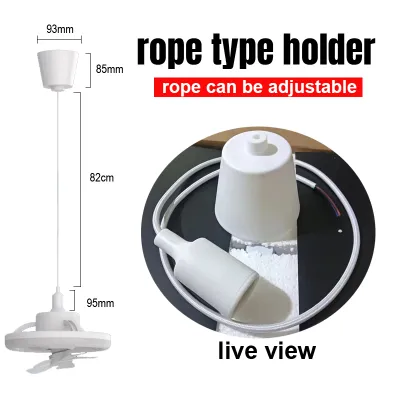
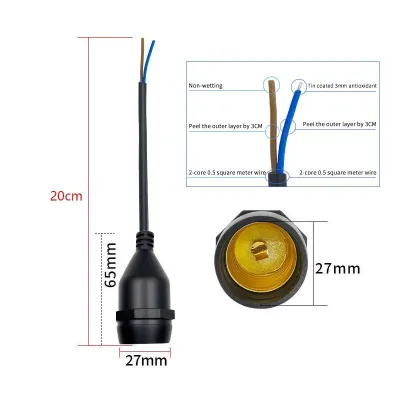
![[SG 🇸🇬 Seller] E27 Led light bulb holder](https://img.lazcdn.com/g/p/b05f769c8c34ce2c221559c81b506fcb.jpg_400x400q80.jpg_.webp)
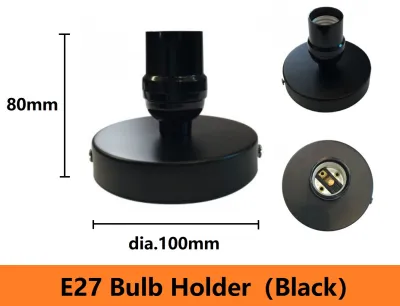
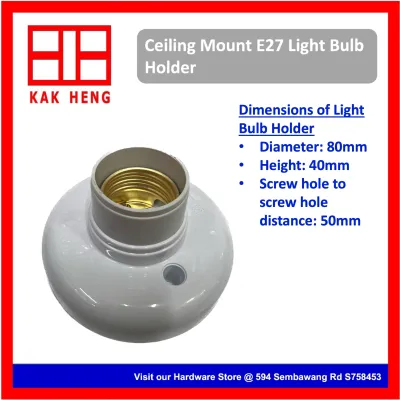
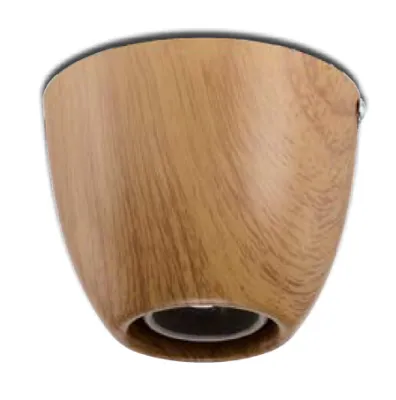
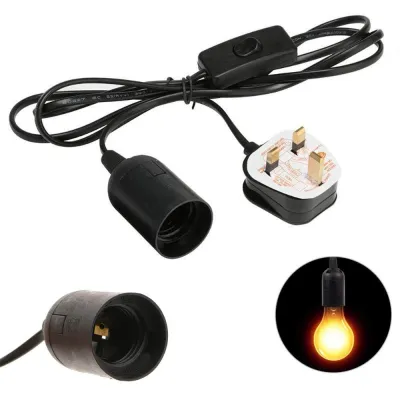
Prices are valid at publication and may change. Please refer to the product page for the latest price.
Every E27 light holder carries a voltage rating, typically expressed as a range like 220V–240V, or sometimes as a single maximum value like 250V. This rating indicates the maximum electrical pressure the holder’s internal insulation and contact points can safely handle. In Singapore, the standard mains electricity supply operates at 230V alternating current (AC) at a frequency of 50Hz.
It is vital to ensure that any E27 holder you install is rated for this 230V standard. Using a holder designed exclusively for lower-voltage regions, such as 110V, can lead to catastrophic insulation breakdown. This mismatch increases the risk of electrical arcing, short circuits, and severe damage to both your bulb and your home’s wiring system.
Decoding Maximum Wattage and Power Limits
The “Max Wattage” rating on an E27 light holder is a thermal safety limit rather than an electrical consumption limit. It specifies the maximum amount of heat energy the holder can safely dissipate without melting, degrading, or catching fire. This limit is determined by the heat resistance of the holder’s housing and the thickness of its internal metal contacts.

Traditional incandescent and halogen bulbs convert only a small fraction of their energy into light, releasing the remaining energy as intense heat. If you install a 100-watt incandescent bulb in a holder rated for a maximum of 40 watts, the excessive heat will rapidly degrade the holder’s plastic or Bakelite casing, leading to exposed live wires.
Modern LED bulbs have significantly reduced this risk because they draw far less power and run much cooler. A 10-watt LED bulb can produce the same light output as a 60-watt incandescent bulb while generating only a fraction of the heat. However, you must still respect the holder’s stated maximum wattage, especially when using enclosed fixtures where heat cannot easily escape, or when using integrated dimming circuits that may impose lower power thresholds.
Evaluating Material Types and Build Quality
E27 light holders are manufactured from several distinct materials, each offering different levels of heat resistance, durability, and aesthetic appeal. The most common materials are ceramic, Bakelite, thermoplastic, and metal. Choosing the right material depends heavily on the type of bulb you plan to use and the environment where the fixture will be installed.
Ceramic or porcelain holders offer the highest heat resistance and are virtually impervious to thermal degradation. This makes them the preferred choice for high-wattage applications, industrial settings, or fixtures that run continuously for long periods. Bakelite and thermoplastic holders are lightweight, cost-effective, and provide excellent electrical insulation, making them highly suitable for standard household LED setups.
Metal holders, often made of brass or aluminium, are popular for industrial or vintage-style pendant lights. Because metal conducts electricity, these holders must be properly grounded (earthed) during installation to prevent the outer casing from becoming live in the event of a wiring fault.
For damp or outdoor environments, such as bathrooms, balconies, or gardens, material choice alone is insufficient. You must verify the fixture’s Ingress Protection (IP) rating to ensure it is sealed against moisture and dust, and look for recognized electrical safety certifications to guarantee safe outdoor operation.
How to Match Specifications to Your Lighting Setup
Before purchasing or installing a new E27 light holder, take a systematic approach to verify compatibility. Start by confirming the physical interface matches your bulb, then check that the voltage rating aligns with Singapore’s 230V grid, and finally ensure the bulb’s actual wattage does not exceed the holder’s maximum limit.
Next, assess the physical environment of the installation. If the holder will be housed inside a tight, enclosed glass shade, heat buildup will be more intense, meaning a ceramic holder or a very low-wattage LED bulb is highly recommended. Inspect the existing wiring in your ceiling or wall; if the copper strands look corroded or the wire insulation feels brittle, the wiring must be replaced before installing a new holder.
Always isolate the power at your home’s main distribution board (DB box) before attempting any inspection or installation. If you encounter degraded wiring, conflicting specifications, or if your project requires alterations to fixed household wiring, stop immediately. In these scenarios, you must engage a licensed electrical worker (LEW) to complete the installation safely and in compliance with local regulations.
Frequently Asked Questions (FAQ)
Can I use an E27 bulb in an E26 light holder?
While an E27 bulb can often physically screw into an E26 holder due to their nearly identical thread dimensions, doing so carries electrical risks. E26 holders are designed for 120V electrical systems common in North America, whereas E27 bulbs and holders are designed for 230V systems. Always verify that the voltage rating of both the holder and the bulb matches your local power supply before attempting to interchange them.
Does the material of the light holder affect the brightness of the bulb?
No, the material of the light holder does not directly affect the brightness or lumen output of the bulb. The holder’s material primarily determines its heat resistance, electrical insulation, and physical durability. While a highly reflective metallic holder interior might slightly redirect ambient light forward, the actual brightness is determined entirely by the bulb’s specifications and design.

Community discussion
Share your experience or ask a question. Comments are reviewed before publication.