
For individuals who wake up at the slightest hint of light or sound, the bedroom environment must be a sanctuary of darkness and silence. Even a tiny glow from an electronic device can penetrate closed eyelids, signaling the brain to halt melatonin production and disrupt deep sleep cycles. Finding a night clock that provides the utility of timekeeping without compromising sleep quality requires a careful evaluation of specific design elements.
A standard alarm clock often acts as an unintended light source, casting a persistent glow across the room or emitting a rhythmic ticking sound that becomes magnified in the quiet of the night. To protect your sleep hygiene, you must look beyond basic aesthetics and focus on features designed specifically to minimise sensory stimulation. By prioritising customisable display settings, silent internal mechanisms, and thoughtful physical designs, you can maintain a dark, restful bedroom environment while still keeping track of the time.
Key Display and Lighting Features You Should Prioritise
The primary source of sleep disruption from a night clock is its display. Traditional digital clocks use fixed-brightness LED or LCD screens that emit a constant, bright light. In a pitch-black room, this level of illumination can easily light up an entire bedside table and cast shadows on the walls. To prevent this visual pollution, look for clocks that offer fully dimmable or completely switchable displays. A step-less dimming control, often adjusted via a rotary dial or a sliding scale, allows you to fine-tune the brightness down to a fraction of a percent. Alternatively, some modern clocks feature a “display off” mode, where the screen remains completely dark until you tap the top of the clock or make a sound, illuminating briefly before turning off again.
Products mentioned in this guide
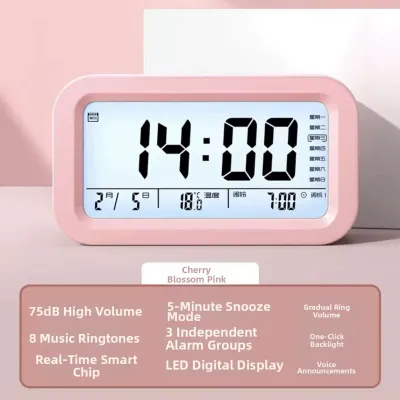
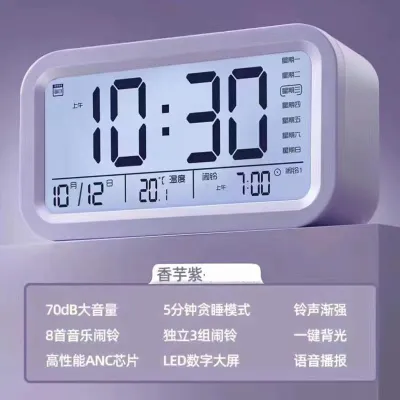
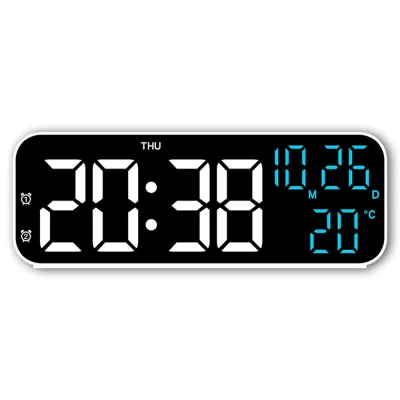
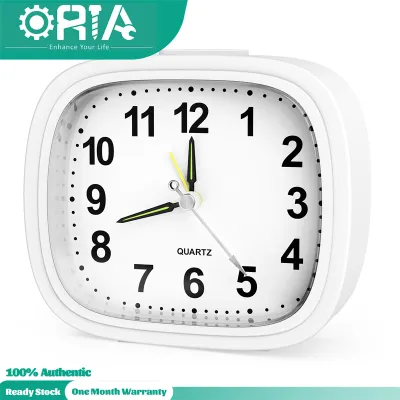
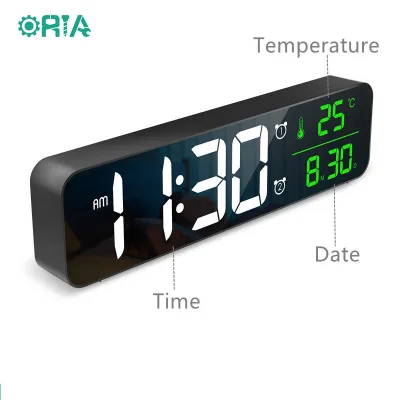
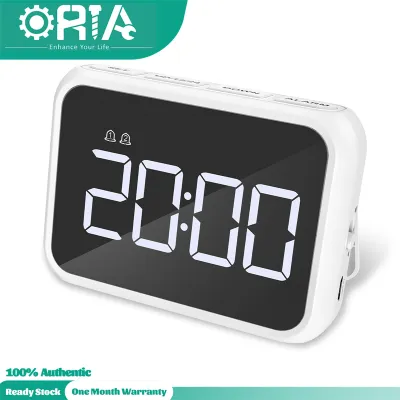
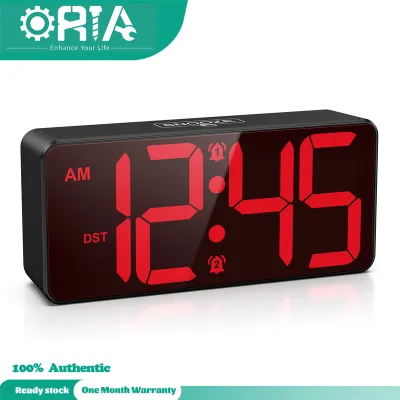
Prices are valid at publication and may change. Please refer to the product page for the latest price.
Another critical feature is auto-dimming capability driven by ambient light sensors. These sensors detect the level of light in the room and automatically adjust the clock’s display brightness to match. During the day, the display brightens so it remains readable under direct sunlight; at night, it drops to its lowest setting. When evaluating auto-dimming clocks, verify whether the minimum brightness level is truly dim enough for your sensitivity, as some sensors have a baseline threshold that may still feel too bright in a completely dark room.
Beyond the main display, secondary light sources can be equally disruptive. Many digital clocks feature secondary indicators, such as a glowing PM light, an active alarm icon, or a bright power indicator LED on the back or side of the unit. Additionally, cheaper LCD screens often suffer from backlight bleed, where the entire background of the screen glows a hazy gray instead of remaining black. To avoid this, look for high-contrast displays, such as organic light-emitting diode (OLED) or vertical alignment (VA) screens, which illuminate only the active digits while keeping the background completely dark. Choosing a clock with a red or amber display is also highly beneficial, as these wavelengths of light are far less disruptive to circadian rhythms than blue or white light.
Movement and Sound Features for Uninterrupted Sleep
While light is a major disruptor, auditory stimulation can be just as damaging to shallow sleep phases. If you prefer an analogue clock face, the mechanism inside the clock is of paramount importance. Traditional quartz movements operate with a stepping motor that moves the second hand once per second, creating a distinct, rhythmic ticking sound. In a quiet bedroom, this repetitive noise can become highly distracting, preventing your mind from settling. To eliminate this issue, look for clocks specified with silent sweep movements. These mechanisms use a continuous, high-frequency motor that glides the second hand smoothly around the dial, operating without any audible ticking.

For digital and analogue clocks alike, alarm volume controls require careful consideration. A sudden, loud alarm can cause a sharp spike in heart rate and cortisol levels, leading to a stressful start to the day. Look for clocks that feature progressive wake-up alarms, often referred to as crescendo alarms. These alarms begin at an barely audible whisper and gradually increase in volume over several minutes, allowing you to wake up gently. Additionally, ensure the clock allows you to set a maximum volume limit, so the alarm never exceeds a comfortable level.
The physical operation of the clock’s buttons is another often-overlooked source of noise. When you need to snooze the alarm, check the time, or adjust a setting in the middle of the night, a loud, plastic “click” can startle you or wake up a sleeping partner. High-quality night clocks address this by using soft-touch silicone buttons, rubberised switches, or capacitive touch sensors that register inputs silently. When researching clocks, check for user feedback regarding the tactile noise of the buttons to ensure nighttime adjustments remain completely silent.
Design and Placement Factors That Affect Your Sleep
The physical build and materials of a night clock play a significant role in how it interacts with the light in your bedroom. Glossy plastic bezels, glass covers, and metallic trim can act as mirrors, catching stray light from streetlamps, passing car headlights, or moonlight filtering through the window. These reflections can create sharp glints of light that catch your eye when you turn over in bed. To prevent this, choose clocks with matte finishes, brushed textures, or wooden casings that diffuse light rather than reflecting it.
Display viewing angles are also crucial for maintaining comfort. Some LCD screens have poor viewing angles, meaning the digits become distorted, faint, or conversely, appear much brighter when viewed from below or from the side. If your bedside table is lower or higher than your mattress, you may find yourself straining to read the time, or facing an uncomfortable glare. Look for displays with wide viewing angles, or choose a clock with an adjustable stand that allows you to tilt the face slightly away from your direct line of sight.
Finally, consider the management of power cables and external adapters. Many plug-in night clocks rely on external power adapters that feature their own built-in LED power indicators. These small lights can glow surprisingly bright, casting a blue or green light onto the wall behind your bedside table. When setting up your clock, ensure you can route the cable to hide the adapter behind furniture, or use electrical tape to cover any indicator lights on the plug itself. Alternatively, choosing a battery-operated or USB-rechargeable clock eliminates the need for a continuous wall connection, removing cable clutter and secondary light sources entirely. If you choose a plug-in model, verify that the voltage and plug type are compatible with your local electrical outlets, and check for safety certifications to ensure safe, continuous operation.
How to Build Your Shortlist: A Buyer's Checklist
When searching for the perfect night clock on an ecommerce platform or in a physical retail store, a structured checklist will help you filter out unsuitable models. Start by reading the technical specifications and product labels carefully. Look for explicit terms such as “silent sweep,” “stepless dimming,” “display off,” “gesture-activated,” or “crescendo alarm.” Avoid products that only use vague terms like “quiet” or “adjustable brightness” without specifying the mechanism or the range of dimming available.
Next, analyze user reviews with a specific focus on nighttime performance. Search the review section for keywords like “bright,” “glow,” “ticking,” “noise,” “click,” or “led.” This will help you identify common complaints that may not be apparent from the manufacturer’s description, such as an auto-dimming sensor that remains too bright in the dark, or a button that makes a loud clicking sound. Pay close attention to reviews written by self-proclaimed light sleepers, as their standards for darkness and silence will align closely with yours.
Because light and sound sensitivity are highly subjective, a clock that seems perfect on paper may still not suit your specific bedroom environment. Therefore, it is highly recommended to verify the return policy of the retailer or online marketplace before making a purchase. Look for sellers that offer a flexible return window, allowing you to test the clock in your actual bedroom for a few nights. This real-world testing is the most reliable way to ensure the clock’s lowest brightness setting and silent operation meet your personal standards for a restful night’s sleep.
Frequently Asked Questions (FAQ)
Are projection clocks suitable for light sleepers?
Projection clocks can be a double-edged sword for light-sensitive individuals. On one hand, they allow you to view the time projected onto the ceiling or wall without having to turn your head or pick up the clock, which can help you remain relaxed. On the other hand, the projection beam itself can create a visible shaft of light in a dark room, and the projected digits can act as an unwanted light source if they are too bright. If you wish to try a projection clock, prioritise models that offer adjustable projection brightness, focus controls, and a dedicated physical switch to turn the projector off completely when not in use.
Can I use a smart speaker or phone as a night clock instead?
Using a smartphone or a smart speaker as a night clock is generally not recommended for light sleepers. Smartphones frequently wake up with bright screen flashes when notifications arrive, and checking the time on a phone exposes your eyes to blue light, which suppresses melatonin. Smart speakers with displays often have ambient sensors that do not dim sufficiently for sensitive eyes, and their voice-activated features can be disruptive to use in the middle of the night. A dedicated, single-purpose night clock remains the most effective tool for maintaining a dark, distraction-free sleep environment.

Community discussion
Share your experience or ask a question. Comments are reviewed before publication.