
Finding a desk lamp that genuinely protects your eyes in Singapore’s demanding study and work environments requires looking past flashy marketing buzzwords. Many products claim to offer “eye-care” or “medical-grade” illumination, but true eye protection relies on verifiable optical specifications and safety certifications rather than subjective branding. Whether you are setting up a home office in a HDB flat or equipping a study desk for late-night exam preparation, the right light source must actively minimize visual fatigue.
To identify which lamps actually deliver on their promises, you must evaluate three core pillars: optical performance, electrical safety compliance, and physical adjustability. Instead of relying on a brand’s reputation, the most reliable approach is to cross-reference manufacturer specifications with recognized international standards. This guide provides the practical tools and verification steps needed to make an informed decision.
Decoding Eye-Care Marketing Claims vs. Real Optical Performance
When browsing online marketplaces or local lighting showrooms, you will frequently encounter terms like “natural light simulation,” “anti-blue light,” or “double-shadow reduction.” While these phrases sound reassuring, they lack standardized definitions. For instance, a lamp marketed as “anti-blue light” might simply feature a yellow-tinted plastic diffuser that reduces overall brightness without addressing the underlying blue light hazard.
Products mentioned in this guide
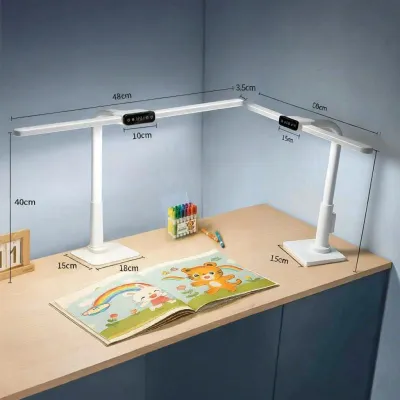
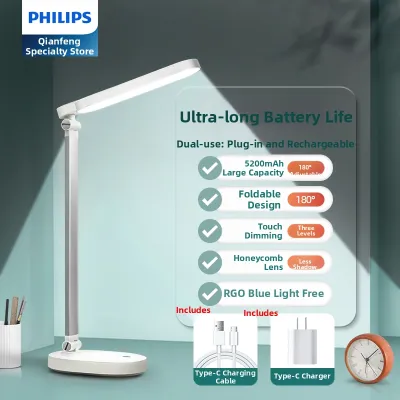
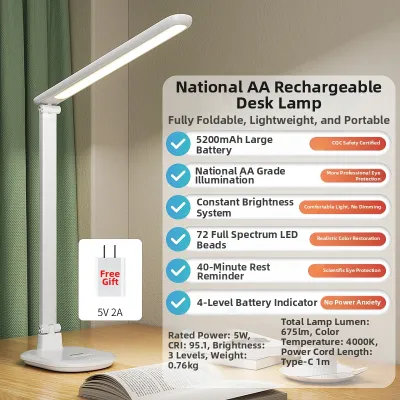
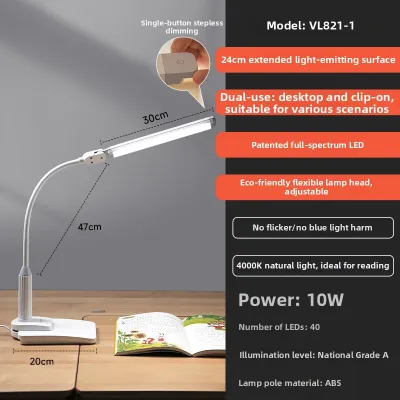
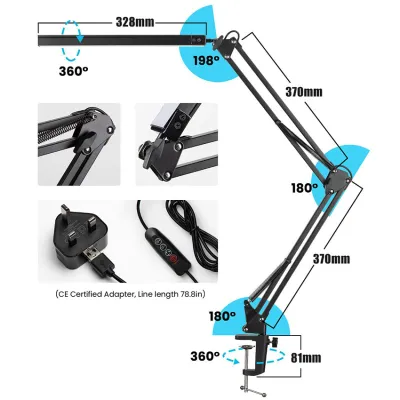
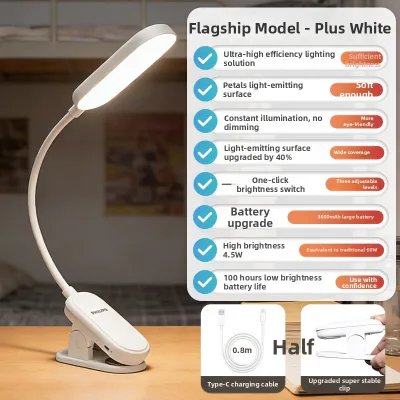
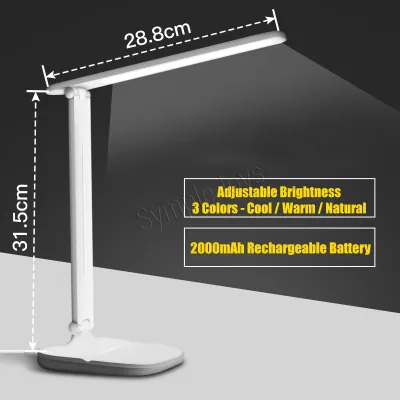
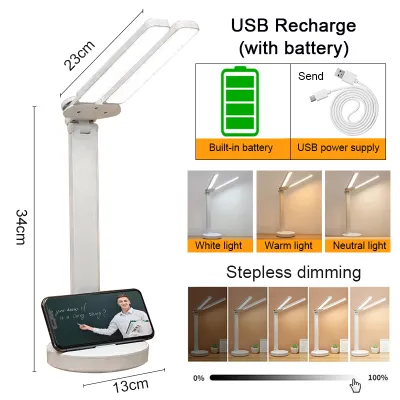
Prices are valid at publication and may change. Please refer to the product page for the latest price.
To separate marketing hype from real performance, you must look for measurable technical parameters. True glare control, for example, is achieved through physical engineering rather than simple frosted plastic covers. High-quality lamps utilize honeycomb louvers, micro-prismatic diffusers, or asymmetric optical designs that direct light precisely onto your workspace while keeping the light source out of your direct line of sight.
Furthermore, uniform light distribution is critical for preventing eye strain. When a lamp creates a harsh, bright hotspot directly underneath it while leaving the surrounding desk area dark, your pupils must constantly dilate and constrict as your eyes move across the workspace. A genuine eye-care lamp provides a wide, even spread of light, maintaining a consistent illuminance level (measured in Lux) across a designated working area, typically verified at a distance of 30 to 50 centimeters.
Essential Optical Specifications to Check on the Product Label
Before purchasing any desk lamp, request the product manual or check the manufacturer’s technical specification sheet for these critical optical metrics.

Flicker and Stroboscopic Effect
Invisible flicker is a rapid fluctuation in light output that, while not consciously perceivable, can cause headaches, eye strain, and general fatigue over prolonged use. To ensure a lamp is flicker-free, verify that it complies with the IEEE 1789 standard or relevant IEC guidelines for LED lighting. High-quality lamps use advanced direct current (DC) drivers to deliver a steady, continuous stream of power to the LEDs, eliminating stroboscopic effects.
Color Rendering Index (CRI)
The Color Rendering Index, represented as CRI or Ra, measures how accurately a light source reveals the true colors of objects compared to natural daylight. For reading, writing, and detailed design work, look for a CRI of 90 or above (Ra >= 90). A low CRI forces your brain to work harder to distinguish colors and contrast, leading to quicker visual fatigue during extended study sessions.
Blue Light Hazard
Blue light in the 415 to 455 nanometer spectrum can contribute to digital eye strain and disrupt your sleep cycle. Rather than trusting vague “blue-light blocking” claims, verify that the lamp has achieved a Risk Group 0 (RG0) classification under the IEC 62471 standard. This certification proves that the light source is exempt from photobiological hazards, making it safe for long-term exposure.
Adjustable Color Temperature
A versatile eye-care lamp should offer adjustable color temperature measured in Kelvin (K). Cooler light (around 4000K to 5000K) enhances alertness and focus, making it ideal for daytime work. Warmer light (around 2700K to 3000K) reduces blue light emission and is gentler on the eyes during evening hours, helping to preserve your natural circadian rhythm before sleep.
Navigating Desk Lamp Categories Available in Singapore
The Singapore market offers a wide array of desk lamps, ranging from premium optical instruments to budget-friendly smart devices. To find the right fit, it helps to understand how different categories prioritize performance, features, and value.
Established Lighting Specialists
Brands with a long history in professional illumination, such as Philips or BenQ, typically focus heavily on optical engineering and precise light distribution. When evaluating models from these specialists, look for advanced features like asymmetric optical paths that project light at an angle to prevent screen reflection, or multi-jointed arms that allow precise positioning.
The primary advantage of these brands is their consistent adherence to international optical standards, often backed by accessible photometric data sheets. However, these premium models often come with a higher price tag, sometimes exceeding S$150, and their physical designs can be bulkier, requiring a dedicated area on your desk.
Smart and Tech-Integrated Brands
Tech-focused brands like Xiaomi or Yeelight emphasize smart home integration, automated features, and sleek, minimalist aesthetics. A key feature to look for in this category is an integrated ambient light sensor, which automatically adjusts the lamp’s brightness based on the surrounding room lighting to maintain a constant, comfortable level of illumination.
When choosing a smart lamp, verify that the automated dimming mechanism does not introduce flicker. Some budget smart lamps use low-frequency Pulse Width Modulation (PWM) to dim the light, which can cause severe invisible flicker. Ensure the manufacturer specifies “flicker-free dimming” or uses high-frequency DC dimming technology. Additionally, check that the lamp offers physical manual overrides so you can adjust the brightness independently of an app.
Accessible Retail and Budget Options
For those seeking a straightforward, cost-effective solution, widely available retail and budget brands offer basic illumination at lower price points. While you will likely need to sacrifice premium features like smart app integration, automatic dimming, or multi-axis metal articulation, you must not compromise on baseline optical safety.
When shopping in this category, always verify that the lamp still carries an RG0 blue light exemption and a CRI of at least Ra 80. Avoid ultra-cheap, unbranded lamps that do not list these specifications, as they often utilize low-grade LED chips that flicker heavily and distort colors.
Electrical Safety and Compliance Checks for Singapore
In Singapore, electrical safety is just as important as optical performance. Because desk lamps are plugged directly into mains power or use external power adapters, they must be fully compatible with the local electrical grid, which operates at 230V and 50Hz.
Before purchasing, verify that the lamp or its power adapter carries the local Safety Mark issued by the Consumer Product Safety Office. This mark indicates that the product has been tested and certified to meet local safety standards, reducing the risk of short circuits, overheating, or electrical fires. This is especially critical when buying from online marketplaces where products may be shipped directly from overseas with non-compliant plugs.
Ensure the lamp comes with a standard Type G three-pin plug suitable for Singapore wall sockets. Avoid using unapproved travel adapters, modifying the plug yourself, or daisy-chaining multiple high-wattage devices into a single extension outlet. If the lamp uses a USB power source, ensure you connect it to a high-quality, certified USB adapter that matches the voltage and current requirements specified in the lamp’s manual.
Matching the Lamp to Your Desk Setup and Tasks
The physical design of your desk lamp should match your specific workspace layout and the tasks you perform daily.
If you have a compact study desk or a crowded home office, a clamp-mounted lamp or a monitor light bar is highly efficient. Clamp-mounted lamps attach directly to the edge of the table, freeing up valuable surface space. Monitor light bars clip onto the top of your screen, projecting light downward in an asymmetric pattern that illuminates your keyboard and documents without casting glare onto the monitor screen.
For traditional reading and writing on physical paper, a weighted-base lamp with a highly adjustable, multi-axis arm is ideal. This design allows you to position the light source directly over your reading material and tilt the lamp head to prevent direct glare from reaching your eyes. Ensure the lamp head can be positioned below eye level so you do not look directly at the exposed LED panel while working.
Decision Framework: Which Lamp Category Fits Your Needs?
To finalize your choice, consider how your primary activities and budget align with the available lamp categories.
- Choose an Established Lighting Specialist if your primary tasks involve long hours of reading physical documents, detailed drawing, or if you are setting up a dedicated study space for children where optical precision and robust build quality are the highest priorities.
- Choose a Smart and Tech-Integrated Brand if you work primarily on a computer screen, appreciate automated brightness adjustments that adapt to changing daylight, and want a lamp that integrates seamlessly with your existing smart home ecosystem.
- Choose an Accessible Budget Option if you only need occasional task lighting for short periods, have limited desk space, and are willing to adjust settings manually in exchange for a lower price point.
| Lamp Category | Primary Use Case | Must-Check Optical Spec | Typical Physical Footprint |
|---|---|---|---|
| Established Specialist | Heavy reading, writing, drafting | Ra >= 90, Asymmetric optics | Medium to Large (Weighted base or clamp) |
| Smart / Tech-Integrated | Screen-based work, dynamic environments | RG0 certification, DC dimming | Sleek, compact base |
| Accessible Budget | Occasional task lighting, simple setups | Safety Mark, Ra >= 80 | Small base or clamp-on |
Regardless of the category you choose, always verify the seller’s return policy and warranty terms before completing your purchase on any online marketplace. A reliable manufacturer should offer at least a one-year local warranty, ensuring you can easily secure a replacement if any electrical or optical components fail.
Frequently Asked Questions (FAQ)
How do I test a desk lamp for invisible flicker at home?
While professional testing requires a specialized spectrometer, you can perform a basic check using your smartphone camera. Open your camera app, select the video mode, and set it to slow-motion recording. Point the camera directly at the illuminated lamp. If you see dark, moving bands or rapid strobing on your screen, the lamp is experiencing significant flicker. Note that this method is not exhaustive, as some high-frequency flicker may still escape detection by standard phone sensors.
Is a higher wattage always better for eye-protection desk lamps?
No, a higher wattage does not guarantee better eye protection. Wattage simply measures electrical power consumption, not the quality or brightness of the light. For modern LED lamps, you should focus on luminous flux (measured in lumens) and illuminance (measured in Lux). A well-engineered lamp with lower wattage can deliver highly efficient, uniform, and glare-free light, whereas a high-wattage lamp with poor diffusion may create harsh glare and hot spots that increase eye strain.

Community discussion
Share your experience or ask a question. Comments are reviewed before publication.